
COMMITTEE ON SCIENCE
U.S. HOUSE OF REPRESENTATIVES
HEARING CHARTER
Learning from 9/11: Understanding the Collapse of the World Trade Center
Wednesday, March 6, 2002
Noon to 2:00 p.m.
2318 Rayburn House Office Building
1. Purpose
On Wednesday, March 6, at noon the House Committee on Science will hold a hearing on the investigation into the collapse of the World Trade Center (WTC). Witnesses from industry, academia, and government will testify on the catastrophic collapse of the WTC complex and subsequent efforts by federal agencies and independent researchers to understand how the building structures failed and why. By scrutinizing the steel and other debris, blueprints and other documents, and recorded images of the disaster, engineers, designers, and construction professionals may learn valuable lessons that could save thousands of lives in the event of future catastrophes, natural or otherwise.
The Committee plans to explore several overarching questions raised by the collapse and the ensuing investigation:
1. What have we learned about how the federal government investigates catastrophic building collapses, and are any changes warranted?
2. What have we learned about the collapse of the World Trade Center, including which structural elements failed first, and why?
3. How will we know what changes, if any, are warranted in building and fire codes as a result of lessons learned from the World Trade Center’s collapse?
4. Has the World Trade Center disaster exposed any gaps in our understanding of buildings and fire, and are changes needed in the federal government’s research agenda?
2. Background
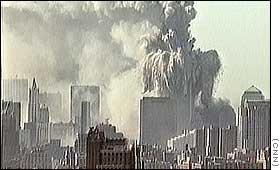
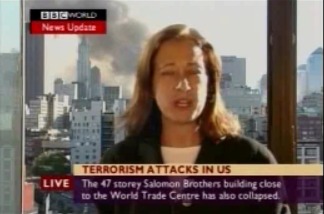
At 8:47 a.m. on the morning of September 11, 2001, terrorists crashed a fuel-laden Boeing 767 into the north tower (Tower 1) of the World Trade Center (WTC) complex. Approximately 16 minutes later, a second Boeing 767 slammed into the south tower (Tower 2), exploding upon impact and engulfing several of the building’s upper floors in flames. While the performance of both towers exceeded their design specifications – the buildings were designed to withstand the force from the initial impact of a 707 jet – the subsequent structural and fire damage still caused the buildings to fall. Tower 2 collapsed in less than an hour, killing victims trapped above the flames and rescue workers in and around the building. Thirty minutes later, Tower 1 met the same fate. While more than 25,000 people were successfully evacuated from the towers, nearly 3,000 people and emergency responders were killed in the collapses. As the day progressed, the remaining WTC buildings collapsed as well, including Building 7, which burned for 8 hours before crumbling to the ground. Fortunately, the later building collapses produced no casualties.
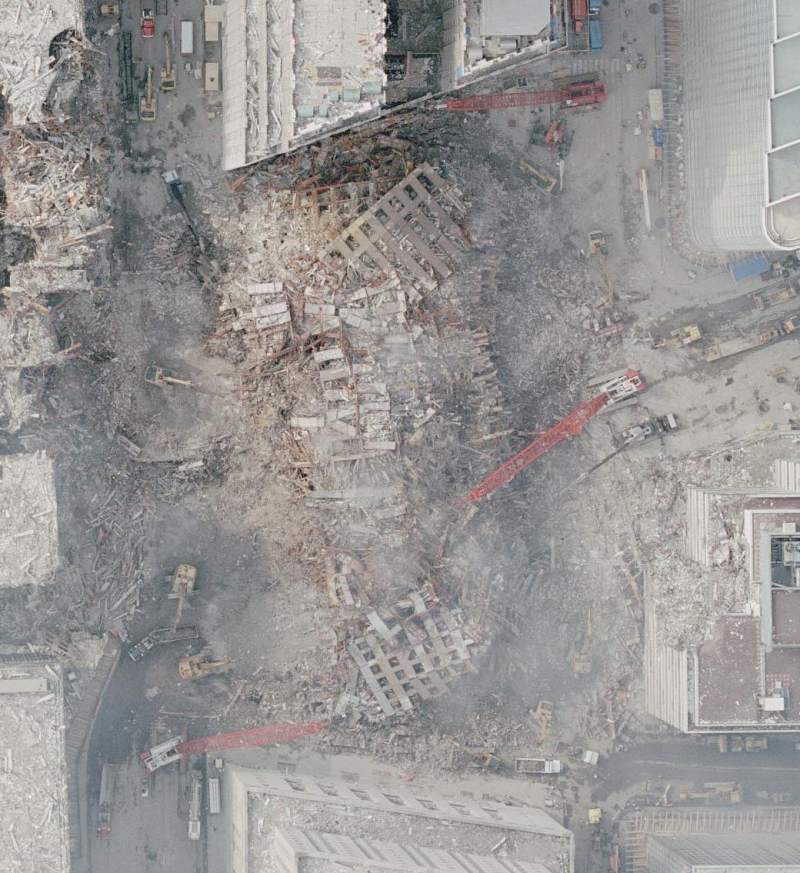
In the wake of the collapses, search and rescue workers launched an around-the-clock recovery effort to find and recover survivors and victims who perished. To make way, literally tons of twisted steel and fractured concrete were removed from the rubble pile and loaded onto convoys of bulldozers and flatbed trucks to be carried away to recycling plants and landfills.
Researchers also began to respond immediately. Among the first were National Science Foundation (NSF)-funded social scientists and engineers who arrived at the WTC site within 48 to 72 hours after the tragedy to begin collecting data. Similarly, the American Society of Civil Engineers (ASCE) formed a Disaster Response Team within hours of the first plane strike. On September 12th, the Federal Emergency Management Agency (FEMA) and its contractor, Greenhorne and O’Mara, Inc., located in Greenbelt, Maryland, commenced the development of a Building Performance Assessment Team (BPAT; explained more fully on the next page) to conduct a formal analysis of the progressive collapses and produce a report of its findings. A variety of other engineering researchers and professionals, including members of the Structural Engineering Association of New York, also engaged in the monumental task of collecting data that could lead to a better understanding of the collapse of the buildings themselves and to the development of mitigation strategies to prevent a similar tragedy in the future.
Concerns Related to the Engineering Investigation
Though many of the individuals who have participated in the WTC building performance investigation are architects and engineers with experience investigating other structural collapses – including those resulting from natural causes as well as terrorist attacks – nothing had prepared these investigators for a disaster of this magnitude and complexity. Unlike the destruction caused by an earthquake, which may affect several buildings across an expansive area, this disaster involved many buildings and a massive debris pile in a small, confined area. Also unlike most earthquakes, the WTC disaster caused significant casualties and prompted a prolonged search and rescue effort. In addition, the concurrent criminal investigation by the Federal Bureau of Investigation and a separate investigation by the National Transportation Safety Board further frustrated the building performance investigators.
The investigation has been hampered by a number of issues, including:
· No clear authority and the absence of an effective protocol for how the building performance investigators should conduct and coordinate their investigation with the concurrent search and rescue efforts, as well as any criminal investigation: Early confusion over who was in charge of the site and the lack of authority of investigators to impound pieces of steel for examination before they were recycled led to the loss of important pieces of evidence that were destroyed early during the search and rescue effort. In addition, a delay in the deployment of FEMA’s BPAT team may have compounded the lack of access to valuable data and artifacts.
· Difficulty obtaining documents essential to the investigation, including blueprints, design drawings, and maintenance records: The building owners, designers and insurers, prevented independent researchers from gaining access – and delayed the BPAT team in gaining access – to pertinent building documents largely because of liability concerns. The documents are necessary to validate physical and photographic evidence and to develop computer models that can explain why the buildings failed and how similar failures might be avoided in the future.
· Uncertainty as a result of the confidential nature of the BPAT study: The confidential nature of the BPAT study may prevent the timely discovery of potential gaps in the investigation, which may never be filled if important, but ephemeral evidence, such as memories or home videotapes, are lost. The confidentiality agreement that FEMA requires its BPAT members to sign has frustrated the efforts of independent researchers to understand the collapse, who are unsure if their work is complementary to, or duplicative of, that of the BPAT team. In addition, the agreement has prevented the sharing of research results and the ordinary scientific give-and-take that otherwise allows scientists and engineers to winnow ideas and strengthen results.
· Uncertainty as to the strategy for completing the investigation and applying the lessons learned: The BPAT team does not plan, nor does it have sufficient funding, to fully analyze the structural data it collected to determine the reasons for the collapse of the WTC buildings. (Its report is expected to rely largely on audio and video tapes of the event.) Nor does it plan to examine other important issues, such as building evacuation mechanisms. Instead, FEMA has asked the National Institute of Standards and Technology (NIST) to take over the investigation. Yet so far, NIST has not released a detailed plan describing how it will take over the investigation, what types of analyses it will conduct, how it will attempt to apply the lessons it learns to try to improve building and fire codes, and how much funding it will require.
Role of the Federal Emergency Management Agency
The Federal Emergency Management Agency is charged with supporting the nation’s emergency management system. FEMA intervenes at all stages of disaster management including preparation, response, recovery, mitigation, risk reduction, and prevention. In the case of the World Trade Center attack, FEMA dispatched Urban Search and Rescue Teams and established a disaster field office at the site within hours of the first strike to assist in New York City’s rescue effort. At the same time, the FEMA Building Performance Assessment Team (BPAT) began their important work of initiating an analysis that could ultimately yield valuable information about the sequence of events and failures that resulted in progressive building collapse.
BPATs are routinely deployed by FEMA following disasters caused by events such as floods and hurricanes. The teams are formed by, and operate under the direction of the Mitigation Directorate’s Program Assessment and Outreach Division and comprise such individuals as regional FEMA staff, representatives from state and local governments, consultants who are experts in engineering, design, construction, and building codes, and other technical and support personnel. A contractor for FEMA, Greenhorne & O’Mara, Inc., maintains a roster of hundreds of mitigation specialists from across the United States. BPAT teams are typically deployed within seven days of any disaster event.
Generally, a BPAT conducts field inspections and technical evaluations of buildings to identify design practices, construction methods, and building materials that either failed or were successful in resisting the forces imposed by the event. A major objective of the BPAT’s findings and recommendations are aimed at improving design, construction and enforcement of building codes to enhance performance in future disasters. The culmination of the BPAT’s efforts is a report that presents the team’s observations, conclusions, and recommendations for improving building performance in future natural disasters.
The BPAT team deployed to the WTC site was assembled by the American Society of Civil Engineers and is headed by W. Gene Corley, Ph.D., P.E, Senior Vice President of Construction Technologies Laboratory in Skokie, Illinois. He was also the principal investigator in the FEMA study of Oklahoma City’s Murrah Federal Office Building. On September 11th, ASCE, in partnership with a number of other professional organizations, commenced the formation of an independent team of experts to conduct a building performance assessment study at the WTC site as part of ASCE’s Disaster Response Procedure. In late September, this team, the ASCE Disaster Response team, was officially appointed as the BPAT team and was funded by FEMA to assess the performance of the buildings and report its findings. The BPAT team received $600,000 in FEMA funding in addition to approximately $500,000 in ASCE in-kind contributions.
The 23-member BPAT team conducted an analysis of the wreckage on-site, at Fresh Kills Landfill and at the recycling yard from October 7-12, 2001, during which the team extracted samples from the scrap materials and subjected them to laboratory analysis. Why the analysis was conducted only after a delay of three weeks after the attacks remains unclear. Since November, members of the Structural Engineers Association of New York (SEAoNY) have volunteered to work on the BPAT team’s behalf and are visiting recycling yards and landfills two to three times a week to watch for pieces of scrap that may provide important clues with regard to the behavior of the buildings.
In the month that lapsed between the terrorist attacks and the deployment of the BPAT team, a significant amount of steel debris – including most of the steel from the upper floors – was removed from the rubble pile, cut into smaller sections, and either melted at the recycling plant or shipped out of the U.S. Some of the critical pieces of steel – including the suspension trusses from the top of the towers and the internal support columns – were gone before the first BPAT team member ever reached the site. Fortunately, an NSF-funded independent researcher, recognizing that valuable evidence was being destroyed, attempted to intervene with the City of New York to save the valuable artifacts, but the city was unwilling to suspend the recycling contract. Ultimately, the researcher appealed directly to the recycling plant, which agreed to provide the researcher, and ultimately the ASCE team and the SEAoNY volunteers, access to the remaining steel and a storage area where they could temporarily store important artifacts for additional analysis. Despite this agreement, however, many pieces of steel still managed to escape inspection.
The BPAT team is expected to release its report in April. Because FEMA requires the members of its BPAT team to sign a confidentiality agreement until the report is released, the exact scope of the report is unknown. But it appears from the role that BPAT teams normally play and general comments ASCE members of the BPAT team have made that the report is likely to include an examination of how the buildings behaved leading up to the collapse, hypotheses for which structural elements failed and thereby initiated the collapse, and recommendations for additional research and analysis.
For example, ASCE has said that the study will rely primarily on audio and video recordings, interviews with survivors, blueprints and design drawings of the World Trade Center, and evidence they or the SEAoNY volunteers have collected from the rubble. The BPAT team has access to more than 120 hours of high quality film footage and audiotapes of 911 communications with trapped victims. The BPAT team initially had difficulty in obtaining building blueprints and design drawings from either the City of New York, the Port Authority, the building owners, or the building designers due primarily to liability concerns on the part of the building owners and insurers. Belatedly, however, the team was provided access to these documents in early January.
ASCE has said that the BPAT study will not include an analysis of the evacuation or rescue procedures and may not be able to validate definitively any of a number of hypotheses regarding the collapse. But because of the confidentiality of the report, it is unclear whether the it will provide answers or simply lay out more questions. It is unknown, for example, to what degree the BPAT report will compare video evidence with that collected from the steel beams from the floors that were hit by the planes.
As a result, independent researchers are unsure how they can contribute to the understanding of how the buildings fell without unnecessarily duplicating work. Others fear that the BPAT’s silence on the scope of its report may allow critical aspects of the picture to be missed, and that, by the time the report is released and any such gaps are discovered, the trail of evidence that could provide answers may have grown cold.
The National Science Foundation
Researchers supported by the National Science Foundation are used to mobilizing rapidly after an earthquake and arriving on scene soon after the event to begin collecting data. Recognizing the similarities between the WTC disaster and earthquakes, NSF program managers awarded nearly $300,000 to experienced earthquake researchers, including engineers and social scientists, to begin an analysis of the 9/11 terrorist attacks within 72 hours of the events. In an effort to quickly deploy researchers to the site, awards were made through the Small Grants for Exploratory Research Program, a supplemental award program that enables NSF program managers to award additional support to currently-funded investigators through an abbreviated internal review process (see Appendix A for a list of awards).
The efforts of NSF-funded researchers were impeded by the same obstacles the BPAT team encountered: an inability to examine the steel, either removed from the site during the early search and rescue work or shipped to recycling plants, and the denial of access to building design, construction and maintenance documents. Interestingly, it was an NSF-funded researcher who ultimately negotiated the arrangements by which he and others investigating the disaster were provided access to the remaining pieces of steel at the recycling plant.
To date, the NSF-funded researchers continue to face problems. They continue to be denied access to important building diagrams and blueprints, and so are unable to complete their analyses or develop the computer models necessary to better understand the failure of the buildings structural elements. Perhaps more importantly, without these computer models, engineering researchers will be unable to develop effective mitigation strategies.
The National Institute of Standards and Technology
NISTs Building and Fire Research Laboratory carries out research in fire science, fire safety engineering, and structural, mechanical, and environmental engineering. It is the only federal laboratory dedicated to research on building design and fire safety. In the past, the lab has investigated several structural failures using authority Congress made explicit in 1985. (15 U.S.C. 282a). The goals of its previous investigations were to determine the probable technical causes of the failures, examine what lessons could be learned from those determinations, and help develop improved building codes, standards, and practices. The investigations also identified areas of research that needed further study.
Shortly after the attack, NIST appointed an employee of the Building and Fire Research Laboratory to serve on the 23-member BPAT team. While this partnership lent some of NIST’s resources and expertise to the BPAT study, NIST did not immediately launch a formal investigation into the technical causes that led to the collapse of the World Trade Center buildings.
NIST believes that the World Trade Center collapse raises difficult and technical questions regarding building codes and standards, justifying the redirection of funds to its building and fire lab. For example, standards for concrete design, building loads, and structural integrity may need revision. In response, NIST has redirected $2 million of its fiscal year 2002 internal discretionary funds to the lab to supplement its current building engineering and standards work. NIST has also requested permission to reprogram from the rest of its laboratories another $2 million in fiscal year 2002 funds for these efforts. The reprogramming request is currently pending before the Office of Management and Budget and will ultimately need approval from Congress. NIST did not need Congressional review to redirect its discretionary funds.
In January, after a delay of three months since the terrorists’ attacks, FEMA asked NIST to take over the next phase of the investigation of the collapse. Yet neither NIST nor FEMA has released details as to what that next phase would entail (other than the general outline NIST has provided below). In addition, the Administration has not yet indicated whether FEMA, NIST, or a supplemental funding request to Congress would provide funds for such an investigation, nor has it identified how much it would cost.
Administration officials and outside parties are weighing whether a formal arrangement should be made for NIST to serve as FEMA’s research arm in the event of future catastrophic building failures. Currently, there is no formal relationship between the two agencies regarding these matters.
Based on some initial planning, NIST has preliminarily identified the following general areas for investigation:
· Determine technically, why and how the buildings collapsed (WTC 1 and 2, and possibly WTC 7);
· Investigate the technical aspects of fire protection, response, and evacuation, and occupant behavior and response;
· Determine whether state-of-the-art procedures were used in the design, construction, operation, and maintenance of the WTC building;
· Determine whether there are new technologies and procedures emerging that could be employed in the future to reduce the potential risks of collapse; and
· Identify building and fire codes, standards, and practices that warrant revision.
3. Questions
Please see Appendix A for copies of letters to witnesses and the questions each was asked to address in testimony at the hearing.
4. Witnesses
The following witnesses will address the subcommittee:
Mr. Robert Shea, Acting Administrator Federal Insurance and Mitigation Administration, and, Mr. Craig Wingo, Director of Division of Engineering Science and Technology, Federal Emergency Management Administration
Dr. W. Gene Corley, P.E., S.E., American Society of Civil Engineers, Chair of the Building Performance Assessment Team reviewing the WTC disaster
Professor Glenn Corbett, Assistant Professor of Fire Science at John Jay College, New York City
Dr. Abolhassan Astaneh-Asl, Professor, Department of Civil and Environmental Engineering University of California, Berkeley
Dr. Arden Bemet, Director, National Institute of Standards and Technology
5. Additional Reading
Glanz, J. (2001, December 4). Wounded Buildings Offer Survival Lessons. The New York Times, p. F1
Glanz, J., & Lipton, E. (2001, December 25). A National Challenged: The Towers; Experts Urging Broader Inquiry in Towers’ Fall. The New York Times, p. A1
Glanz, J., & Lipton, E. (2002, January 17). New Agency to Investigate the Collapse of Towers. The New York Times, p. B3
Glanz, J., & Lipton, E. (2002, February 2). At Scrapyards, as Search for Clues in the Towers’ Collapse. The New York Times, p. B1








 progressiveissuesblog
