NIST’s preliminary reports on WTC 7’s collapse includes a slide presentation named: Project 6: WTC 7 Structural Fire Response and Collapse Analysis. 1 A key tenet of its theory is that the building sustained severe structural damage from heavy pieces of debris cast out by the collapse of the North Tower, whose closest wall was about 350 feet from Building 7’s south wall.Page 14 of the slide presentation makes the following claims about damage from debris from the North Tower.Debris Damage from WTC 1
After WTC 1 collapsed:Heavy debris on Vesey Street and WTC 7 PromenadeNo heavy debris observed in lobby area, white dust coatingSW Corner Damage — floors 8 to 18South face damage between two exterior columns – roof level down 5 to 10 floors, extent not knownSouth Face Damagemiddle 1/4 – 1/3 width south face, 10th floor to groundlarge debris hole near center around 14th floor1/4 width south face, above 5th floor, atrium glass intact8th/9th floor from inside, visible south wall gone with more damage to west, 2 elevator cars dislodged into elevator lobbyPage 19 contains this illustration.This slide, labeled Estimated Extent of Debris Damage indicates that a huge gouge hollowed out Building 7’s south face. The only evidence NIST adduces in support of its “estimated extend of debris damage” are the following two images, which apparently hadn’t surfaced until NIST published its presentation.Both the image above and the image to the right are contained in NIST’s slide presentation entitled: Project 6: WTC 7 Structural Fire Response and Collapse Analysis. They are the only two images provided to support NIST’s conclusion that Building 7 sustained severe structural damage from the collapse of the North Tower. The first shows a large gash in the building’s southwest corner extending from the 18th floor downward, and the second shows damage to the parapet wall at the top of the south-facing facade.The admittedly minor damage to the parapet wall appears to be the only evidentiary basis for NIST’s claim of a huge gash in the middle of the south facade, since no photographs show this damage.The alleged southwest corner damage is interesting because there are no known photographs that show this corner of the building from the 18th story down. In fact, it is the only corner of the building whose 8- to 18th-floor span is not shown by other public photographs. See, for example, post-North-Tower-collapse photographs of the building archived on 9-11 Research.In the following three video captures, smoke obscures the portion of WTC 7’s southwest corner below about the 18th floor.These frames extracted from the video WTC: The First 24 Hoursshow Building 7 on the afternoon of 9/11/01Damage Claims Versus Symmetric CollapseEven if one accepts all of NIST’s claims about extensive structural damage to WTC 7, and its claims about fires on several different floors, its collapse scenario is not remotely plausible. The alleged damage was asymmetric, confined to the tower’s south side, and any weakening of the steelwork from fire exposure would also be asymmetric. Thus, even if the damage were sufficient to cause the whole building to collapse, it would have fallen over asymmetrically — toward the south. But WTC 7 fell straight down, into its footprint.References
aying that the current investigation into how and why the twin towers fell on Sept. 11 is inadequate, some of the nation’s leading structural engineers and fire-safety experts are calling for a new, independent and better-financed inquiry that could produce the kinds of conclusions vital for skyscrapers and future buildings nationwide.
Senator Charles E. Schumer and Senator Hillary Rodham Clinton, both of New York, have joined the call for a wider look into the collapses. In an interview on Friday, Mr. Schumer said he supported a new investigation “not so much to find blame” for the collapse of the buildings under extraordinary circumstances, “but rather so that we can prepare better for the future.”
“It could affect building practices,” he said. “It could affect evacuation practices. We live in a new world and everything has to be recalibrated.”
Experts critical of the current effort, including some of those people who are actually conducting it, cite the lack of meaningful financial support and poor coordination with the agencies cleaning up the disaster site. They point out that the current team of 20 or so investigators has no subpoena power and little staff support and has even been unable to obtain basic information like detailed blueprints of the buildings that collapsed.
While agreeing that any building hit by a jetliner would suffer potentially devastating damage, experts want to examine whether the twin towers may have had hidden vulnerabilities that contributed to their collapse.
The lightweight steel trusses that supported the tower’s individual floors, the connections between the trusses and the buildings’ vertical structural columns, as well as possible flaws in the fireproofing have been drawing scrutiny from fire safety consultants and engineers in recent weeks.
“Two buildings came down,” said Joseph F. Russo, director of the Center for Fire Safety Engineering at Polytechnic University in Brooklyn, referring to the twin towers. “That suggests some degree of predictability.”
“And if it was predictable,” Mr. Russo said, “was it preventable?”
Family members of some victims have added their voices to the calls for a wider investigation.
The exact scope of an expanded inquiry has not been defined. But the central desire is to learn any lessons that might be hidden in the rubble and to pinpoint the exact sequence and cause of the collapse, regardless of whether it was inevitable from the moment the planes struck, members of the investigative team and others said.
In calling for a new investigation, some structural engineers have said that one serious mistake has already been made in the chaotic aftermath of the collapses: the decision to rapidly recycle the steel columns, beams and trusses that held up the buildings. That may have cost investigators some of their most direct physical evidence with which to try to piece together an answer.
Officials in the mayor’s office declined to reply to written and oral requests for comment over a three- day period about who decided to recycle the steel and the concern that the decision might be handicapping the investigation.
“The city considered it reasonable to have recovered structural steel recycled,” said Matthew G. Monahan, a spokesman for the city’s Department of Design and Construction, which is in charge of debris removal at the site.
“Hindsight is always 20-20, but this was a calamity like no other,” said Mr. Monahan, who was designated by the mayor’s office to respond to questions about the investigation. “And I’m not trying to backpedal from the decision.”
Interviews with a handful of members of the team, which includes some of the nation’s most respected engineers, also uncovered complaints that they had at various times been shackled with bureaucratic restrictions that prevented them from interviewing witnesses, examining the disaster site and requesting crucial information like recorded distress calls to the police and fire departments.
The investigation, organized immediately after Sept. 11 by the American Society of Civil Engineers, the field’s leading professional organization, has been financed and administered by the Federal Emergency Management Agency. A mismatch between the federal agency and senior engineers accustomed to bypassing protocol in favor of quick answers has been identified as a clear point of friction.
“This is almost the dream team of engineers in the country working on this, and our hands are tied,” said one team member who asked not to be identified. Members have been threatened with dismissal for speaking to the press.
“FEMA is controlling everything,” the team member said. “It sounds funny, but just give us the money and let us do it, and get the politics out of it.”
A spokesman for FEMA, John Czwartacki, said the agency’s primary mission was to help victims, emergency workers and to speed the city’s recovery, and added, “We are not an investigative agency.”
But given the assignment to examine the structural failures at the World Trade Center, the agency has so far spent roughly $100,000 and Mr. Czwartacki said that more financing could be expected after the group produced what he called an “interim document” in the spring.
“I’ve heard the calls for the N.T.S.B.-style investigation,” Mr. Czwartacki said, referring to appeals by engineers and some families of trade center victim for an exhaustive examination like those done by the National Transportation Safety Board when a plane crashes. “I don’t think this study will do it for them.”
Mr. Czwartacki added that it was premature to comment on whether team members were receiving necessary information because the study has not been completed. Regardless of what any investigation might find, it is unclear how many civilian lives would have been saved if the buildings had not collapsed, because so many died on the burning upper floors.
Despite the universe of unknowns, the calls for more extensive investigations of various kinds are coming from engineers, fire experts and professional organizations in New York and across the nation.
by Joe Calderone New York Daily News January 4, 2002
A respected firefighting trade magazine with ties to the city Fire Department is calling for a “full-throttle, fully-resourced” investigation into the collapse of the World Trade Center.
A signed editorial in the January issue of Fire Engineering magazine says the current investigation is “a half-baked farce.”
The piece by Bill Manning, editor of the 125-year-old monthly that frequently publishes technical studies of major fires, also says the steel from the site should be preserved so investigators can examine what caused the collapse.
“Did they throw away the locked doors from the Triangle Shirtwaist fire? Did they throw away the gas can used at the Happy Land social club fire? … That’s what they’re doing at the World Trade Center,” the editorial says. “The destruction and removal of evidence must stop immediately.”
Fire Engineering counted FDNY Deputy Chief Raymond Downey, the department’s chief structural expert, among its senior advisers. Downey was killed in the Sept. 11 attack.
John Jay College’s fire engineering expert, Prof. Glenn Corbett, serves as the magazine’s technical editor.
A group of engineers from the American Society of Civil Engineers, with backing from the Federal Emergency Management Agency, has been studying some aspects of the collapse. But Manning and others say that probe has not looked at all aspects of the disaster and has had limited access to documents and other evidence.
A growing number of fire protection engineers have theorized that “the structural damage from the planes and the explosive ignition of jet fuel in themselves were not enough to bring down the towers,” the editorial stated.
A FEMA spokesman, John Czwartacki, said agency officials had not yet seen the editorial and declined to comment.
Norida Torriente, a spokeswoman for the American Society of Civil Engineers, described her group’s study as a “beginning” and “not a definitive work.”
Sen. Chuck Schumer (D-N.Y.) has joined a group of relatives of firefighters who died in the attack in calling for a blue-ribbon panel to study the collapse.
“We have to learn from incidents through investigation to determine what types of codes should be in place and what are the best practices for high-rise construction,” Manning told the Daily News. “The World Trade Center is not the only lightweight, core construction high-rise in the U.S. It’s a typical method of construction.”
FAIR USE NOTICE: This site contains copyrighted material the use of which has not always been specifically authorized by the copyright owner. We are making such material available in our efforts to advance understanding of criminal justice, political, human rights, economic, democracy, scientific, and social justice issues, etc. We believe this constitutes a ‘fair use’ of any such copyrighted material as provided for in section 107 of the US Copyright Law. In accordance with Title 17 U.S.C. Section 107, the material on this site is distributed without profit to those who have expressed a prior interest in receiving the included information for research and educational purposes. For more information go to: http://www.law.cornell.edu/uscode/17/107.shtml. If you wish to use copyrighted material from this site for purposes of your own that go beyond ‘fair use’, you must obtain permission from the copyright owner.
An Attempt to Uncover the Truth About September 11th, 2001
We all know the official story of September 11th: four jetliners were hijacked by groups of four and five Arabic men armed with box cutters, who proceeded to fly three of the four jets into the Twin Towers and the Pentagon. Subsequently the World Trade Center Towers, weakened by the impacts and fires, collapsed into piles of rubble.
The FBI had compiled a list of hijackers within three days, and it was so obvious that Osama bin Laden had masterminded the operation from caves in Afghanistan, that there was no need to seriously investigate the crime or produce evidence. The “retaliatory” attack on the Taliban would soon commence.
Is this story true? Its central assumptions have never been tested by an official government body whose members lack obvious conflicts of interest. There are numerous red flags in the official story, which requires a long series of highly improbable coincidences. Questioning that story is an act of responsible citizenship.
CNN anchor Aaron Brown seems to struggle to make sense of what he is seeing one minute after announcing that that WTC Building 7, whose erect facade is clearly visible in his view towards the Trade Center, has or is collapsing.
CNN announced that WTC 7 “has either collapsed or is collapsing” about an hour before the event.
This YouTube video is an excerpt from the CNN‘s live television broadcast on 9/11/2001. At about 01:58 in the clip, anchor Aaron Brown states that it’s about 4:14 Eastern Daylight Time. That means that when the he makes the announcement at the beginning of the clip, it is about 4:12
The following is a transcript of the two-minute excerpt:
We are getting information now that one of other buildings, building 7, in the world trade center complex is on fire and has either collapsed or is collapsing.
I .. I .. You to be honest can see these pictures just a little bit more clearly than I, but Building number 7 one of the other buildings in this very large complex of buildings that is the Trade Center … there were — there were — and that is the right way to put it — there were the two towers, but then there are a number of support buildings around it — retail spaces, restaurants, office space, garages, the trains come in from New Jersey bringing commuters taking commuters back, come into the complex that is the World Trade Center, and now we are told there is a fire there and that building may collapse as well, as you can see.
We can see as we now look back down town, we can see the billowing smoke. It is extraordinary to us how long this scene has gone on. The smoke has not cleared at all. It has not lightened at all. It was that horrific moment when the Towers collapsed, and then we’ve been in this sort of situation ever since, as the fires continue to burn. Rose Arsie, one of our producers who has been slowly and diligently making her way to the building described the fires she saw in the areas of the Towers themselves and clearly those fires continue to burn at about 4:15 eastern daylight time today, in an unbelievable and awful scene in New York.
This video excerpt was apparently extracted from a 41-minute mpeg recording discovered in a vast archive of broadcast footage publicized in late February of 2007.
Reports of Foreknowledge of the Collapse of Building 7 in the Oral Histories
The oral histories released on August 12, 2005 contain many reports of warnings of the collapse of WTC Building 7 at various times during the day. Most of the warnings were from after about 4 PM.
Joseph Cahill — Paramedic (E.M.S.)
The reason we were given for why we were moving was that 7 World Trade Center was going to collapse or was at risk of collapsing. So we must have been somewhere in this area where we would have had a problem with that. But I honestly don’t remember. … They wanted us to move the treatment sector because of 7 World Trade Center was imminently to collapse, which, of course, it did.
Then, like I said, building seven was in eminent collapse. They blew the horns. They said everyone clear the area until we got that last civilian out. We tried to give another quick search while we could, but then they wouldn’t let us stay anymore. So we cleared the area. … So yeah, then we just stayed on Vesey until building seven came down.
So we started heading over to where Building 7 was at and they were like Building 7 is going to collapse, you can’t go over there, this and that, and there was another building that they thought was going to collapse that was like right behind the triage center, the building that we were in.
While we were searching the subbasements, they decided that Seven World Trade Center, which was across the street, was going to collapse. So they called us out. … When I came out, they were calling us on the radio to tell us to get out. Then I reported that the search was negative, and then they wouldn’t let anybody near the site pretty much, because Seven World Trade Center was going to come down.
We got to Chambers and Greenwich, and the chief turns around and says, ‘There’s number Seven World Trade. That’s the OEM bunker.’ We had a snicker about that. We looked over, and it’s engulfed in flames and starting to collapse. … We hear over the fire portable, ‘Everybody evacuate the site. It’s going to collapse.’ Mark Steffens starts yelling, ‘Get out of here! Get out of here! Get out of here! We’ve got to go! We’ve got to go! It’s going to collapse.’ … We pulled the car over, turned around and just watched it pancake.
Early on, there was concern that 7 World Trade Center might have been both impacted by the collapsing tower and had several fires in it and there was a concern that it might collapse. So we instructed that a collapse area — … — be set up and maintained so that when the expected collapse of 7 happened, we wouldn’t have people working in it. Thre was considerable discussion with Con Ed regarding the substation in that building and the feeders and the oil coolands and so on. And their concern was of the type of fire we might have when it collapsed.
Roy David — Fire Lieutenant (F.D.N.Y.), Battalion 8
At Pace University we had — we set up — I’m sorry, we set up in that lobby of that building, the lobby and the actual whole first floor. There was a threat of collapse of building number seven, so 225, we had to evacuate it.
The major concern at that time at that particular location was number Seven, building number seven, which had taken a big hit from the north tower. When it fell, it ripped steel out from between the third and sixth floors across the facade on Vesey Street. We were concerned that the fires on several floors and the missing steel would result in the building collapsing. So for the next five or six hours we kept firefighters from working anywhere near that building, which included the whole north side of the World Trade Center complex. Eventually around 5:00 or a little after, building number seven came down.
Brian Fitzpatrick — Firefighter (F.D.N.Y.), Ladder 22
We were then positioned on Vesey Street between North End and the West Side Highway because there was an imminent collapse on 7 World Trade, and it did collapse.
When the third building came down, we were on that corner in front of the school, and everybody just stood back. They pulled us all back at the time, almost about an hour before it, because they were sure — they knew it was going to come down, but they weren’t sure. So they pulled everyone back, and everybody stood there and we actually just waited and just waited and waited until it went down, because it was unsafe.
Ray Goldbach — Fire Captain (F.D.N.Y.), Executive Assistant to the Fire Commissioner
There was a big discussion going on at that point about pulling all of our units out of 7 World Trade Center. Chief Nigro didn’t feel it was worth taking the slightest chance of somebody else getting injured. So at that point we made a decision to take all of our units out of 7 World Trade Center because there was a potential for collapse. … Made the decision to back everybody away, took all the units and moved them all the way back toward North End Avenue, which is as far I guess west as you could get on Vesey Street, to keep them out of the way.
George Holzman — Firefighter (F.D.N.Y.), Ladder 47
We stayed there for quite sometime when I don’t even know who, I think it was someone, Lieutenant Lowney spoke to, asked us to leave the area, they were concerned about 7 World Trade Center collapsing.
Edward Kennedy — Firefighter (F.D.N.Y.), Engine 44
That was the only Mayday that I remember, and to tell you the truth, the only guy that really stands out in my mind that I remember being on the radio was Chief Visconti. … I remember him screaming about 7, No. 7, that they wanted everybody away from 7 because 7 was definitely going to collapse, they don’t know when, but it’s definitely going to come down, just get the hell out of the way, everybody get away from it, make sure you’re away from it, that’s an order, you know, stuff like that.
And at that point they were worried that 7 was coming down so they were calling for everyone to back out. So I waited for — we waied for the boss, Lieutenant Rohan, in the middle of the rubble and we all walked out together back to the West Side Highway and pretty much hung out by the marina when 7 came down. … Because they were just adamant about 7 coming down immediately. I think we probably got out of that rubble and 18 minutes later is when 7 came down.
So when I get to the command post, they just had a flood of guys standing there. They were just waiting for 7 to come down. … I made it down Vesey Street to just in front of the overpass of 7 World Trade. People were saying don’t stand under there, it’s going to come down. … So at that point we were a little leery about how the bridge was tied in, so no one was really going onto it, and then they were also saying 7 was going to come down. They chased everyone off the block.
Kevin McGovern — Firefighter (F.D.N.Y.), Engine 53
At that time Seven World Trade Center was burning and was in danger of collapsing. After a while the lieutentant said, “Let’s move, let’s get out of here, let’s take a break.” Actually I think at that point just as we were leaving, guys — I don’t know who it was. I guess it was a chief was saying clear the area, because they were worried about number Seven World Trade Center coming down and burying guys who were digging. So we basically went back to the rig, because they were clearing that area out. It took about three hours for Seven World Trade Center to actually come down. So we were off to the side.
At this point Seven World Trade Center was going heavy, and they weren’t letting anybody get too close. Everybody was expecting that to come down. … I remember later on in the day as we were waiting for seven to come down, they kept backing us up Vesey, almost like a full block. They were concerned about seven coming down, and they kept changing us, establishing a collapse zone and backing us up.
The most important operational decision to be made that afternoon was the collapse had damaged 7 World Trade Center, which is about a 50 story building, at Vesey between West Broadway and Washington Street. It had very heavy fire on many floors and I ordered the evacuation of an area sufficient around to protect our members, so we had to give up some rescue operations that were going on at the time and back the people away far enough so that if 7 World Trade did collapse, we wouldn’t lose any more people. We continued to operate on what we could from that distance and approximately an hour and a half after that order was given, at 5:30 in the afternoon, 7 World Trade Center collapsed completely.
Christopher Patrick Murray — Firefighter (F.D.N.Y.), Engine 205
Probably about 4:00 o’clock, 5:00 o’clock, our radios went dead, because we heard reports all day long of 7 World Trade possibly coming down and I think at 5:30 that came down.
Then we found out, I guess around 3:00 o’clock, that they thought 7 was going to collapse. So, of course, we’ve got guys all in this pile over here and the main concern was get everybody out, and I guess it took us over an hour and a half, two hours to get everybody out of there. … So it took us a while and we ended up backing everybody out, and that’s when 7 collapsed.
They backed me off the rig because seven was in dead jeopardy, so they backed everybody off and moved us to the rear end of Vesey Street. We just stood there for a half hour, 40 minutes, because seven was in imminent collapse and finally did come down.
As the day went on they started worrying about 7 World Trade Center collapsing and they ordered an evacuation from that area so at that time, we left the area with the other companies, went back to the command post on Broadway … We were about to proceed our operation there and this was in the afternoon, I would say approximately maybe 2:00 roughly, where we started to operate and then they asked us to fall back again due to the potential of 7 World Trade Center collapsing.
They were saying building seven was going to collapse, so we regrouped and went back to our rig. We went to building four or three; I don’t know. We were going to set up our tower ladder there. They said no good because building seven is coming down.
I ran into Chief Coloe from the 1st Division, Captain Varriale, Engine 24, and Captain Varriale told Chief Coloe and myself that 7 World Trade Center was badly damaged on the south side and definitely in danger of collapse. Chief Coloe said we were going to evacuate the collapse zone around 7 World Trade Center, which we did.
They said — we were like, are you guys going to put that fire out? I was like, you know, they are going to wait for it to burn down and it collapsed. … Yes, so basically they measured out how far the building was going to come, so we knew exactly where we could stand. … 5 blocks. 5 blocks away. We still could see. Exactly right on point, the cloud just stopped right there. Then when that building was coming down, the same thing, that same rumbling.
Free fall: The speed at which the towers came down—they were almost in free fall—suggests controlled demolition rather than catastrophic collapse.Photo: Jim Collins/AP
1. 11/22 and 9/11 They keep telling us 9/11 changed everything. But even in this Photoshopped age of unreliable narrators, much remains the same. The assassination of President John Kennedy, the Crime of the Last Century, occurred in plain sight, in front of thousands—yet exactly what happened remains in dispute. The Warren Commission found that Lee Harvey Oswald, fellow traveler of the Fair Play for Cuba Committee, shot Kennedy with a cheap Mannlicher-Carcano rifle from a sixth-floor window of the Texas School Book Depository. The commission found that Oswald, who two days later would be murdered by nightclub owner Jack Ruby, acted alone.
Yet, as with so many such events, there is the sanctioned history and the secret history—players hidden from view. In the Kennedy murder, the involvement of shadowy organizations like the Mafia and the CIA came into question. This way of thinking came to challenge the official narrative put forth by the Warren Commission. It is not exactly clear when the grassy knoll supplanted the sixth-floor window in the popular mind-set. But now, four decades after Dallas, it is difficult to find anyone who believes Lee Harvey Oswald was the lone gunman.
But if Oswald didn’t kill the president, who did? So 11/22 remains an open case, an open wound.
Now here we are again, contemplating the seemingly unthinkable events of September 11. An official explanation has been offered up: The nation was attacked by the forces of radical Islam led by Osama bin Laden and his Al Qaeda jihadists. Again, this narrative has been accepted by many.
But not all.
2. War Without End “Just your average wild-eyed, foaming-at-the-mouth conspiracy nuts,” Father Frank Morales told me as he surveyed the 200 or so graying beatniks and neighborhood anarchist punks sporting IS IT FASCISM YET? buttons who had assembled in the basement of St. Mark’s Church for the weekly Sunday-night meeting of the New York 9/11 Truth Movement to hear a lecture by Webster Tarpley, author of 9/11 Synthetic Terror: Made in USA.
Saying he was in New York “to debunk the outrageous myth … the absurd fairy tale” that the tragic events of September 11, 2001, were the work of nineteen fanatics with box cutters sent by a bearded man in a cave, the 60-year-old Tarpley projected a slide designated “State-Sponsored False Flag Terrorism,” depicting a Venn diagram of three interconnected circles.
Circle one was labeled patsies, comprising “dupes,” “useful idiots,” “fanatics,” “provocateurs,” and “Oswalds.” Included here were the demonized bin Laden and alleged lead hijacker Mohammad Atta. The second ring, marked MOLES, contained “government officials loyal to the invisible government,” such as Paul Wolfowitz, Tony Blair, Donald Rumsfeld, Dick Cheney, and, of course, George W. Bush. The third circle, PROFESSIONAL KILLERS, encompassed “technicians,” “CIA special forces,” “old boys”—the unnamed ones who did the dirty work and kept their mouths shut.
September 11 was the true face of corporatized terror, said Tarpley, graduate of Flushing High School, class of 1962 (also Princeton), and author of an “unauthorized” biography of George Herbert Walker Bush. The book paints the Bush-family patriarch, Senator Prescott Bush, as knowingly profiting from Hitler’s Third Reich in his role as a director of the Union Banking Corporation, where, Tarpley’s book says, the Nazis kept their money.
According to Tarpley, this, roughly, is how it went down on September 11: Cheney, Rumsfeld, and the Pet Goat–engrossed president played their assigned roles enabling the strange events of the day, including the wholesale “stand-down” of the multi-trillion-dollar American air-defense system. Cued by fellow mole Richard Clarke, the main players made sure the CIA-owned-and-operated Osama and his alleged 72-virgin-craving crew got the blame, the towers collapsing not from fire, as reported by the brainwashed mainstream media, but thanks to a well-planned “controlled demolition.”
Laying out his scenario, Tarpley touched on many of the “unanswered questions” that make up the core of the 9/11 Truth critique of the so-called Official Story.
Like: How, if no steel-frame building had ever collapsed from fire, did three such edifices fall that day, including 7 World Trade Center, which was not hit by any airplane?
And why, if hydrocarbon-fueled fire maxes out at 1,800 degrees Fahrenheit and steel melts at 2,700 degrees, did the towers weaken sufficiently to fall in such a short time—only 56 minutes in the case of the South Tower?
And why, if the impact destroyed the planes’ supposedly crash-proof flight-recorder black boxes, was the FBI able to find, in perfect condition, the passport of Satam al Suqami, one of the alleged American Airlines Flight 11 hijackers?
And how to explain the nonperformance of the FAA and NORAD?
How could they, an hour after the first World Trade Center crash, allow an obviously hostile airplane to smash into the Pentagon, headquarters of the entire military-industrial complex, for chrissakes? And why did the Defense Department choose to stage an extraordinary number of military exercises on 9/11—occupying matériel and spreading confusion about who was who on that day?
Sky commander: The fact that Bush spent much of 9/11 in the air while Cheney was in de facto control in the White House leads some to suggest the VP was ringleader. Photo: Doug Mills/AP
And why was it so important, as decreed by Mayor Giuliani, to clear away the debris, before all the bodies were recovered?
And what about the short-selling spree on American and United airlines stock in the days before the attacks? Betting on the stocks to go down—was this real sicko Wall Street insider trading?
There were so many questions. But when it came to the big “why” of 9/11, there was only the classic conspiratorial query: “Who benefits?”
For Tarpley and others, this was a slam dunk: September 11 was a holocaust-as-ordered by the neocon cabal Project for the New American Century, which, like its Svengali, Leo Strauss, recognized the U.S. masses to be meth-addled, postliterate, post-logical lard-asses, a race of “sheeple” that would never rise to inherit the mantle of post–Cold War world-dominators without “some catastrophic and catalyzing event—like a new Pearl Harbor.” In other words, a new Pearl Harbor like the old Pearl Harbor, which Roosevelt was supposed to have known about and used as an excuse to get us into World War II.
Pearl Harbor, the Reichstag fire, take your pick. What mattered was that 3,000 human beings were dead, freeing Manchurian Candidate Bush to decree his fraudulent War on Terror, a Social Darwinian/Hobbesian/with-us-or-against-us struggle to corner the planet’s dwindling bounty—a global conflict without end in which only the strong, the white, and the Republican would survive.
3. Your “HOP” Level In his paper “What Is Your ‘HOP’ Level?” Nick Levis, who co-coordinates the N.Y. 9/11 Truth meetings with Father Morales and Les Jamieson, categorizes the basic narrative theories about September 11. The options essentially boil down to four.
(A) The Official Story (a.k.a. “The Official Conspiracy Theory”). The received Bushian line: Osama, nineteen freedom-haters with box cutters, etc. As White House press secretary Ari Fleischer said, there was “no warning.”
(B) The Incompetence Theory (also the Stupidity, Arrogance, “Reno Wall” Theory). Accepts the Official Story, adds failure by the White House, FBI, CIA, NSA, etc. to heed ample warnings. This line was advanced, with much ass-covering compensation, in The 9/11 Commission Report.
(C) LIHOP (or “Let It Happen on Purpose”). Many variations, but primarily that elements of the U.S. government and the private sector were aware of the hijackers’ plans and, recognizing that 9/11 suited their policy goals, did nothing to stop it.
(D) MIHOP (“Made It Happen on Purpose”). The U.S. government or private forces planned and executed the attacks.
Tarpley’s conception of a far-flung, supragovernmental alliance of intelligence agencies (he reserves a key spot for Britain’s MI6) and military forces is only one of many MIHOPs floating around 9/11 Truth circles. Popular are various configurations of a Cheney-Bush MIHOP, with most asserting that the vice-president, who appeared to be in charge on 9/11, was the main actor in the plot. Also ambient is the ecodoomsday Peak Oil MIHOP, the idea that the “peaking” of petroleum reserves required a false provocation to start an “oil war” in the Middle East.
More controversial is Mossad MIHOP: the conjecture that Israeli intelligence (and kowtowing by the U.S. to the “Israel lobby”) played a crucial role, attempting to draw the U.S. into a prolonged struggle with Israel’s enemies. Notable in this is the “white van” story: Five men observed filming the attacks from Liberty State Park were later pulled over by cops near Giants Stadium. One man was found to have $4,700 in his sock. “We are Israelis,” the men reportedly told the cops. “We are not your problem.” The men were quickly deported to Israel, after which the Forward claimed that the company that owned the van, Urban Moving Systems, was a Mossad front.
Mossad MIHOP dovetails with the baseless rumor, widely believed in Arab countries, that 4,000 Jewish World Trade Center workers were told to stay home that day, showing that conspiracy theory can be tricky terrain. Mossad MIHOP easily morphs into Zionist MIHOP or Jewish MIHOP, leading to the charges of anti-Semitism that have dogged the 9/11 Truth movement. “Do I believe Israel has undue influence over U.S. foreign policy?” asks one activist. “Absolutely. But there are people in this movement who are fucking Nazis. You have to draw the line at Holocaust denial.”
Deeper into late-night-talk-radio, Da Vinci Code territory are numerous incarnations of the New World Order MIHOP, defined by Nick Levis as the work of “a global ruling elite seeking greater control of the world Zeitgeist.” Ever elastic, NWO MIHOPs often date back to secret societies like the Knights Templar, founded in 1118 during the First Crusade. (Bush’s alleged slip of calling the terror war a “crusade” was a key hint to the real, if surreal, agenda.) The continuity is clear to any student of the hidden history. The Templars begat the Freemasons (look at the pyramid-meeting-the-eye on every dollar in your pocket, fool!), from whom emerged the nefarious Illuminati, and onward to current standard-bearers like Yale’s Skull and Bones society (both Bushes are Bonesmen; John Kerry, too), the Council on Foreign Relations, and the blue-helmeted armies of the United Nations.
Cave man: Fundamental to the theorists’ worldview is that bin Laden, living in primitive conditions half a world away, could not have orchestrated such a complex plot. Photo: Al Jazeera/AP
Less-cited scenarios include Sino MIHOP, claiming the attack was a first strike in the inevitable conflict between China and the West. Scientologists have suggested a Shrink MIHOP, imagining evil Thetan psychologists as culprits. In the postmodern battle of paranoid narratives, we get to choose our terror dream, identify our own evil genius.
4. Inevitable MIHOP “For me, MIHOP was inevitable, because the more you know, the more you know,” says Les Jamieson, a friendly, eminently reasonable 51-year-old from Brooklyn who remembers the moment the scales of Official Story hallucination fell from his eyes.
“I read a story in Newsweek, which said these generals were told earlier that week not to fly. Obviously, someone knew. My reaction was, ‘Holy shit.’ This process has been one holy shit after another.”
Father Frank Morales’s conversion was more dramatic. Raised in the Jacob Riis Projects, Morales, who if not for his priest collar could be mistaken for an East Village hipster, is a longtime Lower East Side hero, primarily for his work with local squatter communities. The day after 9/11, the diocese asked if he’d go to ground zero to perform last rites. “They said be prepared, because ‘we’re not talking bodies, Frank, we’re talking body parts.’ ”
“I could feel myself getting madder and madder, not the way a priest is supposed to feel,” says Morales. Sitting with a fireman, Morales called out, “If I had somebody in this mess, I’d wanna get those motherfuckers.” It was then, Morales says, that the fireman whispered, “Hey, that’s not it. You wanna know something? Bush and bin Laden have the same banker.”
It was everything that happened afterward, the Patriot Act and Iraq, that turned him into a 9/11 Truth activist, says Morales, who likewise sees little alternative to MIHOP.
“To me,” Morales says, “this is about history. History and truth, the nature of truth in a not particularly truthful age.”
“We’re like the minutemen of Revolutionary times, prosecutors in the discovery phase for a trial that is sure to come,” says Jamieson, who on Saturday afternoons can often be found at ground zero holding up a banner proclaiming that 9/11 was AN INSIDE JOB.
As 9/11 Truth advocates know well, the veracity they seek is unlikely to meet the ontological standards of Saint Anselm. They’ve got people on their side like the “WebFairy,” who runs a site “proving” the towers were not hit by planes but holograms, or “ghost planes.” Still, the truth movement wields one irrefutably puissant weapon in its struggle. As Nick Levis says, “Would you believe anything George W. Bush told you?”
5. A Fast-Moving Meme Google “911 conspiracy” and the bytes bury you. The first great conspiracy theory of the Internet Age—imagine JFK assassinationology with the Web!—9/11 Truth is a fast-moving meme. The thicket of “truth” sites is myriad. There is “911truth.org,” 911forthetruth.com,” “911truthla.org,” “nakedfor911truth.com,” “911truthemergence.com,” “911citizenswatch.org,” “911research.wtc7.net,” “911review.com,” and hundreds more.
It can be argued that a whole new kind of politics is being waged in the 9/11 Truth assault. Apocalyptical survivalists and extreme Bush-haters are equally attracted to the movement’s blanket J’accuse. Be you a Starbucks-window breaker or John Bircher, you don’t need a weatherman to know which way Thomas L. Friedman and his globalist windbaggery blows.
This is not a movement that takes its Nagra tape recorders to document Dealey Plaza acoustics to ascertain which bullet came from what angle. When 9/11 Truth “researchers” cite “the physical evidence,” they usually mean the referred reality of photographs or videos posted on the Net. Paul Thompson, whose 9/11 timeline has become the undisputed gold standard of Truth research, does all his work on the Net. “I don’t have to be any particular place to do this,” says Thompson, who for a while moved to New Zealand so it would be easier for him to concentrate.
Yet it is difficult to deny the allure of this movement. The conspiracist has always relied on a degree of magical thinking. As Marshall McLuhan would swear if he weren’t dead, there has never been a more conspiracy-ready medium than the Net. It is an exhilarating serendipity that every surfer has felt: the glorious synchronicity in the way one link handshakes the next, the sensation of not knowing how you got there but being sure this is the right place. Such miraculous methodology cannot simply be random. For the moment, it feels like Truth.
“There’s reality, and there’s illusion,” says William Rodriguez. “When illusion becomes reality, that’s a problem; 9/11 is a giant illusion.”
Coincidences are rife. What is to be made of reports that prior to September 11, parties unknown purchased the domain names “nycterrorstrike.com,” “horrorinnewyork.com,” and “tradetowerstrike.com.” Was this Mohammad Atta’s idea of a cyberjoke?
Consider Pammy Wynant, protagonist of the novel Players, by Don DeLillo. Published in 1977, the book describes how Pammy, working for a firm called Grief Management Council, which has its offices in the World Trade Center, at first thought the WTC was “an unlikely headquarters for an outfit such as this. But she changed her mind as time passed. Where else would you stack all this grief?” Later, DeLillo writes, “to Pammy the towers didn’t seem permanent. They remained concepts, no less transient for all their bulk than some routine distortion of light.”
Mystery Plane: The plane that hit the Pentagon isn’t seen in any photographs. Some ask if it existed at all.Photo: AP
Even dismissing numerological smut—like how 9+1+1=11 and there are eleven letters in both George W. Bush and The Pentagon, for which ground was broken September 11, 1941, exactly 155 (=11) years after the Masonic-dominated Founding Fathers opened the Constitutional Convention on September 11, 1786, not to mention, for CIA MIHOP fans, that Kissinger and the Langley boys chose September 11, 1973, to overthrow Chilean socialist president Salvador Allende—we appear to have entered the realm of the precognitively strange.
Does it matter that the pilot for the conspiracy-themed Lone Gunmen (a short-lived Fox knockoff of The X-Files), which aired on March 4, 2001, tells the story of a U.S. government agency’s plot to crash a remote-controlled 727 into the World Trade Center as an excuse to raise the military budget and then blame the attack on a “tin-pot dictator” who was “begging to be smart-bombed”?
And why does every 9-year-old know how to fold a $20 bill so it forms a likeness of the burning Pentagon on one side and the Trade Center on the back? (See clydelewis.com/twenty.html.)
German composer Karlheinz Stockhausen may have been roundly chastised for calling 9/11 “the greatest work of art ever.” Yet what is the conspiracist’s obsessive attempt to make sense where there is no sense but a kind of (paranoid) art? No wonder Jungian shrinks, who churn out copious papers on the topic, are so crazy about 9/11. It’s got so much archetype. Perhaps one of these learned men will pen a monograph on mandala-like smoke patterns (wwnet.fi/users/veijone/satan.htm) in the burning South Tower, which seem to form a likeness of Lucifer?
6. Inside the Truth Vacuum “People are always coming up with stuff about holograms and planes shooting pods. That’s what happens when the truth is systematically suppressed,” says Monica Gabrielle, whose husband, Richard, was killed in the attacks.
Monica, who describes herself as being “a completely normal housewife paying my taxes, raising my children” before 9/11 and who now lives on Long Island “with my dog, my alarm, and some plants,” testified before the 9/11 Commission. She ended her statement saying she hoped “this commission understands the need to leave a legacy of truth, accountability, and reform as a tribute to all of the innocent victims … We look to you for leadership.”
Asked if she ever expected to get a “legacy of truth,” Monica, who manifests an endearingly New Yorkish manner, laughs. “I must be an idiot because, yeah, I did. I was brought up to believe in things like the U.S. government. But we got screwed. The commission was whitewash, a stonewall. Maybe 3,000 people dead wasn’t enough to do the right thing. Did they need 5,000, or 10,000?
“They had these people come in, made them promise to do better next time, and gave them medals. Rich was dead, and nobody was at fault. To me, that’s a sin … With them, everything is fake. The government gave out ceremonial urns to the victims’ families. It had beach sand inside. From Coney Island or somewhere. They could have at least used the dust from the Trade Center. Something real.”
Asked about 9/11 Truth, Monica laughs again. “You want tinfoil-hat-wearing nutters? I get these e-mails from this woman. She’s nice, supportive. Then she says to be careful because ‘our thoughts, feelings, and bodily functions are being controlled 100,000 percent by electromagnetic waves.’ But I write back. I know she means well. Everyone needs a friend.”
“Conspiracy theories,” says Lorie Van Auken with a sigh. She’s one of the “Jersey girls” who pushed the Bush administration to convene the 9/11 Commission. Her husband, a Cantor Fitzgerald employee, was killed in the North Tower. She says, “That’s why we demanded the commission, so there wouldn’t be any conspiracy theories.
“Now, when I hear Philip Zelikow [the 9/11 Commission’s executive director] wrote a book with Condi Rice or was seen with Karl Rove, it drives me crazy. I feel like I’m trapped in a truth vacuum.”
One thing that has changed over Lorie’s “career as a 9/11 widow” is that she’s come to appreciate “these conspiracy nuts, or whatever you want to call them.
“At first, we widows didn’t want to be seen with conspiracy people. But they kept showing up. They cared more than those supposedly doing the investigating. If you ask me, they’re just Americans, looking for the truth, which is supposed to be our right.”
7.Why 7 WTC Fell Talking to these women was not unlike watching the Zapruder film, I thought. The famous 8-mm. movie shot by ladies’-garment manufacturer Abraham Zapruder has been used to justify any number of Kennedy-assassination theories. Think the driver of the limo was the actual shooter, as a few nutbags have postulated? It’s in the Zapruder film, if you’re stoned and squint enough.
Hot Zone: The fact that people, like the woman in this picture, could survive near the impact zone suggests the fires weren’t hot enough to melt structural steel. Photo: Amy Sancetta/AP
However, you always get to the part where the president’s head explodes in a flash and shower of blood. It remains a horrible, frozen moment. One look and I am back in geometry class at Francis Lewis High School, the principal’s voice on the loudspeaker saying that the president had been shot, that he was “dead.”
Speaking with the widows, or simply walking by a firehouse, was a teleportation back to the raw unspun brutality of the Day. This isn’t as much of a stretch as it sounds, since I was there on September 11.
I’d just walked right into what would come to be called ground zero. No one stopped me. I knew the towers had fallen, seen it on TV. Still, I didn’t expect things that big to totally disappear, as if the ground had swallowed them up.
“Where are the towers?” I asked a fireman. “Under your foot” was the reply.
Hours later, I sat down beside another, impossibly weary firefighter. Covered with dust, he was drinking a bottle of Poland Spring water. Half his squad was missing. They’d gone into the South Tower and never come out. Then, almost as a non sequitur, the fireman indicated the building in front of us, maybe 400 yards away.
“That building is coming down,” he said with a drained casualness.
“Really?” I asked. At 47 stories, it would be a skyscraper in most cities, centerpiece of the horizon. But in New York, it was nothing but a nondescript box with fire coming out of the windows. “When?”
“Tonight … Maybe tomorrow morning.”
This was around 5:15 p.m. I know because five minutes later, at 5:20, the building, 7 World Trade Center, crumbled.
“Shit!” I screamed, unsure which way to run, because who knows which way these things fall. As it turned out, I wasn’t in any danger, since 7 WTC appeared to drop straight down. I still have dreams about the moment. Even then, the event is oddly undramatic, just a building falling.
Now the 9/11 Truth movement tells me I saw much more. According to Jim Hoffman, a software engineer and physicist from Alameda, California, where he authors the site 911research.wtc7.net, what I saw was a “classic controlled demolition.” This was why, Hoffman contends, 7 WTC dropped so rapidly (in about 6.6 seconds, or almost at the speed of a free-falling object) and so neatly, into its “own footprint.”
For 7 WTC to collapse unaided at that speed, Hoffman says, would mean “its 58 perimeter columns and 25 central columns of structural steel would have to have been shattered at almost the same instant, so unlikely as to be impossible.”
What happened at 7 WTC might be the key to the entire mystery of September 11, contends Hoffman. The $500 million insurance profit made by Larry Silverstein is a garden-variety motive, but the list of 7 WTC tenants sets conspiracy heads spinning.
To wit: The IRS, the Department of Defense, and the CIA kept offices on the 25th floor. The Secret Service occupied the ninth and tenth. The Securities and Exchange Commission (home to vast records of bank transactions) was on floors 11 through 13. The 23rd floor was home to Rudy Giuliani’s Office of Emergency Management, his crisis center. If this wasn’t enough, the mortgage of 7 WTC was held by the Blackstone Group, headed by Pete Peterson, chairman of the Council on Foreign Relations, stalwart players in any NWO MIHOP.
In the 9/11 Truth cosmology, the destruction of 7 World Trade Center is akin to Jack Ruby’s shooting Lee Harvey Oswald. Seven WTC was the home of secrets. It had to go. Central to the scenario is a comment made by Silverstein in a 2002 PBS documentary.
“We’re like the minutemen of Revolutionary times, prosecutors in the discovery phase of a trial that’s sure to come,” says Les Jamieson.
“We’ve had such a terrible loss of life,” he quotes himself as saying on 9/11. “Maybe the smartest thing to do is pull it.”
“Pull it,” as Truth people never tire of repeating, is the term usually used for controlled demolition.
These were vexing questions, especially since 7 WTC is not even mentioned in The 9/11 Commission Report. Nor is the building given much shrift in the subsequent “Final Report on the Collapse of World Trade Center Towers,” compiled by the National Institute of Standards and Technology (NIST).
And there I was, thinking all I saw was a building falling down.
8. The Magician and the Expert A few days after the St. Mark’s meeting, I went to a Community Board No. 1 forum where the NIST report would be discussed. The meeting was in the Woolworth Building, the world’s tallest structure when it was completed in 1913. Since it was still standing, it seemed a good place to talk about the only former world’s tallest building(s) to fall down. I was with William Rodriguez, who, as he always does, brought along his video camera, “so they know I’m watching them.”
Smoke Bomb: Could this puff of smoke be evidence of an internal explosion consistent with controlled demolition? Photo: Jerry Torrens/AP
As a boy shining shoes in Puerto Rico, William dreamed of being wrapped in a straitjacket and suspended upside down from a flaming rope. “That was going to be my big trick. It was my goal to become a magician, the greatest illusionist in the Caribbean basin.”
Later, Rodriguez met James Randi, a.k.a. the Amazing Randi, the magician best known as a debunker of supernatural claims, offering the One Million Dollar Paranormal Challenge to anyone able to demonstrate verifiable evidence of psychic powers.
“Randi was my mentor,” said William. “I admired him for his tricks but also because he never said they were anything but tricks. He separated the truth from the phony.”
William moved to New York, but beyond some gigs at Mostly Magic, his career did not take off. He started working for a cleaning company in the World Trade Center. He’d stay there twenty years.
On 9/11, William was late. Instead of mopping the stairwells on the 110th floor, where he almost certainly would have died, he was chatting with the maintenance crew on level B-1 in the basement. “I heard this massive explosion below, on level B-2 or 3. I saw this guy come up the stairs. The skin on his arms was peeled away … hanging. Then I heard another explosion, from above. That was the first plane, hitting the building.”
In possession of one of the few master keys in the building, William led firemen up the stairwells. He was responsible for getting at least a dozen people out of the towers. Trying to escape as the North Tower fell, he found himself beneath a half-buried fire engine.
“I told myself this is going to be a slow death, but I should make it last as long as I could. My training as an escape artist helped me. I knew to be calm. They found me just in time. I understood my whole life had been pointing to this moment.”
Acclaimed as “the last man pulled from the rubble,” William became a hero of 9/11. “I was at the White House. They took my picture with President Bush.”
Four years later, after repeatedly being rebuffed in his attempts to tell officials his story about the basement explosion, William is suing the U.S. government under the rico statute, legislation drafted to prosecute Mafia families. The suit reads like an Air America wet dream, with Bush, Cheney, Rumsfeld, Condoleezza Rice, John Ashcroft, George Tenet, Karl Rove, and others (the Diebold Company is thrown in for good measure) listed as defendants.
“They say I’m a conspiracy theorist; I call them conspirators, too,” William says.
“It is like Randi said. There’s reality, and there’s illusion. When illusion becomes reality, that’s a problem. Nine-eleven is a giant illusion. Besides, what can they do to me? I’m a national hero, Bush told me so himself.”
“That’s him, the NIST guy,” William said, indicating Dr. S. Shyam Sunder, head of the institute’s Trade Center report.
An elegantly attired man in his fifties, Dr. Sunder, holder of degrees from the Indian Institute of Technology in Delhi and MIT, took his seat beside Carl Galioto, a partner at Skidmore, Owings and Merrill, architects of the new $700 million replacement for 7 WTC. Behind them was a slide of “the new downtown skyline,” dominated by another Skidmore project, the Freedom Tower, which, at an iconic 1,776 feet, is next in line to be the world’s tallest building. Like the new 7 WTC, which Galioto said featured a “two-foot-thick vertical core encasing the elevators, utility infrastructure, and exit stairs,” the Freedom Tower will be “among the safest buildings ever built.” This was important, the architect said, because “constantly building and rebuilding” was what New York was all about.
After Dr. Sunder’s presentation (planes and fire did it), a woman from N.Y. 9/11 Truth stood up and said she hadn’t been able “to sleep at night” since her best friend had died at the WTC. She had hoped NIST would clear up doubts, but this was not the case. “I have here a report which contradicts much of what you say.”
The woman put a paper by Steven E. Jones, a physics professor from Brigham Young University, in front of Dr. Sunder. Jones makes the case for controlled demolition, claiming the persistence of “molten metal” at ground zero indicates the likely presence of “high-temperature cutter-charges … routinely used to melt/cut/demolish steel.”
“I hope you read this; perhaps it will enable you to see things a different way,” the woman said.
“Actually, I have read it,” Dr. Sunder said with a sigh.
Later, asked if such outbursts were common, Dr. Sunder said, “Yes. I am sympathetic. But our report … it is extensive. We consulted 80 public-sector experts and 125 private-sector experts. It is a Who’s Who of experts. People look for other solutions. As scientists, we can’t worry about that. Facts are facts.”
Brother Act: One of many eerie 9/11 coincidences is that Marvin Bush, the president’s brother, worked for a firm that handled security for the WTC, and United and American airlines. Photo: Pablo Martinez Monsvais/AP
I asked Dr. Sunder about 7 WTC. Why was the fate of the building barely mentioned in the final report?
This was a matter of staffing and budget, Sunder said. He hoped to release something on 7 WTC by the end of the year.
NIST did have some “preliminary hypotheses” on 7 WTC, Dr. Sunder said. “We are studying the horizontal movement east to west, internal to the structure, on the fifth to seventh floors.”
Then Dr. Sunder paused. “But truthfully, I don’t really know. We’ve had trouble getting a handle on building No. 7.”
9. Can 49.3 Percent of the People Be Crazy? Late in the summer of 2004, as the Republicans in Madison Square Garden extolled George Bush’s staunch protection of the homeland, a Zogby poll asked New Yorkers if they believed that “some of our leaders knew in advance attacks were planned on or around September 11, 2001, and consciously failed to act.”
Of city residents, 49.3 percent said yes.
A year and a half later, doubt had increased, at least according to my own informal canvassing. Per Nick Levis’s “HOP” paper, I offered four choices: (A) the Official Story; (B) the Official Story plus incompetence; (C) LIHOP; (D) MIHOP.
Of the 56 respondents, 28 said C, 23 picked B, with 4 (including two Muslim cabdrivers) opting for MIHOP.
Almost every white person with a straight job said B. Many disliked Bush but said they couldn’t bring themselves to believe the U.S. government would take part in the death of 3,000 of its countrymen.
Typical was the opinion offered by an investment banker at a downtown bar. “I can see them wishing it would happen, secretly happy it did. But on purpose? Look at the way they’ve managed Iraq. They’re boobs. They couldn’t have pulled off 9/11 without getting caught. Not possible.”
Uptown, responses were different. “Yeah, they knew,” said a retired transit worker on 116th Street, one of the 17 of 22 black people questioned who picked C. He said he’d heard Marvin Bush, the president’s younger brother, was a director of Securacom, a firm that on 9/11 was in charge of security not only at the World Trade Center but also for United and American airlines as well as at Dulles airport, where Flight 77 took off.
“That true?” he asked.
Yeah, I said. That’s what I heard.
“There anywhere he ain’t got no brother?”
“Bush’s cousin, Wirt Walker III, worked there, too.”
“Wirt? The third? You’re shitting me.”
This was pretty much the opinion. If Katrina proved the government was willing to let people die, right there on TV, why should 9/11 have been any different? Only one person picked A, the official story. This was a fireman, who was smoking a cigarette outside a downtown engine company. Truth be told, I wasn’t keen on quizzing firemen about 9/11 Truth, but I knew the guy’s brother from high school.
“Not answering that,” he said, warning not to ask others in the company, which had lost men on 9/11. This didn’t mean he wasn’t of the opinion that if he lived to be a million he’d never “see anything as corrupt, bullshit, and sad as what happened at the WTC.
“They got their gold and shipped us to Fresh Kills,” he said. Call it one more conspiracy theory, but many uniformed firefighters believe the powers that be cared more about finding the gold reserves held in vaults beneath the Trade Center than the bodies of their fallen brothers.
Still, the fireman said, if he had to pick a letter in my poll, it would be A.
“Osama fucking bin Laden, like Bush says. If I thought it was someone else, then I’d have to do something about it. And I don’t want to think about what I’d do.”
10. Disinformation It weighs on you, thinking about 9/11, the day and the unremitting aftermath. Being a supposedly unflappable New Yorker offers little solace. The wound remains unhealed, emotions close to the surface.
Certainly there was an urgency as activists gathered at the Veselka restaurant after the Tarpley meeting.
With all the saber-rattling about Iran, this was no time to decrease vigilance, said Nick Levis, proposing a toast: “That in 2006, we will crack the Official Story so we can stop being 9/11-heads and return to normality.” A classically hermetic New York conversation ensued, quickly moving from snickers about bin Laden’s supposed CIA code name, “Tim Osmond … as in Donny and Marie,” to speculation about the role of Jerry Hauer, Giuliani’s former OEM guy, in the post-9/11 anthrax threats.
Talk came to a halt, however, with the mention of whether it was American Airlines Flight 77 that hit the Pentagon on 9/11.
Father Frank Morales outside St. Mark’s Church on Second Avenue and 10th St.Photo: Jeff Mermelstein/For New York Magazine
Broached in 2002 by Thierry Meyssan in his French best-seller L’Effroyable Imposture (The Appalling Fraud), the idea that the Pentagon was struck by a missile instead of a 757 is the most controversial tenet of 9/11 Truth–iana. The claim is based on Meyssan’s reading of photographs (“Hunt the Boeing” at asile.org/citoyens/numero13/pentagone/erreurs_en.htm) supposedly showing the hole in the building to be no more than fifteen to eighteen feet wide—far too small to fit a plane with a 125-foot wingspan.
But there are problems, such as the many eyewitnesses who saw a plane flying low near the Pentagon shortly before impact. Disputing the no-crash theory, Jim Hoffman has argued, “This is just the sort of wackiness defenders of the Official Story harp on to show how gullible and incompetent we conspiracy theorists are supposed to be.” In other words, Meyssan and other no-plane believers were either wrong, unknowing dupes or spreaders of disinformation.
The D-word is nothing to take lightly in conspiracy circles. For, as Thomas Pynchon notes in his “Proverbs for Paranoids,” if they can get you asking the wrong questions, they don’t have to worry about answers.
At Veselka, the question was, if Flight 77 did not crash, what happened to the 56 people on the plane? This query did not sit well with Nico Haupt, a thin, black-clad man from Cologne, Germany, compiler of the 9/11 Encyclopedia (911review.org/Wiki/Sept11Topics.shtml).
“Gassed,” he hissed. “Have you ever heard of gassing? It is very easy. You open the door of the plane, and it spreads.”
“You think they gassed them?” Would even the Illuminati stoop this low?
Haupt cast a withering look. “That, or some other method of murder. Assholes!”
“Nico, calm down,” said Tarpley. “This is tactics. There’s no reason to make an enormous moral issue out of everything.”
But Haupt was past consoling. “You are motherfuckers. Stupid motherfuckers.” Slamming the tabletop, he gathered his things and stormed out.
“Nico is so emotional,” said one activist, returning to her plate of pierogi.
11. 250 Greenwich Street After dinner, I stopped at ground zero. Before the towers were built, my father took me here when the area was called Radio Row and sold tubes cheap. After 9/11, I spent many nights watching the great plume of water, shining in the vapor lamps, raining onto the smoking pit.
Now I was in front of the replacement for 7 WTC, Silverstein’s $700 million baby, a nifty parallelogram with a stainless-steel finish like a Viking stove in a Soho loft. According to the Web brochure, 7 WTC collapsed “probably” as a result of “the ignition of Con Edison diesel stored in the base.” To “avoid this hazard in the new building, the diesel is stored under the new plaza across from the reopened Greenwich Street.”
Another change is the offering of an alternative address, 250 Greenwich Street. Apparently, Silverstein felt this would play better in “the trendy Tribeca neighborhood.” Call it real-estate MIHOP.
When the new 7 WTC opens, N.Y. 9/11 Truth plans a demonstration here. Now, however, it being late Sunday night, the place looked like a neutron-bomb landscape, lights on in the finished lobby, gleaming card-reading security gates in place, but no sign of humanity anywhere.
A giant LCD screen scrolled various alphabetical fonts, one after another. It was numbing watching this, thinking that time was moving on, new fortunes would be made here, and like 11/22, it would never be known who did what on 9/11.
A cop car pulled up. They wanted me to move on. Cops always want you to move on. Not that I was in any hurry. Larry Silverstein didn’t own the sidewalk. I had as much right to the disaster as anyone.
Then I remembered one more factoid. David Cohen, who headed the CIA office at 7 WTC on September 11, was the same guy hired by Ray Kelly as deputy commissioner of Intelligence. It was Cohen who instituted the subway bag search, one more chimera of security in the post-9/11 world. Who knew what a guy like that might be up to? So I moved on. Can’t trust anyone nowadays.
The Plane Truth 9/11 conspiracy theories, from nuts to soup.
Mossad Did It A common theory, especially in the Arab world, holds that Israel orchestrated the attacks in order to bring the U.S. into conflict with Israel’s enemies. Evidence cited ranges from the arly spurious and deeply anti-Semitic (the oft-heard, oft-refuted canard that Jews were told to leave the towers before the attacks) to the apparently true but unexplainable. (Five men who were seen filming the attacks in Liberty Park were later apprehended and found by the Forward to have ties to Mossad.)
Oilmen Did It A theory based on the idea that worldwide oil production, having reached its peak, is beginning a long decline, leading to surging energy prices and global economic collapse. The 9/11 attacks, goes this scenario, were orchestrated by Cheney, Bush, and their friends in the oil industry and government, in order to begin a process that would secure further reserves in Iraq and increase the U.S. military presence in the Persian Gulf.
Bush and Cheney Did it The most basic of conspiracy theories. Bush and Cheney orchestrated the attacks, for much the same reason Roosevelt was sometimes said to have orchestrated Pearl Harbor: in order to begin the conflict that would allow them to realize their global ambitions.
The New World Order Did It After winning a long struggle against the old Kissingerian pragmatists and balance-of-power devotees, neocon idealists centered at the Council on Foreign Relations initiated the conflict in order to establish the United States as the sole global power.
A Rogue Network Did It A secret government used Bush and Cheney as patsies in carrying out the attacks. Bush was kept on the run in Air Force One (code-named “Angel”) by an anonymous call saying, “Angel is next.” Bin Laden and his henchmen were CIA plants and double agents. Britain’s MI6 intelligence service was involved. The towers were blown up from inside, by teams of secret government assassins. Even Bush and Cheney are in the dark about why the attacks took place.
Shrinks Did It Scientologists believe that psychiatry (through a mechanism that remains murky) helped give birth to the suicide attackers “through drugs and psycho-political methods.”
–Reported by Janelle Nanos
The Plane Truth A list of 9/11 conspiracy theories, from nuts to soup.
Dozens of responders who were in the vicinity of WTC 7 in the afternoon of the attack reported receiving warnings that the building would collapse. Several describe the evacuation of a zone around the building about a half hour before the 5:20 PM collapse.
These witness accounts of these warnings and evacuation actions are one of two bodies of evidence indicating foreknowledge of WTC 7’s collapse.
An archive of transcripts of interviews of more than 500 members of emergency services contains at least 26 interviews that describe either warnings or foreknowledge of WTC 7’s collapse. The following table excerpts the phrases from each interview relating to expectations of collapse.
file
description
9110085
was going to collapse or was at risk of collapsing; imminently to collapse
9110413
in eminent collapse
9110398
a possible collapse
9110486
going to collapse
9110425
going to collapse
9110425
going to collapse
9110103
going to collapse
9110179
might collapse
9110170
threat of collapse
9110217
concerned that the fires on several floors and the missing steel would result in the building collapsing
9110256
an imminent collapse on
9110200
they knew it was going to come down, but they weren’t sure
9110150
a potential for collapse
9110467
concerned about 7 World Trade Center collapsing
9110502
was definitely going to collapse, they don’t know when, but it’s definitely going to come down
9110021
they were just adamant about 7 coming down immediately
9110055
just waiting for 7 to come down
9110301
in danger of collapsing
9110222
concerned about seven coming down
9110222
The most important operational decision to be made that afternoon was the collapse had damaged 7 World Trade Center
9110327
heard reports all day long of 7 World Trade possibly coming down
9110117
around 3:00 o’clock, that they thought 7 was going to collapse.
9110246
in dead jeopardy; stood there for a half hour, 40 minutes, because seven was in imminent collapse and finally did come down
9110472
the potential of 7 World Trade Center collapsing
9110409
was going to collapse; is coming down
9110462
definitely in danger of collapse
Evacuation of Collapse Zone
Fire chiefs cordoned off and evacuated the area around Building 7 in preparation for its collapse. That decision was not made lightly, becasue it it meant suspending search and rescue operations in and around the northern end of Ground Zero. A detailed article published in Fire Engineering Magazine describes that decision:
Be that as it may, FDNY chief officers surveyed 7 WTC and determined that it was in danger of collapse. Chief Frank Cruthers, now the incident commander, and Chief Frank Fellini, the operations commander, both agreed that a collapse zone had to be established. That meant firefighters in the area of the North Tower had to be evacuated. This took some time to accomplish because of terrain, communications, and the fierce determination with which the firefighters were searching. At 5:30 p.m., about 20 minutes after the last firefighters evacuated the collapse zone, 7 WTC collapsed. It was the third steel-frame high-rise in history to collapse from fire — the other two had collapsed earlier that day. 1
Firehouse Magazine ran series of articles with interviews of fire chiefs. Fire Chief Joseph Pfeifer describes Chief Nigro ordering people away from the building:
Yes, I watched 7. At one point, we were standing on the west side of West Street and Vesey. And I remember Chief Nigro coming back at that point saying I don’t want anybody else killed and to take everybody two blocks up virtually to North End and Vesey, which is a good ways up. And we stood there and we watched 7 collapse.” 2
Fire Chief Daniel Nigro describes his reasons for creating the collapse zone:
The biggest decision we had to make on the first day was to clear the area and create a collapse zone around the severely damaged 7 World Trade Center, a 47-story building heavily involved in fire. A number of fire officers and companies assessed the damage to the building. The appraisals indicated that the building’s integrity was in serious doubt. I issued the orders to pull back the firefighters and define the collapse zone. It was a critical decision; we could not lose any more firefighters. It took a lot of time to pull everyone out, given the emotionalism of the day, communications difficulties, and the collapse terrain. 3
Chief Frank Cruthers recalls Chief Nigro convening a meeting of fire chiefs on the subject of establishing a collapse zone.
Of primary importance early on in the operation was the structural condition of 7 World Trade Center. Assistant Chief Frank Fellini had been approached by several chiefs who were concerned about its stability. It had been heavily damaged in the collapse and was well-involved in fire. Chief Fellini had looked at it and described to us some damage to its south side; he felt that structural components of the building had been compromised. So when Chief Dan Nigro arrived at the command post, he convened a meeting of staff chiefs, and this was a major subject of the meeting. We were all in accord about the danger of 7 WTC, and we all agreed that it was not too conservative of a decision to establish a collapse zone for that building, move the firefighters out of the collapse area, and maintain that strategy. 4
Professional photographer Tom Franklin provides some detail about the timing of the evacuation:
It was about 4 p.m., and they were anticipating Seven World Trade Center collapsing. The firemen were leaving en masse. 5
It was 4:45 p.m., and all the firemen and rescue workers were evacuating Ground Zero after word came that a third building — WTC 7 — was ready to fall. 6
Mark Jacobson, reporter, New York Magazine described being surprised by a fireman’s certainty that the skyscraper would come down:
Hours later, I sat down beside another, impossibly weary firefighter. … Then, almost as a non sequitur, the fireman indicated the building in front of us, maybe 400 yards away. ‘That building is coming down,’ he said with a drained casualness. ‘Really?’ I asked. At 47 stories, it would be a skyscraper in most cities, centerpiece of the horizon. But in New York, it was nothing but a nondescript box with fire coming out of the windows. ‘When?’ ‘Tonight … Maybe tomorrow morning.’ This was around 5:15 p.m. I know because five minutes later, at 5:20, the building, 7 World Trade Center, crumbled. 7
Indira Singh, a volunteer EMT, describes hearing rumors that the building would be brought down:
What happened with that particular triage site is that pretty soon after noon, after midday on 9/11, we had to evacuate that because they told us Building 7 was coming down. … I do believe that they brought Building 7 down because I heard that they were going to bring it down because it was unstable, because of the collateral damage. … By noon or one o’clock they told us we had to move from that triage site up to Pace University, a little further away, because Building 7 was gonna come down or being brought down. … There was another panic around four o’clock because they were bringing the building down and people seemed to know this ahead of time, so people were panicking again and running. 8
Battalion Fire Chief John Norman describes the size of the collapse zone — 600 feet in radius:
After we found Chief Ganci, in addition to recon, I was detailed to make sure the collapse zone for 7 WTC had been set up and was being maintained. The sector commanders were trying to clear out of that area. We expected it to fall to the south, into the areas we were searching. 9
Now we’re still worried about 7. We have guys trying to make their way up into the pile, and they’re telling us that 7 is going to fall down – and that was one of the directions from the command post, to make sure we clear the collapse zone from 7 and this is a 600-foot-tall building, so we had to clear a 600-foot radius from that building. 10
Deputy Fire Chief Nick Visconti describes resistance to the evacuation by firefighters who wanted to fight the fires in Building 7:
Now, World Trade Center 7 was burning and I was thinking to myself, how come they’re not trying to put this fire out?
… At some point, Frank Fellini said, now we’ve got hundreds of guys out there, hundreds and hundreds, and that’s on the West Street side alone. He said to me, Nick, you’ve got to get those people out of there. I thought to myself, out of where? Frank, what do you want, Chief? He answered, 7 World Trade Center, imminent collapse, we’ve got to get those people out of there.
… There were a couple of chiefs out there who I knew and I called them individually. I said to them, listen, start backing those people out, we need them back up to the command post. While this was going on, I saw individual company officers. I was whistling, Captain, bring your guys this way. I was getting some resistance. The common thing was, hey, we’ve still got people here, we don’t want to leave. I explained to them that we were worried about 7, that it was going to come down and we didn’t want to get anybody trapped in the collapse. One comment was, oh, that building is never coming down, that didn’t get hit by a plane, why isn’t somebody in there putting the fire out? A lot of comments, a bit of resistance, understandable resistance. 11
Controlled demolitions are demolitions of structures engineered to achieve certain objectives.
Demands of safety and economy are paramount in commercial demolitions, whose objectives include:
Avoiding damage to surrounding structures
Minimizing production of dust and other disturbances
Facilitating debris removal
Usually those demands are best met by bringing a building down into its own footprint. In some cases controlled demolitions are designed to lay buildings down on their sides. The control in controlled demolition lies in the ability to control the pattern and timing of the destruction to make the building fall as desired.
The most common type of controlled demolition of large urban structures is called implosion, but very different types of controlled demolitions are possible.
Implosions A classic controlled demolition implosion not only brings a building down into its footprint, it causes the periphery of the building to fall inward, towards the building’s central vertical axis. Although controlled demolition implosions are not implosions in the literal sense of the word, since the do not use pressure differences to push a building’s exterior inward, they achieve a similar result by destroying structural components in a particular order. Given the structural designs typical of most large buildings, breaking that structure from inside to outside and from bottom to top will tend to implode a building.
Typical building implosions employ numerous small charges, totaling a modest quantity of explosives. Since small cutter charges are quite effective at slicing through steel members when properly installed facing them, it doesn’t take a large amount of explosvies to implode a skyscraper.
It does, however, require a large number of charges, since, not only is it necessary to sever all of a building’s support columns, it is necessary to do so with precise timing. The timing of the charges is critical to a successful implosion, since an asymmetries in the charge detonation will tend to make a building lean to the side being destroyed first.Controlled demolition experts boast about the technical complexity and precision required to pull off a successful implosion.
Anyone with rudimentary knowledge of blasting techniques can blow up a building. The Loizeauxs implode things down. They collapse a structure inward within its footprint or lay it down in a predetermined direction to avoid collateral damage to adjacent structures.
After a detailed structural analysis, they use a minimum amount of explosives strategically placed in holes drilled in critical support columns or strapped to support beams. These are detonated in an exquisitely timed sequence lasting from milliseconds to a full nine seconds. Weight and gravity do the rest.
Some Loizeaux techniques developed over the decades are proprietary and the principal reason for their commercial success and safety record. Their implosions have never caused a death or injury. 1 An implosion severs the columns at least at the ground level, and usually on multiple levels higher up in the building, particularly if the building is tall.Depending on the height of the structure, we’ll work on a couple of different floors—usually anywhere from two to six. The taller the building, the higher up we work.
We only really need to work on the first two floors, because you can make the building come down that way. 2 Because columns are often rigged on multiple levels, the number of charges in a typical demolition far outnumbers the number of columns.About 150 pounds of dynamite and plastic explosives divided into 650 charges will be placed in holes drilled into columns on the first, second, third, sixth and 10th floors of the building and set off with an electronic ignitor, said Doug Loizeaux, of Controlled Demolition Inc., of Phoenix, Md., the subcontractor for the implosion work. 3
CDI placed 991 separate charges, about 800 lbs. of explosives in all, on seven floors from the basement to the 14th floor and detonated them over a five-second interval. 4
The following table summarizes statistics about the deployment of explosives in a number of controlled demolitions documented by PhillyBlast.com. Although PhillyBlast.com does not document the number of columns in the buildings, it is clear that the number of charges vastly outnumbers them.structureheightdatechargesholeslocationscolumnstotal explosivesPhiladelphia Naval Hospital15 stories6/9/2001600200 lbs.Flag House Courts11 stories2/10/20011050200 lbs.Broadway Homes22 stories8/19/2000900200 lbs.Hollander Ridge Tower20 stories7/8/2001,16656403 lbs.Hayes Homes12 stories12/11/1999350120 lbs.Reading Grain Elevator235 feet2/28/1999300200 lbs.PennDOT Building12 stories8/1/19981,000240300 lbs.Jack Frost Sugar Refinery8 stories11/2/19974,000506700 lbs.5 Seismic Signatures
It is doubtful that the explosive detonations in a typical demolitions, being small, numerous, and staggered over time, would generate a seismic signals with much magnitude, but the secondary effects can. Ground coupled explosives can trigger earthquakes in regions with high crustal strain, such as Los Vegas, NV.But with the charges positioned above ground instead of within the crust — where the release of strain results in powerful earthquakes — the Aladdin implosion didn’t even register on the nearby seismograph at the University of Nevada, Las Vegas, according to geology professor Dave Weide. 6

 This slide, labeled Estimated Extent of Debris Damage indicates that a huge gouge hollowed out Building 7’s south face.
 Both the image above and the image to the right are contained in NIST’s slide presentation entitled: Project 6: WTC 7 Structural Fire Response and Collapse Analysis. They are the only two images provided to support NIST’s conclusion that Building 7 sustained severe structural damage from the collapse of the North Tower. The first shows a large gash in the building’s southwest corner extending from the 18th floor downward, and the second shows damage to the parapet wall at the top of the south-facing facade.The admittedly minor damage to the parapet wall appears to be the only evidentiary basis for NIST’s claim of a huge gash in the middle of the south facade, since no photographs show this damage.The alleged southwest corner damage is interesting because there are no known photographs that show this corner of the building from the 18th story down. In fact, it is the only corner of the building whose 8- to 18th-floor span is not shown by other public photographs. See, for example, post-North-Tower-collapse photographs of the building archived on 9-11 Research.In the following three video captures, smoke obscures the portion of WTC 7’s southwest corner below about the 18th floor.

 These frames extracted from the video WTC: The First 24 Hours show Building 7 on the afternoon of 9/11/01Damage Claims Versus Symmetric CollapseEven if one accepts all of NIST’s claims about extensive structural damage to WTC 7, and its claims about fires on several different floors, its collapse scenario is not remotely plausible. The alleged damage was asymmetric, confined to the tower’s south side, and any weakening of the steelwork from fire exposure would also be asymmetric. Thus, even if the damage were sufficient to cause the whole building to collapse, it would have fallen over asymmetrically — toward the south. But WTC 7 fell straight down, into its footprint.References
 aying that the current investigation into how and why the twin towers fell on Sept. 11 is inadequate, some of the nation’s leading structural engineers and fire-safety experts are calling for a new, independent and better-financed inquiry that could produce the kinds of conclusions vital for skyscrapers and future buildings nationwide.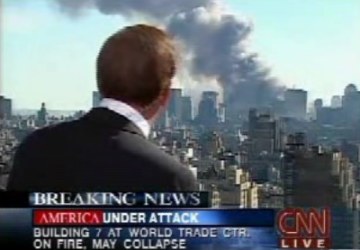
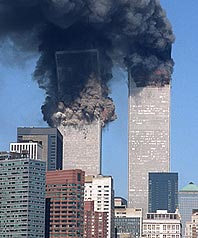
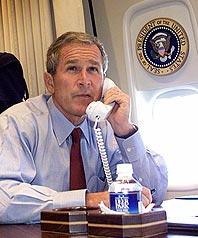
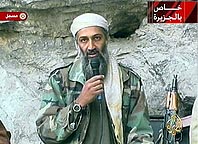
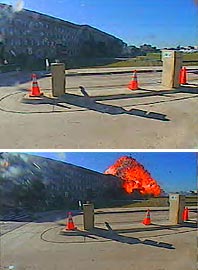

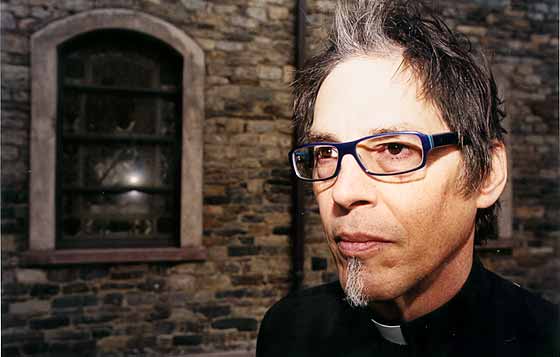


 progressiveissuesblog