The Ivermectin Debate

The Ivermectin Debate
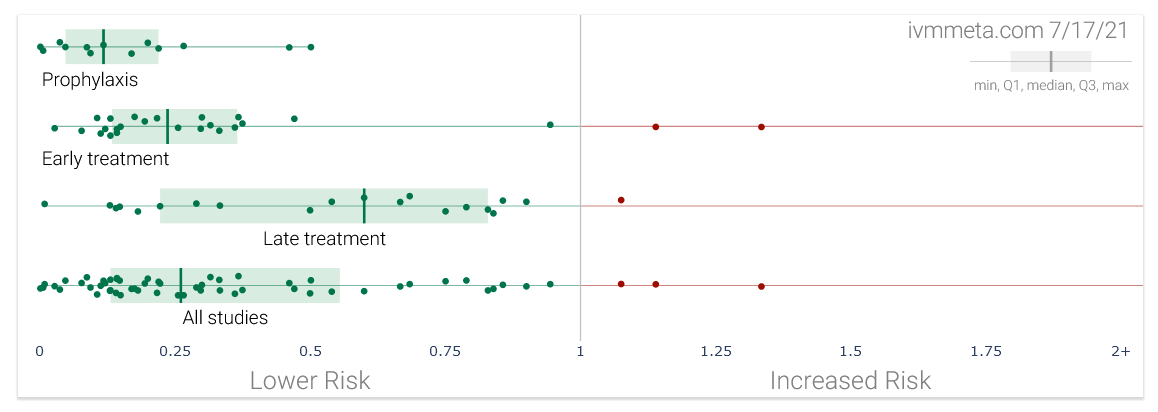
Ivermectin against covid: study results by treatment stage (IVMMETA)

Updated: December 2021
Published
: July 2021
Share on: TG / TW / FB
Select LanguageDutchEnglishFrenchGermanGreekHebrewHungarianItalianJapaneseKoreanPolishPortugueseRussianSpanishSwedishTurkishPowered by

Is ivermectin highly effective or totally useless against covid? And why is there still no agreement on this question?

Please note: Patients are asked to consult a doctor.

To date, about 60 studies – among them about 30 randomized controlled trials and about 40 peer-reviewed publications – have been done on the use of ivermectin against covid. Most of these studies found that the use of ivermectin was associated with a positive outcome, such as a reduced risk of infection, hospitalization or death (see chart above; not all of these results were significant).

Based on these studies, several meta-analyses computed positive results, too. Most recently, a WHO-supported meta-analysis of 24 randomized controlled trials found a 56% mortality reduction overall and a 70% mortality reduction in patients who received early outpatient treatment. There even appears to be a positive dose-response relationship, which is another indicator of effectiveness. (Update: The WHO-supported meta-analysis has been updated, see postscript below.)

Nevertheless, several concerns have been raised regarding the reliability of these results, and major – although not necessarily “independent” – health authorities like the WHO, the US FDA and the European EMA all continue to advise against the use of ivermectin outside of clinical trials.

First, it has been argued that there might be some publication bias, that is, only positive studies may have been published, while negative studies may have remained unpublished. However, the above mentioned meta-analysis was able to show that there is in fact no publication bias: studies that had been registered or announced did indeed get published, at least as a pre-print.

But secondly, and more importantly, it has been argued that many of the existing studies are of rather low quality: due to budget constraints, many of them are small, single-center, open-label (not double-blinded) and not perfectly randomized, thus significantly limiting their reliability. It is possible that at least some of these studies were biased towards getting a positive result.

Thirdly, and most worryingly, some of the ivermectin studies may simply be fraudulent or fake. As a matter of fact, one of the first positive studies on ivermectin, published in mid-April 2020, was from the very same group (Surgisphere) that published a fraudulent (negative) study on HCQ in the Lancet (both studies were ultimately retracted). And just last week, another seemingly positive study on ivermectin by an Egyptian group was shown to be very likely fraudulent. (See updates below.)

It remains debatable whether the groups behind these fraudulent studies simply tried to jump on the bandwagon of a promising medication, or if their role was in fact more substantial. In a context unrelated to ivermectin and covid, a former editor of the British Medical Journal recently argued that “we have now reached a point where those doing systematic reviews must start by assuming that a study is fraudulent until they can have some evidence to the contrary.”

Finally, and contrary to what some ivermectin proponents have argued, the epidemiological evidence in favor of ivermectin is rather weak. Ivermectin hasn’t “crushed the curve” anywhere; rather, decreases in infections were mostly driven by seasonal and endemic effects. In fact, ivermectin pioneers like Peru and Mexico have some of the highest covid mortality rates in the world; to their defense, even in Latin America, ivermectin use has often been limited and local.

On the other hand, the few studies claiming that ivermectin did not work against covid are also of rather low or dubious quality. The most famous one – a Colombian trial published in JAMA – was done so poorly that over 100 scientists and doctors called for its retraction. Furthermore, the only negative meta-analysis simply excluded most positive trials, confused the control and treatment group of another trial, and made several statistical mistakes, also triggering calls for retraction.

Some of the weakest arguments against ivermectin include questioning its safety (as done by Merck, the WHO and the US FDA, despite the fact that it is one of the safest drugs in the world), or calling it a “veterinary medicine” (it is used as an anti-parasitic drug in both humans and animals, as are many other drugs). Such dubious arguments, as well as some rather obvious conflicts of interest, raise legitimate questions about the motivations of some of the critics of low-cost ivermectin.

Regarding the potential mode(s) of action of ivermectin against Sars-CoV-2 and covid, proposals by various studies (molecular simulations, in vitro and in vivo) range from direct anti-viral action or interference with cellular receptors to immuno-modulatory mechanisms. Critics argue that doses needed to achieve anti-viral action are too high, but some ivermectin study authors have disagreed.

Most recently, a detailed covid animal study by the renowned French Institute Pasteur found that ivermectin “limited inflammation and prevented clinical deterioration”, but did not reduce viral load. The study “supports the use of ivermectin as an immuno-modulatory drug in covid patients”, but it would also, if applicable to humans, directly question the validity of several studies that claimed ivermectin works as an anti-viral prophylaxis against coronavirus infection (more on this).

To resolve this situation and finally answer the question of the effectiveness of ivermectin against covid, several high-quality randomized controlled trials (RCTs) are currently ongoing, sponsored by large foundations or public funds. While rather late in the pandemic, these trials are certainly of crucial importance to settle the ivermectin debate.

Large and expensive RCTs may, however, come with their own intricacies. Specifically, RCTs may to some extent be “designed to succeed” – as was the case with some covid vaccine trials as well as remdesivir – or be “designed to fail”. In the case of covid – a multi-phasic disease with a very steep age-based risk gradient – a trial can be designed to fail by enrolling (young) low-risk participants, using a drug late instead of early, under-dosing the drug or in some cases even over-dosing it.

For instance, the ongoing TOGETHER trial of ivermectin, sponsored by the Gates Foundation, was caught using just a single dose of ivermectin, whereas successful trials used two to four doses per day for up to five days. The Oxford PRINCIPLE trial, meanwhile, was caught enrolling participants up to 15 days after symptom onset, at which point some high-risk covid patients are already dead. Of note, the Oxford group had previously “botched” several other early treatment trials.

An even deeper issue, however, is that almost all covid medication trials have been looking for a single “wonder drug”, whereas it is increasingly clear that severe covid is an auto-immune, hyper-inflammatory and pro-thrombotic condition, which in high-risk patients may have to be treated by a combination of drugs (and as early as possible). This is becoming all the more important as the long-term protection by covid vaccines appears to be falling increasingly short of expectations.

Finally, ivermectin is also a prime example of the media war that has been going on during the covid pandemic, with US social media platforms – most notably Facebook and Youtube – having censored numerous doctors, scientists and politicians supporting ivermectin, while the GAVI vaccine alliance has been buying Google ads discouraging its use. Moreover, one of the major social media “fact checking” organizations turned out to have financial ties to a covid vaccine manufacturer.

In conclusion, the current evidence base concerning the use of ivermectin in the early treatment of covid continues to be positive, but important questions regarding the quality and certainty of many studies remain. It is to be hoped that ongoing high-quality RCTs will be able to resolve the debate. Given a still rising global covid mortality of currently about ten million people, if ivermectin is even just 10% effective against covid, its professional use could already have saved a million people.

See alsoWhat’s the deal with Ivermectin and COVID? (Interview)

Update August 2021

In the meantime, preliminary results of the Gates-funded TOGETHER trial of ivermectin have been published: the trial found a non-significant reduction in hospitalization of 9% and a non-significant reduction in deaths of 18%; the probability of superiority (vs. standard treatment) was calculated as 76%. Limitations of the trial include a rather short treatment duration (just three days) and a rather young patient cohort (18+, median age 52); the treatment delay is not yet known. Overall, the trial results are consistent with ivermectin being either useless or being up to 30% effective.

Update October 2021

Several additional ivermectin studies turned out to be likely fraudulent (detailed discussion here). Once low-quality studies are excluded from the analysis, the mortality benefit of ivermectin is no longer statistically significant.

The epidemiological evidence doesn’t support a strong effect of ivermectin, either: for instance, in the Indian state of Uttar Pradesh, known for its use of ivermectin, the total death count turned out to be 43 times higher than the official covid death toll.

Some beneficial immuno-modulatory effect – as found by the French Institute Pasteur – is still plausible, but the available evidence has become rather uncertain. Two high-quality RCTs of ivermectin are still ongoing, and ivermectin recently passed the “futility threshold” in both of these trials (i.e. >33% chance of benefit).

See alsoThe lesson of ivermectin (Nature Medicine, September 2021)

Video: Ivermectin, For and Against

An expert discussion on the use of ivermectin. (Rebel Wisdom; July 25, 2021; 80 minutes) https://www.youtube.com/embed/t_42LVirfNI?version=3&rel=1&showsearch=0&showinfo=1&iv_load_policy=1&fs=1&hl=en-US&autohide=2&wmode=transparent

.

Coronavirus Covid-19 Research History – Index

.
Specific Issues Index

from Creating Better World

Posted in coronavirus, Covid-19, pandemic | Tagged , , , , , , | Leave a comment

Israel: Why Is All-Cause Mortality Increasing?

Israel: Why Is All-Cause Mortality Increasing?

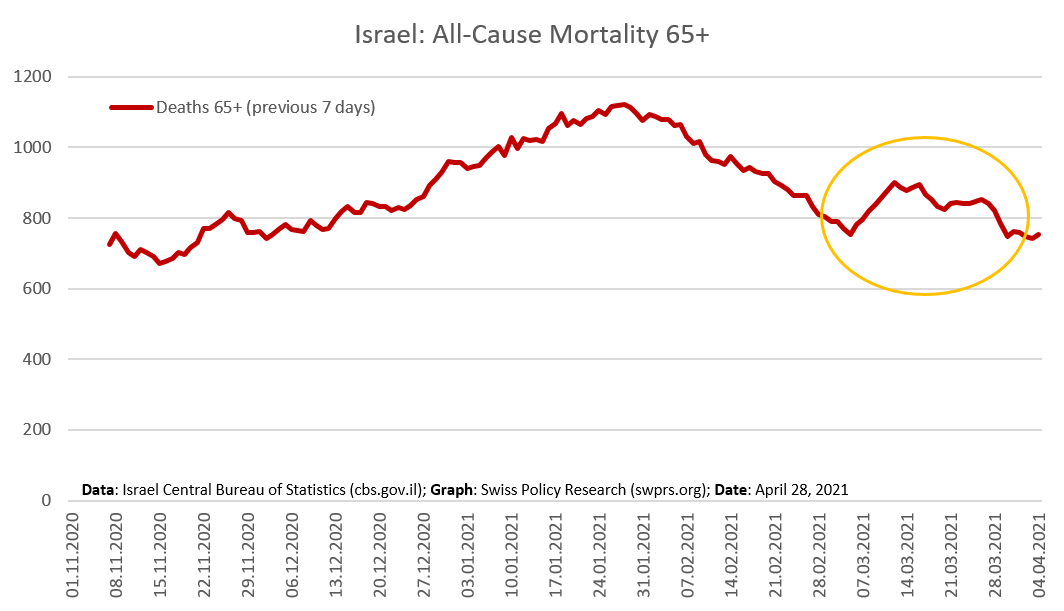
All-cause deaths 65+, previous 7 days (Source: Israeli CBS)

Updated: June 12, 2021
Published
: March 31, 2021
Share onTwitter / Facebook
Select LanguageDutchEnglishFrenchGermanGreekHebrewHungarianItalianJapaneseKoreanPolishPortugueseRussianSpanishSwedishTurkishPowered by

Why has Israeli all-cause mortality increased after the vaccination campaign?

(See updates below.)

By early March, Israel had vaccinated about 90% of its 65+ population and about 50% of its entire population. Covid deaths had been decreasing since the end of January, as expected, although not any faster than in some other countries with a very low vaccination rate, such as South Africa.

Concerningly, however, Israel has seen a renewed and continued increase in all-cause mortality since mid-February; in fact, by March 21, Israel reported the highest excess mortality of all countries participating in Euromomo. In contrast, many other European countries currently report a post winter wave negative excess mortality.

The cause behind this renewed increase in Israeli all-cause mortality appears to be unclear. According to Israeli newspaper YNet, the director of an Israeli clinic explained that they are currently seeing “a murky wave of heart attacks”. The director believes that this might be due to the “persistent stressful situation” and the “neglect of preventive medical care”.

Although quite a few cases of post-vaccination heart muscle inflammation, heart failure and heart attacks have been reported in Israel since December (see e.g. 123), the hospital director argues that “a connection to heart damage from the vaccine has not yet been proven to be significant.”

Nevertheless, given the paramount global importance of this question, Israeli and international public health authorities may want to answer it as quickly as possible.

Update, April 28

The latest data provided by the Israeli Central Bureau of Statistics (updated on April 28 with data until April 4) confirms a substantial increase in deaths since late February. On April 26, Israel announced an investigation into cases of heart inflammation after covid vaccinations. In the US, too, there have been several reports of post-vaccination heart inflammation and heart attacks in young adults.

All-cause deaths 65+, previous 7 days (Source: Israeli CBS)

Update, June 12

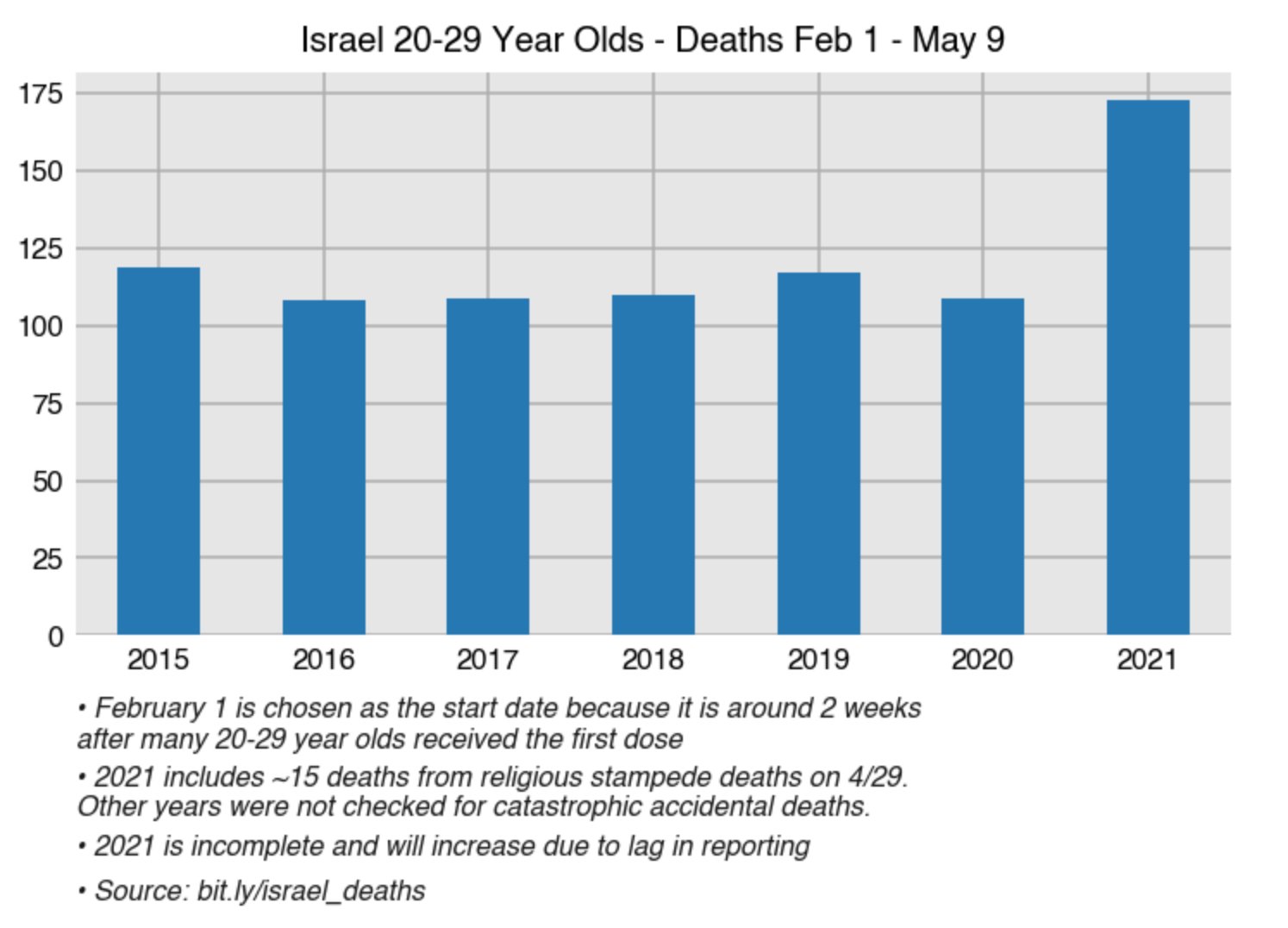
Israeli authorities have confirmed that mRNA vaccines may cause heart inflammation and heart attacks, especially in young people (in whom it is more difficult to ignore). Since February, Israeli deaths in 20 to 29 year olds have also been markedly increased (see figure below). In the US, too, all-cause mortality has markedly increased in most age groups in the wake of vaccinations.

Israel: All-cause deaths, 20-29 years, February to May, 2015 to 2021 (TP/CBS)

Comparison: Decrease in covid deaths

Daily covid deaths in Israel (high vaccination rate), Sweden (low vaccination rate), and South Africa (very low vaccination rate): the decrease since late January has been almost identical. Update: Since about mid-April, covid deaths in Israel are lower than in most other countries.

Daily covid deaths in Israel, Sweden, and South Africa (OWD)

The situation in Israel

A woman describing the situation in Israel in April 2021. The full video is 13 minutes.

.

Coronavirus Covid-19 Research History – Index

.
Specific Issues Index

from Creating Better World

Posted in coronavirus, Covid-19, Israel, pandemic | Tagged , , , , , , , | Leave a comment

Israel: Highest infection rate in the world

Israel: Highest infection rate in the world

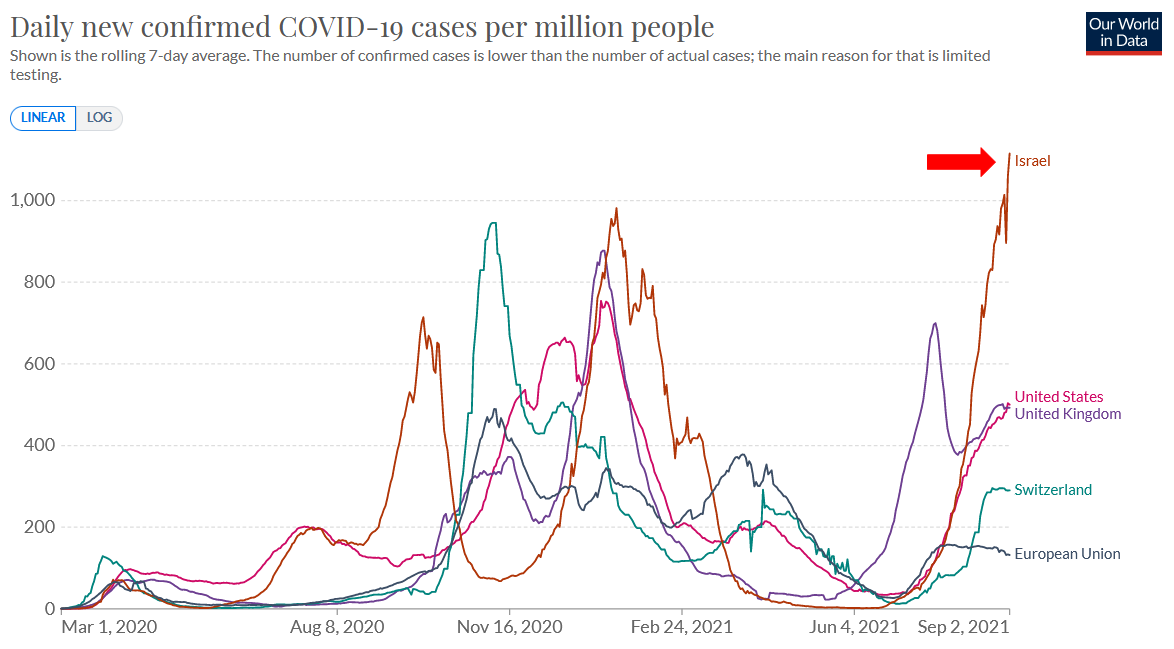
Israel: Highest coronavirus infection rate in the world (OWD)

Updated: September 14, 2021
Published
: September 2, 2021
Share onTwitter / Facebook
Select LanguageDutchEnglishFrenchGermanGreekHebrewHungarianItalianJapaneseKoreanPolishPortugueseRussianSpanishSwedishTurkishPowered by

Israel is reporting the highest coronavirus infection rate in the world, showing that neither vaccine mandates nor “vaccine passports” are suitable means to limit or end the pandemic.

Israel has been a global pioneer in covid mass vaccinations as well as in introducing the highly controversial “vaccine passport” (Green Pass). Nevertheless, since late August 2021, Israel has been reporting the highest coronavirus infection rate in the entire world (see chart above).

The Israeli case clearly shows that neither covid vaccine mandates nor “vaccine passports” are suitable means to limit or end the pandemic. This is because covid vaccines are unable to reduce coronavirus infections and transmission, and they lose much of their effectiveness even against severe disease within a few months, a medical fact already known from influenza vaccines.

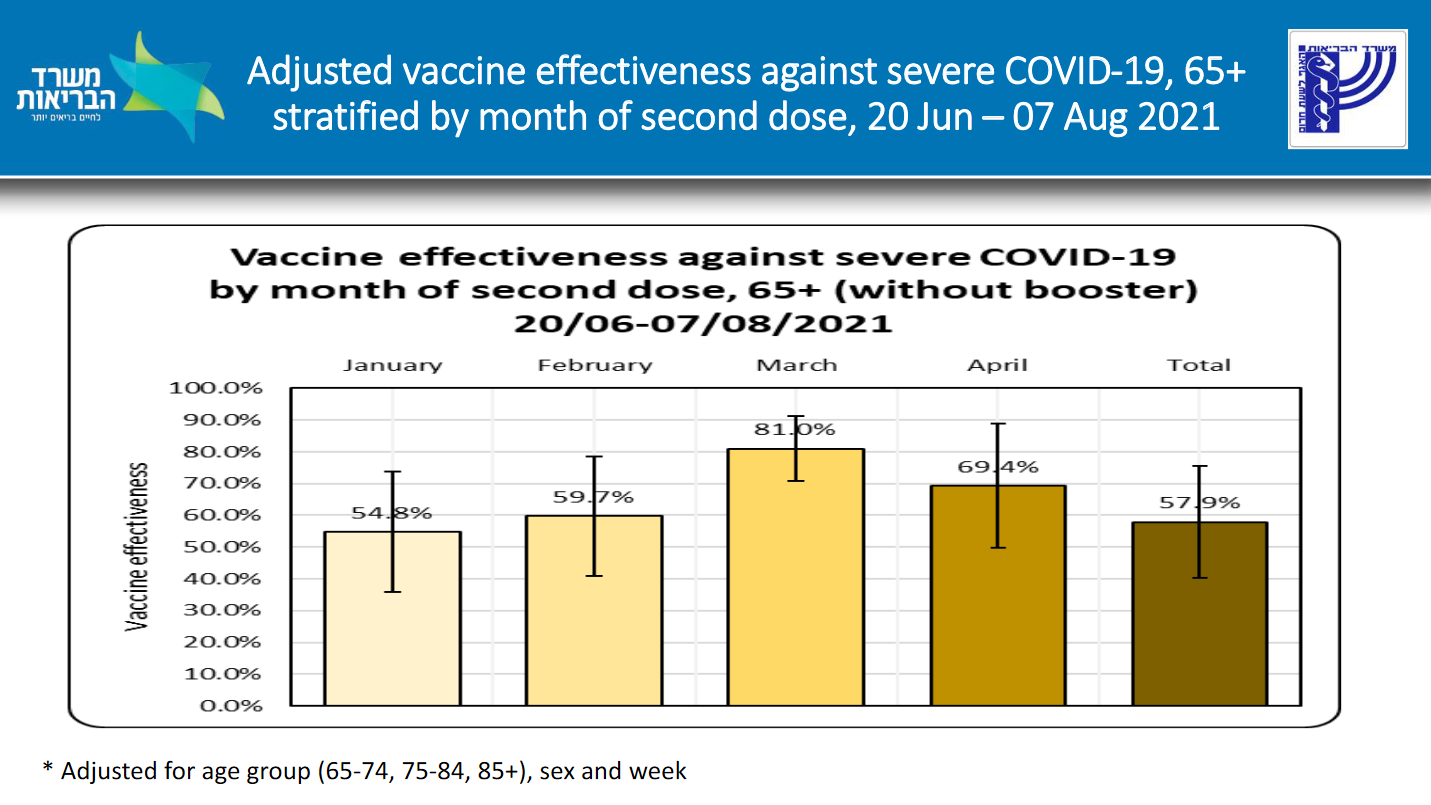
It should be noted that even in Israel, covid vaccines continue to provide some protection against hospitalization and severe disease (about 50%). Nevertheless, double-vaccinated Israeli citizens will again be counted as ‘unvaccinated’ and will require a third dose. It may well be, however, that “booster shots” have actually increased recent coronavirus infections (“post-vaccination spike”).

On the positive side, Israeli data confirms that natural immunity, acquired through previous infection, is much stronger and long-lasting – providing a protection up to 27 times higher than vaccination – thus opening up a realistic path out of the pandemic. Depending on the country, between 5% and 75% of the population have already acquired natural immunity.

In addition, Israel was the first country to confirm the rather troubling safety profile of covid vaccines, reporting a “murky wave of heart attacks” and an increase in all-cause mortality – even in young people – already back in March and April 2021. By now, serious and fatal cardiovascular and neurological covid vaccine adverse events have been well documented (see updated overview). Globally, covid vaccines may already have killed or severely injured more than 100,000 people.

Given the obvious failure of “vaccine passports”, several countries have already had to withdraw them. In Spain, the highest court stopped their use, calling them “ineffective and unconstitutional”; in Denmark, the government was pressured to discontinue them; in Switzerland, people will have a binding vote in November; in some US states, they have already been outlawed; in Sweden, covid mortality has remained below the European average without any major restrictions, anyway.

(Ironically, Sweden just banned Israeli citizens – even if vaccinated – from entering the country.)

In contrast, governments in places like France, Italy, Germany, Britain, Canada, and some US states (e.g. New York) have not yet abandoned their “vaccine passport” schemes, requiring them for cultural events, restaurants, public transport or even shopping. In Pakistan, people without a “vaccine certificate” can no longer use motorways or even cellphones. In many of these places, citizens have responded with large protests and civil disobedience (see videos below).

Meanwhile, the WHO has recently published a document, sponsored by the Gates Foundation and the Rockefeller Foundation, detailing technical specifications for the global implementation of “vaccine certificates”. Critics have long argued that “vaccine certificates” may well be a first step towards the introduction of a global digital biometric ID system that may later be expanded into a Chinese-style “social credit” population control system (watch a video about this).

But as the Israeli example shows, “vaccine passports” have already lost their justification.

∗∗∗

Update: The WHO director for Europe acknowledged that covid vaccines won’t achieve ‘herd immunity’. The government of Iceland – which despite a record vaccination rate of 90% experienced its strongest covid wave – admitted that it was “a mistake” to have privileged vaccinated citizens. By October, ‘vaccine passport’ pioneers Singapore and Lithuania were reaching record infection rates.

∗∗∗

Israel: Mass vaccinations have failed to limit infections

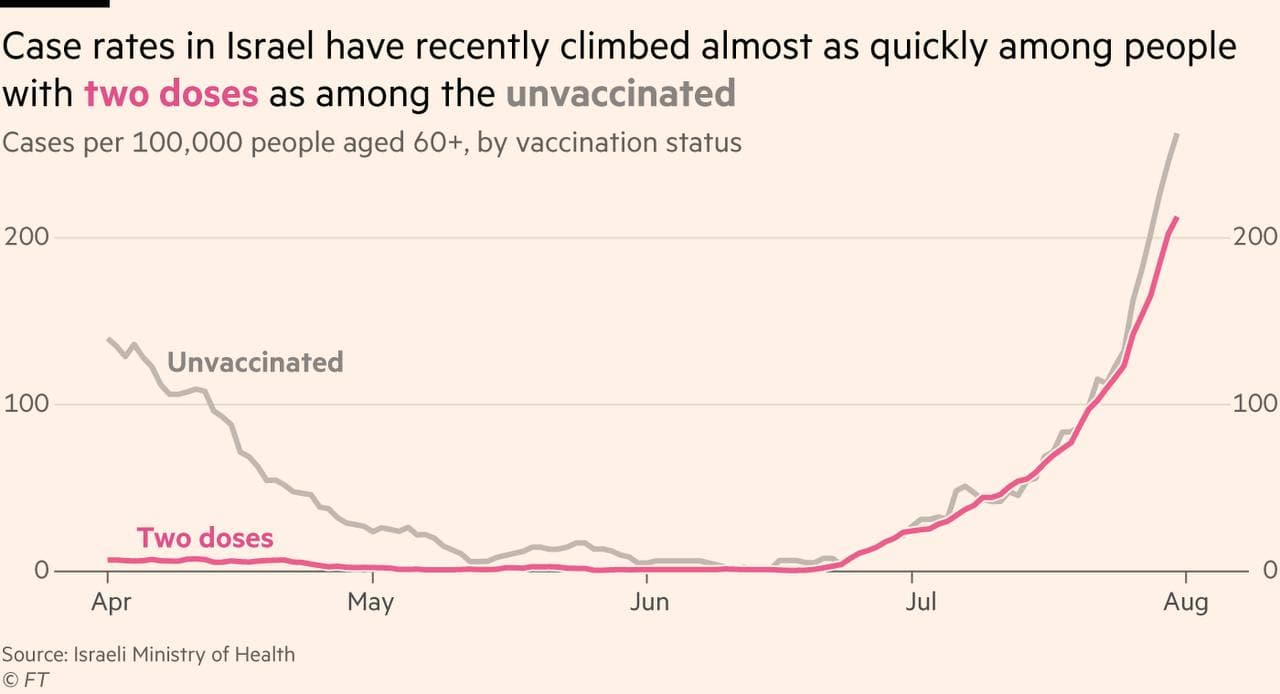
Vaccinated and unvaccinated people have almost the same infection rate. (FT)

Israel: Same infection rate in unvaccinated and fully vaccinated people (Financial Times)

Vaccinated or unvaccinated: same viral load

Vaccinated and unvaccinated people are equally infectious. (Study)

Vaccinated or unvaccinated: Same viral load and infectiousness (Riemersma et al)

Protection against severe covid down to about 50%

In Israeli senior citizens, protection against severe disease has dropped to about 50%. (MOH)

Pfizer vaccine effectiveness against severe disease, by month of second dose, 65+ (Israeli MOH)

Sweden: Mortality, 1990 to 2021

No-lockdown Sweden has had an excess mortality of 10% since March 2020.

Sweden: Mortality 1990 to 2021, August to Juli (SCB)

“Vaccine passports” in France

A couple in a French bar has to show their “vaccine passport” and ID to armed police.

Bordeaux: A couple in a bar has to show their “vaccine passport” and ID to armed police. (08/2021)

Bill Gates on “vaccine passports” (March 2020)

Bill Gates demanding “digital immunity proof” in March 2020Read more. video

Edward Snowden on coronavirus measures (March 2020)

Edward Snowden has warned of a “permanent destruction of rights”

.

Coronavirus Covid-19 Research History – Index

.

Specific Issues Index

from Creating Better World

Posted in coronavirus, Covid-19, Israel, pandemic | Tagged , , , , , | Leave a comment

Covid Vaccine Adverse Events

Covid Vaccine Adverse Events

Post-vaccination deaths reported to the US VAERS system, 1990 to November 2021 (OpenVAERS)

Updated: January 2022
Published
: June 2021
Share on: TG / TW / FB
Select LanguageDutchEnglishFrenchGermanGreekHebrewHungarianItalianJapaneseKoreanPolishPortugueseRussianSpanishSwedishTurkishPowered by

An overview of severe covid vaccine adverse events.

Please note: SPR covers only vaccine-related issues that are of global importance. To study case reports of vaccine-related injuries and deaths, see Covid Vaccine Injuries (18+).

A) Neurological disorders

Covid vaccinations have been associated with several neuro-inflammatory and neuro-degenerative disorders, including Guillain-Barré syndrome (GBS), multiple sclerosis (MS, new-onset or relapse), transverse myelitis (TM), and acute disseminated encephalomyelitis (ADEM).

Neurological auto-immune reactions may be due to antigenic cross-reactivity and typically occur within days or weeks of vaccination. Symptoms vary and may include muscle weakness and paralysis, tremors and seizures, as well as cognitive issues (see video below).

By November 2021, about 2000 cases of post-vaccination GBS had been reported to the US VAERS systems and about 500 cases had been reported to the British MHRA system. Back in 1976, the US swine flu vaccination campaign was stopped due to an increased risk of GBS.

See alsoStudies and case reports (TG)

Video: Various post-vaccination neurological disorders (18+)https://videopress.com/embed/DqM4nXEo?hd=1&cover=1&loop=0&autoPlay=0&permalink=1

Image: Post-vaccination MS brain lesions in a previously healthy 26-year-old woman.

Post-vaccination MS brain lesions in a 26-year-old woman (more)

B) Menstrual disorders, miscarriages, birth defects

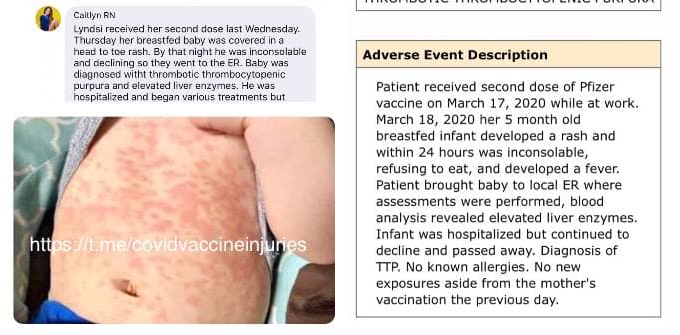
US authorities have argued that covid vaccines “appear to be completely safe for pregnant women” (NIH) and “are thought not to be a risk to lactating people or their breastfeeding babies” (CDC). However, the US VAERS system counts already more than 3,000 post-vaccination miscarriages, and it has been known since March 2021 that covid vaccines, or the spike protein they produce, may get into breast milk and sicken or kill a baby (e.g. by causing internal bleeding or allergic reactions).

In addition, by September 2021, more than 30,000 British women had reported post-vaccination menstrual disorders, such as excessive bleeding, and several cases of post-vaccination birth defects, including cardiac anomalies or pulmonary hemorrhage, have been reported.

In Scotland, an investigation has been launched into a spike in deaths among newborn babies. Of note, the Pfizer vaccine trial in pregnant women continues to be delayed for “lack of participants”. Regarding female fertility, it is too early to know if covid vaccines might have any impact.

Update: An age- and trimester-adjusted analysis of British stillbirth data found that covid vaccination (mostly in the third trimester) increased the risk of stillbirth by about 33%.

A breastfeeding baby with fatal internal bleeding (source)

C) Heart inflammation, heart attacks, cardiac arrest

In March 2021, Israel first reported a “murky wave of heart attacks” and an increase in post-vaccination all-cause mortality. In June, the Israeli Ministry of Health confirmed that covid mRNA vaccines may cause heart inflammation (myocarditis) and heart attacks, especially in young people. In September, a US study showed that in healthy male adolescents, the risk of post-vaccination myocarditis is about five times higher than the risk of covid hospitalization.

In young males, the risk of post-vaccination myocarditis may reach about 1 in 1000 (including subclinical cases). In October, several Nordic countries partially or fully halted the use of the high-dosed Moderna mRNA vaccine due to the elevated risk of myocarditis. In November, Taiwan suspended the second dose of the Pfizer vaccine in adolescents.

Post-vaccination myocarditis may also affect athletes and may lead to sudden cardiac arrest. Since the beginning of the covid vaccination campaign, several hundred professional athletes collapsed or died from cardiac arrest or heart attacks. In several countries, cases of myocarditis have significantly increased during covid vaccination campaigns. Myocarditis, even if “mild” (i.e. self-limiting), may cause long-term heart issues.

A study in mice found that if mRNA vaccine gets into a vein, the heart muscle absorbs the mRNA, starts producing coronavirus spike protein, gets attacked by the immune system, and develops inflammation and cell damage (i.e. myocarditis). This is likely what happens in humans, too, if the vaccine accidentally gets injected into a blood vessel instead of muscle cells.

See alsoAthlete cardiac arrests (overview) and Cardiac Arrest in Athletes (TG)

Image: Heart issues in European soccer players (December 2021)

Three professional soccer players suffering heart issues within one week (more)

Vaccine-induced myocarditis has also affected children and adolescents.

Vaccine-induced heart muscle inflammation in adolescents (more)

Myocarditis after covid vaccines (red) vs. flu vaccines (blue, all years) by age:

Myocarditis after covid vaccines (red) vs. influenza vaccines (blue) by age (OpenVaers)

D) Blood clots and strokes

Blood clots, stroke and pulmonary embolism continue to be major covid vaccine adverse events, especially after adenovector covid vaccines (AstraZeneca, Johnson&Johnson). In response, several countries have suspended the use of adenovector covid vaccines altogether or in non-senior citizens, in whom the risk is most pronounced.

In April 2021, AstraZeneca acknowledged that up to 10% of people receiving their covid vaccine may develop transient thrombocytopenia (low blood platelet count), which, in severe cases, may turn into thrombotic thrombocytopenia and increased risk of blood clots.

Life-threatening blood clots have also affected professional athletes and have caused pulmonary embolism (blood clots in the lung) and cerebral bleeding. A 44-year-old BBC moderator died due cerebral bleeding caused by the AstraZeneca vaccine. Several cases of leg amputations due to vaccine-induced blood clots have also been reported (see image below).

Of note, the risk of blood clots may increase during air travel. British Airways confirmed the death of three of their pilots, aged 30 to 55, without disclosing their cause of death or vaccination status. A German Lufthansa First Officer collapsed during a flight from Spain to Germany.

There are also ‘anecdotal’ reports of unusual cardiovascular complications several months after vaccination, raising the question of potential long-term cardiovascular damage: for instance, six months after vaccination, a healthy 13-year-old boy had a fatal cardiac arrest, a healthy 15-year-old girl had a fatal brain aneurysm, and a healthy ~35-year-old woman had a life-threatening stroke.

Leg amputations due to vaccine-induced blood clots (more)

The following figure shows a brain MRI of a vaccine-induced cerebral sinus venous thrombosis and cerebral hemorrhage (brain bleed) in a 32-year-old woman (more):

Brain MRI of a vaccine-induced cerebral sinus venous thrombosis in a 32-year-old woman (more)

E) Severe skin reactions

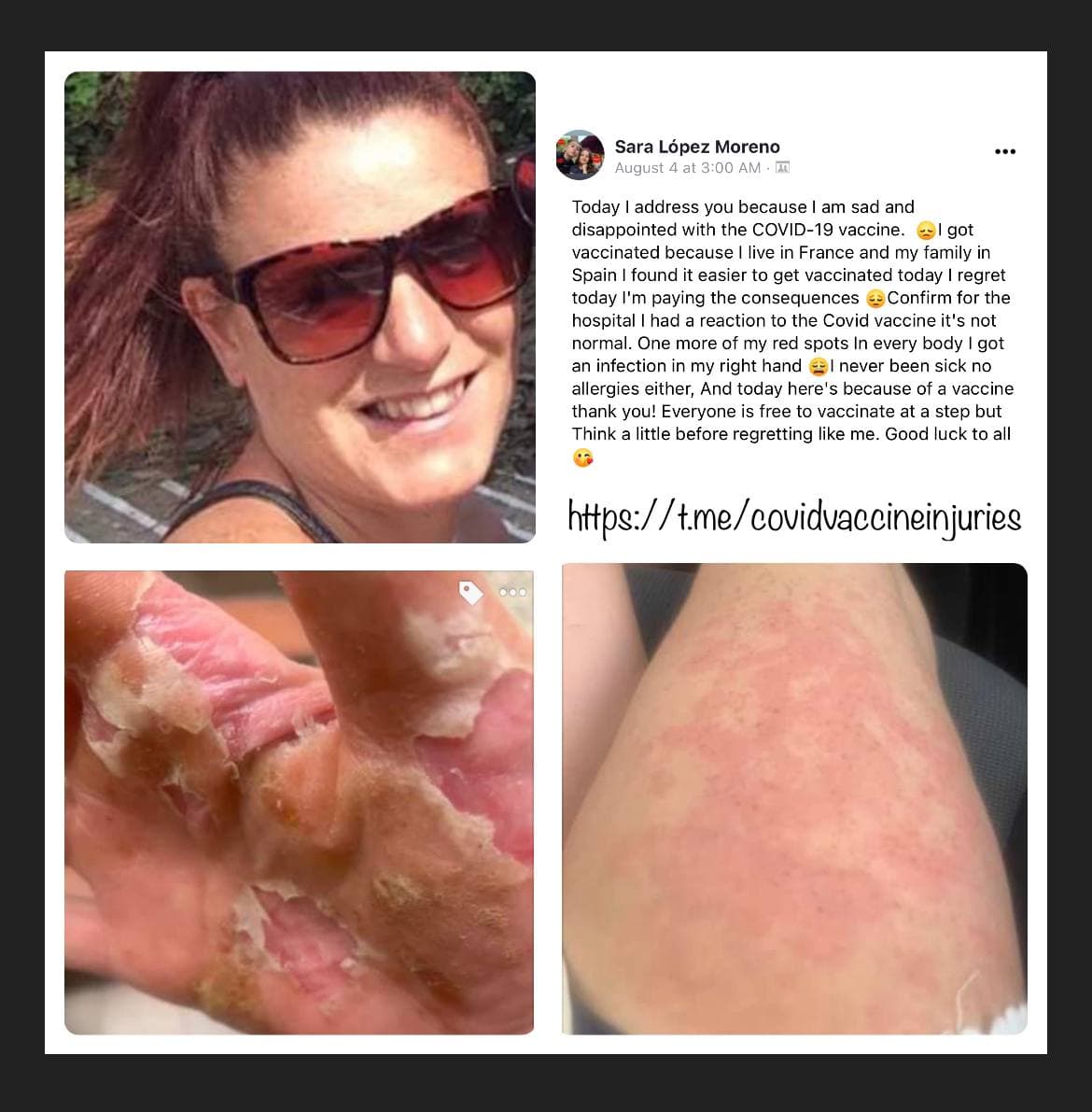
Skin reactions have been reported quite frequently after covid vaccinations. They include various types of rashes and eczema, chronic hives, but also immune responses affecting blood vessels in the skin (eryhtema multiforme or thrombotic thrombocytopenic purpura).

Read moreCOVID-19 Vaccines and the Skin (Dermatlogic Clinics)

A severe, vaccine-related skin reaction (more)

F) Eye disorders and blindness

Covid vaccines may lead to bleeding and inflammation in the eyes and, in severe cases, to retinal detachment and blindness. In the UK, several hundred cases of post-vaccination blindness have been reported. In the US, about 2,500 reports to the VAERS system mention post-vaccination blindness. There are also reports of post-vaccination eye disorders affecting the eye lens (e.g. cataract), but the causality is currently less clear in these cases.

Vaccine-induced bleeding in the eye (more)

G) Bell’s palsy (facial paralysis)

Bell’s palsy is a unilateral facial paralysis that may last for up to six months. By December 2021, about 12,000 cases of post-vaccination Bell’s palsy had been reported to the US VAERS system, but the real number of cases is likely in the tens of thousands.

Video: A woman affected by post-vaccination Bell’s palsy (more):https://videopress.com/embed/oGEDp5UI?hd=1&cover=1&loop=0&autoPlay=0&permalink=1

H) Shingles and other virus reactivations

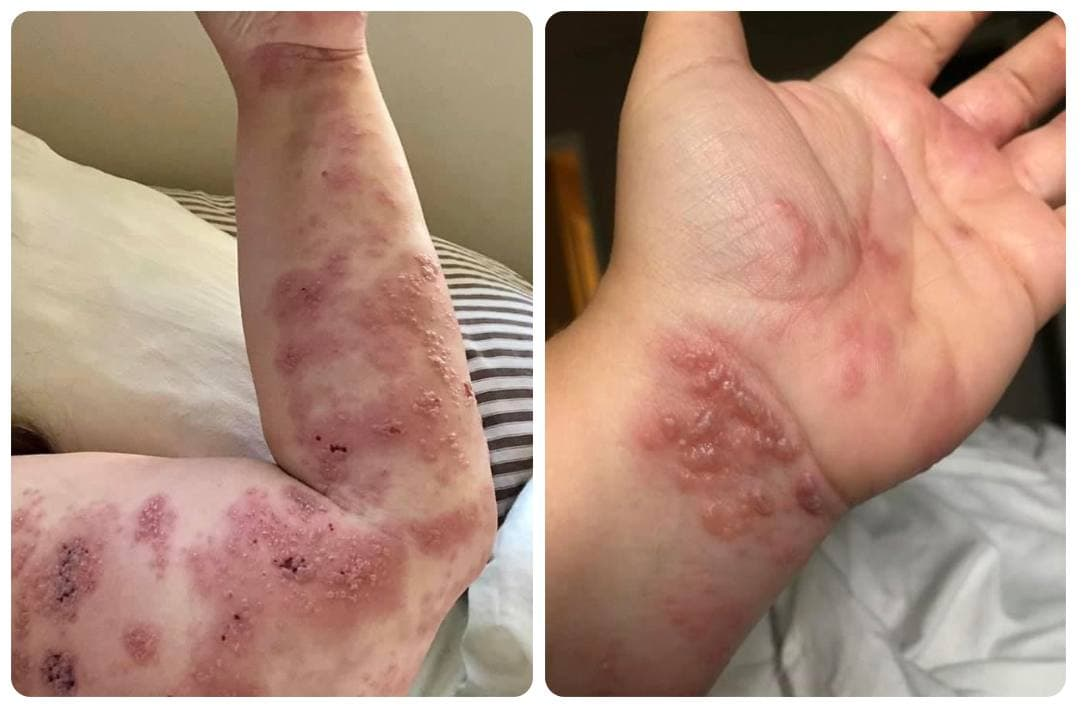
Reports of post-vaccination shingles (i.e. varicella zoster virus reactivation) have been quite frequent: by December 2021, about 11,000 cases of post-vaccination shingles had been reported to the US VAERS system (the true figure may be close to 100,000).

Varicella zoster virus reactivation may occur due to temporary vaccine-induced immune suppression (lymphocytopenia); about 20% of shingles patients develop a type of long-lasting neurological pain called postherpetic neuralgia (PHN).

The vaccine-induced reactivation of other latent virus infections, including human papilloma virus (HPV) and Epstein-Barr virus (EBV), has also been reported.

See alsoShots and shingles: What do they tell us? (Doctors for Covid Ethics)

Post-vaccination shingles within 48 hours (more)

J) Tinnitus, hearing loss, dizziness and vertigo

New onset of tinnitus is a rather frequently reported adverse event of covid vaccines: by December 2021, about 16,000 cases of post-vaccination tinnitus had been reported to the US VAERS system. In addition, several thousand cases of deafness or sudden hearing loss have been reported.

Of note, the Johnson & Johnson covid vaccine clinical trial had already included six cases of post-vaccination tinnitus, but the US FDA later ruled that they were ‘unrelated to the shot’. Vaccine-induced tinnitus may be caused by neuro-inflammation or blood vessel disorders, such as endothelial dysfunction.

In addition to tinnitus, there are also numerous reports of post-vaccination dizziness and vertigo, which may be due to immune reactions affecting the vestibular system in the inner ear.

VideoABC report on post-vaccination tinnitus (ABC News)

A case of tinnitus caused by a covid mRNA vaccine (more)

K) Anaphylactic shock

Covid vaccinations can cause a potentially life-threatening anaphylactic (allergic) shock. People affected by an anaphylactic shock typically collapse shortly after vaccination. By December 2021, about 8,500 cases of anaphylaxis had been reported to the US VAERS system. According to studies, anaphylaxis is more frequent after covid vaccines compared to other vaccines.

Video: An anaphylactic shock immediately after covid vaccination (more):https://videopress.com/embed/WcAEasmC?hd=1&cover=1&loop=0&autoPlay=0&permalink=1

L) Tumor growth and cancer

While there is no evidence that covid vaccines themselves are carcinogenic (i.e. cancer-causing), it has been shown that covid vaccines can cause a temporary immune suppression (lymphocytopenia) in up to 50% of people, which in turn might, in some cases, influence tumor growth (similar to the reactivation of varicella zoster virus, described above).

In official adverse event reporting systems and in vaccine-related online patient groups, there are already several thousand case reports of sudden post-vaccination tumor growth and cancer, even in young people, although some of these cases may certainly be coincidental.

Read moreCovid vaccines and cancer (SPR)

Image: Rapid progression of T-cell lymphoma following a Pfizer booster shot.

Rapid progression of T-cell lymphoma following Pfizer booster shot (Goldman et al)

Video: US clinical pathologist Dr. Ryan Cole describes a significant post-vaccination increase in certain types of cancer. German pathologists also noted the issue of post-vaccination immune dysregulation and sudden tumor growth in some patients.https://videopress.com/embed/HJY0tMWs?hd=1&cover=1&loop=0&autoPlay=0&permalink=1

Dr Ryan Cole on post-vaccination cancer (full video)

M) Appendicitis

By December 2021, post-vaccination appendicitis had been mentioned in about 1,000 reports to the US VAERS system. According to the US CDC, “the most common serious adverse events in the vaccine [trial] group which were numerically higher than in the placebo group were appendicitis, acute myocardial infarction, and cerebrovascular accident.” Appendicitis might occur due to vaccine-induced immune suppression or due to vaccine-induced mesenteric venous micro-thrombosis.

N) Children: PIMS, myocarditis, blood clots

Covid vaccination was thought to prevent pediatric inflammatory multi-system syndrome (PIMS), a rare condition associated with covid in children. Instead, it turned out that covid vaccines may themselves trigger PIMS, which is most likely caused by an immune reaction to the spike protein. Vaccine-induced PIMS was first noticed in Israel and was later confirmed by EMA.

By December 2021, the US VAERS system had received several hundred reports of post-vaccination heart inflammation and even strokes in children 5 to 17 years old. Some of these children had already recovered from mild or even asymptomatic covid prior to their vaccination.

In a letter to the British Medical Journal, a group of doctors wrote: “For young age groups, in whom covid-related morbidity and mortality is low, and for those who have had covid-19 infection already, and appear to have longstanding immunological memory, the harms of taking a vaccine are almost certain to outweigh the benefits to the individual, and the goal of reducing transmission to other people at higher risk has not been demonstrated securely.”

Read morePost-vaccination adverse events in children

Post-vaccination deaths and injuries in children (HIN)

O) Diabetes and diabetic ketoacidosis

In October 2021, a Chinese study published in Nature Cell Discovery first reported a “consistent increase” in post-vaccination blood sugar levels (HbA1c) lasting several months. Blood sugar levels peaked about one month after vaccination and reached prediabetic levels in about 30% of previously healthy participants. In addition, the study also found consistent alterations in serum sodium and potassium levels, coagulation profiles, and renal functions.

In September 2021, a US study reported several cases of post-vaccination hyperglycemic emergencies, including hyperglycemic syndrome and diabetic ketoacidosis. The first widely reported case of a post-vaccination death due to diabetic ketoacidosis was 42-year-old cyber security expert Dan Kaminsky in April 2021.

Vaccine-induced hyperglycemic emergencies (Lee et al., JES, September 2021)

P) Other autoimmune diseases

In addition to neurological autoimmune diseases described above, covid vaccine have already been linked to several other new-onset autoimmune diseases, including, in particular, autoimmune hepatitis (i.e. chronic liver inflammation; more cases).

See alsoStudies and case reports (Telegram)

Covid vaccines and autoimmune hepatitis (Erard et al)

Q) Booster toxicity

Several covid vaccine vaccine adverse events, including cardiovascular adverse events, have been shown to be dose-dependent. Thus, they are more likely to occur after the high-dosed Moderna vaccine compared to the lower-dosed Pfizer vaccine (100μg vs. 30μg mRNA), and they are more likely to occur after the second or third dose compared to the first dose.

In December 2021, the Canadian province of Quebec decided to stop booster vaccinations of senior citizens who had previously been infected after an increase in life-threatening booster vaccine reactions had been observed (previously also reported in Germany and in Israel). It is also known that mRNA lipid nano-particles themselves can cause toxicity if injected repeatedly over several months or years.

Read moreBooster adverse events (VAERS compilation)

Safety signals during vaccine trials

Several serious adverse events were already observed during official covid vaccine trials, but were discarded as “unrelated”. An editor of the British Medical Journal noted that the Pfizer vaccine trial had excluded, without explanation, five times more people from the vaccine group than from the control group. In the Pfizer vaccine trial for adolescents, as 12-year-old girl suffered permanent paralysis, but Pfizer reported her case merely as “abdominal pain”.

Causality and Under-Reporting

Some post-vaccination injuries may be unrelated to the vaccination. However, in the US, about 50% of post-vaccination deaths occurred in people who became ill within 48 hours of being vaccinated. Furthermore, a systematic analysis found that even in senior citizens, about 85% of post-vaccination deaths reported to VAERS were plausibly caused by the covid vaccine.

A large 2006 meta-study found that reporting systems of drug adverse events typically cover only about 5% to 20% of all adverse events experienced by drug recipients (under-reporting). Thus, reported adverse events may have to be multiplied by a factor of 5 to 20 to get actual adverse events.

In an open letter published in October 2021Dr. Hartmut Glossmann – professor of Pharmacology, one of Austria’s most cited scientists in the world, founder of the first Austrian Drug Commission and long-time editor of a German pharmaceutical publication – described covid vaccines as “the biggest drug scandal” he has ever witnessed.

Case reports

To study case reports of vaccine-related deaths and injuries, see:

To study cases of vaccine skeptics dying of covid, see “Sorry Antivaxxer”.

Video: Cardiac arrests in athletes

There have been a record number of professional and amateur athletes suffering a cardiac arrest or heart attack in 2021, typically within weeks of vaccination (5-minute compilation).

See alsoAthlete cardiac arrests (overview) and Cardiac Arrest in Athletes (TG)https://videopress.com/embed/rHQvj8Vi?hd=1&cover=1&loop=0&autoPlay=0&permalink=1

Video: How covid vaccines got approved

“Hearing without listening”: At FDA hearing on coronavirus vaccine, the chair cut off questions and limited debate. (One minute video, The Defender)https://videopress.com/embed/iFHuVD1u?hd=1&cover=1&loop=0&autoPlay=0&permalink=1

Video: The Testimonies Project

An Israeli documentary on covid vaccine injuries (1 hour; source: The Testimonies Project).https://rumble.com/embed/vk35c3/?pub=rqlj3

.

Coronavirus Covid-19 Research History – Index

.
Specific Issues Index

from Creating Better World

Posted in coronavirus, Covid-19, pandemic | Tagged , , , , , , | Leave a comment

Covid versus the flu, revisited

Covid versus the flu, revisited

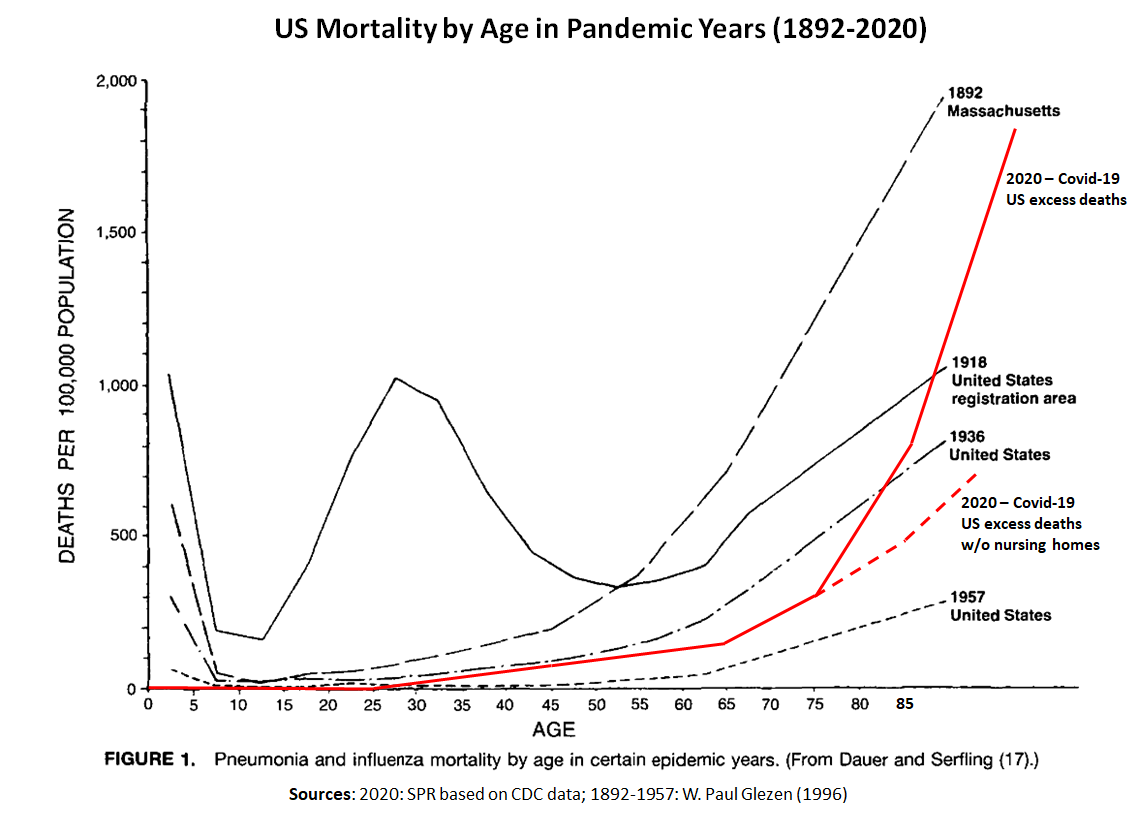
Pneumonia and influenza mortality by age in previous pandemic years (Glezen, 1996) vs. 2020 excess mortality by age, primarily driven by covid-19, overall and excluding nursing homes (SPR based on CDC data)

Published: March 21, 2021
Share onTwitter / Facebook
Select LanguageDutchEnglishFrenchGermanGreekHebrewHungarianItalianJapaneseKoreanPolishPortugueseRussianSpanishSwedishTurkishPowered by

The legitimacy of comparing covid-19 and “the flu” has been a heatedly debated topic during the current pandemic. To clarify the situation, the above chart shows US influenza and pneumonia mortality by age in previous pandemic years compared to 2020 US excess mortality, which consisted primarily (>75%) of confirmed and suspected covid-19 deaths, according to the CDC.

As can be seen, up to about 75 years of age, 2020 mortality ranged between the 1957 “Asian flu” and the 1936 flu. Above 75 years, and especially above 85 years, 2020 mortality increased steeply and surpassed even the 1918 flu. This very steep increase was primarily driven by deaths in nursing homes (solid vs. dashed red lines), which accounted for about 40% of all US covid-19 deaths. The combination of a very high mortality in the elderly, and a high proportion of the elderly in modern Western societies, led to a very high overall mortality impact of covid-19.

Clearly, 2020 did not encompass all US covid-19 deaths (the peak of the second wave was reached in mid-January 2021), but earlier pandemics also extended over two to three years. Furthermore, in 2020 there were “lockdowns” in many US states; however, during earlier pandemics, measures such as face masks and school closures had also been employed. Moreover, a comparison of covid-19 mortality in California and Florida, for instance, indicates that most anti-pandemic measures in 2020 were of very limited utility. Finally, against both the 1957 and the 1968 pandemic influenza viruses, an effective vaccine was available within months.

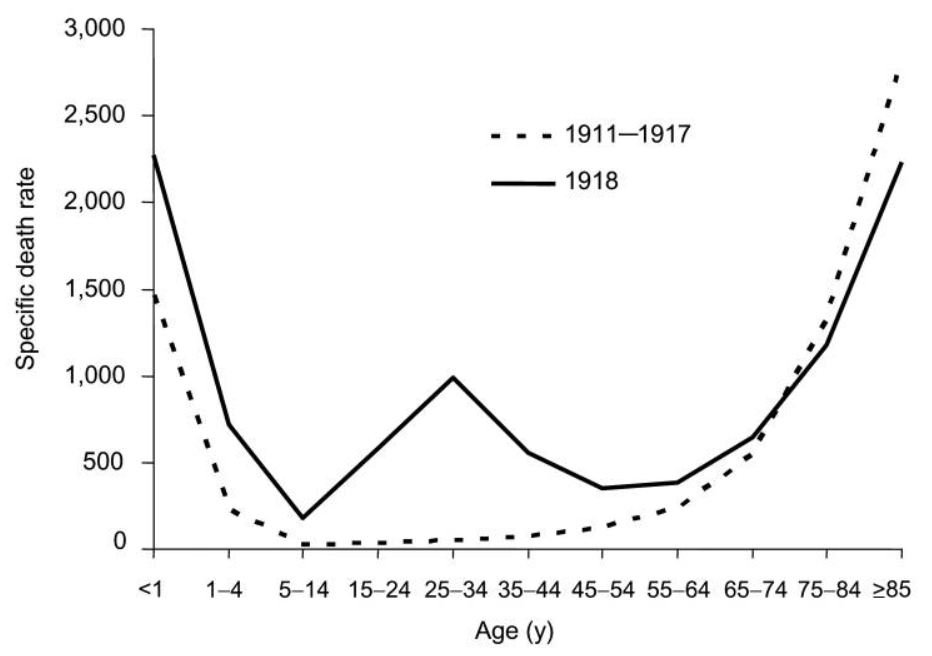
Another noteworthy aspect is that the 1918 influenza actually had a very limited mortality impact on people over the age of about 45 years (see figure below); it is generally thought that these people benefited from some degree of immunity due to exposure to a similar influenza virus that had been circulating in the 19th century, prior to the 1890 pandemic. In fact, 99% of excess influenza deaths in 1918 were in people younger than 65 years. Similarly, the 1957 influenza pandemic had a limited impact on people over 70 due to some degree of prior immunity, acquired in the 19th century.

In contrast, no such prior immunity existed against the novel SARS coronavirus. As a result, the age profile of the covid-19 mortality resembles most closely the 1889-1892 pandemic (see figure above), which some researchers believe was also caused by a then novel coronavirus (OC43).

Finally, another major difference between covid-19 and previous influenza pandemics is that influenza pandemics had a major impact on the mortality of young children, whereas covid-19 overall is very mild to young children (see figure above). This difference might be due to the fact that the novel coronavirus uses cell receptors that are driven by (male) sexual hormones.

See also: Covid-19 Mortality: A Global Overview and Why covid is a “strange pandemic”

1918 influenza mortality by age compared to baseline (Taubenberger & Morens, 2006)

Addendum

1) Coronavirus infection level per US state

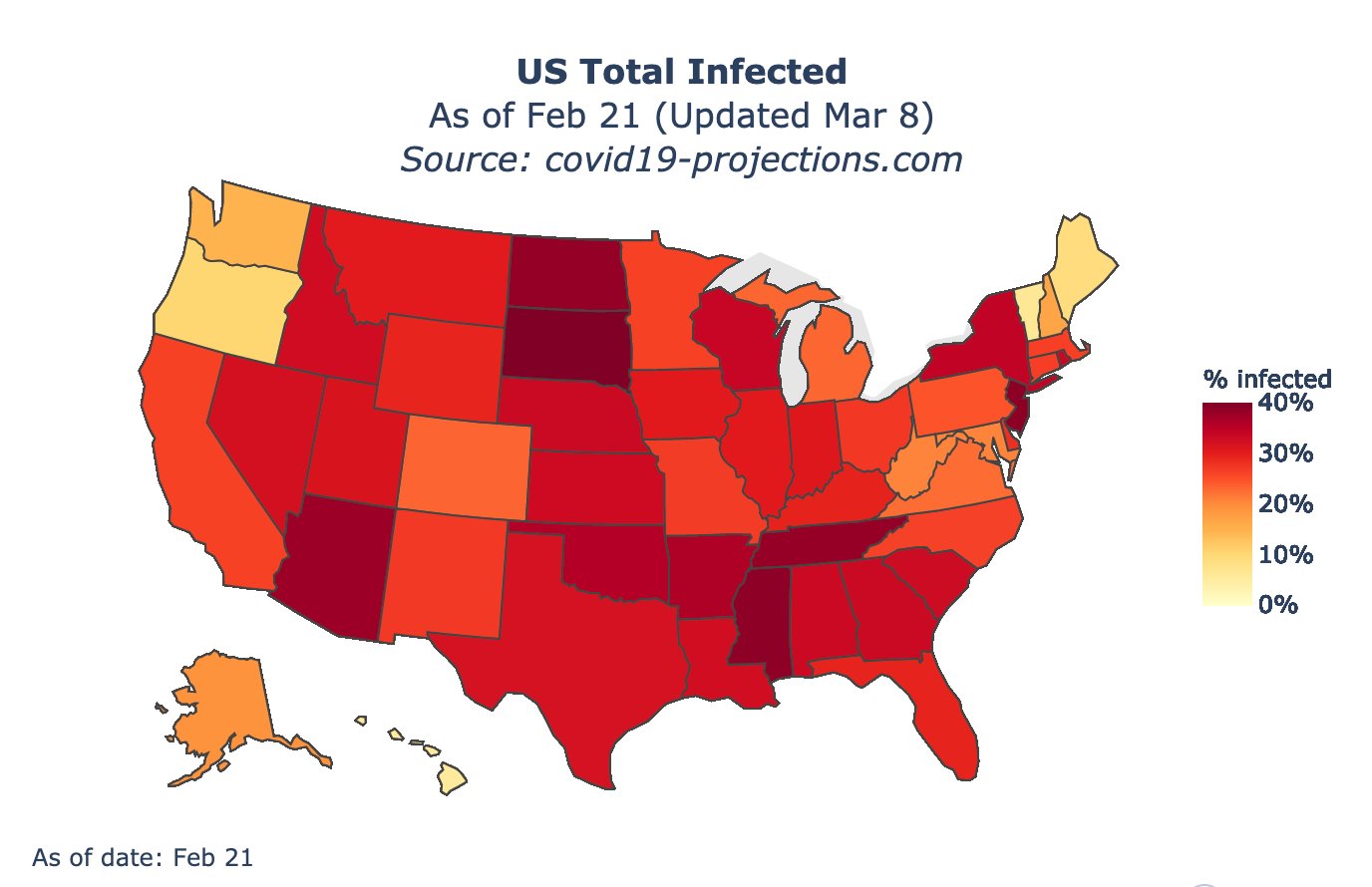
The following map shows the total coronavirus infection level per US state by late February 2021, as projected (i.e. not measured) by Covid19 Projections. The infection attack rate was lowest in the northwestern and northeastern corners (5% to 15%) and highest in South Dakota (47%).

Projected coronavirus infection attack rate in US states by February 2021 (covid19-projections.com)
2) Age-adjusted mortality, 1900-2020

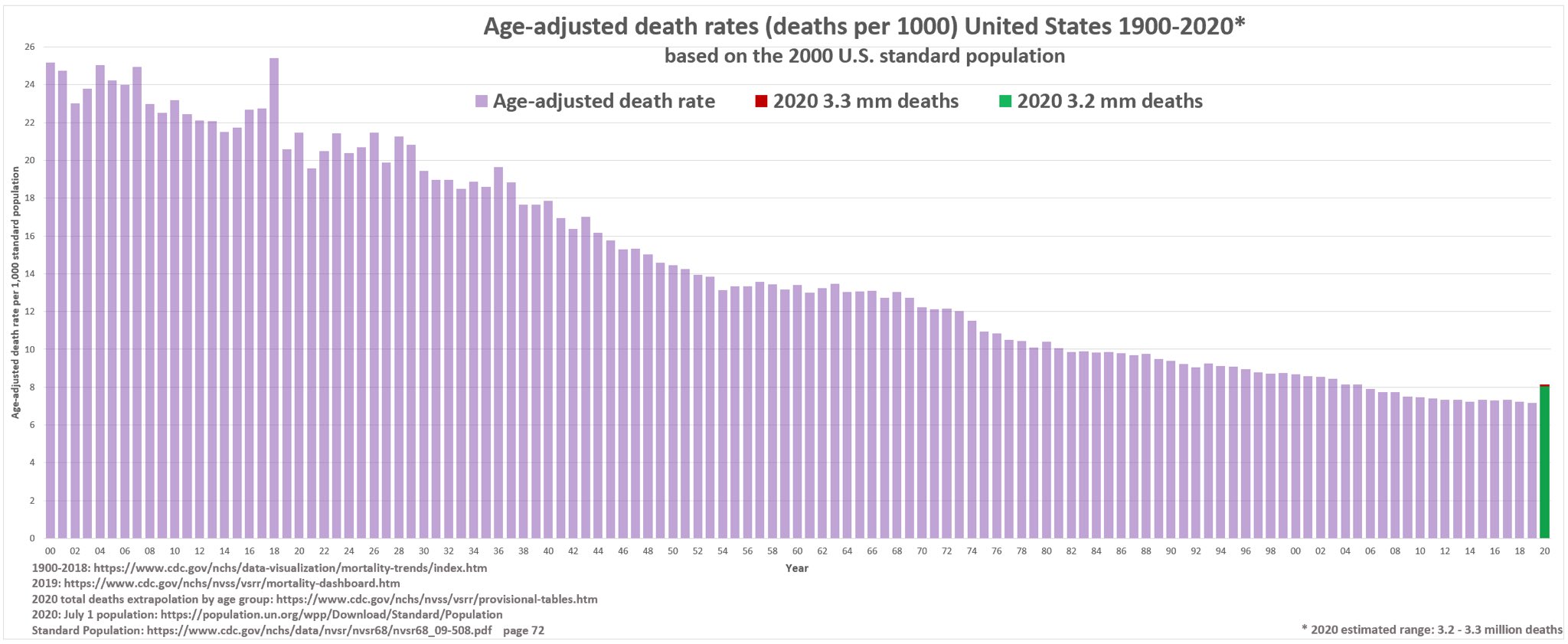
The following chart shows US age-adjusted mortality form 1900 to 2020. To take population ageing into account, the mortality of each year was applied to the US standard population of the year 2000. US age-adjusted mortality in 2020 was similar to mortality in 2004.

US age-adjusted mortality, 1900-2020 (Norwood/CDC)
3) Covid deaths by age group

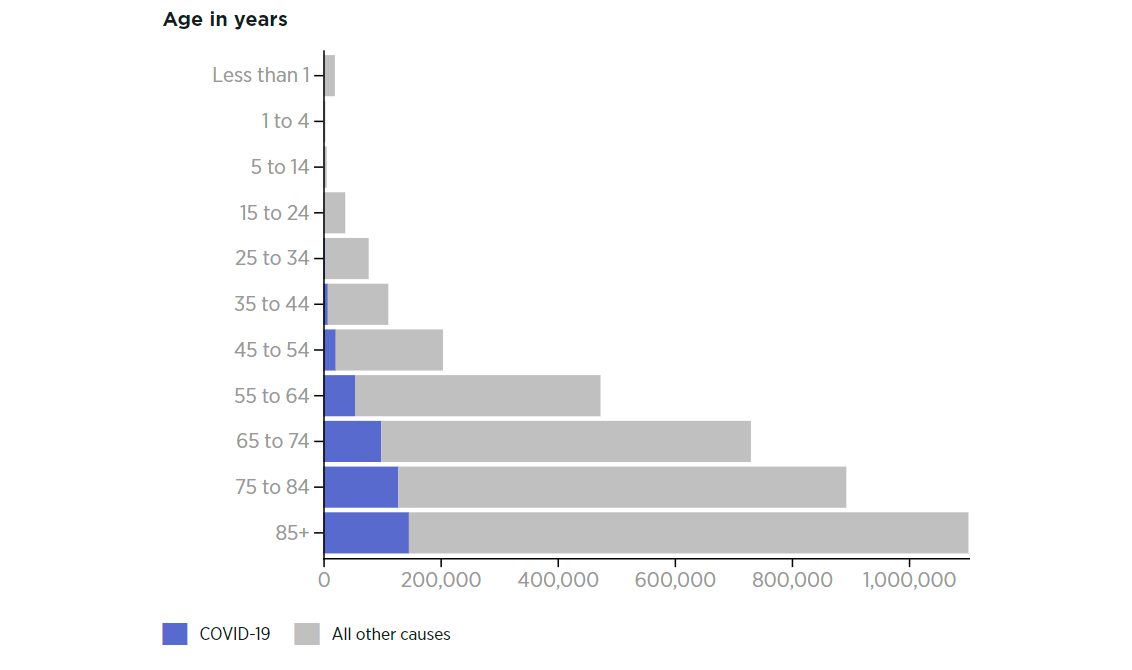
The following chart shows the number of US deaths from or with covid (blue) and from all other causes (gray), per age group, from February 2020 to February 2021, based on CDC data:

USA: Deaths from covid and all other causes, per age group, February 2020 to February 2021 (Heritage/CDC)

.

Coronavirus Covid-19 Research History – Index

.
Specific Issues Index

from Creating Better World

Posted in coronavirus, Covid-19, pandemic | Tagged , , , , , , , | Leave a comment

Pre-symptomatic transmission is very real

Pre-symptomatic transmission is very real

Fact or fiction? Pre-symptomatic transmission of the coronavirus (MIT Medical, May 2020)

Published: June 2021
Updated: August 2021
Share onTwitter / Facebook
Select LanguageDutchEnglishFrenchGermanGreekHebrewHungarianItalianJapaneseKoreanPolishPortugueseRussianSpanishSwedishTurkishPowered by

Pre-symptomatic transmission is real. But face masks still don’t work.

Because many authorities justified mask mandates with pre-symptomatic or asymptomatic coronavirus transmission, many skeptics and critics tried to argue against the existence or importance of pre-symptomatic and asymptomatic transmission. But pre- and asymptomatic transmission is real for the same reason that face masks don’t work: aerosols.

In fact, numerous studies have shown that Sars-CoV-2 respiratory viral load peaks shortly before or shortly after symptom onset (see diagrams below). Once symptoms become apparent, it means the immune system has kicked in and viral load decreases rapidly.

The idea that only symptomatic people spread viral particles, by sneezing or coughing, is based on the obsolete ‘droplet model’ of virus transmission. In reality, transmission occurs primarily, and perhaps almost exclusively, via inhaled aerosols produced when breathing, talking, singing, coughing, or whatever. Droplets, by definition, cannot be inhaled.

Skeptics often point to a famous Wuhan study, published in November 2020 in Nature Communications, that allegedly showed that asymptomatic transmission is a myth, as even a commentary in the BMJ argued. In reality, the Wuhan study was a post-lockdown PCR study which tested 10 million Wuhan citizens in late May 2020 and found 300 who still had a positive PCR test.

But as the study notes, none of these people had positive virus cultures. Thus, these 300 cases were classic post-infectious high-CT PCR positives, who obviously couldn’t infect anyone anymore. In other words, the famous Wuhan study said nothing at all about pre- and asymptomtic transmission.

(Another common misunderstanding about Wuhan is the idea that the city turned into a major coronavirus hotspot. In reality, antibody seroprevalence in Wuhan was only about 1% to 5% by May 2020. At the same time, New York City had already a seroprevalence of at least 20%.)

Pre-symptomatic transmission is already well known from influenza, and it would have been truly surprising if it had played no role at all in the case of the new coronavirus. Indeed, it looks like pre-symptomatic transmission is even more important in the case of the new coronavirus, with estimates ranging between 30% and 60% of all virus transmission.

Pre-symptomatic or “stealth” transmission is also a major reason why Sars-Cov-2 could spread so rapidly and create a global pandemic. The real ‘myth’, or rather exception, might be sick people coughing straight into the faces of healthy people.

In contrast to transmission by pre-symptomatic people (i.e. a few days or hours before symptom onset), transmission by people who remain fully asymptomatic is a bit more complex to evaluate, because this group includes some people with a low viral load, which makes them less contagious. In addition, fully asymptomatic people are much more difficult to detect. However, nobody knows beforehand if they will develop symptoms or not, and as a Swedish doctor recently showed, even fully asymptomatic transmission has been documented in several carefully designed studies.

In conclusion, pre-symptomatic aerosol transmission is very real and has played an important role in driving the coronavirus pandemic. For the very same reason, face masks, ‘temperature screening’, reactive lockdowns, and even ‘contact tracing’ (beyond the very early phase) have not worked.

Postscript

1) “The abundance of this speech-generated aerosol, combined with its high viral load in pre- and asymptomatic individuals, strongly implicates airborne transmission of SARS-CoV-2 through speech as the primary contributor to its rapid spread.” (‘Breathing, speaking, coughing or sneezing: What drives transmission of SARS-CoV-2?’, Stadnytskyi et al, JIM, June 2021)

2) The Australian coronavirus outbreak in June 2021 confirmed the key role played by pre-symptomatic aerosol transmission: in a major Sydney cluster, a pre-symptomatic person infected an entire birthday party of 24 people; a pre-symptomatically infected flight attendant went on five domestic flights before testing positive; and an infected nurse traveled for 10 days before testing positive, having already infected several of her contacts.

3) Even in hospitals, pre-symptomatic aerosol transmission may drive outbreaks: “In this context, our cases consolidated the importance of presymptomatic transmission in the nosocomial outbreak, suggesting that the contact tracing period should be as early as 4 to 5 days before symptom onset.” (Jung et al, ICJ, June 2021)

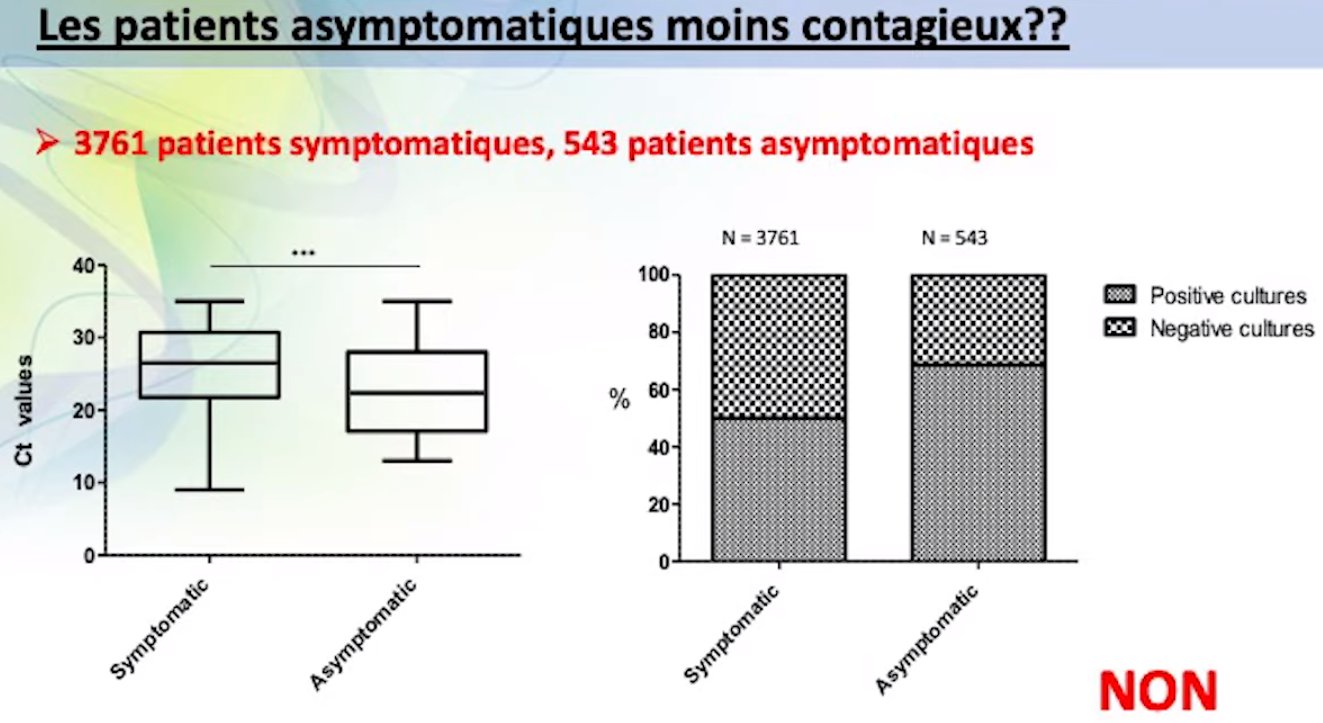
4) A French research group found that there was no significant difference in viral load and positive virus cultures between symptomatic and asymptomatic people.

Viral load (ct) and positive virus cultures in (non) symptomatic people (IHU)

Scientific diagrams

A) Viral load and culture probability over time

Rapidly decreasing viral load and (especially) infectiousness.

Viral load and estimated infectious virus shedding time series (Jones et al, May 2021)
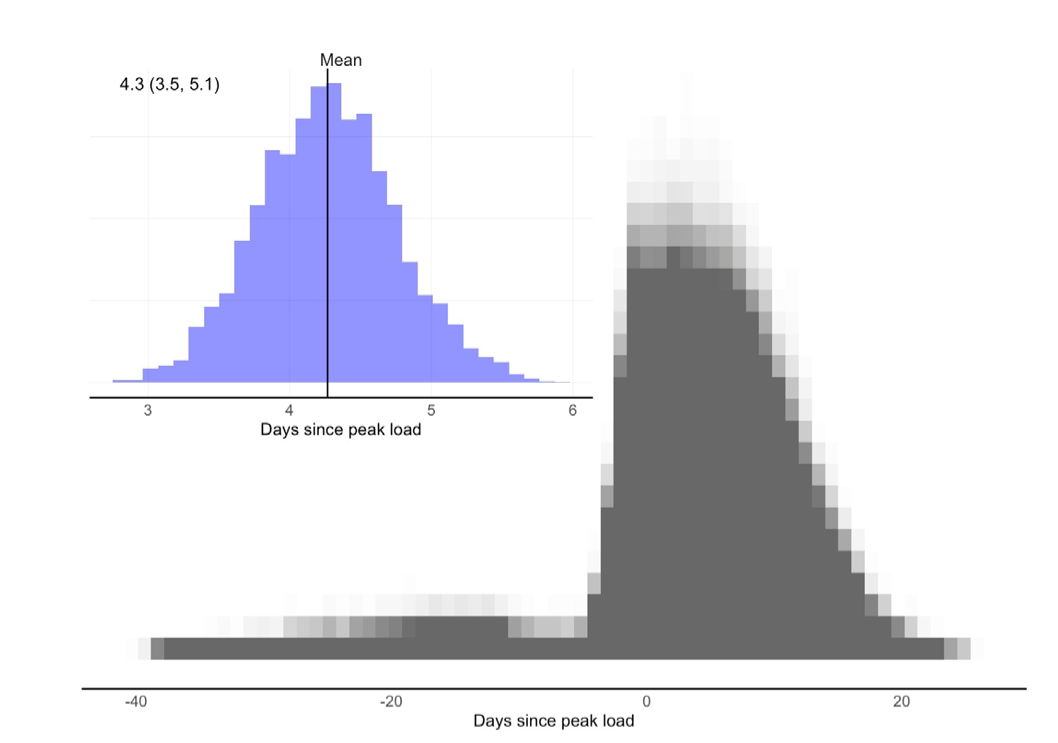
B) Symptom onset compared to peak viral load

Mean delay between peak viral load and self-reported symptom onset is 4 days.

Patient-reported onset of symptoms compared to estimated day of peak viral load (Jones et al, May 2021, Figure S15)
C) Temporal pattern of viral shedding

Rapidly decreasing viral load (PCR ct value) after symptom onset.

Temporal patterns of viral shedding (He et al, April 2020)
D) SARS-1, SARS-2, MERS: Viral load vs. symptom onset

SARS-2: Peak viral load near symptom onset – easy transmission. SARS-1 and MERS: Viral load increases only after symptom onset – poor transmission.

SARS-1, SARS-2, MERS: Respiratory viral load by day of symptom onset (Benefield, September 2020)
E) Aerosols: Respiratory pathogen transmission routes (2018)

Aerosols as the primary mode of transmission, even at close range.

Respiratory pathogen transmission routes (Ian Mackay, 2018)

.

Coronavirus Covid-19 Research History – Index

.

Specific Issues Index

from Creating Better World

Posted in coronavirus, Covid-19, pandemic | Tagged , , , , , , , | Leave a comment

Why Covid-19 Is a “Strange Pandemic”

Why Covid-19 Is a “Strange Pandemic”

Covid mortality (solid) and natural mortality (dashed) in men (red) and women (blue) (Spiegelhalter)

Published: September 2020 (updated)
Share onTwitter / Facebook
Select LanguageDutchEnglishFrenchGermanGreekHebrewHungarianItalianJapaneseKoreanPolishPortugueseRussianSpanishSwedishTurkishPowered by

Why does covid-19 appear to be a somewhat strange pandemic? It is because of the covid-19 mortality profile, which is almost identical to natural mortality.

To better understand this crucial point, we first look at two other well-known pandemics: the 2009 swine flu “fake pandemic” and the notorious 1918 “Spanish flu” pandemic.

The 2009 swine flu was a “fake pandemic” because in reality it was a rather mild flu that caused few deaths globally. It was labeled a “pandemic” in June 2009 only because the WHO had removed the requirement of “enormous numbers of death and illness” one month before. The pandemic warning then triggered a multi-billion dollar sale of rather useless and partially dangerous vaccines.

The 2009 swine flu strain was mild because it was somewhat similar to a flu virus strain that had circulated prior to the 1957 Asian flu pandemic. This meant that most people over 60 years – the main risk group – had already developed immunity against the new virus. And the virus simply wasn’t dangerous enough to seriously threaten many people younger than 60 years.

The 1918 “Spanish flu” virus, on the other hand, was a very dangerous virus that had a very different mortality profile. In addition to old people, it also killed babies and young children plus young adults between 20 and 45 years at very high rates (see chart at the bottom).

In contrast, the mortality profile of the covid-19 coronavirus is essentially zero for children and young adults and near zero below 50, before it begins to rise slowly and then very steeply above 70 and especially above 80, reaching extreme levels in nursing homes.

Thus the covid-19 mortality profile is almost identical to natural mortality. This doesn’t mean that covid-19 doesn’t increase someone’s risk of death – it absolutely does – but this increase is proportional to the pre-existing risk of death of the respective age and risk group.

The characteristics of covid-19 may have to do with the cardiovascular and immunological effects of the virus and they explain the high death rate in nursing homes (up to 70% of deaths), in people above 70 years (about 90%), and in Western countries in general. In contrast, covid death rates in Africa, predicted by many (including Bill Gates) to be high, have been very low.

Many people expect a “real pandemic” to kill also younger people, or at least babies, at a significant rate, as the 1918 flu and other flu pandemics indeed did. Some skeptics therefore concluded that covid-19 must then be another “fake pandemic”. But it is not – it simply has a very different and much more “natural” mortality profile.

If covid-19 had hit us in the 1950s – with a much younger population, few nursing homes, and a much lower prevalence of cardiovascular disease – it would have caused rather few deaths.

Because of the covid-19 mortality profile, mass PCR testing and contact tracing in the general population make little sense and create an additional “casedemic” on top of the pandemic. Mass vaccinations will also make rather little sense, especially because at the time experimental vaccines might become available, many people may already have been exposed to the wild virus.

However, the mortality profile of covid-19 is only “the tip of the iceberg”. Covid-19 is also causing many standard and intensive care hospitalizations – even in people below 65 years – and it is causing post-acute “long covid” in about 10% of symptomatic people, including many young and healthy people. These are potentially serious issues that should not be downplayed in any way.

The best currently available answer to these issues is evidence-based early and prophylactic treatment, as emphasized by many leading experts from around the world. Simply isolating sick people at home until they cannot breathe anymore is the worst possible approach. Unfortunately, in many Western countries, it continues to be the most common approach.

It is important to keep in mind that in many parts of Europe and some parts of the US, coronavirus antibody values are still very low (e.g. 2% in Germany). Hence it is not reasonable at all to assume that the pandemic is already over. Even in global hotspots with a 20% antibody rate, it is not at all certain if this is going to provide collective immunity during winter months.

The following chart by Cambridge statistics professor David Spiegelhalter compares covid mortality (solid line) to natural mortality (dashed line) in men (red) and women (blue). As mentioned above, covid does increase the risk of death – covid mortality comes on top of natural mortality – but this increase is proportional to natural mortality.

Covid mortality (solid) and natural mortality (dashed) in men (red) and women (blue) (Spiegelhalter)

The following chart shows US mortality by age in previous pandemic years compared to 2020 US excess mortality, which consisted primarily (>75%) of confirmed and suspected covid-19 deaths, according to the CDC. To learn more about this comparison, please read this article.

Pneumonia and influenza mortality by age in previous pandemic years (Glezen, 1996) vs. 2020 excess mortality by age, primarily driven by covid-19, overall and excluding nursing homes (SPR based on CDC data)

.

Coronavirus Covid-19 Research History – Index

.
Specific Issues Index

from Creating Better World

Posted in coronavirus, Covid-19, pandemic | Tagged , , , , , | Leave a comment

The failure of PCR mass testing

The failure of PCR mass testing

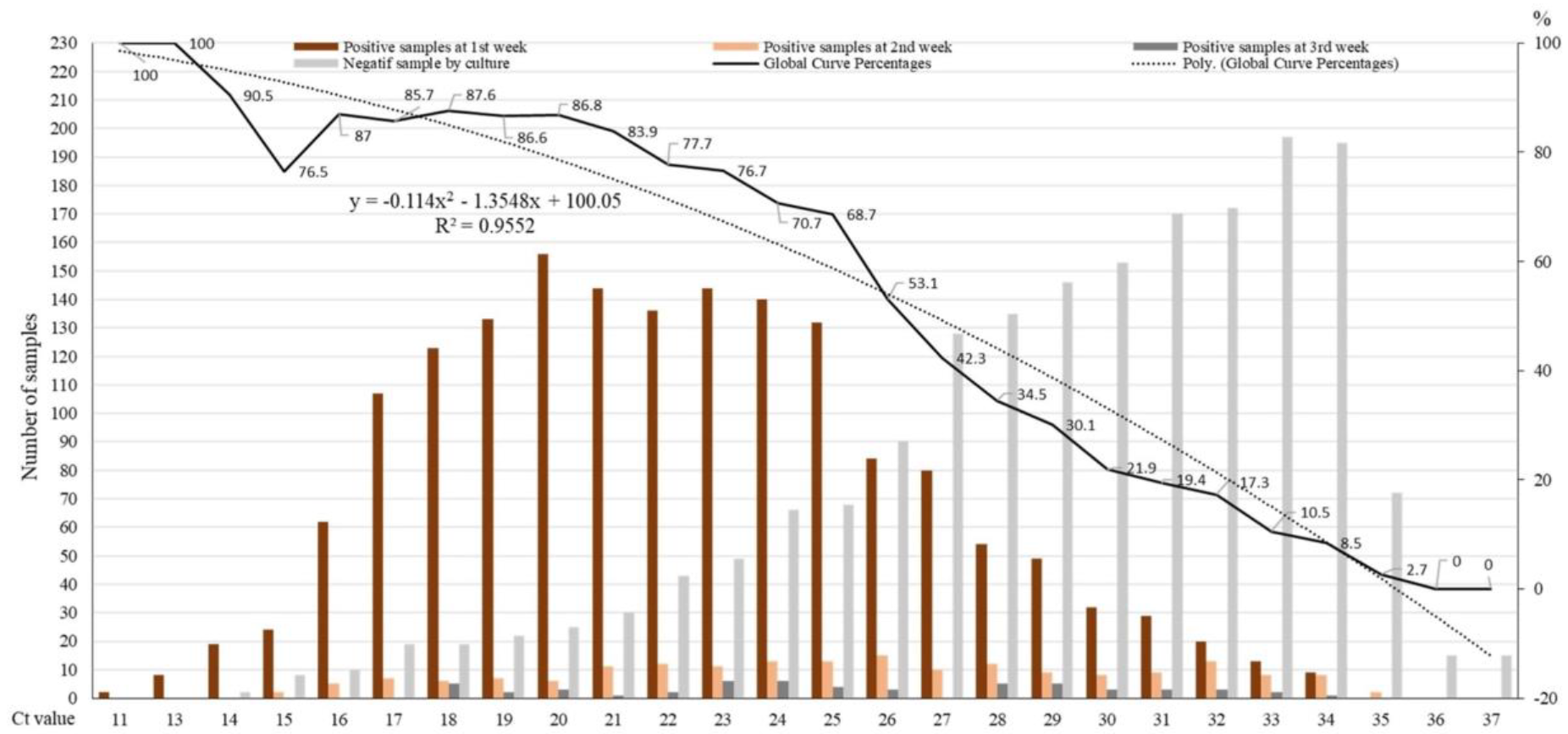
PCR cycle threshold (11-37) and positive cell culture (black line, 100% to 0%). The colored bars indicate the number of positive cell cultures per ct per week after infection (1 to 3 weeks). (Jafaar/Raoult)

Published: June 19, 2021
Share onTwitter / Facebook
Select LanguageDutchEnglishFrenchGermanGreekHebrewHungarianItalianJapaneseKoreanPolishPortugueseRussianSpanishSwedishTurkishPowered by

A new German study confirms and explains the failure of PCR mass testing.

In March 2020, SPR warned that PCR mass testing in the general population (“test, test, test”) would be a serious mistake. The issue never was that PCR tests didn’t work or that the Drosten PCR paper was “peer-reviewed” in just one day. The issue is that PCR tests cannot determine an acute infection, ongoing infectiousness, and actual disease, especially if ct values are not taken into account.

Several studies have since shown that national PCR testing rates have had no influence at all on covid mortality. In addition, a new German study re-analyzed PCR tests of 160,000 people and concluded:

“In light of our findings that more than half of individuals with positive PCR test results are unlikely to have been infectious, RT-PCR test positivity should not be taken as an accurate measure of infectious SARS-CoV-2 incidence. Our results confirm the findings of others that the routine use of ‘positive’ RT-PCR test results as the gold standard for assessing and controlling infectiousness fails to reflect the fact ‘that 50-75% of the time an individual is PCR positive, they are likely to be post-infectious.’” (Stang et al, Journal of Infection, May 2021)

Why has mass PCR testing failed so badly? Most likely because of the role of pre-symptomatic transmission: by the time someone gets a ‘positive’ test result, the infectious virus is already being neutralized, or in some cases is already long gone. Hence PCR testing really only makes sense in targeted, preemptive high-risk settings, such as hospitals, nursing homes or early border controls, or possibly in Chinese-style preemptive, pooled mass testings of entire 10-million-people cities.

Overall, PCR mass testing has achieved essentially nothing but hundreds of billions in unnecessary costs and large-scale psychological trauma, especially in children. Nevertheless, with millions of deaths, covid was not just a “casedemic” or a “fake pandemic” (as the 2009 swine flu), but a PCR-driven “casedemic” on top of a real pandemic – or, as previously noted: a “strange pandemic”.

RelatedThe trouble with PCR tests (October 2020)

.

Coronavirus Covid-19 Research History – Index

.

Specific Issues Index

from Creating Better World

Posted in coronavirus, Covid-19, pandemic | Tagged , , , , , , , | Leave a comment

Obesity and The Pandemic: New Insights

Obesity and The Pandemic: New Insights

Obesity rates in women (WHO, 2014)

Published: June 10, 2021
Share on:  Twitter / Facebook
Select LanguageDutchEnglishFrenchGermanGreekHebrewHungarianItalianJapaneseKoreanPolishPortugueseRussianSpanishSwedishTurkishPowered by

Has obesity driven not just covid mortality, but the pandemic itself?

Several studies have shown that obese people not only have a higher covid fatality risk, but they also have higher viral loads, exhale more bioaerosols, and do so for a longer period of time. Thus, could obesity have driven not only covid mortality, but the pandemic itself? And could the near-absence of obesity in some East Asian countries explain their remarkable resilience against the covid pandemic?

Please note: This is a scientific analysis; it does not support “fat shaming”.

A) Covid mortality and age

Covid fatality rates in the entire population vs. non-nursing home population (Molenberghs)

The preferred framework for explaining covid mortality usually has been age: the older a person, the higher the infection fatality rate. The older the average age of a population, the higher, allegedly, covid mortality (assuming equal infection prevalence).

However, if one excludes the nursing home population in Western countries – which accounts for about 50% of Western covid deaths, but only about 1% of the overall population – the age-gradient of the covid infection fatality rate is actually much less steep than is commonly assumed (see the chart above).

Furthermore, if one excludes Western nursing homes, the covid IFR in the general population is in fact not that much different between, for instance, Europe, the US, South Africa, Latin America and India (about 0.2% to 0.5%).

In most countries, the median age of covid deaths is quite close to the average life expectancy of the country in question, e.g. 80+ in Western Europe, 78 in the USA, 70 in Brazil, and 62 in South Africa. Indeed, the young average age of many Latin American countries, South Africa or India has not at all protected these countries against high covid mortality rates.

It is well known that Sars-Cov-2 uses the ACE2 cell receptor, which is primarily a receptor of the endothelium and the cardiovascular system. Hence it is reasonable to assume that covid severity may be linked to cardiovascular and metabolic health, which is indeed the case.

Given this association, one may argue that the residual age-gradient of covid fatality rates in the non-nursing home population may be driven, to a significant extent, by cardiovascular and metabolic health. In addition, the status of being a nursing home resident may itself be closely associated with poor cardiovascular health and with general frailty.

It should be noted that many generally healthy people over 100 years of age, and up to 117 years of age, have already survived a covid infection, which may also speak against “age” as a paramount risk factor of itself. Indeed, among the five countries with the highest life expectancy in the world, we find Japan, South Korea and Singapore, all of which have very low covid mortality rates.

In conclusion, it may be argued that age, in itself, may not be the primary factor determining covid fatality rates. Instead, cardiovascular and metabolic health, of which obesity rates may be seen as a reasonable proxy value, should be considered.

B) Obesity and covid mortality

Top: Obesity rates in women (WHO, 2014). Bottom: Excess mortality during the pandemic (Economist, May 2021)

The above chart compares obesity rates in women (which are more pronounced than in men) to total excess mortality between March 2020 and May 2021. In most countries, excess mortality during the pandemic has primarily been driven by covid mortality (exceptions see below).

The following country analysis is based on the list of countries by obesity rate (WFB/Wikipedia) and the overview of global excess mortality rates (estimated by ‘The Economist’).

In many countries, high obesity rates are associated with high covid mortality rates. This includes the United States (36% obesity rate); most of Europe, in particular the UK (28%) and large parts of Eastern Europe (e.g. the Baltic states, Poland, Hungary, Czechia, Bulgaria; all 23% to 26%); Russia (23%) and Kazakhstan (21%); most of Latin America (including Mexico and Peru; 20% to 30%); South Africa (28%); as well as Turkey, Iraq and Iran (26% to 32%).

A few countries have high obesity rates, but low covid mortality rates. This group includes Canada, Australia and New Zealand (all 30%), and some Arab countries (notably Algeria and Saudi Arabia, at 28% and 35%). In the case of Canada, Australia and New Zealand, it is clear that these countries have managed to keep covid infection prevalence low due to strict border management; otherwise, their covid mortality would most certainly have been quite high. In the case of the Arab states, infection prevalence is not known, but the example of Bahrain (30%) indicates rather high mortality rates.

(Update: The latest edition of the Economist’s global excess mortality analysis shows that Saudi Arabia in fact has very high excess mortality, consistent with their very high obesity rate.)

Next, there are countries with a low obesity rate and a low covid mortality rate. Very significantly, the countries which proved to be highly resilient against the covid pandemic are also the countries with the lowest obesity rates in the world: Vietnam, Bangladesh, Cambodia, Japan, South Korea and Laos (all below 5%), Singapore, the Philippines and Indonesia (5% to 7%), and Thailand (10%), as well as many Black African countries (5% to 10%), but not South Africa (28%, see above).

Finally, there are a few countries with an apparently low obesity rate, but a not-so-low excess mortality rate. This group includes India and Nepal (both 4%) and some countries in central and eastern Africa (5% to 10%). However, a closer look into Indian obesity rates reveals that, while the national obesity rate is very low, it is in fact very high in urban areas (reaching 20% to 50%). While this ‘urban obesity effect’ may apply to some other countries, too, it seems to be particularly pronounced in India.

Nepal  seems to be a real outlier; it has seen a major infection and mortality wave, but only in the spring of 2021, driven by the more infectious “Indian variant” of the coronavirus. Is the “Indian variant” perhaps more infectious than the original “Wuhan variant” because it is more infectious in non-obese people? Did Sars-Cov-2 get better at transmitting from lean people?

In the case of African countries with low obesity rates but elevated excess mortality, it is difficult to say if excess mortality was due to covid or due to other factors (e.g. hunger, tuberculosis, malaria).

In China, the national obesity rate is still low (6%), but reaches levels greater than 20% in some cities. Due to extreme Chinese lockdowns and a general lack of reliable prevalence and mortality data, it is difficult to say in which of the above groups China belongs.

In conclusion, it looks like obesity rates are indeed strongly associated with covid mortality rates. Most supposed ‘exceptions’ are easily explained. The biggest question marks concern some Arab states (notably Saudi Arabia, where infection prevalence is not known), Nepal, and China.

C. Obesity and covid infections

Exhaled aerosols compared to BMI and age (Edwards et al)

In addition to a higher fatality risk, studies have shown that people with obesity also have a higher viral load and do so for a longer period of time. It has been argued that this may be because of a higher concentration of ACE2 cell receptors in adipose tissue. Furthermore, studies have shown that exhaled bioaerosols increase with age and body mass index (BMI), as is shown in the chart above.

In sum, given that Sars-Cov-2 appears to be transmitted primarily via aerosols, and that pre-symptomatic transmission appears to play an important role (30% to 60% of all transmission), this could mean that obesity (and possibly excess weight in general?) could drive coronavirus infections, the frequency of “super-spreading” events, and the covid pandemic in general.

If so, this could explain why the countries with the lowest obesity rates in the world – such as Vietnam, Bangladesh, Cambodia, Japan, South Korea and Laos (all below 5%) – appear to have been exceedingly resilient against the covid pandemic, with a very low coronavirus infection prevalence, morbidity and mortality (although the new “Indian variant” might pose a challenge to them).

It could also explain why, in contrast, countries with high obesity rates have often seen very explosive, nation-wide outbreaks of coronavirus infections (e.g. in Latin America, in the US, and also in Eastern Europe in the autumn of 2020), followed by high covid morbidity and mortality.

Ironically, many Western countries assumed that the success of East Asian countries was due to face masks, only to find out that face masks have had no impact at all on coronavirus infection rates (as was already known from influenza epidemics).

Conclusion

The potential link between obesity rates and the rate of covid infections, morbidity and mortality should be further investigated in order to elucidate the dynamics of the coronavirus pandemic.

(See postscript below.)

Japanese citizen Chitetsu Watanabe, at the time the oldest living man, died on February 23, 2020 at the age of 112 – though apparently not from covid. (CNN)

Postscript: Obesity and influenza

Interestingly, a similar relationship between obesity and infectiousness was already found in the case of influenza:

“Why are obese patients potentially more contagious than lean subjects? Three factors make obese subjects more contagious than leans:

  • First, obese subjects with influenza shed the virus for a longer period of time (up to 104% longer) than lean subjects, potentially increasing the chance to spread the virus to others [22].
  • Secondly, the obese microenvironment favors the emergence of novel more virulent virus strains. This is due mainly to the reduced and delayed capacity to produce interferons by obese individuals and animals [17, 18]. The delay in producing interferon to contrast viral replication allows more viral RNA replication increasing the chances of the appearance of novel, more virulent viral strains [18].
  • Thirdly, body mass index correlates positively with infectious virus in exhaled breath [23]. This finding was especially significant for males, which leads to the hypothesis that the higher ventilation volumes or a differential chest conformation might explain this fact”

Source: Influenza and obesity: its odd relationship and the lessons for COVID-19 pandemic (Luzi & Radaelli, Acta Diabetologica, April 2020)

Update

.

Coronavirus Covid-19 Research History – Index

.

Specific Issues Index

from Creating Better World

Posted in coronavirus, Covid-19, pandemic | Tagged , , , , , | Leave a comment

Coronavirus Variants: What’s Next?

Coronavirus Variants: What’s Next?

Coronavirus variants: Escape from antibody classes 1 to 3 (SPR, based on Greaney et al.)

Updated: November 2021
Published
: July 2021
Share onTwitter / Facebook
Select LanguageDutchEnglishFrenchGermanGreekHebrewHungarianItalianJapaneseKoreanPolishPortugueseRussianSpanishSwedishTurkishPowered by

So far, no variant has achieved escape from all three major antibody classes.

(See update on the Omicron variant below).

Existing coronavirus variants – including the British, South African, Brazilian and Indian variants – have shown some gradual changes in infectiousness, virulence, and immune escape. Relative transmission advantages are often only transitory, until collective immunity has caught up.

Some of the existing variants – notably the South African, Brazilian, Nepalese and Peruvian variants – have managed to escape two out of three antibody classes, reducing vaccine effectiveness; but so far, no variant has managed to escape all three antibody classes (see update below).

Such a triple-escape variant may arrive next autumn or winter and could potentially lead to increased rates of vaccine breakthroughs and re-infections, especially in regions that have not yet faced the Brazilian or South African ‘class 2’ escape variants. The actual impact will also depend on the effectiveness of cellular immunity (T cells), which may be somewhat broader.

Furthermore, a triple-escape variant will, for the first time, raise the question of a potential antibody-dependent disease enhancement (ADE), as vaccinated people, in particular, will have very high levels of non-neutralizing antibodies, whose behavior remains somewhat uncertain. ADE has been observed with SARS-1 vaccine candidates, but not yet with SARS-2 vaccines.

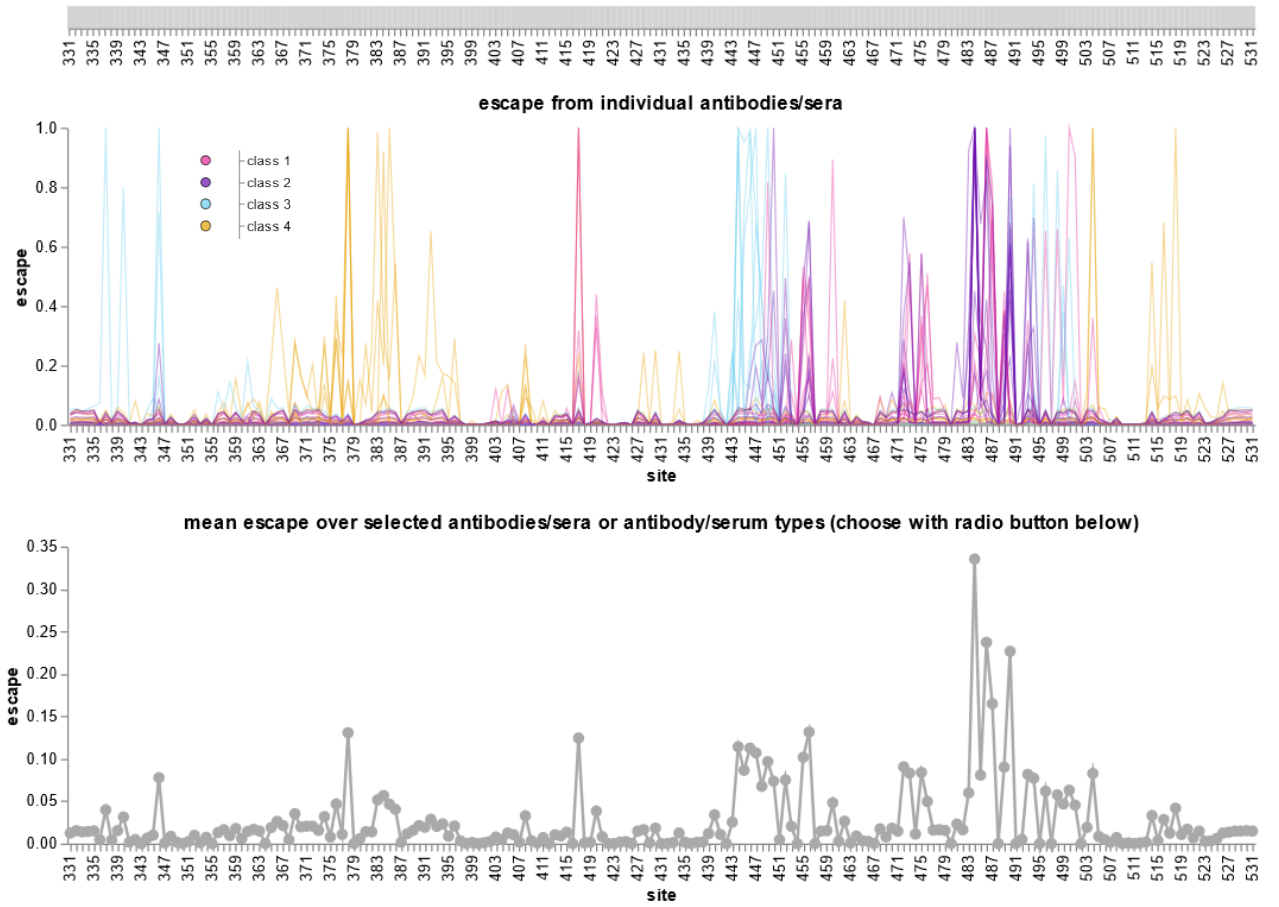
In terms of escape mutations, the coronavirus has already played many of its best ‘cards’, including the powerful 484 escape mutation found in the South African, Brazilian and New York variants and the 490 mutation in the Peruvian variant. In terms of receptor binding affinity – which may or may not increase infectiousness and virulence – there are a few more options left (see charts below).

Existing and future coronavirus variants once again highlight the importance of effective and affordable early treatment options for high-risk people and low-income nations, as monoclonal antibody therapies are losing effectiveness and vaccines will require updated boosters.

See alsoThe Delta summer wave (June 2021)

Update November 2021: The Omicron variant, detected in November 2021 in South Africa, is the first coronavirus variant with escape mutations in all three major antibody classes (see above). This will likely reduce neutralization by existing vaccines and possibly by natural immunity.

Figures

1) Coronavirus escape mutations (per antibody class and overall)

Coronavirus escape mutations, per antibody class and overall (Bloom lab)

2) Coronavirus mutations increasing or decreasing ACE2 receptor binding affinity

Mutations increasing (blue) or decreasing (red) ACE2 receptor binding affinity. An increased receptor binding affinity may increase or decrease virulence and infectiousness.

Coronavirus mutations and their effect on ACE2 receptor binding affinity (Starr et al.)

3) RNA vaccines: Reduced neutralization against new virus variants

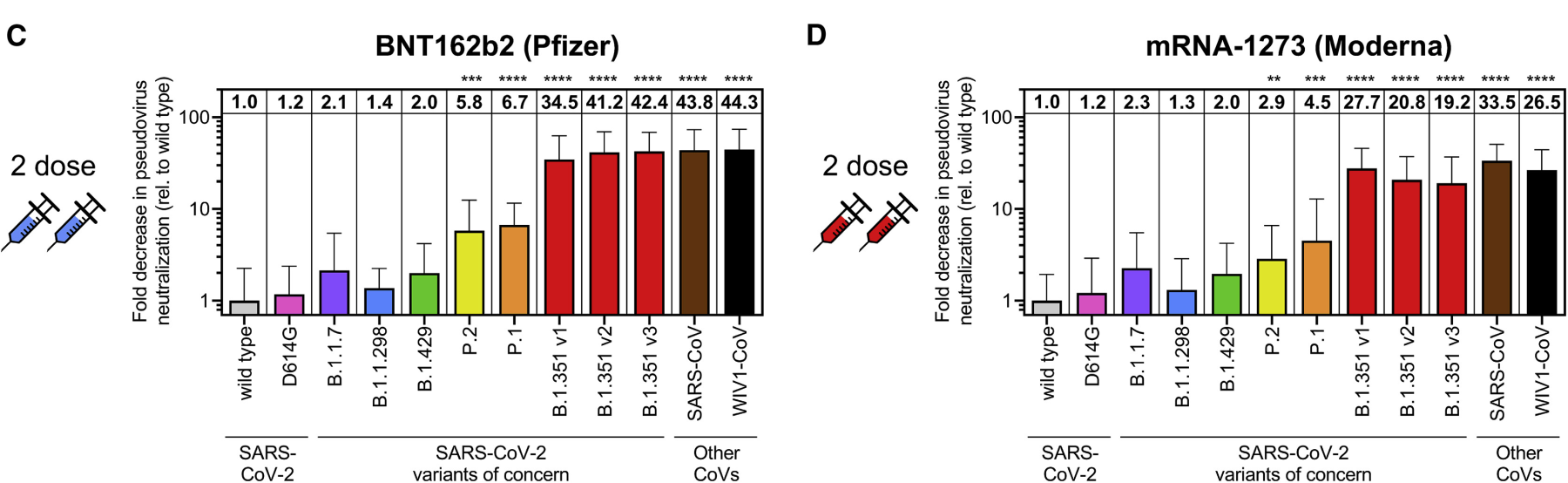
Covid RNA vaccines: reduction in neutralization of variants (x-fold reduction). P.1/P.2: “Brazilian” variants; B.1.351.V1-3: “South African” variants (Source: Garcia-Beltran).

Covid RNA vaccines: Reduction in neutralization of variants (x-fold reduction). P.1/P.2: “Brazilian” variants; B.1.351.V1-3: “South African” variants (Source: Garcia-Beltran)

.

Coronavirus Covid-19 Research History – Index

.

Specific Issues Index

from Creating Better World

Posted in coronavirus, Covid-19, pandemic | Tagged , , , , , , | Leave a comment