Bernie Sanders Vs. Joe Biden 2020 Election

Bernie Sanders Vs. Joe Biden 2020 Election

(a biased comparison between Sanders and Biden)

Joe Biden and his pathetic record:

1. Has Dementia (can only manage 7 minutes of speaking)

2. Anti Medicare for all

3. Fought to cut Social Security and Veterans programs

4. Voted for Corporate Welfare/Wall St. bailout

5. Voted for Bankruptcy Bill 6. Authored the Crime Bill

7. Voted for Iraq War

8. Backed NAFTA and PNTR agreements

9. Repealed Glass-Steagall Banking act which deregulated the banking sector that led to 2008 Global Financial Crisis

10. Praised Segregationist Strom Thurmond

11. Poor Treatment of Anita Hill (took 18 years to apologize)

12. Burisma Senate Hearings – (nepotism)

13. Supported Border (Fence) quote: ‘Some of you won’t like it, I voted for 700 miles of fence…’

14. Refuses to legalize cannabis (even for medicinal purposes)

15. Keeps lying about being arrested when visiting Nelson Mandela

16. Lies about involvement in civil rights activism.

17. Voted against gays, for the Defense of Marriage Act

18. Voted for the Hyde anti-abortion Amendment

19.Says climate change is a challenge but accepts money from Fossil Fuel companies.

20. Constantly flips on what he says about Environmental issues

21. No decisive plan to increase employment.

22. Funded by over 60 billionaires

23. Is a Neo-Liberal

24.  Insults people at public speeches and rallies.

25. Is part of the Corporate elite ‘Ruling class’.

26. Sells out the ‘working class’ with false promises.

Bernie Sanders and his social justice record:

1. Sharp mind and body ( does 3 x 45 minute rallies per day)

2. Universal Medicare for all

3. Wants to increase Social Security and Veterans programs

4. Voted against Corporate Welfare/Wall St. bailout

5. Voted against Bankruptcy Bill

6. Voted against the Crime Bill

7. Voted against Iraq War

8. Voted against NAFTA and PNTR agreements

9. Wants to reinstate Glass-Steagall Banking act and regulate the banking sector

10. Marched with MLK

11. Has always fought for women’s rights

12. Grilled Alan Greenspan at 2003 Senate House Financial Banking Services Sub-committee

13. Bernie’s quote: ‘We don’t need a wall or barb wire. We can and must secure borders without building a fence.

14. Wants to legalize cannabis (esp. for medicinal purposes)

15. Got arrested for civil rights activism (photographic proof – Chicago Tribune August 1963)

16. Has a 57 year history of civil rights activism

17. Voted for gays, against the Defense of Marriage Act

18. Voted against the Hyde anti-abortion Amendment

19. Supports ‘Green New Deal’ to tackle climate change by building sustainable energy infrastructure. More jobs needed

20. Always supports Environmental and Conservation Efforts.

21. Federal Jobs Guarantee

22. Funded by small (avg.$18.50) donations from grassroots

23. Is a Social Democrat (Progressive Capitalist)

24. Gracious; Never insults others, not even Joe Biden

25. Stands up and fights the Corporate elite ‘Ruling class’.

26. Always Fights for the ‘working class’. .

The Case Against Joe Biden: Former VP’s Long Career Shows a Recurring Theme of “Appeasing the Right”

Biden or Sanders – Who is More ‘Electable’?  https://www.youtube.com/watch?v=QQRMGgTFHlU

What Bernie Skeptics Need to Know with Robert Reich  https://www.youtube.com/watch?v=4Y5nBJe8Dlc&feature=youtu.be  The REAL Reason Biden Is Winning https://www.youtube.com/watch?v=MhIIlz-Vo_Y  

Nation of Change Is the DNC cheating? Again? The DNC’s candidate always gains in the counting. And that is highly suspicious.   By Michael T. Hertz March 13, 2020 https://www.nationofchange.org/2020/03/13/is-the-dnc-cheating-again/ 

Manufacturing Consent’s Victims: Black Biden Supporters Troubled After Learning of Civil Rights Lies https://www.youtube.com/watch?v=_4vWrLjeOhw&t=2s 

.

.

Specific Issues Index

from Creating Better World

Posted in 2020 Presidential Election, Bernie Sanders, Joe Biden | Tagged , , , , , , | Leave a comment

Bernie Sanders as a Democratic Socialist in 2016 Election

Bernie Sanders as a Democratic Socialist 2016 Election

Facts:  Sanders wins important elections as a declared Socialist.  As a Socialist, Sanders is very progressive on most all domestic issues. Does any Socialist oppose Sanders domestic issue positions? If Sanders domestic issues would be implemented, the result would be perhaps the greatest peace movement victory ever imagined possible!    What other Socialist can legitimately claim any reasonable chance to win a Senate seat, let alone the Presidency?

Socialism tends not to deal directly with military & war issues,

The Frankfurt Declaration, 1951:  Socialism aims to liberate the peoples from dependence on a minority which owns or controls the means of production.

It aims to put economic power in the hands of the people as a whole, and to create a community in which free men work together as equals… Socialism has become a major force in world affairs. It has passed from propaganda into practice. In some countries the foundations of a Socialist society have already been laid. Here the evils of capitalism are disappearing…

Since the Bolshevik revolution in Russia, Communism has split the International Labour Movement and has set back the realization of socialism in many countries for decades. Communism falsely claims a share in the Socialist tradition. In fact it has distorted that tradition beyond recognition. It has built up a rigid theology which is incompatible with the critical spirit of Marxism… Wherever it has gained power it has destroyed freedom or the chance of gaining freedom…

Socialists worked on domestic issues with U.S. administrations deeply involved in wars in Southeast Asia during the 60’s. 

In the 1960s Michael Harrington and other socialists were called to assist the Kennedy Administration and then the Johnson Administration‘s War on Poverty and Great Society[2] while socialists also played important roles in the 1960s Civil Rights movement.[3][4][5][6]   

U.S. Socialism is fragmented with very few significant election victories in recent times!

Socialism in the United States has been composed of many tendencies often in important disagreements with each other and it has included utopian socialists, social democrats, democratic socialists, communists, Trotskyists, and anarchists.

At its peak a century ago, the Socialist Party of America polled at 6 percent nationally, had two representatives in Congress and boasted hundreds of state and local legislators.

But for more than a generation, socialism has been virtually invisible on the American scene. Its return in several high-profile local city council races—Sawant’s in Seattle, Ty Moore’s in Minneapolis and Seamus Whelan’s in Boston—has been surprising.

Sanders expresses good intentions as to Peace, War, Human Rights, Nuclear Weapons, Free Trade, Sovereignty of other peoples, but he is publicly naive as to the true nature of U.S. Government.   For example he still believes 9/11 Government fairy tale and is naïve as to true nature of ISIS founding and funding.   But Sanders has continually displayed an open mind with the ability to modify his positions progressively when further educated.   What some progressives forget is that publicly promoting some truths can be a serious detriment to winning the Presidency with a politically ignorant voting public.  And elections in America are determined heavily on bread and butter issues rather than foreign policy.   By running as a Democrat, if Sanders gets the nomination, he will have most of the Democratic Party constituency vote behind him.  As a 3rd Party candidate, he would have no hope!  Sanders knows how to get elected!

Cuba: Bernie Sanders supports President Obama’s efforts to normalize diplomatic relations with Cuba. In 2014, Bernie commended the announcement of the President’s policy as a “major step forward in ending the 55-year Cold War with Cuba.”

Bernie supports closing the Guantánamo Bay detention camp the United States maintains on the Cuban island, noting it has “significantly damaged the United States’ moral standing, undermined our foreign policy, and encourage terrorism rather than effectively combated it.”

His opinion refers to abuse and torture, as well as the unlawful detention of inmates at the military prison Amnesty International has called a “gulag of our times.”

Iraq: Gulf War and Desert Storm: Bernie voted against the joint resolution to authorize the use of force against Iraq in 1991, calling for economic sanctions and other diplomatic means to address the conflict instead.

Iraq War and Operation Iraqi Freedom: Bernie voted against the joint resolution to authorize the use of force against Iraq in 2002, and voted against the invasion of Iraq in 2003.

Iran: Bernie views Iran as a major player in the Middle East and believes that diplomatic relations between Iran and the West are crucial for both regional stability and the long term security of the U.S. and its allies. Furthermore, Bernie believes that Iranian nuclear ambitions must be held in check and the only way to accomplish this is through clearly defined restrictions verified by international observers.

Bernie has stated unequivocally the we must limit nuclear proliferation and work towards a safer world free of nuclear weapons:  “I strongly agree with President Obama’s call for ‘a world without nuclear weapons.’   It is with this vision in mind that Bernie supports the Iran nuclear pact. Similarly, Bernie has been working to reduce nuclear weapons stockpiles around the world. In 2015, Bernie co-sponsored the Smarter Approach to Nuclear Expenditures Act, which would reduce the nuclear weapons budget by $100 billion over the next ten years.

Israel/Palestine: Bernie Sanders has described the entrenched conflict between Israel and the Palestinians as both depressing and difficult, and considers the conflict one of the most important issues in the Middle East. He acknowledges that there is no magic solution to the problem, but Bernie believes in a two-state solution, where “Israel has a right to exist in security, and at the same time the Palestinians have a state of their own.” Finally, Bernie sees many other conflicts in the Middle East as exacerbating the Israeli-Palestinian conflict.

Jewish Heritage: Bernie is Jewish, but he does not favor Israel over the Palestinians, nor does he otherwise let his religion influence his positions regarding the conflict.

Two-State Solution: Bernie believes that Israel and the Palestinians can, and should, peacefully co-exist, and that Palestinians should have a country of their own.

On Netanyahu & Iran: Bernie is not a big supporter of Israeli prime minister Benjamin Netanyahu, and believes that diplomacy, not military action or economic sanctions, can keep Israel safe from Iran.

Latin America: Bernie Sanders believes the United States should not involve itself in the governments of other countries, even if officials in charge do not agree with the other countries’ left-leaning principles. He also believes that free-trade agreements harm the U.S. working class and that the U.S. can provide and receive aid from countries in Latin America.

Nicaragua and the Sandinistas: Bernie did not believe the U.S. should send arms to the Contras in Nicaragua.

NAFTA: Bernie opposed NAFTA because he believes most free-trade agreements are detrimental to the American working class, and are mostly in the interest of the business elites.

Venezuela and Vermont Deal: Bernie brokered a deal with Venezuela to provide discounted heating oil to low-income families in Vermont.

Greece: Bernie supports the people of Greece in rejecting the increasingly constricting austerity measures proposed by its creditors. He’s written letters to the managing director of the IMF and U.S. Federal Reserve encouraging these organizations to ease the Troika’s demands:

“In a world of massive wealth and income inequality, Europe must support Greece’s efforts to build an economy which creates more jobs and income, not more unemployment and suffering.”

The North Atlantic Treaty Organization (NATO): NATO was formed after World War II as a way to get the militaries of various western countries to agree on mutual defense strategies. Although Bernie Sanders is generally anti-war, he begrudgingly supported NATO’s bombing of Serbia in 1999. He did not vigorously oppose NATO’s 2011 military intervention in Libya, although he did voice concerns. He was also against NATO expansion.

Kosovo Crisis: The decision to bomb Serbia was a complex one, and Bernie ultimately voted to take action to prevent further genocide.

Libya Intervention: In 2011, the United States and other NATO countries launched strikes against Libya. Bernie expressed wariness regarding the human and fiscal cost then, and now, as civil war rages on in the country.

Anti-Expansion: Bernie is against the expansion of NATO because it provokes unnecessary aggression from Russia. Moreover, he believes European nations should fund more of the costs of an alliance primarily intended to protect their continent.

Libya: In a February 2011 interview, Bernie expressed concerns with Obama’s decision to circumvent the War Powers Act , saying: “I think one of the things many people are upset about is this war took place without consultation of the Congress, without debate within the Congress. Look, everybody understands Gaddafi is a thug and murderer. We want to see him go, but I think in the midst of two wars, I’m not quite sure we need a third war.”

In a June interview later that year, he said:  “I have reservations about our involvement in Libya. I mean, we are in a huge deficit. We are in two wars. And I would become somewhat conservative on that issue.”

So how has he voted with regards to our involvement in Libya?  Bernie hasn’t had a chance to vote on bills regarding Obama’s choice to join the Libya airstrikes. The Kerry-McCain bill, drafted by Senate Democrats who wanted to show support for the president’s military intervention in Libya, was pulled from a vote in July 2011.

Afghanistan: The attacks on the World Trade Center on September 11, 2001 resulted in a military conflict in Afghanistan that is still being fought to this day. Although Bernie Sanders voted in a symbolic debate to retroactively support the U.S. military engagement there, he has been appalled by the continued presence of the U.S. in Afghanistan, the resulting casualties, and the debt accrued over the long war.

Bernie voted in favor of the 2001 Authorization of Use of Military Force (AUMF), which he justified by saying,

“I will vote for this resolution because I believe that the use of force is one tool that we have at our disposal to fight against the horror of terrorism and mass murder. One
tool but it is not our only tool, and it is something that must be used wisely… and with great discretion.“

It’s important to understand that under the War Powers Act, President Bush already had the legal right to use force without the approval of Congress because America had been attacked. The debate in Congress about whether or not to use military force in Afghanistan “was more symbolic than legally necessary,” according to Bernie.

In 2008, Bernie grew concerned about the situation in Afghanistan, and voted against the Defense Authorization Bill, which authorized $603 billion in military spending, including $69 billion for operations in Iraq and Afghanistan. At the time, Bernie called it an “unwinnable war”:

In 2009, Bernie strongly opposed a proposed 40,000 troop surge in Afghanistan, saying it would be “a very, very, very bad idea”.

After President Obama announced a timetable to withdraw troops in 2011, Bernie released this statement:   “This country has a $14.5 trillion national debt, in part owing to two wars that have not been paid for. We have been at war in Afghanistan for the last 10 years and paid a high price both in terms of casualties and national treasure. This year alone, we will spend about $100 billion on that war. In my view, it is time for the people of Afghanistan to take full responsibility for waging the war against the Taliban. While we cannot withdraw all of our troops immediately, we must bring them home as soon as possible. I appreciate the president’s announcement, but I believe that the withdrawal should occur at significantly faster speed and greater scope.”

ISIS: is an incredibly dangerous, powerful, and barbaric organization. For the sake of people in the Middle East and all over the world, they must be stopped.

We Must Learn From the War In Iraq: In terms of lives lost, injured soldiers, monetary costs, and lasting effects in the region, the Iraq War was a disaster. We need to learn from it so we don’t make the same mistakes twice.   “I voted against the war in Iraq because I feared very much the destabilizing impact it would have on the region. Today, after 13 years in Afghanistan and 12 years in Iraq, after the loss of almost 7,000 troops and the expenditure of trillions of dollars, I very much fear U.S. involvement in an expanding and never-ending quagmire in that region of the world.”

A Coalition is Required: The United States cannot and should not lead the effort to defeat ISIS on its own. There are enough capable military powers in the region, and the coalition should be led by Middle Eastern allies.

China: is one of the world’s fastest growing economies. As such, America’s foreign policy towards China is immensely important. One of Bernie’s key goals is to end our disastrous trade policies with China which force American workers to compete against low-wage labor, which serves largely to benefit already wealthy corporations. Because Bernie respects national sovereignty and believes strongly in the universality of human rights, he has a strong record of supporting Tibet as well as both political and religious freedoms in China. Bernie also strongly supports efforts to prevent foreign sales of weapons to China to prevent them from building up their military.

Russia: Historically, Russia has been, and will continue to be, a significant player in the international economic and diplomatic sphere. Bernie Sanders supports a strong, consistent stance with Russia’s president, Vladimir Putin. Bernie supports enforcing economic sanctions and international pressure as an alternative to any direct military confrontation when dealing with Russia.

Bernie believes the United States should isolate Putin politically and economically. In March 2014, Bernie commended President Obama on sanctions levied against Russian leaders after voters in the Crimea region supported a Russian-backed referendum to secede from Ukraine.

http://feelthebern.org/

.

.

Specific Issues Index

from Creating Better World

Posted in 2016 Election, Bernie Sanders, socialism | Tagged , , , , , , , , , , , , , | Leave a comment

Bernie Sanders – 2016 Presidential Election

Bernie Sanders – 2016 Presidential Election

2016-03-28 Intellectual Noam Chomsky endorses Bernie Sanders for President     https://www.youtube.com/watch?v=CgTt2ieMC2o

2015-10-13 Bernie and Hillary Duel as Democrats Debate    https://www.commondreams.org/news/2015/10/14/bernie-and-hillary-duel-democrats-debate   

2015-10-13 CNN Democratic presidential debate Tuesday, Oct. 13, 2015, in Las Vegas.

Politico reports that the Sanders campaign “is touting the debate as a victory expected to expand his audience, boost fundraising, and, most important, peel off Clinton supporters to his cause.

While mainstream media pundits fell in line this week to declare Hillary Clinton the winner of Tuesday’s Democratic primary debate, signs suggest otherwise!

Not only did the U.S. senator from Vermont have “the biggest soundbite of the night,” as Sanders’ senior adviser Tad Devine told Politico—referring, of course, to the “damn emails” line—but he also raked in post-debate donations, won several online polls and focus groups, and dominated the internet and social media over the course of the evening. 

“According to Google Trends, Bernie Sanders won the debate,” said Lindsey Cook for US News. “He was the most-Googled candidate post-debate in every state and led Google Search results into [Wednesday] morning. Sanders was also the most-discussed candidate on Facebook.

To the extent online polls have any value, Bernie Sanders won 68% in the MSNBC.com poll; Bernie Sanders won 55% in the Daily Kos poll; Bernie Sanders won 54% in the Time.com poll; and Bernie Sanders overwhelmingly won CNN’s own Facebook poll, not that you would know it from what the pundits were saying on CNN itself. CNN’s own focus group also said that Bernie Sanders won, and Fusion’s focus group said that Bernie Sanders won, and Fox News’ focus group said that Bernie Sanders won.

Corporate media, however, ignored Sanders’ success and clear resonance with voters, choosing instead to push a pro-Clinton storyline.

“Professional political reporters pride themselves on knowing what is really happening,” Gawker‘s Hamilton Nolan argued. “It would be more accurate, though, to say that they establish what is really happening, by creating the narrative that defines our messy political process in the public mind.”

However, Common Dreams reported, it is largely due to Sanders’ candidacy that the White House hopefuls were forced to debate the merits of capitalism on a national stage.

“The winner had to move the issues and set the tone for the evening, which is what Bernie Sanders did on Tuesday,” wrote columnist H.A. Goodman on Wednesday. “Because of his ability to lead on the biggest issues, from the environment to wars in the Middle East, Bernie Sanders is on his way to the Democratic nomination and the first debate was a major stepping-stone. He won the debate, and he’ll win the nomination because only one candidate is setting the agenda for ideas and discussion within the Democratic Party.”  Indeed, as Ruth Conniff argued at The Progressive, “the most significant win of the evening was for those millions of people in the Sanders revolution, who continue be inspired by a candidate who speaks seriously and credibly about building a movement to retake our democracy.” 

Breaking the usual parameters of election season discourse, Democratic presidential hopefuls Tuesday night debated the merits of capitalism on the national stage—a development that many attribute to the candidacy of self-described socialist U.S. Senator Bernie Sanders and rising inequality and discontent.

When CNN‘s Anderson Cooper asked Sanders whether he considers himself a capitalist, the Vermont Senator replied: “Do I consider myself part of the casino capitalist process by which so few have so much and so many have so little, by which Wall Street’s greed and recklessness wrecked this economy? No, I don’t.”

“I believe in a society where all people do well,” he continued, “not just a handful of billionaires.”

During the debate, Sanders also offered a definition of what he means when he calls himself a democratic socialist: “And what democratic socialism is about is saying that it is immoral and wrong that the top one-tenth of one percent in this country own almost 90 percent—almost—own almost as much wealth as the bottom 90 percent. That it is wrong, today, in a rigged economy, that 57 percent of all new income is going to the top one percent.”

Some critics of capitalism who do not share Sanders’ specific political vision argue that there is value in openly discussing alternative systems.   “Even if it’s not the definition of socialism that I’d prefer, in this country, with its history, it still feels significant,” wrote labor reporter Sarah Jaffe in the wake of Tuesday night’s debate.

While direct criticism of capitalism in mainstream politics is not unheard of in U.S. history, it is unusual for modern times.

“From the late 1970s to fairly recently, this was certainly outside the norm as a combination of Cold War politics and Reaganomics and other dynamics made it taboo to criticize capitalism, especially on the national stage of presidential politics,” Marjorie Wood, senior economic policy associate at the Institute for Policy Studies and managing editor of Inequality.org, told Common Dreams.

A key reason that the US has so many wars is that big US media have a strong pro-war, pro-Empire bias. You rarely see big US media badgering a politician for supporting a war that turned out to be a catastrophe. But it’s commonplace for big US media to badger politicians for opposing wars, even catastrophic ones.

CNN journalist Anderson Cooper is a perfect example of this phenomenon.  Here’s Anderson Cooper, badgering Bernie Sanders at the first Democratic debate for opposing the CIA’s illegal war on Nicaragua in the 1980s and you supported the Sandinistas in Nicaragua.  Interestingly, during this period, Anderson Cooper was working for the CIA.

Millions of Americans “supported the Sandinistas in Nicaragua” in the 1980s. In 1979, the Sandinista National Liberation Front overthrew the US government-installed Somoza dictatorship in Nicaragua, promising to address Nicaragua’s extreme poverty and the lack of basic government services like education and health care for the majority of the population. In 1982, Nicaragua was recognized by the World Health Organization as the third world country that had made the most progress in health care.

Under the Reagan Administration, the CIA organized a terrorist army (the “Contras”) to attack the Nicaraguan government. Millions of Americans participated in a solidarity movement to oppose US military intervention in Nicaragua, including public radio host Ira Glass, actors Ed Asner, Mike Farrell and Diane Ladd, civil rights leader Julian Bond and engineer Ben Linder, who was killed in a terrorist attack by the CIA’s army. The US-Nicaragua solidarity movement succeeded in passing the Boland Amendment in Congress, cutting off US funding to the CIA’s terrorist army, which led the Reagan Administration to try to fund the Contras illegally through arms sales to Iran. When these illegal activities were exposed, it became the Iran-Contra scandal.

.

,

Specific Issues Index

from Creating Better World
Posted in 2016 Election, Bernie Sanders, Hillary Clinton | Tagged , , , , , , , | Leave a comment

Bernie Sanders on some issues -2020 Election

Bernie Sanders on some issues -2020 Election

Bernie Sanders on Foreign Policy

2017-09-22 Bernie Sanders To Democrats: This Is What a Radical Foreign Policy Looks Like    “… no country, not the United States or any other country, can do it alone  … to address the very deep and complicated international issues that exist, we need to do it in cooperation. “While clearly the United Nations could be more effective, it is imperative that we strengthen international institutions, … people coming together and talking and arguing is a lot better than countries going to war.” “unilateralism, the belief that we can simply overthrow governments that we don’t want, that has got to be re-examined.” “… I think that foreign policy is clearly very, very important.” “Anyone who thinks there is a simple solution in dealing with all of the horrific and longstanding conflicts in the world would be mistaken … we cannot continue with simply using military as a means of addressing foreign policy issues.” “I think there has to be a legitimate understanding that American interests are being threatened. Obviously if someone was going to wage war against the United States, attack the United States, there is very good reason to respond.” “When you’re looking at genocidal situations, where people are being slaughtered right and left … we need international peacekeeping force to address that.” On N. Korea “face-to-face meetings done in good faith” “in general, discussions and face-to-face meetings” “Could I see that? Yeah, I could see that, yeah.”  On Israel/Palestine “There comes a time when … we are going to have to say that Netanyahu is not right all of the time,” “Certainly the United States is complicit, …” “in terms of Israeli-Palestinian relations the United States has got to play a much more even-handed role. Clearly that is not the case right now.” On reducing aid to Israel “The U.S. funding plays a very important role, and I would love to see people in the Middle East sit down with the United States government and figure out how U.S. aid can bring people together, not just result in an arms war in that area. So I think there is extraordinary potential for the United States to help the Palestinian people rebuild Gaza and other areas. At the same time, demand that Israel, in their own interests in a way, work with other countries on environmental issues.” “So the answer is yes.” On Terrorism “I think you best deal with terrorism by trying to understand the root causes of those problems: the massive poverty that exists, the lack of education that exists, that when you drop a drone, for example, that kills innocent men, women, and child, that it only forms more antagonism toward the United States.” On Iran & Saudi Arabia “I think that one of the areas that we have got to rethink, in terms of American foreign policy, is our position vis-a-vis Iran and Saudi Arabia,” “For whatever reason — and I think we know some of the reasons having to do with a three-letter word called oil — the United States has kind of looked aside at the fact that Saudi Arabia is an incredibly anti-democratic country and has played a very bad role internationally, but we have sided with them time and time and time again, and yet Iran, which just held elections, Iran whose young people really want to reach out to the West, we are … continuing to put them down.” “legitimate concerns … about Iran’s foreign policy” “even-handed” “Iran and Saudi conflict.” “Do I consider them (Saudi Arabia) an ally? I consider them to be an undemocratic country that has supported terrorism around the world, it has funded terrorism, so I can’t … No, they are not an ally of the United States.” On global war on terror “a disaster for the American people” “responds to terrorists by giving them exactly what they want.” “The goal is not for the United States to dominate the world. … Our goal should be global engagement based on partnership, rather than dominance.”  On increased Pentagon spending. “Is that really a wise investment?” “that most of the people who voted for this huge increase in military spending really would not be able to tell you exactly why it is needed.” “Bottom line is I think we need to rethink foreign policy … and that means dealing with issues like income and wealth inequality, which is not only an American issue, it is a horrific global issue.” “We have six of the wealthiest people who have more wealth than the bottom half of the world’s population. We need to deal with the issue of climate change, because if we don’t get our act together internationally on that, we may not have much of a planet left for our children and our grandchildren.”  “Where we’ve got to be radical,” “is to understand that we cannot continue with simply using military as a means of addressing foreign policy issues. Where we have got to be radical and forceful, in an unprecedented way, is to force debate and discussion on the causes of international conflict – and certainly, we have not been doing that, and we need more American leadership to do that.”https://theintercept.com/2017/09/22/bernie-sanders-interview-foreign-policy/

2017-09-22 Bernie Sanders Lays Out His Foreign Policy Vision “The goal is not for the United States to dominate the world. Nor, on the other hand, is our goal to withdraw from the international community and shirk our responsibilities under the banner of “America First.” Our goal should be global engagement based on partnership, rather than dominance. This is better for our security, better for global stability, and better for facilitating the international cooperation necessary to meet shared challenges.” The goal is not for the United States to dominate the world. Nor, on the other hand, is our goal to withdraw from the international community and shirk our responsibilities under the banner of “America First.” Our goal should be global engagement based on partnership, rather than dominance. This is better for our security, better for global stability, and better for facilitating the international cooperation necessary to meet shared challenges.”  “For human history has often been a record of nations and tribes — and, yes, religions — subjugating one another in pursuit of their own interests. Yet in this new age, such attitudes are self-defeating. Given our interdependence, any world order that elevates one nation or group of people over another will inevitably fail.  So whatever we think of the past, we must not be prisoners to it. Our problems must be dealt with through partnership; our progress must be shared.“ “The goal is not for the United States to dominate the world. Nor, on the other hand, is our goal to withdraw from the international community and shirk our responsibilities under the banner of “America First.” Our goal should be global engagement based on partnership, rather than dominance. This is better for our security, better for global stability, and better for facilitating the international cooperation necessary to meet shared challenges.” “But, I also want to be clear about something else: As an organizing framework, the Global War on Terror has been a disaster for the American people and for American leadership.” “At a time of exploding technology and wealth, how do we move away from a world of war, terrorism and massive levels of poverty into a world of peace and economic security for all? How do we move toward a global community in which people have the decent jobs, food, clean water, education, health care and housing they need? These are, admittedly, not easy issues to deal with, but they are questions we cannot afford to ignore.” http://washingtonmonthly.com/2017/09/22/bernie-sanders-lays-out-his-foreign-policy-vision/

Senator Bernie Sanders’ plan to address the global climate crisis.

Bernie Sanders’ “decade of the Green New Deal”:

– Reach 100% renewable energy for electricity and transportation by 2030 and complete decarbonization by 2050.
– Declare a national emergency and invest $16.3 trillion toward transforming our energy system and mobilizing workers.
– Virtually end American unemployment by creating 20 million good-paying union jobs.
– Ensure a just transition for workers. Bernie Sanders

That means that by 2050, the U.S. economy would be completely powered and sustained by 100% renewable energy.

Image Answering Your Questions
Dear Fellow Vermonter,

Earlier this month, I held a Vermont Telephone Town Meeting and I have to say, the response was extraordinary. More than 30,000 Vermont households joined the meeting and over 750 Vermonters submitted questions. This tells me that, in the midst of the many major challenges facing our country, Vermonters want to know what’s going on in Washington and they very much want to be part of the conversation.

During the call, I answered many questions from across the state on a range of issues, but I could only respond to a fraction of the questions asked. What I’d like to do now is answer a few more questions that were asked on topics of wide concern.

Let me thank all those who joined us for the town meeting, and those of you who asked questions.

Sincerely,
Image       Voting Rights
Jeffery, Montpelier: What is the best thing that Vermonters can do to ensure that all Americans can vote if they want to?

A: All across the country right-wing state legislatures are working overtime to roll back voting rights and make it harder for people of color, the poor, the young, and the disabled to vote. Under the pretense of combatting voter fraud, they are suppressing the vote and undermining American democracy. These legislative actions are largely based on Trump’s false claim that he won the 2020 presidential election by a landslide, but lost because of voter fraud.

In order to protect voting rights, I strongly supported legislation that would have guaranteed the right of all Americans to vote – no matter what state they live in. Shamefully, a minority of my colleagues were able to kill the Freedom to Vote Act by using the filibuster, an archaic Senate rule that has been abused countless times in recent years to deny basic, fundamental human rights and block the will of the people. In my view, it is long past time that we modernize the Senate rules, so that we can save our democracy and pass the Freedom to Vote Act into law.

The good news is that here in Vermont we have in recent years made it easier, not harder, for people to vote. Mail-in ballots are readily available. Additionally, Vermonters do not need to present an ID unless it is their first-time voting, and Vermont has same-day voter registration. To find out more, visit https://sos.vermont.gov/elections/voters/early-absentee-voting/ or call the State of Vermont’s Secretary of State’s Election Division at 802-828-2363 .   Student Loan Debt  
Madeline, Colchester: What is the status of student loan debt being cancelled? It would change my entire life.

A: Working class people in this country should not have to suffer financially for decades because they chose to get a higher education. That is grossly unfair not only for the individual carrying that debt, but for a nation which desperately needs a well-educated workforce. We need to encourage people to get the education they need, not punish them. I should mention to you that you are not alone in struggling with student debt. Nearly 45 million Americans, owing over $1.8 trillion in total, are in the same position.

It is my view that we should cancel all student debt in this country, and that is a fight I will continue to wage. It is absurd and unfair that millions of Americans are unable to buy a home or a car or even start a family because of the drain that student debt has placed on their budget, year after year. Instead of giving massive tax breaks to billionaires, now is the time to protect the financial needs of working individuals and families.

I am pleased that the Biden administration extended the payment pause to May 1, 2022, and that the Department of Education cancelled $415 million in student loans for students who were misled by for-profit colleges. That is a small step in the right direction, but nowhere near enough. It is also good news that President Biden has made it simpler for people working in public service jobs to qualify for the Public Service Loan Forgiveness (PSLF) program. Even if you have applied before and been denied, I would encourage you to review the PSLF Waiver and apply again today. Stay tuned for an upcoming Bernie Buzz on this limited-time opportunity.   Helping Young People Thrive in Vermont
Nicholas, Winooski: A recent VPR-Vermont PBS poll found that many suggested 18-year-olds leave the state to start a life, most working students want to attend a college out of state, and rising costs to attend Vermont colleges make it unaffordable to get an education. The change in age demographics in Vermont are quickly becoming a crisis. How can we make this state friendlier to young people?

A: The challenge of keeping young Vermonters here in the state is not an easy one, but it is enormously important that we confront it.

The good news is that the overall quality of life in Vermont is high. We are a beautiful state with four distinct seasons that many people find appealing. We also do better than most states in terms of the quality of our health care and educational systems and, currently, we have one of the lowest unemployment rates in the country.

The bad news is that we are an expensive state in which to live. And despite the fact that at $12.55 an hour, Vermont ranks 11th nationally for its minimum wage, many of the jobs in Vermont still do not pay a livable wage. We have got to raise the minimum wage to at least $15 an hour and focus on creating good-paying jobs.

Short term, we should look at how best to use the historic level of federal funding that came into the state from the American Rescue Plan. That means using these funds to invest heavily in child care, affordable housing, and higher education. We must also create a high quality, universal, and affordable broadband system. Small businesses cannot thrive and create jobs if there is not decent internet and cell phone service.   Mail Delays and the Postal Service
Martin, Williston: While I recognize there are more pressing problems at present, is there any realistic expectation of improved postal service in the near to medium term? It’s only gotten worse over the last few months. Here in Williston, we are down to one delivery/week and it doesn’t help to pick up mail at the post office because delayed sorting is at least as big a bottleneck as home delivery. I have excellent internet access so I am not very dependent on the USPS for routine transactions, but there are many people who remain critically dependent.

A: If you are experiencing mail delays, you’re not alone. That goes for many people in Vermont, with rural communities often being hit hardest. Over the last two years, I have heard from more and more Vermonters who are having problems with mail delivery and, recently, that situation has only become worse.

I am working hard to address these delays but, before I get into that, I want to make one point very clearly. What every Vermonter should know is that delays in the mail are not the fault of our local postal workers. In fact, the opposite is true. Today, many letter carriers are working incredibly long hours – sometimes 12-hour shifts, seven days a week.

The problems facing the Postal Service are deep, long-standing, and largely unnecessary. For more than 15 years, the Postal Service has been required to pre-fund 75 years’ worth of retiree health benefits which costs them many billions of dollars every year. There is no other entity, either public or private, which has had that kind of financial burden.

Further, President Trump’s handpicked Postmaster General, Louis DeJoy, under the guise of “efficiency,” has implemented a disastrous plan to slow down mail delivery, cut back on post office hours, shut down mail processing plants, and dismantle mail sorting machines. I believe that DeJoy should be removed from his position.

The good news is that, after many years of discussion, the Senate just passed a piece of legislation that will help strengthen the Postal Service, protect postal workers, and begin to address some of these long-standing issues. Hopefully, that legislation will give the Postal Service the resources they need to greatly improve service. It is headed to President Biden’s desk now.

If you have not received mail delivery in a timely manner, or are experiencing a health or safety issue as a result of mail delays, please contact my office at 802-862-0697 , or toll free at 1-800-339-9834 .   Roads and Infrastructure
Barbara, Pawlet: We have 26 miles of dirt roads in our town and climate change is making mud season longer and more difficult to navigate. Is there funding to repair and re-engineer dirt roads?

A: In November 2021, President Biden signed into law one of the most significant infrastructure bills since the creation of the interstate highway system in the 1950s. At a time when many of Vermont’s roads, bridges, and water systems are in serious need of repair, I fought hard as a senior member of the Environment and Public Works committee to ensure that Vermont got its fair share of funding in this historic legislation.

I’m proud to let you know that, as a result, our state is expected to receive at least $2.2 billion dollars – one of the largest infusions of federal money into Vermont in history. This federal investment will not just repair our roads and bridges, but will help clean up Vermont’s drinking water supply, increase access to affordable, reliable internet service, help transition our public transit systems away from fossil fuels, and create many good-paying jobs.

This legislation provides Vermont with: $1.4 billion for federal-aid highway programs over five years. $225 million for bridge replacement and repairs over five years. $21 million to expand Vermont’s electric vehicle charging network over five years. At least $100 million to deploy advanced broadband throughout the state. $77 million to improve and expand public transportation over five years. $355 million to improve water infrastructure over five years. $150 million for the Northern Border Regional Commission (NBRC).   Seniors Isolation and Loneliness
Kerry, Windsor: I’m concerned with senior isolation and loneliness. Being one myself and living in low income senior housing, and thankful for it! Any plans for more senior programs etc.? A lot of us would like free art classes, yoga. But the classes around here are few and costly.

A: I hear from many seniors who are experiencing one challenge after another. From the high cost of prescription drugs, to adequate nutrition, to affordable housing, to keeping warm in the winter, there are thousands of older Vermonters who are struggling.

In addition, social isolation and loneliness makes a bad situation worse and often impact the health and well-being of seniors. All of us are social animals who want to interact with other people. Unfortunately, that isolation has been made much worse because of the pandemic and the inability of seniors to fully interact with family and friends.

There are excellent federal programs, like those funded through the Older Americans Act, which provide services to millions of Americans. These programs do a great job and need to be expanded.

The Older Americans Act, for example, funds Meals on Wheels – which provides seniors with nutritious meals and, equally important, a visit from a friendly volunteer. The Older Americans Act also funds senior centers around the country which offer exercise classes, congregate meals, book clubs, health screenings, routine health care services, and more. I am a strong supporter of senior centers and am working to increase funding for these essential parts of our communities.

To learn more about senior centers and other senior programming in your area, please contact the Senior Helpline: 1-800-642-5119 or visit https://asd.vermont.gov/ .

Seniors will not do well without adequate income. That is why I have fought for years to protect Social Security from proposed cuts. For years, many of my Senate colleagues have seen Social Security cuts as a way to balance the federal budget. They were wrong then, and they are wrong now – but the effort to cut Social Security has not gone away.

At a time when about half of American households over the age of 55 have no retirement savings, our job is to expand Social Security, not weaken it. That is why I introduced the Social Security Expansion Act, so that everyone in this country can retire with the dignity they have earned. Medicare and Social Security
Linda, St. George: I am turning 65 in June and received my paperwork for Medicare. The Part B premium for me is going to be $170 out of my Social Security and in order to have all of my medical costs covered I will also have to purchase gap insurance on a very limited low income. How am I supposed to do this??? We as senior citizens are barely surviving on what income we get and now it’s going to be lowered. When are we going to be taken care of?

A: It is unacceptable that, in the richest country in the history of the world, many seniors are forced to choose between paying for necessities like medicine, food, or housing. Older Americans have worked their entire lives. They have raised families. They have helped build this country. They are entitled to retire with dignity.

In my view, health care is a human right and not a privilege. That is why I have led the effort in the Senate for a Medicare for All system which ends all deductibles and co-payments and covers all basic health care needs. At a time when we spend almost twice as much on health care as other countries, the United States is the only major country on earth which does not guarantee health care for all. That must end.

Today, with outrageously high prescription drug prices, Medicare, unlike the Veterans Administration, is not allowed to negotiate drug prices with the pharmaceutical industry. That is absurd, and why Medicare pays twice as much for prescription drugs as does the VA. The plan that I have proposed would enable Medicare to save hundreds of billions of dollars. That money should be used to cover dental care, vision, and hearing aids. I do not think it is asking too much for seniors in this country to be able to chew their food, hear what their friends have to say, or be able to read a newspaper.

If you are having trouble paying your Medicare premiums or figuring out a supplemental plan that meets your needs, federally funded State Health Insurance Plan Coordinators are available to help you at Area Agencies on Aging across Vermont. To learn more or find a SHIP Coordinator near you, visit https://asd.vermont.gov/services/ship or call 800-642-5119 . Pentagon Spending, Waste, and Fraud
Richard, Stamford: Why do we continue to spend more on our military than the next 9 countries on the list, while starving our own programs to help people in our own country?

A: The Department of Defense, with a budget of over $780 billion a year, is the only federal agency that has not been able to successfully undergo an independent audit.

As President Dwight D. Eisenhower told us 60 years ago, the military-industrial complex is enormously powerful. That was true then. It is truer today.

It is time to get our priorities right. We must realize that a great nation is judged not by the size of its military budget, but by how it treats its weakest and most vulnerable citizens. It is unacceptable that the United States spends more on its military than the next 11 countries combined, while nearly 600,000 Americans are homeless and 80 million are uninsured or underinsured. In my view, the time is long overdue for us to take a hard look not only at the size of the Pentagon budget, but at the enormous amount of waste, cost overruns, fraud, and financial mismanagement that has plagued the Department of Defense for decades. High Cost of Prescription Drugs
Roger, Vergennes: What can we do to bring down the exorbitant price of prescription drugs?

A: It is long past time for Congress to take on the greed of the pharmaceutical industry which charges us, by far, the highest prices in the world.

One out of four people in this country are unable to afford the prescription drugs their doctors prescribe. Thousands of Americans die every year because they can’t afford their medicine. Millions with diabetes in America ration their insulin. Why? Because over the past 20 years, the pharmaceutical industry has spent over $4.5 billion on lobbying and hundreds of millions of dollars in campaign contributions. Last year alone, the pharmaceutical industry hired more than 1,700 well-paid lobbyists to protect their interests on Capitol Hill – including the former congressional leaders of both major political parties. Eight of the largest drug companies in the United States made nearly $50 billion in profits in 2020, while the CEOs of those pharmaceutical giants took home over $350 million in total compensation.

Let’s be very clear. The overriding motivation of the pharmaceutical industry is greed, not public health. Their overriding goal is to make as much money as they can by squeezing as much as they possibly can out of the sick, out of the elderly, and out of the desperate.

That is why I recently introduced legislation that would cut the price of prescription drugs under Medicare in half. It would make sure that Medicare pays the same low prices for prescription drugs as the VA does and would allow Medicare to negotiate drug prices with the pharmaceutical industry. I have also introduced legislation to cut drug prices by 50 percent by making sure the U.S. pays no more for prescription drugs than other major countries, as well as legislation to allow patients, pharmacists, and wholesalers to purchase lower-cost drugs from Canada and other countries.

Until the day comes when we put the health of our people over the profits of the drug companies, I will continue to do everything I can to help Vermonters afford their medication. If you are struggling to pay for the medicine you need, you can check out the State of Vermont’s prescription assistance program , find your local Federally Qualified Health Center to learn about their affordable prescription options, or call my office for assistance at 800-339-9834 . How Can We Help? My Vermont offices have experienced caseworkers on staff who help Vermonters navigate federal agencies every day. If you think my office can help, please do not hesitate to call 1-800-339-9834 or click here .  If you would like to share your thoughts on pending legislation, or if you have an idea that we could address through new legislation, click here .  Receiving this email as a forward? Click here to sign up for the Bernie Buzz. Office Locations Washington D.C.

U.S. Senate
332 Dirksen Building
Washington, DC 20510
tel (202) 224-5141
fax (202) 228-0776 Burlington

1 Church St., Suite 300
Burlington, VT 05401
tel (802) 862-0697
tel (800) 339-9834
fax (802) 860-6370

.

.

Specific Issues Index

from Creating Better World

Posted in 2020 Presidential Election, Bernie Sanders | Tagged , , , , | Leave a comment

Covert Action – on CIA, Ukraine War and more!

Dear CovertAction Magazine Supporter —

We need your help.

In 1978, I co-founded Covert Information Action Bulletin with former CIA operations officer and anti-imperialist whistleblower Philip Agee and others including Ellen Ray and Bill Schaap, as well as the legendary revolutionary lawyers William Kunstler and Michael Ratner.

CovertAction Quarterly, as it was later renamed, was in print until 2005, never accepting paid advertising. It was relaunched on the Internet in 2018 under the direction of Philip Agee’s son, Chris, now named CovertAction Magazine (CAM). 

The magazine has exposed machinations behind U.S. military interventions, while shining a spotlight on covert operations carried out by the CIA around the world. Among others, the courageous CIA whistleblower John Kiriakou joined our board and writes for CAM regularly. CAM also reports on other actors in the intelligence apparatus, including the National Security Agency (NSA) and the Federal Bureau of Investigation (FBI).

Will you help us continue this cutting-edge work by making a donation online for our end-of-year fundraising drive?

Please visit our website—CovertActionMagazine.com—where we post five or more new investigative articles weekly complete with photos, videos, documents and footnotes. 

One-and-half million readers from over 190 different countries viewed the magazine this year, and we expect this will increase exponentially in the coming years.

We have reported extensively on the war in Ukraine—including from the perspective of the people of Eastern Ukraine which has been absent in the mainstream media. Additionally, among the hundreds of articles recently published, we have covered a wide variety of topics including:

We have also published historical pieces commemorating the 1976 Orlando Letelier and Ronni Moffitt assassinations, the 1978 Jonestown massacre and possible CIA involvement in it, the CIA’s active complicity with Pol Pot in Cambodia in the genocide that killed over one million people, the 1995 Oklahoma City bombing; and called for a new Church Committee to investigate secret CIA abuses in the present era.

You won’t get deep-diving investigative reports like that from the New York Times or Washington Post, or from NBC, CNN or MSNBC.

That’s why CovertAction Magazine is needed more than ever; and with your support we can keep the Magazine going strong.

Supported by readers who trust our reporting and believe in our mission, CovertAction Magazine is a project of CovertAction Institute, Inc., a 501(c)(3) non-profit organization. In the U.S. your gift is tax-deductible for federal income purposes. Our tax-exempt ID number is 87-2461683. Feel free to donate online or send a check to the address below.

CovertAction Institute, Inc.
55 Gerard Street, #1323
Huntington, NY 11743

Please help us continue to expose the hidden crimes of the U.S. government and international plutocrats worldwide. Contribute as much as you can, or as little as you must. Every dollar helps.

We hold a steadfast commitment to providing compensation for writers, editors, and technical support, particularly those from the Global South. Your contribution helps facilitate this compensation as well as increase the caliber of our work.

Thanks in advance for your support!

In Peace and Solidarity,

Louis Wolf
Research Director

Chris Agee
Executive Editor

Jeremy Kuzmarov
Managing Editor

.

9/11 Attack Government Conspiracy

Assange, Julian

Covert Operations

Drone Assassination Program

IMF – International Money Fund

Iran-Contra Affair

JFK Assassination

Military Industrial Complex

National Endowment for Democracy

Surveillance

Torture

Ukraine

Whistleblowers

.

Specific Issues Index

from Creating Better World

Posted in 911Truth Archive, CIA, Covert Operations, Julian Assange, MEK on 9/11, MEK on Ukraine-Russia, Military-Industrial-Media Complex, National Endowment for Democracy, torture, Ukraine, whistleblower | Tagged , , , , , , , , , | Leave a comment

Donald Trump

Trump’s U.S. 2020 Election

Trump Impeachment

Trump – Search my Website

Trump U.S. 2020 Election and more – Alternative Media

U.S. Capital Insurrection January 6, 2021

.

Specific Issues Index

from Creating Better World

Posted in 2020 Presidential Election, Donald Trump, Donald Trump Impeachment, Trump | Tagged , , , , , , , | Leave a comment

Ministry of Violence, Parts I—III

Ministry of Violence, Parts I—III

Corporal punishment, Evangelicals, and the Doctrine of Obedience

This post from The Sword and the Sandwich contains all three parts of the “Ministry of Violence” series, published throughout October and November 2021, in one place. The first section focuses on views of corporal punishment in evangelical culture, its historical background, the doctrine of demanding absolute obedience from children, and its effects. Part 2 is about the effects of childhood corporal punishment on romantic relationships, and Part 3 discusses breaking the cycle of abuse in parenting. The content of this series may be disturbing to many, as it will contain graphic descriptions of child abuse and its consequences.

I started researching evangelical Christian corporal punishment quite recently, though I had known for years it was and remains a common practice in millions of American households. Knee-deep into parenting guides that read, to me, like alien and sadistic torture manuals, I realized I wanted—and needed—to supplement my reading with the voices of people who had lived with the tactics laid out on paper. So I put out a simple Tweet, asking people who had had such childhoods to reach out to me for a research project.

The response was immediate, and wide-ranging, and intense. Within 48 hours, one hundred people had reached out to me, sharing pieces of their stories on email and DM. Within 72 hours, fifty more had reached out. I wound up designing a 12-question survey—What was your experience of corporal punishment like? What parenting books or doctrines do you recall your parents using? Do you feel childhood corporal punishment has affected you as an adult?—and the responses contained so much candid anguish I marveled the words didn’t etch holes in my screen. Read more

.

Child Care

Children

Children Healthcare

.

Specific Issues Index

from Creating Better World

Posted in childcare, Children, Childrens Health Defense, Christian right | Tagged , , , , , , | Leave a comment

Subtle Tools: The Dismantling of American Democracy from the War on Terror to Donald Trump

Subtle Tools: The Dismantling of American Democracy from the War on Terror to Donald Trump

How policies forged after September 11 were weaponized under Trump and turned on American democracy itself

In the wake of the September 11 terror attacks, the American government implemented a wave of overt policies to fight the nation’s enemies. Unseen and undetected by the public, however, another set of tools was brought to bear on the domestic front. In this riveting book, one of today’s leading experts on the US security state shows how these “subtle tools” imperiled the very foundations of democracy, from the separation of powers and transparency in government to adherence to the Constitution.

Taking readers from Ground Zero to the Capitol insurrection, Karen Greenberg describes the subtle tools that were forged under George W. Bush in the name of security: imprecise language, bureaucratic confusion, secrecy, and the bypassing of procedural and legal norms. While the power and legacy of these tools lasted into the Obama years, reliance on them increased exponentially in the Trump era, both in the fight against terrorism abroad and in battles closer to home. Greenberg discusses how the Trump administration weaponized these tools to separate families at the border, suppress Black Lives Matter protests, and attempt to overturn the 2020 presidential election.

Revealing the deeper consequences of the war on terror, Subtle Tools paints a troubling portrait of an increasingly undemocratic America where disinformation, xenophobia, and disdain for the law became the new norm, and where the subtle tools of national security threatened democracy itself.

Book Review

.

Books – 9/11

The 9/11 Attack Government Conspiracy

.

Specific Issues Index

from Creating Better World

Posted in 911 Attack, 911 Reward, 911Truth Archive, Democracy | Tagged , , , , , , | Leave a comment

Coronavirus Covid-19 Research History – January 26 to January 31, 2023

Stop Censorship of CHD 

2022-10-23 Children’s Health Defense’s Inaugural Conference

Children’s Health Defense Publishing- Books are Harder to Censor

No Covid shots for Babies and Children

SIGN-UP FOR THE CALIFORNIA WEEKLY NEWSLETTER

CHD’s latest eBook, A Letter to Liberals available for download. 

URGENT Action Needed – Help Stop Future COVID Boosters The FDA has scheduled a Vaccines and Related Biological Products Advisory Committee (VRBPAC) meeting on Jan. 26 “to discuss the future vaccination regimens addressing COVID-19.” The vague description regarding the nature of the upcoming VRBPAC meeting lacks transparency. Regardless of their agenda, we must demand that VRBPAC looks at the data regarding the failure of the COVID-19 vaccine program. Submit your comments to VRBPAC.

.

2023-01-30 Never Again is Now Global – World Premiere Directed by Holocaust survivor and human rights activist Vera Sharav, the film features personal stories from fellow survivors and their descendants detailing the atrocities of a past that was promised 75 years ago never to occur again while drawing parallels to the COVID policies we’re seeing today. Outraged voices from historians, educators, doctors, rabbis, activists and scientists around the world, including Pfizer’s former vice president and chief scientist, are also featured in the series.

Sharav’s documentary dives deep into the forbidden subject of the early repressive stages under the Nazi regime that culminated in the Holocaust. The Nazi interventions — the suspension of freedoms, imposition of lockdowns, coerced medical procedures, and identity passports — are eerily similar to modern-day dictatorial constraints on citizens worldwide.

“Never Again Is Now Global” boldly exposes the financial interests and the corporations that drove the Holocaust. Survivors explain how modern-day companies, including General Motors, Ford Motor Company, IBM, and conglomerates like IG Farben, secretly profiteered from the slave labor. https://live.childrenshealthdefense.org/chd-tv/events/never-again-is-now-global/

2023-01-29 CHD Weekly Most Read Articles https://childrenshealthdefense.salsalabs.org/1-29-23defenderweekly?

2023-01-28 Demand Accountability for COVID-19 Mistakes so that this Never Happens Again. The course of action is clear. Please take immediate action by insisting your state legislators hold those responsible for COVID-19 decisions that led to significant injuries and death accountable. Demand the suspension of the COVID-19 injections pending investigative findings. Remind legislators of their duty to ensure public health policies are created solely to protect citizens. The time is now that we demand government transparency and public health policies that are free from coercion, censorship and political interference. We must demand accountability for COVID-19 mistakes so that this never happens again. https://childrenshealthdefense.salsalabs.org/demand-accountability-for-covid-19-wrongdoing?

2023-01-28 CHD TV https://childrenshealthdefense.salsalabs.org/chdtv_01_28_23?

2023-01-27 CHD Articles https://childrenshealthdefense.salsalabs.org/1-27-23defender?

2023-01-26 CHD Articles https://childrenshealthdefense.salsalabs.org/1-26-23defender?

.

Chronological Articles of Covid Research

Coronavirus Covid-19 Research History – Index

.

Specific Issues Index

from Creating Better World

Posted in CDC, coronavirus, Covid-19, pandemic | Tagged , , , , , , , , | Leave a comment

Applying Dr. King’s six philosophical principles of nonviolence

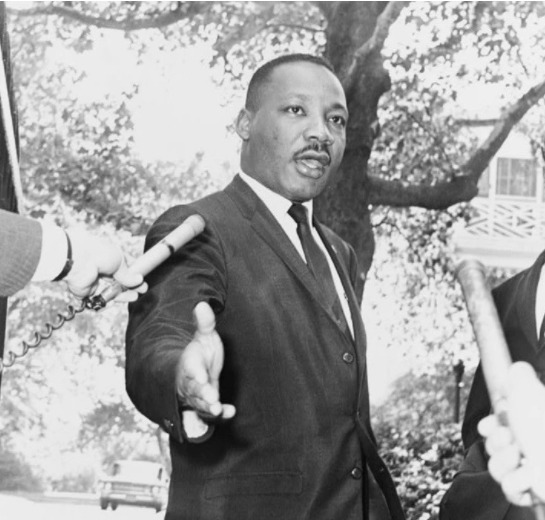
Rev. Martin Luther King press conference / World Telegram & Sun photo by Dick DeMarsico. Created / Published July 30, 1964. (Library of Congress)

Applying Dr. King’s six philosophical principles of nonviolence

April 4, 2022, marks 54 years since Dr. Martin Luther King Jr. was assassinated on his balcony at the Lorraine Motel in Memphis. King had gone there for the second time in a month to march alongside the city’s striking sanitation workers. They demanded dignity and better wages, and King recognized that a strong union was essential to improving the quality of their lives.

In his final speech on April 3 (“I have been to the mountaintop”), King imagined a panoramic view of history and said of all the times to live, he would choose the current moment. Despite the challenges, the hate, the sickness of the mid-twentieth century, it was a moment, King said, when mankind could no longer ignore the problems that plagued society. The means to eradicate poverty were available. The tools to end war and hatred existed in the nonviolent resistance movements. “It is no longer a choice between violence and nonviolence in this world,” King told the crowd in Memphis. “It’s nonviolence or nonexistence.”

The American Union was born to answer the challenge King threw down in his Beyond Vietnam speech out one year before his death; “to declare eternal hostility to poverty, racism, and militarism.” We are still confronted by these interconnected evils, and once again, standing at a similar crossroads, inaction is not an option. Unity is the way forward, supporting a transformative legislative package, with success resting on a clear set of principles.

Like King’s final campaign in Memphis, the union recognizes that “all labor has dignity.” The legislation takes up King’s calls for a “guaranteed annual income” with a program of universal basic income, so every American man, woman, and child has an economic floor to stand on. Racial injustice is addressed with wide-ranging provisions to reverse the trends of mass incarceration. King’s work to end American militarism, which did not stop in Vietnam but continued to grow, is built upon with military downsizing and foreign policy adjustments.

Martin Luther King Memorial in Washington, D.C. (Library of Congress)

King’s strategy of nonviolence affected revolutionary change, but his work was never finished. More than ever, we have the opportunity to continue his mission by working together under the six principles of nonviolence he outlined a half-century ago.

1. Nonviolence is a way of life for courageous people

Nonviolence is not for the faint of heart or those who are afraid of conflict. MLK exemplified the courage necessary to transform social and political norms. The American Union is boldly challenging the status quo in politics by rejecting the “lesser of two evils” paradigm. This opens the possibility of the greater evil succeeding, just as striking sanitation workers risked the greater evil of losing their jobs completely instead of the lesser evil of degrading working conditions. A new path forward requires sacrifice, dedication, and perseverance in pursuing our goals. We are not waiting for political leaders to change; we are demanding they change and we have drafted legislation detailing how.

2. Nonviolence seeks to win friendship and understanding

Part of the civil rights movement’s success was its ability to build bridges among groups toward what Dr. King called “a beloved community.” As a union of voters, we are constantly building bridges among people with different political priorities. Whether they’re Democrats, Republicans, Independents, Libertarians, Greens, Populists or Forwardists, they can find many policies they support in our legislative package. We understand that our strength is in unity and that we can compromise on particulars without compromising our principles. Everyone is welcome in the American Union as we explore every possible alliance to make the country better in 2022.

3. Nonviolence seeks to defeat injustice, not people

King recognized that the enemy was not any particular individual committing evil acts, rather it was injustice. So much energy is wasted in modern politics ginning up hate for the other side, rather than solving problems that affect the entire country. The American Union’s mission is to address the three evils of society by seeing our legislation reach the president’s desk, not to defeat one political party or another. As such, the union has offered every candidate and every incumbent running in 2022 an opportunity to succeed by taking up our demands. We’re ignoring party lines that distract us from fighting injustice.

4. Unearned suffering for a just cause is redemptive

Martin Luther King and Mohandas Gandhi, two great proponents of nonviolent action, equally understood that pain and suffering accompany the cause of freedom. King paraphrased Gandhi in his letter from Birmingham jail, writing, “To our most bitter opponents we say, ‘We shall match your capacity to inflict suffering by our capacity to endure suffering. We shall meet your physical force with soul force.’” Members of the American Union embrace this principle by engaging in a voluntary fast for peace on the 15th of each month. The fast of moral pressure serves as a demonstration of unity and a willingness to sacrifice for the cause of justice and peace.

(Bob Fitch photography archive,Stanford University Libraries)

5. Nonviolence chooses love over hate

In 1957, Dr. King explained the importance of love as the most effective weapon in his fight against injustice. “Love is creative and redemptive,” he said. “Love builds up and unites; hate tears down and destroys. The aftermath of the ‘fight fire with fire’ method … is bitterness and chaos. The aftermath of the love method is reconciliation.” The American Union is creating a new political paradigm based on love and inclusion. By rejecting divisive politics and offering candidates of both parties an oppertunity to succeed, we can unite a divided American around specific legislative solutions that recognize the humanity in all of us.

6. Nonviolence believes the universe is on the side of justice

MLK famously said, “The arc of the moral universe is long, but it bends toward justice.” America has exemplified that in its history, undergoing bursts of self-improvement when it aligned itself with the highest ideals of its founding principles. The American Union believes that people will, far more often than not, do the right thing when given the chance. By helping the poor, forgiving the sinners, and loving our enemies, we’ll create prospects for all people to bend the world toward justice.

As we emerge from the coronavirus pandemic, the country has the opportunity to “recapture the revolutionary spirit” encapsulated in its constitutional duties of establishing justice, liberty, and peace. We the people just need a better way to organize for political power to make it happen. Like Martin Luther King and the sanitation workers knew in 1968, a union is the best way to get there. Together, we can win us a better social contract in 2022.

Click here to learn more about how the American Union can end poverty, end mass incarceration, and end the endless wars, or join with a monthly contribution to the PAC.

Curious about the 50+ policies in the legislative package? Read it yourself [PDF] or take the quiz to see how many you support.

.

Specific Issues Index

from Creating Better World

Posted in Martin Luther King Jr., non-violence | Tagged , , , , , , , | Leave a comment