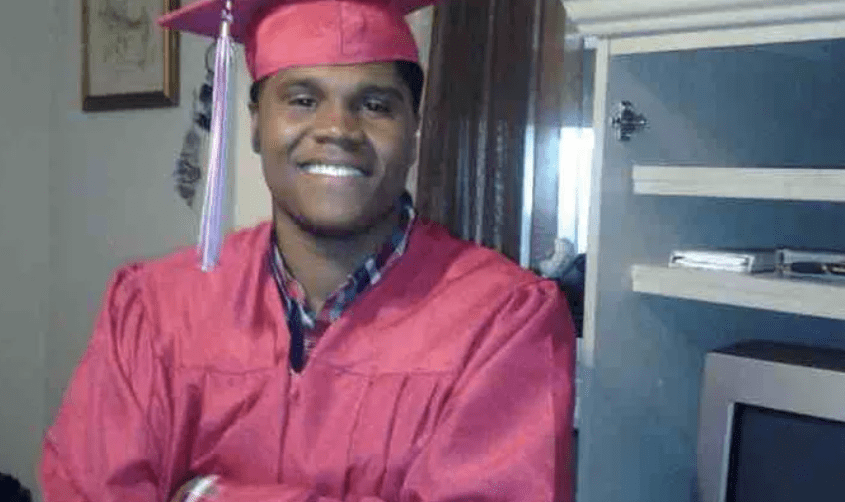
In the early morning hours of New Year’s Day 2009, Oscar Juliuss Grant III was fatally shot by former Bay Area Rapid Transit (BART) Police officer Johannes Mehserle in Oakland, California, USA.
Responding to reports of a fight on a crowded BART train returning from San Francisco, and based on only a general description of those involved in the fight, several BART Police officers detained Grant and several others on the platform of the Fruitvale BART Station. One of the passengers, who witnesses say was not actually involved in the fight, was 22-year-old Oscar Grant.
By the time Mehserle arrived at the scene, another BART officer was restraining Oscar, who was unarmed and lying face down on the platform. Based on the belief that Oscar was reaching into his waistband while being restrained by that other BART officer, Mehserle claims he intended to draw his Taser®, but instead drew his 9mm pistol, and discharged a single fatal round striking Oscar in the chest.
Oscar was pronounced dead the next morning at Highland Hospital in Oakland.
The events were captured on several digital video and cell phone cameras. The footage was quickly disseminated to media outlets and to various websites, where it was viewed by millions. The following days saw both peaceful and violent protests.
On January 30, 2010, Alameda County prosecutors charged Mehserle with murder for the shooting death of Oscar Grant. Mehserle soon resigned his position and pleaded not guilty. After a change of venue, the criminal trial began June 10, 2010 in Los Angeles County Superior Court.
On July 8, 2010, the jury returned its verdict: Mehserle was found guilty of involuntary manslaughter, and acquitted of both second-degree murder and voluntary manslaughter.
Initial protests against the ruling were peacefully organized, however, looting, arson, destruction of property, and small riots broke out after dark. Nearly 80 people were eventually arrested.
On July 9, the U.S. Justice Department opened a civil rights investigation against Mehserle, however, no federal charges have been filed against Mehserle to date.
On November 5, 2010, Mehserle was sentenced to two years in State Prison, but was given double credit for the 146 days he had already served prior to sentencing, thereby reducing his sentence by 292 days. Mehserle served his time in the Los Angeles County Jail, occupying a private cell away from other prisoners, and was released on June 13, 2011.
Oakland civil rights attorney John Burris filed a $25 million wrongful death claim against BART on behalf of Grant’s family. BART settled with Grant’s daughter and mother for a total of $2.8 million in 2011. It also settled with several of Grant’s friends who had sued for damages because of police brutality.
The shooting happened November 18, 2018 on the 24000 block of O’Neil Ave. following a 911 call reporting a man with a knife. Officers found 29-year-old Agustin Gonsalez in the street and repeatedly ordered him to drop the knife. Video shows Gonsalez ignoring the commands and advancing toward an officer before being shot multiple times. Gonsalez was taken to a hospital where he later died. It was determined the object in his hand had been a razor blade.
Famed civil rights attorney John Burris is representing the family, and said in a press conference Friday that the 13 bullets fired were unnecessary. “You should bring out your beanbags, or your pepper spray, any number of things that are available, that these officer all had,” said Burris. “That could have been used at the time that they were there, without using deadly force.”
The decision to clear the officers comes six months after the shooting. The DA’s report, which is 30 pages long, says the investigation focused on whether there is sufficient evidence to prove beyond a reasonable doubt that a law enforcement official committed a crime in connection with the shooting death. DA Nancy O’Malley said no.
Family members met with their attorneys to read the district attorney’s final report on the deadly police shooting of the 29-year-old. “Just reading this whole article just makes me more angry,” said Karla Gonsalez, the man’s mother.
The report found that Gonsalez was suicidal, that he advanced on officers with the intention of getting them to shoot and kill him. It cited evidence, including a text message Gonsalez sent on the day of the shooting, He wrote in part, “I’ve surrendered myself to the devil and gave in…..I’m dead inside so I’m not sorry for the outcome.”
“No, deep down inside, it was a call for help,” said Karla about her son, “It’s not a reason for a police officer to come and kill them (him). It doesn’t give them the place of god to take their life,”
KRON4’s Michelle Kingston spoke with victim’s family. “My son was 29 years old. he has two beautiful kids that are 8 and 10. He adored them.” his mother Karla Gonsalez said. “He was a hard worker. He was goofy. He always knew how to make people laugh.” ” He knew how to brighten our room with a smile”. Gonsalez’s family is wondering how they’ll get through his daughter’s ninth birthday party and Christmas without him.
Meanwhile, there appears to be a power grab initiated by Hayward City Manager Kelly McAdoo that could strip each councilmember of its power to control the conversation at Hayward City Hall by limiting the number of referrals requested per elected official to five each year. Councilmember Aisha Wahab has offered at least five referrals already this year and it is just March.
But it was Wahab’s questions and referral about police de-escalation and mental health training that is the impetus for Tuesday night’s agenda item to reform the referral process. Wahab’s query came after the killing last November by Hayward Police of Agustin Gonsalez, a 29-year-old man was later found to have suffered from mental illness. The answers to Wahab’s question about the types of training and whether Hayward Police receive them did not come easy.
Last month, Wahab raised the issue again during a council meeting, but McAdoo questioned exactly what Wahab was actually asking them to do. Upset, Wahab revealed conversations on the topic that she had with the city manager and questioned whether Hayward police officers are receiving any mental health training at all.
The cellphone video starts at approximately the moment Vallejo Police Department officer David McLaughlin draws his gun from its holster.
Adrian Burrell, a former Marine and documentary filmmaker is holding the phone and standing on his porch on January 22, watching the traffic stop of his cousin, Michael Walton, happening in Burrell’s driveway.
“You have a gun, and I have one, but it’s in the form of a camera,” Burrell recalls thinking. “This is the only thing I can bring to the fight.”
When McLaughlin turns and notices he’s being filmed, he orders Burrell to “get back.”
“Nope,” Burrell responds from his porch about 20 to 30 feet away.
Filming the police is protected under the First Amendment, as long as it doesn’t interfere with police duties. But McLaughlin strides onto the porch—holstering his gun and turning his back on Walton, a man he just moments ago appeared to consider a possible deadly threat—and starts to handcuff Burrell. “You’re interfering, so you’re going in the back of the car,” he says.
What happens next isn’t caught on camera, but McLaughlin tells Burrell to stop resisting. “I’m not resisting,” Burrell insists.
According to Burrell, McLaughlin then swept him to the ground and slammed his head against a wooden pole, giving him a concussion. McLaughlin detained Burrell before eventually releasing him, Burrell says, after finding out he was a veteran.
“I spend my whole life trying to avoid this, and it came to my house,” Burrell thought as he sat in the back of the squad car.
Like many recorded instances of police misconduct over the past five years, Burrell’s cellphone footage, uploaded to Facebook, went viral, sparking national media coverage. But it was only one of a string of high-profile police incidents in recent months that have inflamed long-running tensions in Vallejo—a diverse, blue-collar city north of Oakland, California—between the city’s police department and its citizens. Almost all of the recent incidents have been caught on cellphones or police-worn body cameras. Local activists say they finally show what lawsuits and protesters have complained of for years.
Vallejo has paid out millions of dollars to settle civil lawsuits alleging wrongful deaths, brutality, and misconduct over the past decade. According to Claudia Quintana, Vallejo city attorney, there are currently 35 pending claims and lawsuits in connection with the Vallejo Police Department, 16 of which allege excessive force. There have been accusations of police retaliation against victims who have come forward, the police chief resigned in April, and the mayor has asked that the Justice Department come to town to try to mend the frayed relationship between police and the community.
The Vallejo Police Department says it is underfunded and dealing with high crime and high unemployment; the city never really recovered from the 2008 recession.
But Vallejo has one of the highest per capita rates of fatal police shootings in the state, higher than neighboring cities with similar crime problems, and one of the highest amounts of lawsuit payouts in the Bay Area. And while the number of police use-of-force injuries may be small compared to the overall number of arrests, for the first time, many of them are being caught on tape.
“Vallejo’s been problematic for a long time,” says Melissa Nold, Burrell’s attorney. “I’m from here, I’ve lived here my whole life, and the police department’s always been problematic. I think a lot of the increase for us recently has been the videotapes.”
On Saturday, Jan. 22, 2010 20-year-old Raheim Malik Brown was shot and killed by the Oakland Unified School District’s police force near a Skyline High School dance.
Police statements and media have reported that Brown tried to stab an officer with a screwdriver, and a second officer shot Brown five times – once in each arm, once in his chest and twice in his head – in defense of his partner.
On Thursday, Feb. 3, outside the OUSD headquarters, Brown’s mother, Lori Davis, spoke at a press conference. Calling the killing an “assassination,” she was horrified by the excessive use of force by school police officers. Davis believes that Sgts. Barhim Bhatt and Jonathan Bellusa, the two cops identified at the press conference as the two involved in Brown’s killing, should “never be able to work in another police department ever.”
Tamisha Stewart, the only civilian witness to the killing, who was in the car with Brown outside the Skyline High dance, spoke for the first time publicly about the event. The screwdriver Brown was accused of using as a weapon, according to Stewart, was being used in an attempt to hotwire the car, and it “never left the ignition.”
While hotwiring a car might be cause for police attention, it is not cause for five bullets, including two to the head. Stewart added, “There was nothing that Raheim did that he deserved to die.” According to statements at the press conference, after Brown was killed, Stewart was beaten badly and jailed for almost a week.
An Oakland teacher’s union representative also spoke at the Thursday press conference, saying that the union had voted to “support fully an independent investigation” into Brown’s killing and the OUSD Police Department.
Brown was one of three people killed by police in a single week in Oakland. In early 2010 former Oakland Police Chief Anthony Batts called on the FBI for an external investigation into the November police killing of Derrick Jones. As initial police statements contrast sharply with Stewart’s account of Brown’s killing, further investigation into this case might also be warranted.
Just after midnight on Saturday May 6th, Alan Blueford and two of his friends were waiting for some girls to pick them up on 90th Ave., in East Oakland, after the Floyd Mayweather fight. Not long after Alan had phoned his parents to check-in with them, a car slowly pulled up to them with its lights off. Alan ran. One officer gave chase. A few blocks later Alan was shot by OPD officer Miguel Masso. Masso also shot himself in the foot. Over a dozen witnesses all said that Alan had no weapon and posed no threat to the officer.
Why did the police approach Alan and his friends with their lights off? Why did they give chase when Alan had committed no crime and posed no threat to the officer? Why was Alan shot three times when he had no weapon? How did a trained officer shoot himself in the foot? From the witnesses’ statements, why was Alan not given emergency CPR by OPD? Why did the OPD change their story to the family several times in the days after the shooting? Why have they refused to release the coroner’s report, despite the fact that it has been complete for weeks?
The family has gotten nothing but lies, distortions and stalling from the OPD. The Blueford family and the Justice 4 Alan Blueford Coalition are demanding:
1. Officer Miguel Masso be fired and charged with Alan’s murder.
2. OPD Chief Howard Jordan be held accountable for lying to the Blueford family.
3. An end to stop-and-frisk and other police practices of racial profiling.
4. The repeal of the Police Officers’ Bill of Rights, that shields violent cops from prosecution and keeps them on the street.
On September 30, 2019 Malad Baldwin was assaulted by the police at his home in front of witnesses. His home is in a relatively nice neighborhood in Antioch. Interviews of family members by the Oscar Grant Committee, were used to create this brief narrative of the events. To date the police have refused to release any police records to Malad or his mother and the officers involved are not known at this time. A complaint has now been filed in an effort to obtain police records.
Apparently, Antioch Police were dispatched due to a call from Contra Costa Fire Dept concerning a man acting unusual, according to the Medical History Report by Sutter Hospital ER Thomas Sugarman MD following discussion with Police.
Malad says he had observed a Fire Truck parked down the street. He claims he did nothing abnormal other than staring although he may have had some mental confusion about what might have happened.
While he was near the street near his home, the fire truck drove passed him and then did a U-turn and parked just down the street again. Apparently, that is when the police were notified.
Earlier, Malad had told his brother Lawrence Adams, his care giver, that he was going for his usual walk. Lawrence watching from his upstairs window above the garage then saw a brief exchange between occupants in a slowly passing fire truck. The firemen seemed to be taunting and pointing at Malad and he heard Malad yell out “why are you here for me? You aren’t here for me! I didn’t call you!”
According to Malad, he remembers a police officer pulling up in a patrol car and and approaching him. Malad remembers that the officer asked, “what you are doing” and I says “nothing, I live here”. Malad said “Am I being arrested” I live right here. The officer then followed behind Malad to the house.
Malad was now on his sidewalk near his front door on his way into his house. Malad describes being pulled by the shoulder. He at first thought it was his brother. However, it was the police officer. Malad is confused about what happened, but he remembers being punched.
He doesn’t remember any commands by the officer. Malad also continues to say, “ I didn’t do anything?” Malad then slips inside house and goes up the nearby stairs to his bedroom. Malad remembers locking his bedroom door. Hearing commotion, Malad leaves his room and from the balcony was calling out to his brother “What is happening?” Now, the Officer goes up the stairs following Malad into bedroom.
Lawrence, meanwhile, had watched the police officer arrive from upstairs window .The police officer never said anything in response to Malad, but closely followed him from behind on the sidewalk and across the street up the driveway while having put on leather gloves.
When Lawrence lost visual contact with his brother, he raced downstairs and opened the front door. There he witnessed the officer, without saying a word, grab Malad’s shoulder and then punch him in his shoulder with his fist driving Malad into the side of the house.
Malad then scurried into house. The officer just watched momentarily while grabbing his taser. Then, without saying a word, he violently pushed Lawrence from the door back into the house so hard that Lawrence staggered far into the dining room.
The officer then went into a crouch position besides the stairway with his red lighted taser held out in front of him at the ready. Lawrence yelled out “You can’t do that. That’s against the law. You have no warrant!”
Officer still in crouch mode then climbed up the stairs. Suddenly, 3 firemen walked into the house. Lawrence is still back in dining room with hands up hoping not to get shot. A fireman tugs on his clothes asking him to come outside. Lawrence says “that’s not right. I am only one here with Malad.”
A fireman then says that Malad called in on himself. Lawrence responds, “That’s not right”. Lawrence then manages to escort the firemen from the house.
As Lawrence was engaged with the firemen just outside the front door, another police officer suddenly appears from behind the firemen with baton drawn pushing Lawrence violently up against the door. Instinctively, Lawrence grabs the baton to prevent any blows.
Then a fireman yells from the doorway, “he’s upstairs” and the officer releases Lawrence, turns and runs upstairs. Lawrence locks the front door to keep out the firemen.
Lawrence goes upstairs and sees an officer strike Malad with a baton in back of knee. Officer yells for Lawrence to get out of here and Lawrence says, “ I am going to my room”.
There in his bedroom, Malad is assaulted with a baton or flashlight bringing him down to his knees. One officer had a choke hold on Malad and then the other officer brought his knee across Malad’s throat while the other officer handcuffed Malad with his arms behind him.
Hearing the commotion, Malad’s Uncle Martin Parks, who is disabled, came out of his upstairs room to observe the action in Malad’s room. Shocked by what was happening, he saw Malad laying face down on his bed with handcuffs on.
One officer was still holding Malad down, while another officer had his gun drawn pointing at Malad’s head. Martin then heard the officer say at least two different times if you don’t stop struggling, “I will shoot you”.
During his interview, Martin was still quite shaken by everything that had happened. Observing Martin, one officer yelled “ Get the Fuck out! This is none of your business!” Martin went back to his room and called Malad’s mother Kathryn Wade.
Malad was then brought downstairs and outside of his home with both officer’s pulling his arms high above the rear of his head causing excruciating pain and doubling him over as he tried to walk.
Lawrence retrieves his video phone from room and returns to balcony in time to video police hauling Malad down the stairs and out the front door. Police officer slams front door in Lawrence’s face, but he still comes out to video more.
Lawrence says as his brother is at police car handcuffed, he hears officer threaten Malad “ I will shoot you if you are not still.”
After a few minutes, Malad was placed into a police car and then taken to Sutter Hospital for examination although the police refused to tell family where he was being taken. The handcuffs were never removed during about 30 minutes at hospital.
Malad was given several medicines. According to Medical report, Malad claims he was struck in the right Clavicle by a baton and the left knee by a flashlight. Malad tells Thomas Sugarman MD that he has a history of mental illness, around PTSD. Malad is unable to provide further information, but wants his Mother called. Malad repeatedly asks ‘If there a warrant’ and ‘if he is under arrest’. Full ER visit bill is about $3200.
When Malad leaves in police car, Lawrence goes back inside house, only to return shortly when his mother arrives fearing for her wellbeing. Lawrence sees 3-4 firemen acting disrespectful toward his mom such that even one police officer steps in to stop it.
Malad’s mother, Kathryn Wade, was informed of police attack on her son by Uncle Martin Parks via a phone call. She arrived at her home just after the police had left taking her son to Sutter Hospital. Kathryn was told by police that a Contra Costa Firefighter on a passing Fire truck claimed he had seen Malad throw something at a woman and initiated a call to Police.
Kathryn’s pleas for police, quite numerous now, to locate this mysterious woman were ignored as police made no effort on the scene to find such a person despite continued presence of firemen and two of their trucks. Kathryn has been unable to locate any such woman in talking to neighbors.
No one is aware of the reasons for the presence of these fire trucks either before or after incident involving Malad. There didn’t seem to be any medical emergencies or fires, outside of the attack on Malad. Lawrence observes many police officers in area, just talking to each other. Also, there are two fire trucks one of which was partially blocking Kathryn’s car as she drove into her driveway.
From Sutter Hospital, Malad was transferred to Antioch Police Department and later to Martinez Jail. He was eventually transferred to West County Detention Center. After 3 days, Malad was released apparently without any paperwork, charges or notice to appear in court.
The testimony of Malad, Kathryn, Martin and Lawrence are both honest, sincere, emotional and disturbing! See the video interview links.
Rather than treating this call as someone experiencing a medical mental episode, officers physically abused Malad and even Lawrence and entered Mahad’s home without warrant or permission. No one in family gave any permission for police and firemen to enter their home, nor was anyone asked.
Despite there being no reason to believe any crime was happening or had been committed, police used extreme physical force including repeated threats to shoot to kill with a weapon aimed at Malad while he was handcuffed and otherwise restrained.
In reality, the entire family was terrorized including several young children in a separate living room to left of front door by totally unwarranted police brutality against a wonderful family of color.
Police were aware or should have been aware that Malad suffers from some mental illness that may make him unable to rationally respond to police commands when he is confronted with a stressful situation.
In fact, Malad already suffers some mental disabilities the result of an earlier brutal police assault on April 28, 2014. Beaten to unconscious, Malad was found innocent at a trial after he was falsely accused of actually assaulting the police.
The case resulted in a monetary settlement but has left Malad mentally scarred
Terry, a 43 year old Black man was shot and killed by Pittsburg Police late Friday night, while eating dinner inside his car outside of Nations Burgers in Pittsburg, as was his habit before going to work on his night shift job as a delivery driver for Presidential Propane Company. The police claim that he was reaching for a gun that was a holstered pistol in plain sight to the non shooting officer. Body cam of both officers clearly show Amons attempting to comply with shouted contradictory orders from two cops with guns drawn and aimed at him. The videos shows Amons complying with orders to place his hands on the steering wheel and then attempting to comply with frantic commands to “get out of the car” before being sensely gunned down. The officer with the clearest view, through the open passenger side window, of the gun and Amons hands never fires but suddenly backs away to safety as his partner fires some 5 rounds into Amons back. Video shows this officer had no view of either the gun or Amons hand nearest gun. Officers claim they were responding to a drug dealing complaint that provoked the initial contact. Amons was alone and no drugs were found in his car.
Establish a victory lawns and gardens initiative through a $36 billion investment to help urban, rural, and suburban Americans transform their lawns into food-producing or reforested spaces that sequester carbon and save water. Lawns account for 40 million acres in America, and we spend tens of billions of dollars each year taking care of them each year. Let’s reinvest that money in climate smart practices that encourage everyone to be a part of the solution.
Invest $14.7 billion in cooperatively and community owned grocery stores. Local groceries and co-ops are more likely to buy local products, which will help grow markets for farmers to sell their goods. We will also use these funds to bring grocery stores to food deserts ensuring all people have access to healthy, local food.
Incentivize schools to procure locally produced foods. Institutional purchasing can be a huge boost to local producers and build local farm economies.
We will give a meal incentive for schools that acquire at least 30 percent of their food from local sources.
Invest $31 billion in local food processing, including slaughter and dairy processing. Rampant consolidation in processing has led to a lack of facilities for small-scale, local producers. Investing in local facilities will help smaller producers to compete with the Tyson Foods of the world.
Allow meat slaughtered at state inspected facilities to be sold across state lines. State inspected slaughter facilities must meet or exceed federal regulations.
Currently, imported meat must meet the same standards as meat from a federally inspected slaughterhouses and it may cross state lines. We need to level the playing field for locally produced meat.
Bolster existing programs that help farmers process their products on farm with a $263 million investment. There are already some programs that support on-farm processing and farmers markets. We need to continue to support these efforts as we expand opportunities.
Help states develop food recovery and composting programs with a $160 billion investment to help solve hunger. If food waste were its own country, it would be the third largest emitter of greenhouse gases after the U.S. and China. Meanwhile, 40 million people in this country are food insecure. We need to give states the resources they need to reduce food waste and hunger in their communities.
Enforce country of origin labeling.Unfair trade policy has let foreign countries overturn our country-of-origin-labeling laws even though 90 percent of the American people support country-of-origin labeling. We must respect the will of the people and allow them to know where their food is coming from.
Incentivize community ownership of farmland. One of the barriers to being able to choose a career in ecologically regenerative farming is the cost of acquiring farmland. We want communities to be able to join together to own farmland to help people grow our local, ecologically regeneratively produced food and help solve the climate crisis and will provide government assistance to do so. We will support a robust future for rural America that will be essential to addressing the climate crisis. This is consistent with our Revitalizing Rural America plan.
In 2017, 95 percent of all farmers accounted for were white, with black farmers reporting ownership declining at 10 times the rate it did for white farmers. That is in addition to black farmers losing 80 percent of their land between 1910 and 2007, in no small part due to systematic discrimination. Today, only about 5 percent of black farmers reporting earning over $50,000, compared to 15 percent of white farmers. Additionally, 52 percent of American women farmers said they felt gender discrimination. When we are in the White House we will eradicate discrimination in agricultural land and opportunities.
In addition to the $41 billion he will invest in socially disadvantaged and beginning farmers as president, Bernie will:
Help beginning and socially disadvantaged farmers get fair access to land and resources by providing $50 million for a Disadvantaged and Beginning Farm State Coordinator program. The coordinator will also help farmers access programs and fill out burdensome paperwork that can be a barrier to participation for small farms.
Provide oral translation assistance at all USDA, FDA, and DOJ offices for non-English speakers. Farmers across the U.S. are prevented from accessing government resources because of language and literacy barriers. We will require USDA, the Food and Drug Administration and the Department of Justice to provide translation assistance need to help all farmers regardless of their primary language.
Invest $1.12 billion in Tribal land access and extension programs. We will invest in programs to help Tribes and Tribal corporations access, acquire, and consolidate land on their reservations. We will also ensure federal resources to facilitate knowledge transfer, technical assistance, and educational activities on Tribal land.
a) Invest $127 million in the Highly Fractionated Indian Land Grant Program to reunify divided and fractured ownership of tribal land. b) Invest $600 million in the Indian Tribal Land Acquisition Grant Program for Tribes and Tribal corporations to purchase land on their own reservations. c) Invest $400 million in the Federally Recognized Tribes Extension Program to provide educational outreach and research-based knowledge on Tribal lands through the USDA Extension program.
Strengthen outreach to minority and socially disadvantaged farmers. The Farmer Opportunity Training and Outreach program helps coordinate USDA training and education for beginning, veteran, and socially disadvantaged farmers. The program has been historically underfunded, so we will spend $1 billion to expand it to ensure those who have been chronically underserved by the USDA have access to the resources they need to thrive.
Create a pathway to citizenship for migrant farmworkers and end exclusions for agricultural workers in labor laws. We must ensure farmworkers have the right to overtime pay, strong safety protections, and the right to collectively bargain. Currently, farm workers are exempt from many labor laws that other workers have benefitted from for years. Farming is a dangerous and demanding profession. We need to protect these workers as we do others
Reform H-2A agricultural work visas to substantially raise prevailing wages, allow workers to move between employers, increase enforcement and hold employers who mistreat workers accountable, and include a pathway to citizenship for those who want it.
Lobbyists and the Trump administration have gutted GIPSA and blocked rules helping farmers. As the National Sustainable Agriculture Coalition details, “the 2008 Farm Bill required USDA to write regulations to empower GIPSA to provide basic protections for farmers who do business with these companies. But when USDA tried to write the regulations, the meat and poultry industries launched a full-scale attack to get GOP lawmakers to pass appropriations riders to block USDA from finalizing those farmer protections.” Working together, we will restore the agency that enforces antitrust laws in the meatpacking industry – an agency that Trump eliminated.
Ensure farmers have the right to repair their own equipment. In rural America today, farmers can’t even repair their own tractors or other equipment because of the greed of companies like John Deere. As noted in Wired Magazine, “Farmers can’t change engine settings, can’t retrofit old equipment with new features, and can’t modify their tractors to meet new environmental standards on their own” without going through an authorized repair agent. When we are in the White House, we will pass a national right-to-repair law that gives every farmer in America full rights over the machinery they buy.
Reform patent laws to prevent predatory lawsuits from massive agribusinesses like Bayer/Monsanto. We cannot continue to allow Monsanto to control 80 percent of U.S. corn and more than 90 percent of U.S. soybean seed patents — a situation that has only gotten worse after the Trump administration approved Monsanto’s disastrous merger with Bayer. We are going to reform our patent laws to protect farmers from predatory patent lawsuits from companies like Monsanto.
Reform the agricultural subsidy system so more money goes to small and medium sized farms. We cannot continue to allow the top 10 percent of farms to receive 77 percent of all government subsidies — with much of this money going to absentee farm owners, who live in big cities, renting out their land. With a supply management system, we will be able to decrease the overall amount we spend on subsidies. However, when subsidies are necessary, we will distribute them more equitably.
Strengthen organic standards. Currently, massive farms are able to claim organic status without meeting all of the requirements, forcing smaller producers out of the market. We will address this by starting with implementing two rules to require dairy production to be on pasture and require poultry to have outdoor access.



 progressiveissuesblog