The Journal of 9/11 Studies is a peer-reviewed, electronic-only journal covering research related to the events of September 11, 2001. Many fields of study are represented and all content is freely available online.
Since 2006, the Journal has presented some of the most compelling analysis and evidence related to the crimes of September 11, 2001. Today our mission is to offer new findings and new, evidence-based perspectives that have not yet been addressed. We hope you find the content informative and useful in the fight for truth, justice and peace.
To learn about the editors or get contact and submission information, see the About section in the menu above.
YouTube posted a link to the official 9/11 story that you can use to contrast with the evidence highlighted in this video, then decide for yourself if the official story adequately addressed the issue using the scientific method. (see more)
The direction and sequence of the primary forces to create the smooth motions observed in the towers destruction had to be “out and down”. The official story is impossible because if it was “down then out” by gravity alone, there would have been impacts or jolts slowing or stopping the downward motion.
The DIRECTION of acceleration for any two (or more) objects is INDEPENDENT of mass, material, size and scale, and always in line with the applied net force.
The SEQUENCE of forces acting on any two groups of accelerating objects is also INDEPENDENT of mass, material, size and scale. If one can mimic the motions observed on a large group of objects with a series of forces applied to any small group of objects, then then larger group of objects, regardless of its mass, material, size and scale will have the same sequence and direction of net forces as the smaller group.
The motions of dissimilar small objects are used frequently to demonstrate the motions and forces acting on very large objects because the direction and sequence of net force on both are independent of mass, material, size and scale.
For example, the direction of acceleration and therefore direction of net force acting on a bucket tied to a rope whirled around your head, is similar to the motion and direction of net force acting on our moon orbiting the earth. The direction of acceleration due to the net force acting on both the bucket and the moon are similar, even though the bucket is not a scaled model of our moon.
No agency, no expert, no scientist, nobody has ever been able to make any real model demonstrating the forces necessary to mimic the smooth downward and outward accelerations observed during the twin towers fall using gravity and fire alone, because it’s impossible.
YouTube posted a link to the official 9/11 story that you can use to contrast with the evidence highlighted in this video, then decide for yourself if their story addressed the issue using the scientific method. Why couldn’t the National Geographic (or BBC) experts melt steel with thermite? NOTE: THERMATE = Thermite + SULFUR (The FEMA report could not explain the source of the SULFUR ) Learn more: http://www.911speakout.org
YouTube posted a link to the official 9/11 story that you can use to contrast with the evidence highlighted in this video, then decide for yourself if their story addressed the issue outlined, using the scientific method. Did rubble from the WTC really cause those eutectic formations ,as we were led to believe?
YouTube posted a link to the official 9/11 story that you can use to contrast with the evidence highlighted in this video, then decide for yourself if their story addressed the issue outlined, using the scientific method.
What do you believe? Why do you believe it? Have your beliefs changed over time?
Like most, I had beliefs in childhood that changed as I learned new information, such as my belief in the Tooth Fairy and Santa. But my steadfast belief in America, which I thought was synonymous with truth and justice, endured. When 9/11 happened, I felt justified in the awesome fury of retaliation against those who were blamed, because I believed what we were told. Having received virtually all my information from television and newspapers, I never once questioned the official version for years. After all, not only did I watch the towers fall live on the television, but the information from the experts that very day as to who did it fit perfectly with my core beliefs about America. Later, the scientific explanations as to how those towers fell came from respected sources that I also trusted, such as the National Geographic, and the PBS NOVA program. Their explanation of a natural fire induced collapse fit nicely with my still intact core beliefs about America.
But those beliefs were shaken years later when I received a short video that focused on details of the collapse that were overlooked by my trusted sources. Suddenly, something snapped. Those towers didn’t just “fall down” by gravity alone; those towers were blown up! How could I have been so gullible for so many years? Why didn’t I know about these details, such as the eutectic mixtures, the freefall of building 7, the missing jolt, the iron microspheres and the nanothermite? Any one of them, let alone all, point directly to an intentional demolition rather than a fire-induced natural gravitational “collapse.”
Well it just wasn’t right, and I had to tell others. I now believed that once people were aware of this evidence they would rise up collectively and demand justice. My, how naïve my new belief was! Much to my surprise, rather than provoke interest or outrage, what I mostly got was silence, doubt, or ridicule. I was about as popular as the one that told you that Santa doesn’t really exist.
I began to realize what a firm grip our belief systems have on us, and how loath we are to having those beliefs challenged. For many, it seems far more important to preserve a lifetime of beliefs about one’s country, religious or political views than to peek into any details that go against them. Even in my engineering world, I found it’s ok to study the scientific details of how a bridge or building falls just as long as that building didn’t fall on September 11. There seems to be a deep “disconnect” between what the average person believes and what the evidence says must be true.
So how does one counter this disconnect? Since the media and our institutions could longer be believed, I wanted to use something more credible, something that was independent of what people say. I wanted to use my belief in the fundamental laws of nature. Maybe the best way for me to explain was not telling others, but rather showing others what can or cannot happen by experiment, letting nature do the real talking. Experiment, it turns out, is the key to the scientific method. All the math and computer models in the world, whether by experts or authority, mean nothing if they don’t match a real world experiment.
The National Institute of Standards and Technology (NIST) was tasked with explaining what happened, but they never really told us much about the most important event, the actual collapse of those towers. They decided to stop their voluminous study at “collapse initiation”, leaving the critical mechanism that killed thousands for others to explain.
The PBS NOVA experts told us that it was a floor by floor pancake-type collapse, which they demonstrated using a computer animation. Unfortunately, that animation didn’t quite mesh with what we actually saw that day. So the story changed and the NIST endorsed the “pile driver collapse”, where the smaller “block” of top floors crushed the larger, stronger “block” all the way down to the ground, and then that smaller “block” decided to crush itself back up. Although never observed in the real world, this process was mathematically “proven” in a paper which also has a sketch clearly showing the phenomenon for those of us who may be a little rusty with differential equations.
The primary glitch appears to be with Newton’s 3rd law, which says net forces are equal and opposite. One would think that equal forces should destroy a smaller weaker block well before a larger stronger block. I decided to test Newton’s theory with some simple experiments with falling objects using various materials. Dropping the smaller block onto the larger block, I found that indeed the smaller objects couldn’t destroy any similar larger structure regardless of the material used or how many times I ran the test. That smaller block never even had a chance to make it to the bottom, let alone crush itself back up.
Another odd thing about the towers fall is that there was no measurable “jolt” or impact when those upper floors fell through the damaged fire zone and presumably “hit” the rest of the undamaged structure below. Rather, those upper floors continued to speed up those first few moments, almost as if they were falling right through all that strong steel and concrete.
Let’s think about this. If you jump into a swimming pool you slow down when you hit the water, right? When we watched Luke Aikins hit the net after his remarkable skydive, he also slowed down. So if the towers’ upper “block” of floors was hypothetically dropped into the ocean or a huge net, shouldn’t it also slow down? Why then did the top section continue to speed up when it hit undamaged steel and concrete below? Shouldn’t there at least have been a significant jolt when the two strong structures collided? Believe it or not that jolt is just not there. It’s missing.
In addition to experimenting with materials and motion, a couple of my experiments had to do with heat and chemical processes. One of the first official studies described unique steel with severe corrosion and intergranular melting containing a eutectic mixture consisting primarily of iron, oxygen and sulfur. No clear explanation for the source of that sulfur was identified and the corrosion and subsequent erosion was considered a most unusual event that baffled fire-wise professors. This was a problem for the official story and was never adequately explained by the NIST. Once again the corporate media came to the rescue, with the BBC stating in no uncertain terms that the source of the sulfur was from the drywall that stewed in the pile for weeks. If that was true then why was it such a mystery, and why do we routinely wrap drywall around steel to protect it from fire?
Believe it or not, the BBC didn’t even conduct a simple experiment to prove their claim. So I did. Confining gypsum drywall, diesel fuel, and aluminum around a steel beam, I burned the setup at similar temperatures for days. The result was that there was no intergranular melting or erosion of steel, just the opposite of what the BBC’s other experts told us.
A high percentage of iron microspheres and a red grey chip called nanothermite were found in the dust, neither of which should be present in the remains of any office fire. This time the National Geographic conducted an experiment that “proved” that 175 pounds of thermite could not melt a steel column. It therefore concluded that despite the direct evidence, thermitic material could not have been used to help take down the twin towers (even though it had been used in 1935 to take down a World’s Fair tower). Having no experience of this process, I decided to conduct my own experiments using far less thermite (or thermate, which is thermite with some sulfur added) just to see if I could do what the National Geographic experts couldn’t. Sure enough, after a little configuring I found that ordinary thermite could indeed melt and cut steel, contrary to what National Geographic experts told us.
Finally, while it was pretty obvious that nature was showing us what didn’t happen to those towers, I wanted to see if I could conduct an experiment to show what could have happened. This time I focused on the fact that the direction of a net force is always in line with a body’s acceleration. Net force direction as well as the sequence of applied forces is also independent of scale. Turning this around, if we observe the direction of accelerating objects then we can also determine the direction and the sequence of the net forces involved. If we can mimic similar accelerations on small objects with known forces, then we can understand the direction and sequence of net forces that also apply to large objects with similar motions.
Constructing various “towers,” I first experimented with the “pancake” and “pile driver” theories but those motions simply didn’t match what was observed when the towers fell. However, using the explosive force from internal firecrackers, we see similar horizontal and downward motions as with the towers’ destruction. This miniature controlled demolition of mine demonstrated that the sequence of motions had to be outward first, followed immediately by the downward motion from gravity. And if the outward motion came first, what force caused that horizontal acceleration? Fire and gravity cannot explain the observed motions and chemical evidence, but internal explosives and incendiaries can.
So what do we do? If you honestly believe in truth and justice, it’s imperative to do whatever you can to expose the evidence of what happened to your fellow citizens on 9/11. Speaking up rather than cowering in silence is certainly difficult and unpopular, but it’s what being a patriotic American is supposed to be all about.
Don’t get me wrong, I still believe in America. But the corruption, cronyism and cover-ups in our highest institutions appear epidemic and need to be weeded out if we stand a chance at fixing those problems. The loss of faith in our corporate media, as we catch them time and again in numerous lies, is growing, while belief in all our institutions that ignore the evidence and that cover up those crimes is eroding.
So how do we restore belief in America? We need to start exposing the truth and to let the chips fall where they may. Also, we need to question all official stories about world events happening today, right now, that are used to further political agendas and that are based on little or no real investigation.
Of course, we can just continue to believe whatever we want by ignoring the mountain of uncomfortable evidence, but in so doing, we are demonstrating that our personal beliefs are more important than doing what is right.
Most of us grew up and understood that the Tooth Fairy wasn’t the one who left money under the pillow, and Santa didn’t really deliver those presents, despite what we were told by those we loved and trusted. If you don’t already know by now, those towers didn’t just happen to collapse through fire and gravity alone as we were told. Those towers and the people inside were intentionally blown up.
I believe that truth matters. You can believe it, or not.
Jonathan Cole P.E. is a professional engineer with over 30 years of experience. For years he trusted the official explanations of the 9/11 building collapses until learning of many unexplained details in late 2007. He decided to research further, and conduct experiments to either prove or disprove various claims and theories of the event. His experimental videos can be found on youtube under the name of “physicsandreason” and on the website 911SpeakOut.org.
The following script is from “28 Pages” which aired on April 10, 2016. Steve Kroft is the correspondent. Howard Rosenberg and Julie Holstein, producers.
In 10 days, President Obama will visit Saudi Arabia at a time of deep mistrust between the two allies, and lingering doubts about the Saudi commitment to fighting violent Islamic extremism.
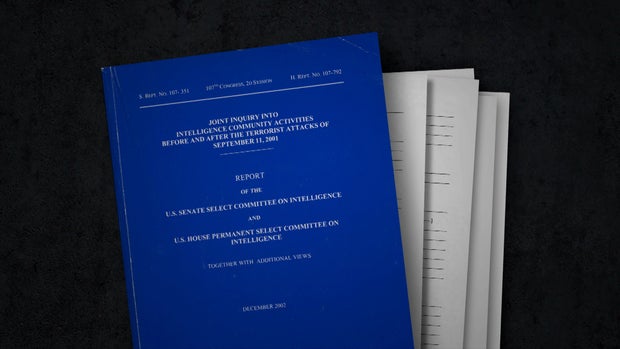
It also comes at a time when the White House and intelligence officials are reviewing whether to declassify one of the country’s most sensitive documents — known as the “28 pages.” They have to do with 9/11 and the possible existence of a Saudi support network for the hijackers while they were in the U.S.
For 13 years, the 28 pages have been locked away in a secret vault. Only a small group of people have ever seen them. Tonight, you will hear from some of the people who have read them and believe, along with the families of 9/11 victims that they should be declassified.
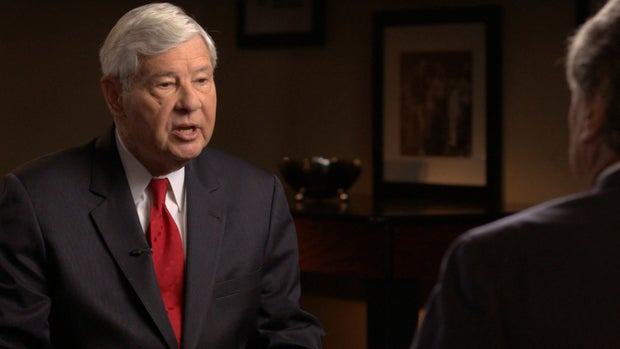
Bob Graham: I think it is implausible to believe that 19 people, most of whom didn’t speak English, most of whom had never been in the United States before, many of whom didn’t have a high school education– could’ve carried out such a complicated task without some support from within the United States.https://www.cbsnews.com/embed/video/?
Steve Kroft: And you believe that the 28 pages are crucial to this? Understand…
Bob Graham: I think they are a key part.
Former U.S. Senator Bob Graham has been trying to get the 28 pages released since the day they were classified back in 2003, when he played a major role in the first government investigation into 9/11.
Bob Graham: I remain deeply disturbed by the amount of material that has been censored from this report.
At the time, Graham was chairman of the Senate Select Committee on Intelligence and co-chair of the bipartisan joint congressional inquiry into intelligence failures surrounding the attacks. The Joint Inquiry reviewed a half a million documents, interviewed hundreds of witnesses and produced an 838 page report — minus the final chapter which was blanked out — excised by the Bush administration for reasons of national security.
“I remain deeply disturbed by the amount of material that has been censored from this report.”
Bob Graham won’t discuss the classified information in the 28 pages, he will say only that they outline a network of people that he believes supported the hijackers while they were in the U.S.
Steve Kroft: You believe that support came from Saudi Arabia?
Bob Graham: Substantially.
Steve Kroft: And when we say, “The Saudis,” you mean the government, the–
Bob Graham: I mean–
Steve Kroft: –rich people in the country? Charities–
Bob Graham: All of the above.
Graham and others believe the Saudi role has been soft-pedaled to protect a delicate relationship with a complicated kingdom where the rulers, royalty, riches and religion are all deeply intertwined in its institutions.
Bob Graham CBS NEWS
Porter Goss, who was Graham’s Republican co-chairman on the House side of the Joint Inquiry, and later director of the CIA, also felt strongly that an uncensored version of the 28 pages should be included in the final report. The two men made their case to the FBI and its then–director Robert Mueller in a face-to-face meeting.
Porter Goss: And they pushed back very hard on the 28 pages and they said, “No, that cannot be unclassified at this time.”
Steve Kroft: Did you happen to ask the FBI director why it was classified?
Porter Goss: We did, in a general way, and the answer was because, “We said so and it needs to be classified.”
Goss says he knew of no reason then and knows of no reason now why the pages need to be classified. They are locked away under the capital in guarded vaults called Sensitive Compartmented Information Facilities, or SCIFs in government jargon. This is as close as we could get with our cameras — a highly restricted area where members of Congress with the proper clearances can read the documents under close supervision. No note-taking allowed.
Tim Roemer: It’s all gotta go up here, Steve.
Tim Roemer, a former Democratic congressman and U.S. ambassador to India, has read the 28 pages multiple times. First as a member of the Joint Inquiry and later as a member of the blue-ribbon 9/11 Commission which picked up where Congress’ investigation left off.
Steve Kroft: How hard is it to actually read these 28 pages?
Tim Roemer: Very hard. These are tough documents to get your eyes on.
Roemer and others who have actually read the 28 pages, describe them as a working draft similar to a grand jury or police report that includes provocative evidence — some verified, and some not. They lay out the possibility of official Saudi assistance for two of the hijackers who settled in Southern California. That information from the 28-pages was turned over to the 9/11 Commission for further investigation. Some of the questions raised were answered in the commission’s final report. Others were not.
Steve Kroft: Is there information in the 28 pages that, if they were declassified, would surprise people?
Tim Roemer: Sure, you’re gonna be surprised by it. And, you’re going to be surprised by some of the answers that are sitting there today in the 9/11 Commission report about what happened in San Diego, and what happened in Los Angeles. And what was the Saudi involvement.
Much of that surprising information is buried in footnotes and appendices of the 9/11 report — part of the official public record, but most of it unknown to the general public. These are some, but not all of the facts:
In January of 2000, the first of the hijackers landed in Los Angeles after attending an al Qaeda summit in Kuala Lumpur, Malaysia. The two Saudi nationals, Nawaf al-Hazmi and Khalid al-Mihdhar, arrived with extremely limited language skills and no experience with Western culture. Yet, through an incredible series of circumstances, they managed to get everything they needed, from housing to flight lessons.
Tim Roemer: L.A., San Diego, that’s really you know, the hornet’s nest. That’s really the one that I continue to think about almost on a daily basis.
During their first days in L.A., witnesses place the two future hijackers at the King Fahd mosque in the company of Fahad al-Thumairy, a diplomat at the Saudi consulate known to hold extremist views. Later, 9/11 investigators would find him deceptive and suspicious and in 2003, he would be denied reentry to the United States for having suspected ties to terrorist activity.
Tim Roemer: This is a very interesting person in the whole 9/11 episode of who might’ve helped whom– in Los Angeles and San Diego, with two terrorists who didn’t know their way around.
Phone records show that Thumairy was also in regular contact with this man: Omar al-Bayoumi, a mysterious Saudi who became the hijackers biggest benefactor. He was a ghost employee with a no-show job at a Saudi aviation contractor outside Los Angeles while drawing a paycheck from the Saudi government.
Steve Kroft: You believe Bayoumi was a Saudi agent?
Bob Graham: Yes, and–
Steve Kroft: What makes you believe that?
Bob Graham: –well, for one thing, he’d been listed even before 9/11 in FBI files as being a Saudi agent.
On the morning of February 1, 2000, Bayoumi went to the office of the Saudi consulate where Thumairy worked. He then proceeded to have lunch at a Middle Eastern restaurant on Venice Boulevard where he later claimed he just happened to make the acquaintance of the two future hijackers.
Tim Roemer: Hazmi and Mihdhar magically run into Bayoumi in a restaurant that Bayoumi claims is a coincidence and in one of the biggest cities in the United States.
Steve Kroft: And he decides to befriend them.
Tim Roemer: He decides to not only befriend them but then to help them move to San Diego and get residence.
In San Diego, Bayoumi found them a place to live in his own apartment complex, advanced them the security deposit and cosigned the lease. He even threw them a party and introduced them to other Muslims who would help the hijackers obtain government IDs and enroll in English classes and flight schools. There’s no evidence that Bayoumi or Thumairy knew what the future hijackers were up to, and it is possible that they were just trying to help fellow Muslims.
The very day Bayoumi welcomed the hijackers to San Diego, there were four calls between his cell phone and the imam at a San Diego mosque, Anwar al-Awlaki, a name that should sound familiar.
The American-born Awlaki would be infamous a decade later as al Qaeda’s chief propagandist and top operative in Yemen until he was taken out by a CIA drone. But in January 2001, a year after becoming the hijackers’ spiritual adviser, he left San Diego for Falls Church, Virginia. Months later Hazmi, Mihdhar and three more hijackers would join him there.
Tim Roemer: Those are a lot of coincidences, and that’s a lot of smoke. Is that enough to make you squirm and uncomfortable, and dig harder– and declassify these 28 pages? Absolutely.
Perhaps, no one is more interested in reading the 28 pages than attorneys Jim Kreindler and Sean Carter who represent family members of the 9/11 victims in their lawsuit against the kingdom. Alleging that its’ institutions provided money to al Qaeda knowing that it was waging war against the United States.
Jim Kreindler: What we’re doing in court is developing the story that has to come out. But it’s been difficult for us because for many years, we weren’t getting the kind of openness and cooperation that we think our government owes to the American people, particularly the families of people who were murdered.
The U.S. government has even backed the Saudi position in court–that it can’t be sued because it enjoys sovereign immunity. The 9/11 Commission report says that Saudi Arabia has long been considered the primary source of al Qaeda funding through its’ wealthy citizens and charities with significant government sponsorship. But the sentence that got the most attention when the report came out is this:
“We have found no evidence that the Saudi government as an institution or senior Saudi officials individually funded the organization.”
Attorney Sean carter says it’s the most carefully crafted line in the 9/11 Commission report and the most misunderstood.
Sean Carter: When they say they found no evidence that senior Saudi officials individually funded al Qaeda, they conspicuously leave open the potential that they found evidence that people who were officials that they did not regard as senior officials had done so. That is the essence of the families’ lawsuit. That elements of the government and lower level officials sympathetic to bin Laden’s cause helped al Qaeda carry out the attacks and help sustain the al Qaeda network.
Yet, for more than a decade, the kingdom has maintained that that one sentence exonerated it of any responsibility for 9/11 regardless of what might be in the 28 pages.
Bob Kerrey: It’s not an exoneration. What we said–we did not, with this report, exonerate the Saudis.
Former U.S. Senator Bob Kerrey is another of the 10-member 9/11 Commission who has read the 28 pages and believes they should be declassified. He filed an affidavit in support of the 9/11 families’ lawsuit.
Bob Kerrey: You can’t provide the money for terrorists and then say, “I don’t have anything to do with what they’re doing.”
Steve Kroft: Do you believe that all of the leads that were developed in the 28 pages were answered in the 9/11 report? All the questions?
Bob Kerrey: No. No. In general, the 9/11 Commission did not get every single detail of the conspiracy. We didn’t. We didn’t have the time, we didn’t have the resources. We certainly didn’t pursue the entire line of inquiry in regard to Saudi Arabia.
Steve Kroft: Do you think all of these things in San Diego can be explained as coincidence?
John Lehman: I don’t believe in coincidences.
John Lehman, who was secretary of the Navy in the Reagan administration, says that he and the others make up a solid majority of former 9/11 commissioners who think the 28 pages should be made public.
John Lehman: We’re not a bunch of rubes that rode into Washington for this commission. I mean, we, you know, we’ve seen fire and we’ve seen rain and the politics of national security. We all have dealt for our careers in highly classified and compartmentalized in every aspect of security. We know when something shouldn’t be declassified. An the, this, those 28 pages in no way fall into that category.
Lehman has no doubt that some high Saudi officials knew that assistance was being provided to al Qaeda, but he doesn’t think it was ever official policy. He also doesn’t think that it absolves the Saudis of responsibility.
John Lehman: It was no accident that 15 of the 19 hijackers were Saudis. They all went to Saudi schools. They learned from the time they were first able to go to school of this intolerant brand of Islam.
Lehman is talking about Wahhabism, the ultra conservative, puritanical form of Islam that is rooted here and permeates every facet of society. There is no separation of church and state. After, oil, Wahhabism is one of the kingdom’s biggest exports. Saudi clerics, entrusted with Islam’s holiest shrines have immense power and billions of dollars to spread the faith. Building mosques and religious schools all over the world that have become recruiting grounds for violent extremists. 9/11 Commissioner John Lehman says all of this comes across in the 28 pages.
John Lehman: This is not going to be a smoking gun that is going to cause a huge furor. But it does give a very compact illustration of the kinds of things that went on that would really help the American people to understand why, what, how, how is it that these people are springing up all over the world to go to jihad?
Today, the FBI released The FBI: Protecting the Homeland in the 21st Century, the final report of the 9/11 Review Commission. This congressionally mandated review focused on the FBI’s implementation of the recommendations proposed by the National Commission on Terrorist Attacks Upon the United States (the 9/11 Commission).
“I am pleased the Review Commission recognized the significant progress we have made to build a threat-based, intelligence-driven law enforcement and national security organization,” said FBI Director James B. Comey. “I thank the commissioners and their staff for their efforts to help us better serve and protect the American public.”
The FBI asked three experts to lead this review: Edwin “Ed” Meese III, former United States attorney general; Timothy J. Roemer, former congressman and ambassador; and Bruce Hoffman, Georgetown University professor and noted author on terrorism. Over the past 14 months, the Commission visited numerous FBI offices, here and abroad, and—with the full cooperation of the FBI—received more than 60 briefings from FBI personnel in the course of their work. Read full copy of report (pdf) (Note: Link only goes to FBI Main Website Page)
Author: By Abdul Rahman AlmotawaPublication Date: Tue, 2002-12-03 03:00
JEDDAH, 3 December 2002 — Omar Al-Bayoumi, a Saudi who has been accused by American and other Western media outlets of helping two of the Sept. 11 bombers — Khalid Al-Mihdhar and Nawaf Al-Hazmi — has reaffirmed that he and his wife had no connection with checks passed to the hijackers.
In an interview with Asharq Al-Awsat, a sister publication of Arab News, Bayoumi, who holds three master’s degrees from US and British universities, urged the media not to falsely implicate him in the issue because US and British agents cleared him of all wrongdoing more than a year ago.
Asked how he would prove false the claim that he did not bring Mihdhar and Hazmi to the US or pay their house rents during their stay at the Barcode complex in Claremont in San Diego, he said: “I don’t know them. So how can I have paid for them? I don’t have the ability to pay for them because I have my own family and meet my educational expenses. It is unthinkable to even imagine that the two people came to learn English without any money.”
He also pointed out that the complex received only checks not cash. Those who have doubts can meet the complex management and make sure.
He challenged the media to produce the endorsed checks, which they said he allegedly passed to Mihdhar and Hazmi. “The subject of endorsed checks is totally baseless. It’s just falsification and fabrication. If anybody has this check they should produce it to the media and investigators,” Bayoumi said.
He expressed his surprise at Western and even Arab media for running false reports without looking for evidence.Scotland Yard and FBI have cleared Bayoumi of all allegations.
He said the security authorities in the US and Britain questioned him while they were looking for those surrounding the attackers.
He said Hazmi and Mihdhar stayed at Barcode complex (where Bayoumi was also staying) for two weeks. He said most of the people living in that complex have subsequently been questioned.
He commended agents from Scotland Yard for talking to him in a polite and decent way. “They told me that you are wanted for questioning. They inspected everything at my house, even the garden in the backyard where my son used to play basketball, my daughter’s bags (she was only one at that time), my computer, discs, aviation games for children, books, everything,” he stated.
“They collected everything and sent them to the United States, with my knowledge, to be inspected by FBI agents. They kept them there for seven months,” he said, adding that a British officer had accompanied the documents and confirmed what he told the British security authorities was true.
“After the first two days they even changed the word investigation into meeting. I was with them for a week. I told them everything, and gave all the supporting evidence,” he said, adding that he had kept all documents related to his expenditure, education and other matters. “They were surprised to see the organization of my papers and bills. I used to keep even the bills from consumer goods I had bought.”
He said the police had not arrested his wife or any other members of his family — his eldest son, Emad, is 16 years old — and confirmed that all their passports were returned to them after seven months.
He added that the FBI agents were asking him about his stay and the contacts he had had in San Diego.
“They asked me for information related to many people, including my relation with Mihdhar and Hazmi and whether I knew anything what the Sept. 11 suspects were planning to do. I told them the truth. These two Saudi youths (Mihdhar and Hazmi) came to the US in early 2000. They came to learn English as they did not know one word of English. Like other Arabs and Saudis, they wanted to stay at Barcode complex, which is close to the mosque and can accommodate 1,500 worshipers. It was natural that they asked experienced people about the best places for shopping, restaurants and Arab grocery stores. But I found out that that they left the complex when they found it was expensive, after staying there for two weeks. I don’t know where they went,” Bayoumi said.
He said police from Scotland Yard had kept his books and documents for seven months. “This obstructed my doctoral studies,” he explained.
However, he pointed out that he completed his third master’s degree in July this year at a British university. Bayoumi, who returned to the Kingdom about four months ago, still intends to complete his studies to earn a doctorate.
Bayoumi has four sons, 11 brothers and a sister. He went to the US after graduating from King Abdul Aziz University in Jeddah at the end of 1994. He then joined the University of San Diego and studied at other American institutions. He obtained a master’s degree in business administration from California and another master’s in project management. He also began studying at Case Western University in Ohio for a doctoral degree, but the university’s high tuition fee ($28,000) prompted him to look for another university in Britain.
In October 2000, he shifted to Aston University in Birmingham, where he was the head of the Saudi students club.
“Things were going smoothly there until the problems started on Sept. 22, 2001 — 11 days after the Sept. 11 attacks,” he said.
Referring to his efforts to establish a mosque and an Islamic school in San Diego with the help of a Saudi businessman, he said the Madinah Mosque in San Diego was established after they bought a commercial building. A Saudi businessman, a former student in the US, paid $545,000 for the project. He denied reports that he collected money from other people.
“I never thought of collecting money from others,” he added.
Bayoumi said he had only superficial knowledge of Basannan, who is also accused of financing the two terror suspects.
Asked about checks from Princess Haifa, wife of Saudi Ambassador to the US Prince Bandar ibn Sultan, he said that the press reports that he passed the checks from Princess Haifa to the two terror suspects were baseless. “Bring the evidence,” he told the US media. “I challenge anyone to show such an endorsed check. Actually, they are politicizing the whole issue. I have told the investigators everything. Do you think the FBI agents and Scotland Yard would leave me if what the media is spreading was true? I don’t think so. These reporters are fabricating stories to boost circulation and attract public attention,” he added.
Bayoumi said the British police inspected his house while he was planning to vacate it, but told him they were ready to protect him and his family from media harassment.
He said the British policeman who handed over the documents had apologized to him in the name of his government for the trouble he had suffered.
“This is our duty and we have to do that and thanks for bearing with us,” he quoted the officer as saying.
Asked whether Britain had received any request to extradite him to the US, he said the British had told him that he could go to the US as a material witness. “But I refused. They (the British) and the lawyers also refused. Everything was clear for my part,” he said.
He denied a report that he was questioned in Guantanamo. “I was always present at my university office. We meet at the weekend at the Saudi students club in Birmingham. I have traveled only to the US and Britain.”
Bayoumi said most American and Western media reported against him without contacting him or the Cultural Attache at the Saudi Embassy in London. “Most newspapers and television stations were telling lies against me and I was unable to reply to them. I preferred to leave them to tell lies today in the knowledge that I would be correcting them tomorrow.”
He said his problem with the media started in November 2001.
“American journalist Joe Stevens of the Washington Post came to interview me two months after the investigation. It took place at the 11th floor of my university.”
He said the journalist asked him about Saudi Arabia, his studies and his visit to the US.
“When he asked me several questions arrogantly I told him to postpone the interview to another day as I was busy with my doctoral thesis. The head of the department was a witness to that. But the man insisted on asking more questions. Then I told him to go to the Scotland Yard and the Saudi Embassy in London to get the information he wanted. He did not like what I said. The journalist then threatened that he would write a report when he returned to his country and put my name in it.”
He continued: “I have proof of this incident as I have taken a letter from the university on this matter. [Asharq Al-Awsat has received a copy of the letter.] After one or two weeks, the media started writing about me in an exaggerated manner. I believe that that this journalist and his friends in other newspapers and magazines are behind it. They invented the story that I helped the two hijackers to find accommodation, along with other false stories.”
With regard to the alleged report that he arranged a dinner party in honor of Mihdhar and Hazmi, he said he had never held such a party. He said Mihdhar and Hazmi had attended a ceremony they arranged to honor those who sponsored the iftar (break fast) program during Ramadan, as was customary every year.
“I am a social worker and many people know me and many people attend such functions. On that day it was coincidentally held while the two were in town. I have told this matter to the investigators and they have accepted everything.”
Bayoumi said he did not know whether Mihdhar and Hazmi had any friends at the complex or the mosque.
“We deal with people by observing their outward appearance and behavior,” he added.
He said he was considered an ordinary social worker while he was present in San Diego.
“My door was open to everybody. Even some children of American families used to drink milk and juice from us and eat with us and stay with us and pray with my children.”
He said there was no reason to be suspicious about Mihdhar and Hazmi.
He said that he had not helped the two to select the institute in which they would learn English.
“If I had helped them in any form, I would not have been here in Jeddah. I would be questioned by British, American and Saudi investigators. They did not find anything and so why do they want to implicate me? What I told them was that if you want to learn the language you have to mix with the native speakers and study at a reputed school. This is general advice we give to everybody.”
He said the two were his neighbors for two weeks and did not know whether they always prayed at the same mosque.
He said he went to the US to study English. Then he got an opportunity to complete his master’s degree. He bought his computer and books from the US. He refuted reports that the company, which sent him for higher studies, was not on good terms with him because he had extended his stay, adding that he was promoted a month ago.
He said the chancellor of the university had met him at his office and gave him his phone numbers on which he could contact him if he faced any trouble from the media or his colleagues. He also said that the university was proud of people who had his qualities and manners. He said the Saudi Embassy in London had issued special IDs for him and his family while his passports were kept for seven months.
He said his German and Brazilian colleagues had asked him to demand compensation.
He and his wife helped his neighbors. “The door of our house remains open until 11 p.m.,” he added.
Originally published at the San Diego Reader by H G Reza on 7/27/16
Nearly 15 years after the 9/11 attacks, questions linger about a San Diego man’s ties to two Al-Qaeda terrorists he helped settle in Clairemont as his neighbors who went on to crash a hijacked plane into the Pentagon.
Omar al-Bayoumi met Nawaf al-Hazmi and Khalid al-Mihdhar under dubious circumstances in a Los Angeles restaurant. Three days later he helped them move into his apartment complex, though he later insisted they were strangers. Bayoumi, married with four children, did not work, yet he seemed not to want for money. He was 42 at the time and claimed to be a student. However, nobody knew where he went to school, and he always seemed to be hanging around the Islamic Center of San Diego on Balboa Avenue, next to the 805 freeway.
San Diego Islamic Center
Bayoumi usually walked around with a video camera, recording people at the mosque and cultural events. Long before the attacks, local Muslims suspected Bayoumi was a Saudi spy who kept tabs on Saudis living in San Diego; a belief buttressed when his wallet with Saudi government credentials was found in the mosque’s sanctuary. His frequent contacts with the Saudi embassy in Washington and consulate in Los Angeles were also well known.
After the attacks, FBI agents had their own suspicion about Bayoumi: was he an advance man for Hazmi and Mihdhar? So, who is Bayoumi and what was his role in the September 11, 2001, attacks? These questions remain unanswered. The release of the so-called 28 pages by Congress on July 15 offer new tidbits about him that only add to the mystery.Page 1 / 34Zoom 100%
Why did al-Bayoumi befriend the 9/11 Pentagon hijackers?
He lived in San Diego on and off for about seven years before moving to England one month before the attacks and now lives in Saudi Arabia.
The newly released document makes up a chapter missing from the 838-page report issued in 2002 by the joint congressional inquiry into intelligence failures leading up to the attacks. The inquiry’s task was to gather information and was not an investigation. President George W. Bush ordered the pages classified on national security grounds. President Obama authorized their release.
Bush’s decision to keep the document secret fueled speculation about Saudi government involvement in the terrorist attacks. However, while it mentions the “substantial assistance” that Bayoumi gave to the hijackers, the pages contain no smoking gun. Follow-up investigations by the FBI and 9/11 Commission were unable to prove that the Saudi government or Saudi citizens named in the document had advanced knowledge of or knowingly assisted the hijackers. Fifteen of the 19 terrorists were Saudis.
Khalid al-Mihdhar — hijacker of plane that crashed into Pentagon; lived in San Diego four months.
Still, investigators uncovered several disturbing coincidences that leave skeptics wondering what the Saudis, including Bayoumi, knew. One 9/11 Commission member called the coincidences “an incredible series of circumstances” that, among other things, allowed Hazmi and Mihdhar to live here unobtrusively. Bayoumi’s association with Hazmi and Mihdhar has been analyzed extensively and remains hotly debated.
Chapter V in the 9/11 Review Commission report notes there is “ongoing internal debate within the FBI” over whether Bayoumi and others gave witting assistance to the hijackers. The review commission was created by Congress to check the FBI’s progress instituting the recommendations of the 9/11 Commission.
Officially, the 9/11 Commission and FBI concluded that the hijackers did not have a support network in the U.S. and any support given to them was unwitting. Both agencies concluded that Bayoumi did not knowingly assist the terrorists. If this is true, then his ties to Hazmi and Mihdhar are intertwined in a series of compelling coincidences.
Nawaf al-Hazmi — hijacker of plane that crashed into Pentagon; lived in San Diego ten months; answered Bayoumi’s cell phone when landlord called.
“The documentary evidence that Bayoumi provided assistance to Hazmi and Mihdhar is solid,” said the declassified document. It notes that he had “far more extensive ties to the Saudi government than previously realized.” The document reported almost 100 phone calls from Bayoumi to Saudi government offices in the U.S. between January (when Hazmi and Mihdhar arrived in Los Angeles) and May 2000.
Before the terrorists arrived here, Bayoumi was getting $465 in monthly Saudi government allowances. In March 2000, one month after Hazmi and Mihdhar moved to Clairemont, his monthly stipend increased to $3700 and remained so until reduced to $3200 in December 2000, when Hazmi left San Diego. Federal investigators suspected that the increase in Bayoumi’s government allowance was intended to assist Hazmi and Mihdhar, but this suspicion was never proven.
Much of what was learned about the attacks was uncovered in San Diego. San Diego County sheriff Bill Gore, head of the local FBI office during 9/11, said, “We know more about [Hazmi and Mihdhar] in San Diego and what they did and where they went from the time they came into the U.S. to the time they flew into the Pentagon than any other hijackers.” But he also added “some things we’ll never know the answer to; one of them being Bayoumi.”
Former Senator Bob Graham (D-FL), co-chair of the joint congressional inquiry, said San Diego provided “the blood sample of 9/11.” “In our understanding of 9/11, San Diego was absolutely critical because we were able to gather so much information there. It was almost analogous to having a physical exam and they draw blood and use a small amount of that fluid to be properly analyzed,” said Graham in a telephone interview.
The Parkwood Apartments, where the hijackers lived, have since been converted into condominiums.
Bayoumi met Hazmi and Mihdhar on February 1, 2000. He claimed it was a random encounter at the Mediterranean Gourmet restaurant on Venice Boulevard in Los Angeles, and then he invited them to move to San Diego. On February 4 he was helping them apply for an apartment that was one door down from his at the Parkwood Apartments, off Balboa Avenue and a block west of the Islamic Center. Bayoumi told FBI agents in an August 2003 interview in Saudi Arabia that Hazmi and Mihdhar were the only ones he ever helped find an apartment.
The terrorists moved in without furniture. Because they did not have a credit history, Bayoumi co-signed for them and they were allowed to list his address as a previous residence. Bayoumi also helped them open a checking account and drew a cashier’s check for $1500 at a Bank of America on Balboa Avenue in his name to cover their first month’s rent; Bayoumi was promptly reimbursed.
On February 9, five days after the duo moved into the apartment, and again on February 14, Bayoumi’s cell phone was used to call the landlord of an apartment complex on 49th Street, off El Cajon Boulevard. On February 15 the landlord returned a page from Bayoumi’s phone and Hazmi answered. The terrorists complained that rent at the Parkwood was too high. They were looking for a cheaper place to live. (The Parkwood Apartments, at 6401 Mount Ada Road, have since been converted to condominiums and the complex given a new name.)
Graham said congressional investigators were lucky to learn about Bayoumi and the two hijackers before the Bush administration put a lid on the information. “And relative to the situation in San Diego, it was just our good fortune to get there before the cover-up [was] put in place,” said Graham, referring to the sealing of the 28 pages. When asked who ordered the cover-up, he said, “I think it came from the White House.”
Graham is skeptical of U.S. claims that there was no involvement by Saudi government officials in the attacks and that any help that Hazmi and Mihdhar received from local Muslims was unwitting. He told 60 Minutes he believes the terrorists received a substantial amount of support from a Saudi network, including in San Diego. However, the FBI has been unable to find any co-conspirators despite a nearly 15-year-long investigation.
In the telephone interview, Graham said the hijackers could not have succeeded without support from within the U.S. “I think it is highly implausible that these 19 people, most of whom didn’t speak English, had never been in the United States before, weren’t well educated, [alone] could have turned out such a sophisticated plot,” he said.
In one of the many contradictory findings in the investigations, the 9/11 Commission reached the same conclusion. The commission’s report said it was unlikely that Hazmi and Mihdhar “would have come to the U.S. without arranging to receive assistance from one or more individuals informed in advance of their arrival.” But the commission ultimately said investigators found no evidence the terrorists had willing accomplices while in San Diego. Mihdhar lived here four months and Hazmi ten.
Pentagon after American Airlines flight 77 crashed into it. Hazmi and Mihdhar were two of the five hijackers of this flight on September 11, 2001.
Gore said FBI agents began the investigation on the supposition that the terrorists had a local cell supporting them. “That was the whole point of our investigation to see if that network existed. I didn’t see one crucial piece of aid or support that they got here in San Diego that they couldn’t have gotten some other way to further their plan,” he said.
Hazmi and Mihdhar were the first hijackers to settle in the United States, arriving in Los Angeles on January 15, 2000, 21 months before the attacks. They came to California after attending an Al-Qaeda summit in Malaysia. Present at the terrorist gathering in Malaysia was the mastermind of the USS Cole bombing on October 12, 2000, which killed 17 sailors, including one from San Diego. The CIA was aware of the meeting but did not inform the FBI at the time.
The CIA’s failure to notify the FBI quickly about Hazmi and Mihdhar still resonates with Gore and FBI officials. The FBI was faulted for missed opportunities to stop the attacks. Critics noted that Hazmi’s name was in the San Diego phone book. “If the CIA had passed it on in a more timely fashion it wouldn’t have taken a rocket scientist to find the hijackers,” said Gore. “But you can’t find somebody when you’re not looking for him and had no reason to look for him.”
In an October 2003 interview with the 9/11 Commission staff, Bayoumi said the restaurant meeting with Hazmi and Mihdhar in Los Angeles was unplanned and occurred after he stopped at the Saudi consulate, where he went with a non-Arabic-speaking friend. However, Graham doubts that the encounter was happenstance. Graham’s committee was unable to interview Bayoumi.
“There were 134 Middle Eastern restaurants in Los Angeles in January 2000. We asked a statistician to calculate the chance that two pairs of two would end up in the same restaurant at the same hour. As I recall it was something like three million to one the probability of that occurring,” said Graham. The FBI called the meeting suspicious, but officials said there is no evidence that Bayoumi planned the meeting or was directed by anyone at the consulate to meet with the terrorists. Authorities have not determined how Hazmi and Mihdhar, who did not have a car then, got to San Diego from Los Angeles.
A student who met Bayoumi at the Islamic Center said in a 2001 interview that he used to accompany Bayoumi to meetings at the consulate. He recalled Bayoumi telling him in early 2000 that he had to go to Los Angeles to meet some important people who were moving to San Diego but did not invite him. Bayoumi did not say who they were.
The student, who left the U.S. in 2005, said Bayoumi was a father figure who gave him advice about sex and other matters. The two would attend mosque together and frequently drive to Las Vegas to eat and enjoy a stage show. Bayoumi also helped him get a cell phone.
“I found him to be a very wise man who loved poetry. He was a poet who liked to recite love poems. I know people were suspicious of him; thought he was a spy. But I never saw anything unusual in his behavior,” he said in 2001. Fifteen years later he remains loyal to his friend.
“I have no doubt that Bayoumi had no negative involvement (at least intentionally) in any wrong doing during his stay in SD. I hope the documents [28 pages] reveals so, otherwise, I would sincerely regret the day I have know [sic] him,” he said in a recent email. In a later email he opined that the declassified document cleared Bayoumi of charges that he was a Saudi agent and had ties to the terrorist attacks.
About four days after the terrorists moved into their new apartment, Bayoumi organized a dinner party in their home to introduce them to the community. A former Islamic Center administrator who attended the party and had almost daily contact with Bayoumi said it was the only time Bayoumi threw a party for newcomers.
In a December 2002 interview with an Arab newspaper, Bayoumi denied arranging the February 2000 party; instead, he said it was a traditional Ramadan dinner that Hazmi and Mihdhar arranged. However, Ramadan, a monthlong religious observance, ended on December 28 in 2000. The preceding Ramadan began in December 1999 and ended on January 8, 2000, a week before the terrorists’ arrival in Los Angeles.
Mohdar Abdullah — Yemeni, introduced to hijackers in El Cajon, admitted close friendship with Hazmi.
Bayoumi hosted another dinner party in spring 2000 at a Kurdish mosque in El Cajon where he introduced the terrorists to about 20 men, including Mohdar Abdullah. Abdullah, a San Diego State student at the time, is another controversial figure whom the FBI speculated may have had advanced knowledge of the attacks.
Abdullah, a Yemeni, denied knowing about the attacks in several interviews but admitted being a close friend of Hazmi. “It was a private introduction. I recall Bayoumi telling me, ‘These guys just came from Los Angeles.’ He told them if they needed any help they could ask me. Being a committed Muslim, it’s kind of a moral obligation to help your brothers who are in need. I reacted very normally. I said sure,” said Abdullah in a 2002 jailhouse interview. He was in the U.S. illegally and deported in 2004.
Bayoumi “indicated he drove [Hazmi and Mihdhar] from Los Angeles to San Diego,” said Abdullah. The 9/11 Commission said the terrorists were “possibly” driven to San Diego by Abdullah, but he has repeatedly denied that.
Bayoumi arrived in the United States in 1994 to study English at San Diego State. He claimed to be a student during the entire time he lived here. He told some that he was living off a stipend from his employer, Dallah/Avco Trans Arabia Co., who he said was paying him to study in the U.S. The business is an aviation services company with ties to the Saudi government. He told an apartment manager that he was receiving money from his family and others that he had a government scholarship. He told the Arab newspaper he was a social worker in San Diego.
Bayoumi first appeared on the FBI’s San Diego radar in 1998, when an apartment manager reported suspicious gatherings of Middle Eastern males in his apartment and a suspicious package mailed to him from overseas. Agents opened an inquiry that was closed the following year without action taken. Hazmi told a Saudi college student from La Mesa he believed Bayoumi was a spy and tailing Mihdhar and him when they crossed paths in the restaurant.
Bayoumi, Hazmi, and Mihdhar met in a Los Angeles restaurant after Bayoumi “pretended” to drop his newspaper next to a table.
In a fall 2001 interview, the student related Hazmi’s account that Bayoumi walked by their table and pretended to drop a newspaper. He then began talking to Hazmi and Mihdhar in Arabic. The student was interviewed with a lawyer present and asked to remain anonymous.
In an October 2003 interview with the 9/11 Commission staff in Saudi Arabia, Bayoumi said that Hazmi’s “description of him as a Saudi spy hurt him very much.” The interview took place in the presence of an agent from the Mabahith, the secret police from the Saudi Ministry of the Interior. Bayoumi said that in the restaurant meeting Hazmi and Mihdhar said they wanted to move to San Diego after hearing his description of the local weather.
Shaikh — member of San Diego Police Commission, FBI informant, took hijackers into his Lemon Grove home.
The La Mesa student said his uncle gave him some advice before he left for the U.S.; advice generated by Saudi paranoia that everyone is a government informant. The man who goes out of his way to help him in San Diego is the one to be wary of, he warned. The student said when he arrived at the Islamic Center in August 2000, asking for help in finding a place to rent, Bayoumi drove him to the house of Abdussattar Shaikh in Lemon Grove, where he lived for one month. Shaikh took in Muslim boarders and was Bayoumi’s friend. Shaikh said he was an educator and preferred to be called Dr. Shaikh. In 2000 he was a member of the San Diego Police Commission and an FBI informant.
Hazmi and Mihdhar rented rooms in Shaikh’s house after moving out of the Parkwood Apartments in May 2000. In an interview with 9/11 Commission staff, Shaikh said Bayoumi told him he had referred the hijackers to Shaikh’s home, but Shaikh disputed that. The FBI did not learn that the terrorists lived with one of the bureau’s informants until after the attacks.
Despite acknowledging his ties to Hazmi and Mihdhar to the 9/11 Commission and in an August 2003 interview with the FBI in Saudi Arabia, Bayoumi told the Arab newspaper he did not know the two terrorists and did not draw a cashier’s check in his name — for which he was reimbursed — to pay for their first month’s rent. He said he did not know where Hazmi and Mihdhar lived after moving from the apartment, despite telling Shaikh that he suggested they rent from him.
The FBI did not learn about Bayoumi’s association with the hijackers until September 13, 2001, when their names and photos were released. Local Muslims who recognized Hazmi and Mihdhar called the FBI and told agents about Bayoumi. A local religious leader interviewed in 2001 said FBI agents showed him a photo lineup on September 15. The only man he recognized was Bayoumi, and it was clear by the questions the FBI was asking that agents did not know where he was, said the imam.
Ali Abdul Aziz Ali — financier for Al-Qaeda who wired money to hijackers and made their travel arrangements
Two days later, attorney Randall Hamud and a client who knew Bayoumi and the hijackers met voluntarily with the FBI and gave them Bayoumi’s address in Birmingham, England, where he had moved. Hamud’s client told agents that he had agreed to have $5000 wired from the United Arab Emirates to his bank account for Hazmi, thinking he was doing a favor for a fellow Muslim. This information also gave the FBI its first lead that directed U.S. authorities to Ali Abdul Aziz Ali, an Al-Qaeda financier who wired money to the hijackers and made their travel arrangements.
“The FBI thanked us and promised that my client’s name would remain anonymous. Later, we discovered that our information probably enabled the FBI to identify and arrest the financier of the attacks,” said Hamud in a recent interview.
Khalid Sheikh Mohammed — known as KSM, uncle of Aziz Ali, known as the mastermind of the 9/11 attacks.
Ali is the nephew of Khalid Sheikh Mohammed, better known as KSM and the mastermind of the 9/11 attacks. Both men are at Guantanamo Bay.
On September 21, 2001, four days after Hamud’s client met with the FBI, New Scotland Yard detained Bayoumi at the FBI’s request and held him under the name Abu Imard for seven days. FBI agents were sent to England to question Bayoumi, said Gore.
After the attacks, several Middle-Eastern students who knew the hijackers in San Diego were arrested as material witnesses. By any measure, Bayoumi provided material support to Hazmi and Mihdhar — wittingly or unwittingly. The FBI’s failure to arrest him as a material witness strengthened suspicion in the Muslim community that he was a Saudi agent.
Gore, interviewed in his Kearny Mesa office, said the FBI did not arrest Bayoumi because “we just couldn’t come up with enough to tie him to 9/11 to get him arrested in Great Britain.”
Osama Basnan — lived in Bayoumi’s apartment complex in Clairemont, known as the Saudi mayor of San Diego, had 700 phone calls with Bayoumi but claimed to not know him.
Osama Basnan, another Saudi who lived in the same apartment complex as Bayoumi, was mentioned prominently in the declassified report. Basnan (spelled “Bassnan” in the document) was a suspected Saudi agent and was known as the Saudi mayor of San Diego. He now lives in Saudi Arabia. An FBI report describes Basnan and Bayoumi as the closest of friends and notes there were about 700 phone calls made between the men’s phones in a one-year period. Their wives were also friends. However, in interviews with 9/11 Commission staff, Bayoumi said he did not like Basnan, and Basnan claimed not to know Bayoumi at all. Basnan was interviewed in the presence of three Mabahith agents.
The 9/11 Commission investigator noted Basnan’s numerous contradictory statements and said Basnan had an “utter lack of credibility on virtually every material subject.” For example, it has been documented that in 1992 he hosted a party in Washington for Omar Abdel Rahman, known as “the Blind Sheikh” and spiritual leader of the terrorists who pulled off the 1993 World Trade Center bombings. Basnan claimed he was a victim of mistaken identity. The FBI and 9/11 Commission were unable to connect Basnan to Hazmi and Mihdhar, but the declassified document says he made laudatory comments about Osama bin Laden, speaking of him “as if he were a god” to an FBI informant.
What is indisputable is that Basnan’s wife received $74,000 in monthly checks before the attacks from the wife of Prince Bandar, Saudi ambassador to the U.S. Basnan himself received a $15,000 check from Bandar. Basnan said the money was used to pay for medical services for his wife. FBI agents accounted for all of the money received by Basnan and his wife and none of it was used to help Hazmi and Mihdhar, said Gore. The couple was deported in 2002.
President George W. Bush meets with Prince Bandar bin Sultan, the Saudi Ambassador to the United States, on August 27, 2002, at Bush’s ranch in Crawford, Texas. (Photograph by Eric Drapper/The White House) Prince Bandar — sent $15,000 to Basnan; the prince’s wife, meanwhile, sent a total of $74,000 in monthly payments to Basnan’s wife.
Gore said he is proud of the FBI investigation in San Diego but added that the full story of 9/11 may never be known. He is bothered by what the investigation did not uncover. He calls the unanswered questions mysteries and one is bigger than the others.
“The one that caused the greatest mystery that we would like to resolve — not knowing creates all these conspiracy theories — and that’s Omar al-Bayoumi. We know there was contact [with the terrorists] and he was gone before 9/11. We know he’s lied in certain interviews and public statements. It’s one of those things hanging out there. Although we weren’t able to prove it, I don’t think he was in any way directing or knew about 9/11. [But] you don’t like to have those loose ends. And that’s definitely a loose end,” he said.




 progressiveissuesblog