Are the new COVID-19 swab tests accurate?

Are the new COVID-19 swab tests accurate?

The last year has seen a flurry of announcements about rapid access swab tests. But what are the practicalities of having one of these new tests and should you trust them?

First there was the announcement about ‘Operation Moon Shot’ and the plan to screen up to four million people every day. Next came mass testing in Liverpool and then the rollout of rapid access testing for care homes. Over the same period, we saw dozens of private rapid access tests come on to the market.

At the start of the COVID-19 pandemic, the UK was way behind the curve when it came to testing. The only test available was the PCR (polymerase chain reaction) test, which is still the standard test used at NHS test sites. It involves taking a swab of the nose and throat, which is sent to a laboratory for analysis. For the first few months, there was a global shortage of both the swabs and the reagent used in lab testing for coronavirus. This was resolved within a few weeks, but because PCR tests need to be processed in a laboratory, it takes at least 24 hours to get a result back.

That’s why there has been a huge research focus into finding tests which tell you more quickly whether you’re infected. Several different types of rapid access test – including lateral flow and LAMP (loop-mediated isothermal amplification) tests – have been trialled with varying levels of success.

Do COVID-19 swab tests hurt?

Most tests to see whether you are currently infected with COVID-19 involve a swab of your nose, throat or both. The swab is like a soft cotton bud. The nose swab might feel slightly uncomfortable, and may make you want to sneeze. The throat swab might make you gag a bit, but neither test should be painful.

How does the coronavirus swab test work?

PCR testing

PCR swab testing involves collecting a sample and isolating RNA (the genetic code) of the virus – the COVID-19 virus is an RNA virus. RNA is similar to DNA (what humans use for their genetic code) but only has a single strand, rather than the double strand in DNA. PCR only works on DNA, but scientists can use enzymes to convert RNA into DNA.

This single copy of DNA is converted, using the PCR process, into millions of copies. This takes:

  • Enzymes to encourage chemical reactions.
  • Chemical building blocks of DNA.
  • Repeated cycles of heating (to separate the two strands of DNA produced), cooling and creating more DNA strands.
  • Time.

The signal from millions of copies can be picked up in testing. Clearly, if there is no COVID-19 RNA present, it can’t be converted into DNA or replicated.

Rapid access tests

Rapid lateral flow device (LFD) tests aren’t just used for COVID-19 – they can be used to test urine, saliva, sweat, fluid and other types of sample and the test is commonly used for pregnancy testing.

For COVID-19 tests, a ‘monoclonal antibody’ – which matches the virus or part of the virus exactly – is attached to a special strip in a test cartridge. Extracts of the swab sample are passed over the strip, and if COVID-19 antigen is present, it is picked up by the antibody and shows up as a coloured line. The Innova test, used in Liverpool and care home mass testing, is a rapid lateral flow test.

LAMP (loop-mediated isothermal amplification) tests work in a similar way to PCR tests. They convert viral RNA into DNA and copy it. However, they use chemical reagents and LAMP technology rather than heat: this produces a much larger amount of DNA more quickly, resulting in a colour change which allows the result to be interpreted.

How accurate are COVID-19 swab tests?

PCR testing

Even the PCR test isn’t 100% accurate. Scientists assess the accuracy of tests based on:

Sensitivity: how often people who have COVID-19 are identified as being infected. People who have ‘false negative’ tests are infected but have a negative result.

Specificity: how often people who do not have COVID-19 are told they are infected. People who have ‘false positive’ tests are not infected with COVID-19 but get a positive result (for instance, because they’re infected with a virus with a similar genetic code).

One review suggests false negative rates of 2-29% for PCR testing, based on a negative PCR test which later becomes positive.

Part of the problem lies with the amount of virus RNA present – at the early stages of infection, there may not be enough genetic material for an accurate positive test, even if you are infected with COVID-19. On average, people are most likely to test positive from a couple of days before they develop symptoms until about a week after symptoms begin.

Rapid access testing

PCR testing is the Gold Standard for sensitivity and specificity, and all the rapid access tests are compared with results of PCR testing.

Public Health England (PHE) has tested 40 different rapid access COVID-19 swab tests. Of these, all but nine fell at the first hurdle – they were found to have rates of false positive/false negative that were too high, or too many of the kits were faulty.

Innova
Of the 40 tests submitted to PHE, the Innova LFD test was the first passed for rollout. It was found to have a 99.6% specificity and high sensitivity compared to PCR.

OptiGene
Since the Innova test was approved, the Department of Health and Social Care (DHSC) has also passed the OptiGene RT-LAMP test. This test can be carried out using a nose/throat swab or using a saliva sample. Their report showed that compared to PCR:

  • The OptiGene test on nose/throat swabs had a sensitivity of 95% and a specificity of 99%.
  • The OptiGene test on saliva had a sensitivity of 79% and a specificity of 100%. However, among people with a higher viral load (those who are more likely to be infectious), the sensitivity rose to 94%.

LumiraDx
NHS Scotland is using LumiraDx – a microfluidic immunofluorescence assay which directly detects the presence of nucleocapsid proteins, uses a nasal swab and provides a COVID-19 test result in about 15 minutes. It compares with PCR positive tests in 97.6% of cases.

Abbott Panbio
On 23rd December 2020, following successful phase 2 testing, the Abbott Panbio LFD test has been compared with the Innova test in a PHE study for detection of new variant COVID-19. After it showed equivalent results, it is being used in field tests by the NHS.

SureScreen Diagnostics
On 11th January 2021, the DHSC announced that the government has ordered 2 million of the first British-manufactured LFD tests for COVID-19 (SureScreen DiagnosticsLFD test) to be validated by PHE.

Oxford Nanopore LamPORE
In January 2021, DHSC announced results of a trial for the Oxford Nanopore LamPORE testing technology used in pilot pop-up laboratories. They concluded that it is “highly effective” in detecting the virus in people with and without symptoms.

The asymptomatic pilot study recruited 1,200 healthcare workers across four hospitals. The results add to previous studies on symptomatic patients. They found:

  • A sensitivity of 100% and a specificity of 100% for swab samples from symptomatic patients.
  • A sensitivity of 99.6% and specificity of 99.4% for swab samples from asymptomatic patients.
  • A sensitivity of 98.9% and specificity of 99.4% for saliva samples from asymptomatic patients.

If you need to book a rapid access COVID-19 swab test, you can be reassured that the tests offered on Patient Access only include the makes above, which have been approved by PHE and/or have been chosen for use in the NHS.

Should I have a COVID-19 swab test?

PCR testing on the NHS

If you have possible symptoms of coronavirus, you should self-isolate and book a test via the NHS website. The standard swab test for current infection available on the NHS is a PCR test. This is available to people of any age in England and Wales with symptoms of coronavirus, or anyone in Scotland or Northern Ireland over 5 years of age with symptoms of coronavirus.

If you’ve been double vaccinated against COVID-19, you no longer need to self-isolate if you have been identified as a close contact of someone with COVID-19. However, you should get a PCR test as soon as possible and ideally self-isolate until you get a negative result. If your result is positive, you must self-isolate for at least 10 days from the date you had the test.

Lateral flow testing on the NHS

LFD tests are now widely available for students and teachers at secondary school, college and university. You can also get free LFD tests from participating pharmacies or online.

These are not suitable to certify you’re infection-free if you’re travelling abroad, and should not be used if you have symptoms. However, they give a good indication of whether you’re infected if you don’t have symptoms, and can offer reassurance that you’re not spreading the virus to others without knowing it.

Private swab tests

If you’re travelling abroad, you may be required to take a PCR or LFD test before you depart or on your return. These are not available on the NHS. Travel-compliant PCR and LFD tests are widely available through pharmacies, and you can book a private test directly on Patient Access. Pharmacies which provide swab testing through Patient Access only offer swabs which have been approved by PHE, DHSC or another national body.

It’s very important that you should not book a private swab test if you have symptoms of possible COVID-19 infection – NHS test centres are fully equipped with infection control measures which are not available in pharmacies.

The bottom line

It’s really important to remember that none of the existing tests is 100% sensitive. What’s more, they only give a snapshot of whether you have virus in your nose and/or throat at the precise time you have the sample taken. In addition, a self-administered test is much less likely to be accurate than one taken by a trained healthcare professional.

However, if you’re infected but have very low levels of virus, you’re probably much less likely to be infectious – capable of passing the virus on to others – even if you are infected. While the most reliable rapid access tests are slightly less sensitive than PCR testing, they’re almost as likely as PCR to be positive if you have a high viral load – ie if you’re very infectious.

Nonetheless, it’s still vital not to assume you can hug and kiss anyone you come into contact with without concern, just because you’ve had a negative test. Social distancing, regular handwashing, good ventilation indoors and wearing a face covering where you can’t socially distance are still the order of the day.

.

Coronavirus Covid-19 Research History – Index

.
Specific Issues Index

from Creating Better World

Posted in coronavirus, Covid-19, pandemic | Tagged , , , , , | Leave a comment

11 things to know about COVID-19 testing

11 things to know about COVID-19 testing

Last updated on June 27, 2021

Whether you’re planning a trip or suspect you may have the novel coronavirus (COVID-19), you may be wondering about testing. But who actually needs coronavirus testing, and what types of tests are most accurate? What actually happens during a COVID-19 nasal swab test? And what does it mean if your test results come back negative?

We spoke with Micah Bhatti, M.D., to learn more.

What actually happens during a COVID-19 nasal swab test? How does COVID-19 testing work?

The person conducting the test will insert a long stick with a very soft brush on the end — kind of like a pipe cleaner — up your nose and twirl it around for a few seconds. The soft bristles will collect a sample of secretions there for analysis. The swab has to go pretty far back, because cells and fluids must be collected from along the entire passageway that connects the base of the nose to the back of the throat to get a really good specimen.

The body is not used to having an object in that area, though, so it creates a lot of very odd sensations. For one thing, it activates the lachrymal reflex, which means it’ll bring tears to your eyes if it’s done correctly. I wouldn’t go so far as to say it hurt, but it is uncomfortable. Since the swab will also touch the back of the throat, it may also trigger a gag reflex.

Are there any other types of COVID-19 tests available?

Yes, tests can be performed on other specimen types that are less invasive, such as a throat swab. But they are less sensitive than the COVID-19 nasal swab test. Saliva is another specimen type that is being explored, but the jury is still out on that one. The preliminary data look really promising. But we’re still waiting on larger studies to confirm these initial findings.

In addition to nucleic acid testing, which detects a virus’ genetic material, there is also antigen testing, which detects the presence of viral proteins that spur the production of antibodies, or the immune system’s response to invaders.

While antigen tests are quicker, they are also much less sensitive than nucleic acid tests. So, while a positive antigen test is informative, a negative result would need to be confirmed by the more sensitive nucleic acid test.

It’s important to obtain the best possible specimens, so COVID-19 nasal swab testing that includes nucleic acid testing, which is what we do for our patients here at MD Anderson, remains the best option. After all, what’s the point of doing a test, if you can’t get an accurate answer? 

What about at-home COVID-19 tests? Are their results reliable?

At-home tests typically involve an individual collecting their own specimen and then shipping it to a testing facility. While the prospect of testing for COVID-19 in the safety and comfort of your own home is quite appealing, the quality and reliability of these at-home test kits is still unknown. 

There are concerns about the quality of specimens people collect on themselves, the integrity of the specimens during shipping, and the expertise of the lab where the testing will be performed. Until those concerns can be addressed, it’s best to have specimens collected by trained medical professionals and testing performed in certified labs that are trusted by your primary care physician.

What should I do if I think I need to be tested for COVID-19?

A COVID-19 nasal swab test must be prescribed by a doctor. So, if you think you might need to be tested for COVID-19, contact your primary care physician or visit a clinic that offers testing.

Is MD Anderson testing its cancer patients for COVID-19?

Our clinical teams may order MD Anderson COVID-19 testing for patients before surgery and some procedures, as well as before certain treatments. COVID-19 vaccination doesn’t eliminate the need for testing in these medical situations. 

Outside test results are helpful to your care team but will not replace MD Anderson COVID-19 testing if your care team determines you need it.

If you’ve been tested for COVID-19 by nasal swab outside of MD Anderson, share a copy of your results with your care team before your appointment. For example, you can attach an image of the results and send it to your care team using MyChart.

Where can I get COVID-19 nasal swab testing if I’m not an MD Anderson patient?

Talk to your family doctor for advice. Many primary care providers offer COVID-19 nasal swab testing, as are many urgent cares, walk-in-clinics and local testing sites. If you live in the Houston area, you can find local testing information by calling 832-393-4220. Be sure to ask if there is a cost for testing and how long it will take to receive the test results.

How accurate is COVID-19 nasal swab testing?

That’s both an easy and a difficult question to answer. The most commonly used test in all clinical laboratories is very sensitive. It’s called a “PCR assay,” which stands for “polymerase chain reaction,” and it is a specific type of nucleic acid test. It looks for traces of the coronavirus’ genetic material, which is what makes a virus do what it does.

In the lab, we can prove a PCR assay can detect very small amounts of the coronavirus. But when we move out into the real world, things get a little more complicated. The two main issues we’ve run into deal with specimen quality and viral load, or how much coronavirus is present in the body.

When you get exposed to COVID-19, it starts replicating in your upper respiratory tract. And the more coronavirus there is, the easier it is to detect. The plateau occurs pretty early on, within a few days of showing symptoms. But if we test you earlier than that, the results aren’t nearly as reliable.

Getting a perfect specimen is a challenge, too, because some collectors don’t feel comfortable inserting the swab as far as they need to go, and patients may jerk back. That’s why we’ve set up swab teams at MD Anderson to improve the quality of the specimens we get. These individuals are highly trained, specifically for the purpose of COVID-19 nasal swab testing.

What happens if my COVID-19 nasal swab test results are negative, but doctors still suspect I have the coronavirus?

First, they would look at your symptoms. Then, they’d consider additional testing, or whether your COVID-19 status could be determined using an alternative method, such as an X-ray.

The coronavirus often starts in the upper respiratory tract — where it causes symptoms like a sore throat, runny nose and dry cough. So, if you’re having those symptoms and they’re being caused by the coronavirus, a COVID-19 nasal swab test should come back positive.

But as it evolves, the coronavirus may move into the lower respiratory tract, where it can cause breathing trouble, a more productive cough and low oxygen levels in your blood. That’s when you might start needing oxygen or a respirator, so your lungs can do their job.

At that point, doctors might order imaging, like a chest X-ray or a CT scan of the lungs, to determine if you have COVID-19. If they see abnormalities that indicate an infectious process, then they’d weigh the risks and benefits of performing a more invasive procedure to obtain samples from inside your lungs.

One of those procedures is a bronchoscopy, where a fiber-optic camera is inserted down the throat and into the lungs to look around and collect samples. That is done only when absolutely necessary, because as with any other medical procedure, there are risks involved.

What are the chances that I might have a false-negative test result?

This is a common question, especially in light of the recent warning from the Food and Drug Administration regarding a high false-negative rate on certain tests.

It’s important to point out that a negative test result may occur in a patient who is in the early stages of the infection and shows no symptoms. A repeat test for this individual may well be positive, as the amount of virus in their body increases to detectable levels. If your physician feels the index of suspicion is high for COVID-19, they may order repeated testing to confirm the initial results. 

What is MD Anderson doing to reduce the chances of getting a false-negative when running COVID-19 nasal swab testing for its patients?

The chances of a false negative at MD Anderson in a symptomatic patient due to a COVID-19 infection are very low, provided the lab receives a good-quality specimen.

MD Anderson takes several measures to ensure a low false-negative rate. First, we use a dedicated team of nurses to collect swabs, which ensures a high-quality specimen is collected every time. Second, the tests used in our laboratory have undergone a verification process to confirm that they perform as expected. And finally, we are tracking when repeat tests are positive on individuals who had previously tested negative.

To date, this last scenario has occurred in less than 1% of our tests. And, in all cases, the time between the negative and positive test results was more than 72 hours, opening up the possibility for infection to have occurred between the two tests’ administration.

I think I had COVID-19 before testing was available. Is there any way to confirm that I had it or that I’m immune to it now?

Not really. You can be tested for antibodies, but the results aren’t going to change how you’ll be treated if you’re a patient, or how you should conduct yourself out in the world.

Antibody tests, also known as serology testing, detect anti-viral proteins in the blood made by your immune system to neutralize the virus. But viruses have lots of different proteins and the antibody response can be very individualized.

Not everybody makes the same antibodies to a virus. So, a negative test result doesn’t necessarily mean you were not exposed to COVID-19. It could just mean the anti-viral proteins the test was set up to look for might not be the same ones your body made.

Similarly, even if I knew you’d had the coronavirus and generated antibodies, we simply don’t know enough to say that they would protect you against reinfection. We just can’t say that with any confidence yet. And as this coronavirus mutates — which all viruses do — antibodies to previous versions might not be effective anymore.

Finally, there’s the possibility that these tests may actually be detecting antibody responses to related or similar viruses. This coronavirus is just one of a much larger family of viruses that circulate regularly among humans. It’s something we’re still striving to unravel, so it makes interpreting antibody test results challenging.

.

Coronavirus Covid-19 Research History – Index

.

Specific Issues Index

from Creating Better World

Posted in coronavirus, Covid-19, pandemic | Tagged , , , , , | Leave a comment

Graphene can be used to detect COVID-19 quickly, accurately

Graphene can be used to detect COVID-19 quickly, accurately

by Jacqueline Carey, University of Illinois at Chicago

‘Wonder material’ can be used to detect COVID-19 quickly, accurately
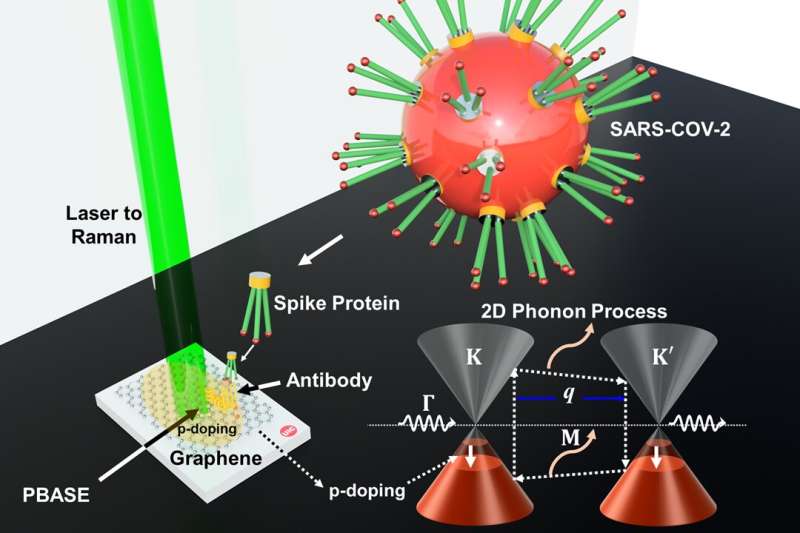
An illustration of the graphene-based COVID-19 spike protein detection process developed at UIC. The white rectangle represents the substrate with graphene functionalized with SARS-CoV-2 antibody (shown in yellow). When this graphene detector interacts with the virus’ spike protein in a COVID-positive sample, its atomic vibration frequency changes. Credit: Vikas Berry

Researchers at the University of Illinois Chicago have successfully used graphene—one of the strongest, thinnest known materials—to detect the SARS-CoV-2 virus in laboratory experiments. The researchers say the discovery could be a breakthrough in coronavirus detection, with potential applications in the fight against COVID-19 and its variants.

In experiments, researchers combined sheets of graphene, which are more than 1,000 times thinner than a postage stamp, with an antibody designed to target the infamous spike protein on the coronavirus. They then measured the atomic-level vibrations of these graphene sheets when exposed to COVID-positive and COVID-negative samples in artificial saliva. These sheets were also tested in the presence of other coronaviruses, like Middle East respiratory syndrome, or MERS-CoV.

The UIC researchers found that the vibrations of the antibody-coupled graphene sheet changed when treated with a COVID-positive sample, but not when treated with a COVID-negative sample or with other coronaviruses. Vibrational changes, measured with a device called a Raman spectrometer, were evident in under five minutes.

Their findings are published today in the journal ACS Nano.

“We have been developing graphene sensors for many years. In the past, we have built detectors for cancer cells and ALS. It is hard to imagine a more pressing application than to help stem the spread of the current pandemic,” said Vikas Berry, professor and head of chemical engineering at the UIC College of Engineering and senior author of the paper. “There is a clear need in society for better ways to quickly and accurately detect COVID and its variants, and this research has the potential to make a real difference. The modified sensor is highly sensitive and selective for COVID, and it is fast and inexpensive.”

“This project has been an amazingly novel response to the need and demand for detection of viruses, quickly and accurately,” said study co-author Garrett Lindemann, a researcher with Carbon Advanced Materials and Products, or CAMP. “The development of this technology as a clinical testing device has many advantages over the currently deployed and used tests.”

Berry says that graphene has unique properties that make it highly versatile, making this type of sensor possible.

Graphene is a single-atom-thick material made up of carbon. Carbon atoms are bound by chemical bonds whose elasticity and movement can produce resonant vibrations, also known as phonons, which can be very accurately measured. When a molecule like a SARS-CoV-2 molecule interacts with graphene, it changes these resonant vibrations in a very specific and quantifiable way.

“Graphene is just one atom thick, so a molecule on its surface is relatively enormous and can produce a specific change in its electronic energy,” Berry said. “In this experiment, we modified graphene with an antibody and, in essence, calibrated it to react only with the SARS-CoV-2 spike protein. Using this method, graphene could similarly be used to detect COVID-19 variants.”

The researchers say the potential applications for a graphene atomic-level sensor—from detecting COVID to ALS to cancer—continue to expand.

.

Coronavirus Covid-19 Research History – Index

.

Specific Issues Index

from Creating Better World

Posted in coronavirus, Covid-19, graphene, Graphene oxide, pandemic | Tagged , , , , , | Leave a comment

Potential of graphene-based materials to combat COVID-19

Potential of graphene-based materials to combat COVID-19: properties, perspectives, and prospects

[MEK Note: It seems toxic Graphene oxide has been used in Face Masks and Covid test nose swaths]

Mater Today Chem. 2020 Dec; 18: 100385.Published online 2020 Oct 21. doi: 10.1016/j.mtchem.2020.100385PMCID: PMC7577689PMID: 33106780Author informationArticle notesCopyright and License informationDisclaimerThis article has been cited by other articles in PMC.Go to:

Abstract

Severe acute respiratory syndrome coronavirus 2 (SARS-CoV-2), a new virus in the coronavirus family that causes coronavirus disease (COVID-19), emerges as a big threat to the human race. To date, there is no medicine and vaccine available for COVID-19 treatment. While the development of medicines and vaccines are essentially and urgently required, what is also extremely important is the repurposing of smart materials to design effective systems for combating COVID-19. Graphene and graphene-related materials (GRMs) exhibit extraordinary physicochemical, electrical, optical, antiviral, antimicrobial, and other fascinating properties that warrant them as potential candidates for designing and development of high-performance components and devices required for COVID-19 pandemic and other futuristic calamities. In this article, we discuss the potential of graphene and GRMs for healthcare applications and how they may contribute to fighting against COVID-19.Keywords: Materials, Microbe, Virus, SARS-CoV-2Go to:

1. Introduction

The recent outburst of coronavirus disease-19 (COVID-19) is devastating for global health systems . COVID-19 is a fatal disease that is caused by a newly born severe acute respiratory syndrome coronavirus 2 (SARS-CoV-2). Due to its severity and reach to most of the nations across the world, the world health organization (WHO) has declared it a pandemic. As of June 11, 2020, there are more than 7.597 million confirmed cases with about 3.841 million recoveries and about 0.423 million deaths for COVID-19 affecting 215 countries. To date, there is no medicine or vaccine available for COVID-19 treatment, though the research, development, and clinical trials for both medicines and vaccines are under progress at an unbelievable pace.

Over the past few years, graphene and graphene-related materials (GRMs) have attracted huge attention of the researchers owing to their wide spectrum properties such as high surface area, high electrical mobility and conductivity, excellent mechanical, electrochemical, and piezoelectric properties, and efficacy against microbes and viruses. Recently, few good reviews appeared in the literature revealing the authors’ views and projections on the possible contribution of graphene-based materials in the global fight against COVID-19. For example, Palmeri and Papi have emphasized over the various modes of interactions among graphene materials and different virions that can help in blocking or destroying the viruses. The authors also briefed over the plausible role of the graphene textiles and filters in controlling the epidemiological spread of COVID-19 and the implications of graphene materials for the development of environmental sensors. Udugama et al. focused on discussing the emerging diagnosis technologies for COVID-19 detection. These technologies include reverse transcription recombinase polymerase amplification (RT-RPA), loop-mediated isothermal amplification method (LAMP), nucleic acid sequence-based amplification (NASBA), rolling circle amplification, enzyme-linked immunosorbent assay (ELISA), magnetic biosensor, magnetic ELISA, and DNA-assisted immunoassay, which all mainly used nucleic acid and protein biomarkers for viral and bacterial diagnosis. Cordaro et al. compiled the literature on the contribution of graphene-based materials and strategies in liquid biopsy and the diagnosis of viral diseases and discussed the potential of graphene in COVID-19 diagnosis. In general, most of the recent reports briefly reviewed the literature related to the implications of graphene-related materials in virus diagnosis and their role in designing personal protective equipment with special reference to COVID-19. In the present review, we have discussed in detail the various functional properties of graphene and related materials and their plausible role in the global fight against viral diseases including COVID-19 by designing highly sensitive electrochemical, piezoelectric, field-effect transistor-based biosensors, and surface plasmon resonance-based diagnostic systems. The article further covers the importance of graphene oxide and related materials in controlling the virus spread and transmission including COVID-19 due to their potential role in (i) development of antiviral surfaces/coatings, (ii) designing of nanofoams for face masks and other PPEs, and (iii) fabrication of 3D printed medical components. Fig. 1 illustrates different possible applications of graphene and GRMs to combat different problems related to viral infections including COVID-19 spread.

Their potency to destabilize and kill microbes and viruses could lead to the application of graphene and GRMs, especially metal ions decorated GRMs, in the development of antiviral and antimicrobial materials and surfaces that may be used in hospital settings, high touch surfaces, and various consumer products. The excellent electrical, electrochemical, piezoelectric properties may enable their applications in the development of electrochemical biosensors, field-effect transistor (FET)-based biosensors, and piezoelectric biosensors for rapid, cost-effective, sensitive, and early-stage diagnosis of viruses. Graphene and GRM-based materials could be used as surface plasmon resonance (SPR) substrate to design highly sensitive viral diagnostic devices, their nanofoams could be used in the development of highly effective face masks with controlled porosity on nanoscale, and 3D printing of these materials may lead to design and development of a variety of PPEs and other healthcare components. We discussed in detail the possible technology development based on graphene and GRMs to fight against COVID-19 and other futuristic health calamities.

2. Graphene and graphene-related materials

Graphene is an atomically thin layer (single layer) of sp2 bonded carbon atoms arranged in a hexagonal pattern. Single-layer graphene (SLG) displays outstanding properties. In SLG, the π and π∗ bands touch at the Dirac point that makes it a zero-band gap material, and at Dirac point, the SLG electrons behave-like massless fermions. SLG displays high carrier mobility that can reach to about 105–106 cm2V−1s−1, two to three orders of magnitude higher than silicon; high mechanical strength of about 130 GPa (130 GPa = 13256310768.713 kg/m2), several times higher than steel; electrical and thermal conductivities higher than copper and diamond, respectively; high transmission of about 97.7%; excellent lubricity; broad-spectrum antimicrobial properties, etc. Graphene and GRMs can be produced by various top-down and bottom-up approaches. Dry and liquid exfoliations are among the common methods for the synthesis of graphene. Geim and Novoselov used the mechanical exfoliation method to peel off the graphite through the scotch tape to produce graphene. Thermal chemical vapor deposition (CVD) is one of the best methods for the synthesis of high-quality graphene with minimal defects that could be used in the development of graphene field-effect transistor (FET), electrochemical, and piezoelectric biosensors. The CVD process of graphene production requires the thermal decomposition of carbon-containing precursor gas, mainly methane, at a high temperature of about 1000 °C on a specific substrate viz. copper. Other materials such as Ni, Pt, Fe, and their alloys have also been employed as the substrates for the deposition of the graphene layer. Preconditioning of the substrate is also required before the deposition of high-quality graphene on copper. Once the synthesis of graphene has been done on a specific substrate, the transfer methods are employed to place the graphene on desired surfaces. Commonly, the transfer of graphene from Cu foil to the desired substrate requires the following steps: (i) coating of poly(methyl methacrylate) (PMMA) on graphene on copper, where PMMA acts as a support layer for graphene, (ii) etching of copper in FeCl3 solution, (iii) rinsing of PMMA/graphene film with ultrapure water, (iv) lifting off PMMA/graphene film on a desired substrate, (v) removal of PMMA, and cleaning and baking of the graphene to get good quality transferred graphene. Likewise, GRMs, such as bilayer graphene (BLG) and multilayer graphene, can be obtained by repeated transfer of the SLG on top of one another. Unlike SLG, the BLG has a greater feasibility to tune its bandgap and hence in recent past this material has attracted considerable interest for optoelectronic applications in particular. The engineering of the bandgap and other properties of BLG and MLG can be performed by the application of electric field, and chemical doping. The top-down approach is the simple, scalable, and fast method for the synthesis of GRMs such as graphene oxide, which is an oxide sheet of graphene. Hummer’s, Brodie, and Staudenmaier methods or modified versions of these methods are used for the synthesis of GO. Graphite is the starting material that is oxidized in an acidic environment, and then ultrasonication and purification steps are employed to reduce the number of layers of graphite oxide to a few layer GO, and even single-layer GO. Furthermore, GO possesses a bandgap due to the presence of functional groups but it shows inferior electrical and thermal properties than graphene. It is essential for many applications, in particular for electronics and bio-electronics like biosensors, to enhance the conductivity of GO to develop highly sensitive, selective, and fast sensing devices. Thus, the chemical reduction of GO is performed commonly using hydrazine, and the resultant reduced graphene oxide (rGO) demonstrates considerably improved electrical properties than GO. This is attributed to a reduced amount of oxygen-containing groups in rGO with respect to GO, but the electrical properties of rGO remain slightly inferior to pristine graphene. A detailed description of the synthesis and properties of graphene and GRMs can be found in Ref.

Fig. 2

Open in a separate windowFig. 2

Schematic illustration of the graphene and GRMs. (a) Single-layer graphene, (b) energy-momentum diagram for one of the discrete points of graphene’s Brillouin zone showing conduction and valence bands touching at the Dirac point, (c) multilayer graphene, and (d) graphene oxide.

3. Graphene-based anti-viral surfaces and coatings

Unveiled in December 2019, a new fatal SAR-CoV-2 virus starts circulating among humans. Transmission through sub-micron size respiratory droplets is the common pathway for COVID-19 spread. Moreover, a person can also catch this virus by coming in contact with the contaminated objects or surfaces and then touching their mouth, nose, or eyes. A recent study reported the variable stability of the SAR-CoV-2 virus on different surfaces. The SARS-CoV-2 is found to have a higher survival time on plastic (72 h) and stainless steel (48 h) surfaces compared to copper (4 h) and cardboard (24 h). Moreover, the virus is confirmed to be more stable on smooth surfaces compared to rough surfaces such as printing/tissue papers (3 h), wood (2 h), and cloths (2 h). Unfortunately, the detectable level of the virus is reported to be available on the external layer of the surgical masks even on day 7. Thus, contaminated high touch surfaces that offer high virus stability can enhance the chances of COVID-19 spread. In the present pandemic situation, where the COVID-19 cases are exponentially increasing each day globally, the development of efficient anti-SARS-CoV-2 protective surfaces/coatings can play a significant role in controlling the viral spread through high touch components, products, and systems.

Graphene-based materials have been explored extensively for their antimicrobial potentials. Reported studies provided evidence about the broad-spectrum inhibition activity of graphene oxide and its derivatives against bacteria and fungi. In 2014, Sametband et al. reported the antiviral properties of GO and partially reduced sulfonated GO against Herpes Simplex Virus Type-1 (HSV-1) through competitive inhibition mechanism. Similar to cell surface receptor heparan sulfate, GO and rGO-SO3 contain multiple negatively charged groups and thus both moieties compete with each other in binding with HSV-1. Blocking of the virus binding sites with the nanomaterial was the main inhibitory factor to safeguard Vero cells from infection. Ye et al. have compared the antiviral potency of GO, rGO, GO-polyvinylpyrrolidone (PVP) composite, GO-poly(diallyldimethylammonium chloride) (PDDA) composite with precursors graphite (Gt), and graphite oxide (GtO). The study revealed broad-spectrum antiviral activity of GO against Pseudorabies virus (PRV, a DNA virus) and porcine epidemic diarrhea virus (PEDV, an RNA virus). Results also suggest that the antiviral properties of GO are attributed to its negatively charged, sharp-edged structure. The GO conjugated with polyvinylpyrrolidone (PVP, non-ionic polymer) showed potent antiviral activity; however, PDDA (cationic polymer) bound GO revealed no virus inhibition, suggesting negative charge as a prerequisite for antiviral properties.

Song et al. have reported the GO-based label-free method to detect and disinfect environmental viruses such as Enterovirus 71 (EV71) and endemic gastrointestinal avian influenza A virus (H9N2) that have great environmental stability and low sensitivity for organic disinfectants and soaps. The report suggests that the physicochemical interactions (hydrogen bonding, electrostatic, redox reactions) among GO and viruses, under thermal reduction of GO, play a critical role in capturing and destruction of the viruses. The viricidal properties of GO are found to be enhanced under elevated temperature conditions (56 °C). In another report, GO sheets are reported to exhibit significant antiviral inhibition potentials toward enveloped feline coronavirus (FCoV), and incorporating silver particles into GO structure broadens its antiviral potential toward non-enveloped infectious bursal disease virus (IBDV) as well. Yang et al. have prepared multifunctional curcumin loaded β-CD functionalized sulfonated graphene composite (GSCC) and investigated its antiviral potential against negative sense respiratory syncytial virus (RSV) which like SARS-CoV-2 infects both the lower and upper respiratory tracts with children and elderly as their easy targets. The results revealed that GSCC could inhibit RSV from infecting the host cells by inactivating the virus directly and prohibiting the attachment of the virus and have prophylactic and therapeutic effects toward the virus. In a recent study, authors have attempted to investigate the antiviral effect of GO-Silver nanoparticles composite on the replication of porcine reproductive and respiratory syndrome virus (PRRSV). The results suggest that the exposure of virus with GO-AgNPs composite obstruct the virus to enter the host cell with 59.2% efficiency and also promotes the production of IFN-stimulating genes (ISGs) and interferon-α (IFN-α) that inhibits the virus proliferation.   More

Fig. 4

.

Coronavirus Covid-19 Research History – Index

.
Specific Issues Index

from Creating Better World

Posted in coronavirus, Covid-19, graphene, Graphene oxide, pandemic | Tagged , , , , | Leave a comment

Immune System

A Snapshot of the Immune System

The Immune System Recognizes and Eliminates Pathogens

  • Immunology may be described as the summation of all those physiologic processes that endow the host with the capacity to recognize materials as foreign to itself and to neutralize, eliminate, or metabolize them with or without injury to its own tissue(s).
  • This ability to differentiate ‘‘self’’ from ‘‘nonself’’ constitutes the basic hallmark of the immune response and the basis for an understanding of clinical immunology in health and disease.
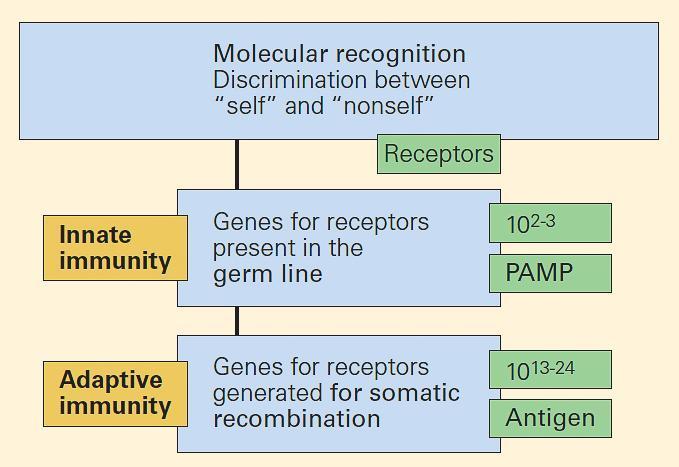
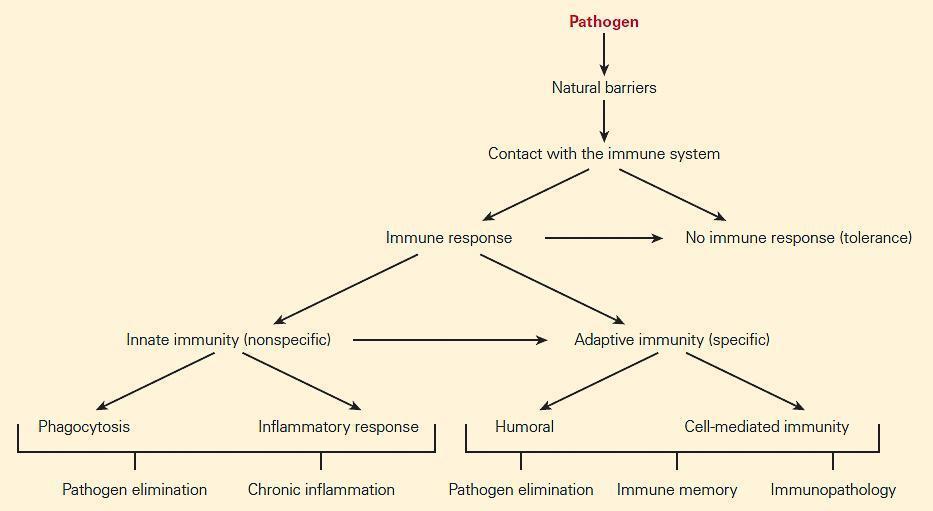
  • For ease of discussion, the possible outcome of an encounter of the host’s immune response with a foreign substance is shown schematically in Figure 1.
  • If the foreign substance cannot be blocked by natural barriers such as skin and mucous secretions, the substance comes into contact with the immune system (Figure 1).

Figure 1. Possible outcomes of an encounter of the host with a foreign configuration. [Reproduced with permission from Bellanti, JA (Ed). Immunology IV: Clinical Applications in Health and Disease. I Care Press, Bethesda, MD, 2012].

.

  • This encounter with a foreign substance can either lead to an immune response or to no response, a condition referred to as immune tolerance.
  • The mechanisms permitting recognition of foreign structures leading to an immune response can be broken down into two general categories:
  • Innate immunity is a set of fixed responses activated by receptors that are encoded by genes in the host’s germ line.
  • These receptors recognize molecular patterns shared by many foreign substances that are not present in the mammalian host.
  • Adaptive immunity is a set of responses to unique foreign structures (antigens or immunogens).
  • Antigen receptors are encoded by relatively few gene elements that are somatically rearranged to result in the assembly of antigen-binding molecules with exquisite specificity for individual immunogens.
  • These antigen-binding structures consist of both cell receptors located on specialized immune lymphoid cells (B and T lymphocytes) as well as extracellular secreted products known as antibodies (Figure 2).

Figure 2. Characteristics of the immune response. [Reproduced with permission from Bellanti, JA (Ed). Immunology IV: Clinical Applications in Health and Disease. I Care Press, Bethesda, MD, 2012].

Anatomic Organization of the Immune System

  • In order to carry out the functions of immunity, an ubiquitous system of cells and cell products has appeared within the vertebrates containing elements of both the innate and adaptive immune systems.
  • For ease of discussion, this system can be divided into external and internal immune systems.
  • Foreign substances that enter the body through the natural portals of entry, i.e., skin, respiratory, gastrointestinal, or genitourinary tracts, encounter components of the external immune system found in collections of lymphoid elements found at these sites.
  • Since most of these organ systems are lined by mucosa, this system is referred to as the mucosa-associated lymphoid tissues (MALT).
  • Foreign substances that penetrate these mucosal and skin-site barriers enter the body through the blood or lymphatics and encounter components of the internal immune system found in the lymph nodes, thymus, and spleen.

Mechanical Barriers and External Secretions

  • Before the activation of the innate and adaptive immune systems takes place, there are a number of natural barriers consisting of anatomic structures and physiologic mechanisms that limit the access and progression of a foreign invader.
  • The initial entry of an infectious agent or its secreted products first encounters the mechanical barriers provided by the skin, the largest external protective outer covering of the body, and the mucous membranes, which line all body passages that communicate with the external environment.
  • The external secretions of the skin and mucous membranes contain a large number of substances that are detrimental to the growth of microorganisms (Table 1). These include a wide variety of metabolites, such as acids, peptides, and proteins.

Table 1: Soluble factors in secretions and sweat

FactorsLocationsFunctions
Acidic pHSkin, stomach, vaginaInhibit bacterial growth
Fatty acidsSweatInhibit bacterial growth
Mucins and agglutininsSecretionsAggregate bacteria
PeroxidasesSecretionsCatalyze oxidation of lipid membranes of bacteria
Protease inhibitorsSecretionsInhibit bacterial function by inhibiting protease activity
LysozymesSweat and secretionsDestroy bacteria by hydrolyzing the polysaccharide component of the cell wall.
LactoferrinSecretionsInhibit bacterial growth by binding iron
Histidine-rich proteins (histatins)SalivaExert antifungal properties by disrupting mitochondrial function
Cationic proteinsSweat and secretionsExert antibacterial activity by binding to lipid cellular membranes
Defensins and other antibacterial peptidesSecretionsSecreted by leukocytes and active against bacteria, fungi, and enveloped viruses

Innate Immunity Responds Quickly to Conserved Pathogen Structure

  • The first set of responses to foreign substances are called innate immune responses because they are present without the requirement for specific induction and are present upon initial and subsequent encounters with a foreign substance.
  • The innate immune responses are primitive, stereotyped, and lack the form of memory associated with adaptive immunity or the ability to respond in an enhanced manner upon subsequent encounters with the same foreign substance.
  • The innate immune system recognizes certain structures on a foreign substance—referred to as pathogen-associated molecular patterns (PAMPs) that are mediated utilizing receptors called pattern recognition receptors (PRRs) located on the surfaces of a variety of cells of the innate immune system
  • Macrophages and dendritic cells are examples of cells bearing these receptors.
  • The innate immune system recognizes certain structures on a foreign substance—referred to as pathogen-associated molecular patterns (PAMPs) that are mediated utilizing receptors called pattern recognition receptors (PRRs) located on the surfaces of a variety of cells of the innate immune system
  • The innate immune responses are primitive, stereotyped, and lack the form of memory associated with adaptive immunity or the ability to respond in an enhanced manner upon subsequent encounters with the same foreign substance.
  • The first set of responses to foreign substances are called innate immune responses because they are present without the requirement for specific induction and are present upon initial and subsequent encounters with a foreign substance.
    • phagocytosis: the ability of certain cells to ingest foreign substances;
    • inflammation: the body’s response to injury;
    • cytotoxicity: the elimination of infected or transformed cells via apoptosis, a cellular process involving a genetically controlled series of events leading to noninflammatory programmed cell death.

Adaptive Immunity Is More Specific and Generates Immune Memory

  • The adaptive immune system includes a complex set of genetically controlled, interdependent, and interactive responses, and is also referred to as acquired (specific) immunity.
  • In contrast to the innate immune system, the adaptive immune system is more expansive and diverse and is characterized by:
    •  Specificity: The recognition of the foreign substance (i.e., antigen or immunogen) by antigen-recognition molecules on the surfaces of lymphocytes in a highly precise and selective manner;
    • Heterogeneity: The cells and cell products that comprise the adaptive immune system consist of a variety of different types; and
    • Memory: The ability to recognize an antigen upon subsequent encounters with the foreign substance in a more rapid and highly augmented fashion.
  • Because the adaptive immune system is composed of relatively small numbers of cells with specificity to recognize an individual immunogen, the responding cells must proliferate, forming a cell clone, and differentiate into effector cells
  • After encountering a foreign substance, the effector cells attain sufficient numbers to mount an effective response commensurate with the quantity of the foreign agent being presented.
  • Thus, the adaptive immune response generally expresses itself temporally, usually several days after the innate response, in the encounter with foreignness.
  • A key feature of the adaptive immune response is that it produces large quantities of long-lived cells (i.e., memory cells) that persist in an apparently dormant state, but that can re-express effector functions rapidly after subsequent encounters with the same antigen.
  • This provides the adaptive immune response with the ability to manifest immune memory, permitting it to contribute to a more effective host response against specific pathogens when they are encountered a second time, even decades after the initial sensitizing encounter.

Humoral and Adaptive Immunity

  • The two major components of the adaptive immune response are
    • humoral immunity and
    • cell-mediated immunity (CMI).
  • Humoral immunity is a process carried out by antibodies (immunoglobulins), produced B lymphocytes in response to and capable of reacting with antigen (Table 2)
  • Cell-mediated immunity is the other arm of the adaptive immune response carried out by T lymphocytes (Table 2)

Table 2: The two major components of the adaptive immune system

TypeEffector cellsEffector mechanism(s)Outcome
HumoralB cellsAntibodyNeutralization of foreign antigen and coating substances for opsonization
Cell-mediatedT cellsCytokines, cell-cell interaction & Cytotoxic activityPromotion or inhibition of inflammation, and/or humoral function & Lysis of infected cells
  • Antibodies are proteins produced by and secreted from B cells and specifically bind extracellular antigen.
  • In humans, there are five major classes (i.e., isotypes) of immunoglobulins: IgM, IgG, IgA, IgD, and IgE, each differing in physical, chemical, and biologic properties.
  • The primary function of antibody is to directly bind with the foreign substance/pathogen.
  • As will be described subsequently, there are a number of other interactions of antibody with other cells and components of the innate immune system.
  • T cells are capable of recognizing intracellular infections (viruses and bacteria that can survive inside the cells that have ingested them).
  • Cell-mediated immunity is a process carried out by T cells through the production of cell-regulating molecules (cytokines) or through inducing cell death (cytotoxicity) without the participation of antibody.

Quiz

Now test your knowledge with these questions! 

.

Coronavirus Covid-19 Research History – Index

.

Specific Issues Index

from Creating Better World

Posted in coronavirus, Covid-19 | Tagged , , , , , | Leave a comment

Covid-19 Mortality: A Global Overview

Covid-19 Mortality: A Global Overview

Estimated total excess mortality per country, January 2020 to September 2021 (Economist)

Updated: September 2021
Published: May 2021
Share on:  Twitter / Facebook
Select LanguageDutchEnglishFrenchGermanGreekHebrewHungarianItalianJapaneseKoreanPolishPortugueseRussianSpanishSwedishTurkishPowered by

The following article provides an overview of covid-19 mortality per country.

A) Excess mortality  B) Life expectancy  C) Care homes  D) Covid vs. the flu  E) Countries 

A) Excess Mortality Per Country

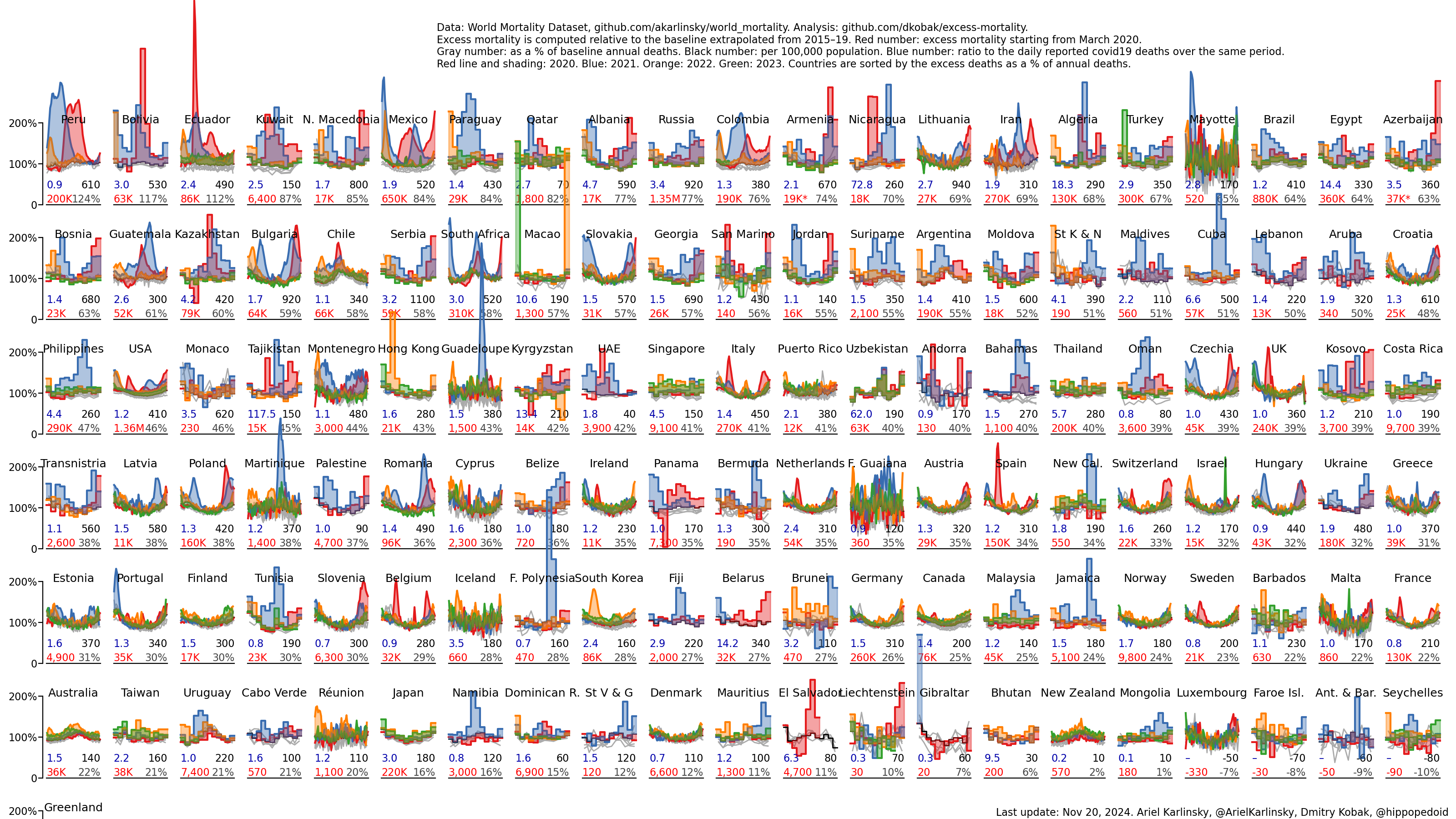
The following live chart, developed by Ariel Karlinsky and Dmitry Kobak, shows excess mortality per country, compared to the extrapolated 2015-19 baseline, since the beginning of the pandemic. In most Western countries, the covid pandemic increased annual mortality by about 5% to 20%, but in some Latin American countries, mortality increased by up to 80%.

These figures refer to all-cause excess mortality and may include non-covid excess deaths. Data from the US and the UK indicate that in some countries, up to one third of all excess deaths may have been not due to covid, but due to indirect effects of the pandemic and lockdowns. International economic disruptions may have pushed up to 150 million people into extreme poverty and hunger.

From January 2020 to September 2021, there were an estimated 15 million excess deaths globally, which amounts to a global excess mortality of about 15% (based on 60 million annual global deaths) and a global pandemic mortality of about 0.2% (based on a global population of about 8 billion people). In comparison, the 1918 flu pandemic had a global mortality of about 2.4% (40 million deaths in 1.8 billion people) and a significantly lower average age of death (see below).

Excess mortality per country since the beginning of the pandemic 🔎 (Karlinsky & Kobak)

Covid mortality depends on the infection rate as well as on demographics (e.g. age structure) and health indicators (e.g. cardiovascular disease prevalence). By the end of 2020, total infection rates ranged between 10% and 30% in most Western countries and between 25% and 50% in many Latin American countries. The following chart shows the total infection rate per country by December 2020, i.e. in the midst of the second wave. (See also: The SeroTracker).

Estimated national immunity levels per country in December 2020 (Source: Bloomberg)

B) Impact on Life Expectancy

Life expectancy is a theoretical concept describing the average age people born in a certain year will reach, assuming that the mortality rate per age of that year will stay constant forever. As a pandemic is a transient event, life expectancy will likely return to its pre-pandemic levels after the pandemic subsides, unless there are significant, population-wide long-term health sequelae.

The following chart, developed by José Manuel Aburto et al., shows the temporary impact of the covid pandemic on life expectancy per country. Specifically, it shows the change in life expectancy in 2020 (negative in most countries), at birth and at age 60, for males and for females, compared to the average yearly change in life expectancy between 2015 and 2019 (positive in all countries).

In most countries, the median age of covid deaths was close to the average life expectancy or even slightly above (e.g. 78 years in the USA and 80 to 86 years in western Europe). Therefore, despite high excess mortality in some countries, the temporary impact on life expectancy in 2020 was limited: it ranged from zero (in countries hardly affected by the coronavirus) to minus 2.1 years in US males.

Impact of covid on life expectancy, per country (Aburto et al.)

For comparison, the 1918/19 “Spanish flu” pandemic, which in contrast to covid killed many young people, lowered US life expectancy by about 15 years or 27%, from 55 years to 40 years. Thus, the “Spanish flu” had lowered US life expectancy about eight times more in absolute terms and about 14 times more in relative terms than covid did in 2020 (1.8 years or 2%).

US age-adjusted mortality (green) and life expectancy (purple), 1900 to 2020. Source: CDC / SPR

C) Nursing homes

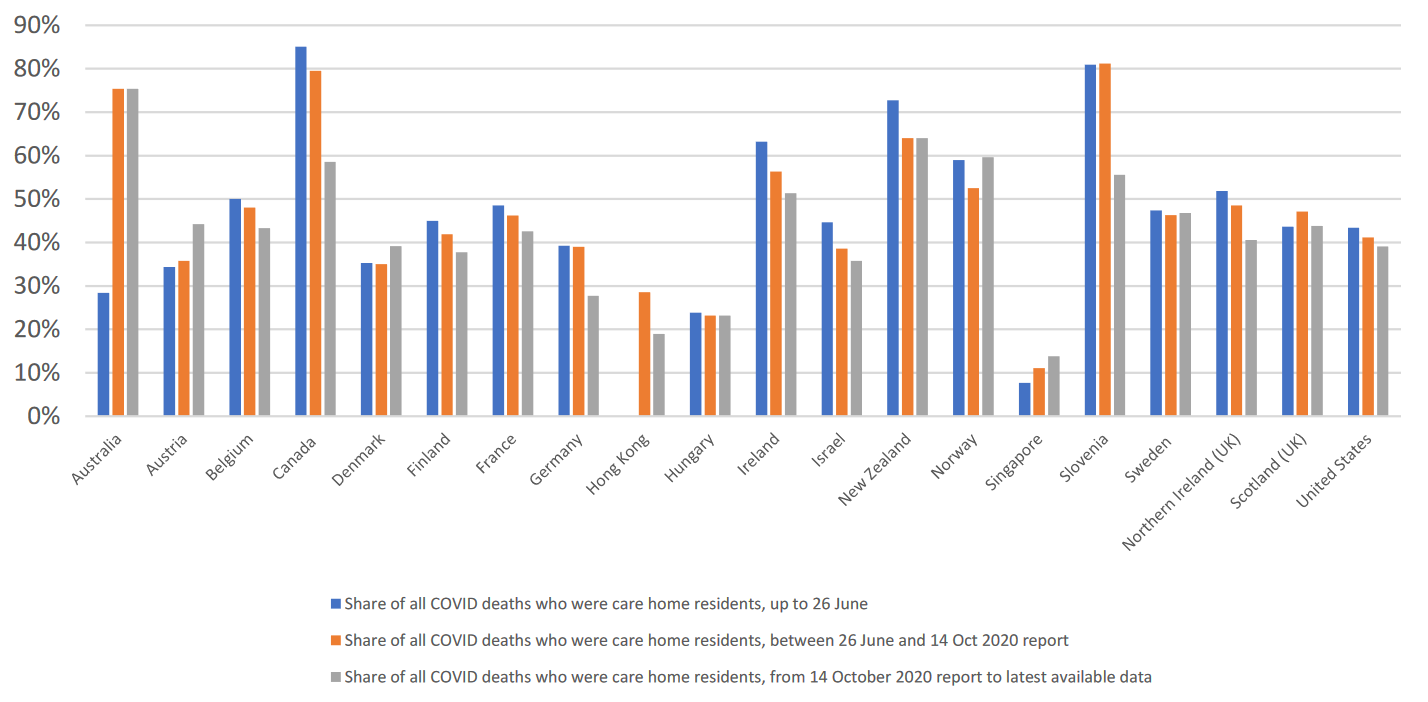
The following chart shows covid deaths in care homes in proportion to all covid deaths, per country. In most Western countries, 30% to 60% of all covid deaths occurred in care homes.

Share of covid deaths in care homes compared to all covid deaths, per country and season (LTC Covid)

The following chart shows the covid infection fatality rate per age group, in the entire population (left) and the non-nursing home population (right), in the case of hard-hit Belgium. It can be seen that in the general, non-nursing home population, IFRs peak at about 3% (males and females combined). In contrast, IFRs can reach up to 30% in nursing home residents.

Belgium: IFRs for entire population vs. non-nursing home population (Molenberghs)

D) Covid vs. the flu

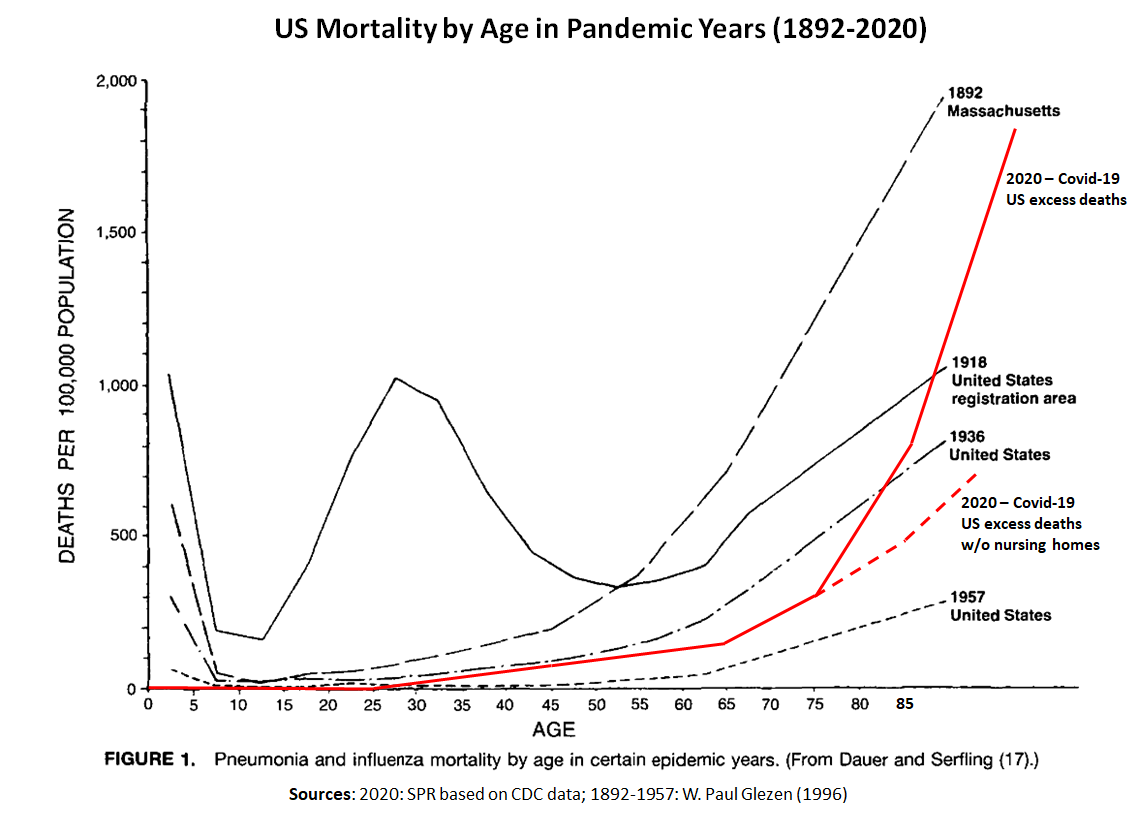
The following chart shows US mortality by age in previous pandemic years compared to 2020 US excess mortality, which consisted primarily (>75%) of confirmed and suspected covid-19 deaths, according to the CDC. To learn more about this comparison, please read this article.

Pneumonia and influenza mortality by age in previous pandemic years (Glezen, 1996) vs. 2020 excess mortality by age, primarily driven by covid-19, overall and excluding nursing homes (SPR based on CDC data)

E) Countries

Mortality statistics of Sweden, the US, the UK, Italy, France, Germany, and Switzerland.

Comparison: Covid deaths per age group

The following chart shows the percentage of covid deaths per age group in various countries. While in many European countries, up to 90% of deaths affected people older than 70 years of age, in many Latin American countries, up to a third of deaths affected people younger than 60 years of age.

Percentage of covid deaths per age group, per country, by February 2021 (Sinichol)

1) Sweden

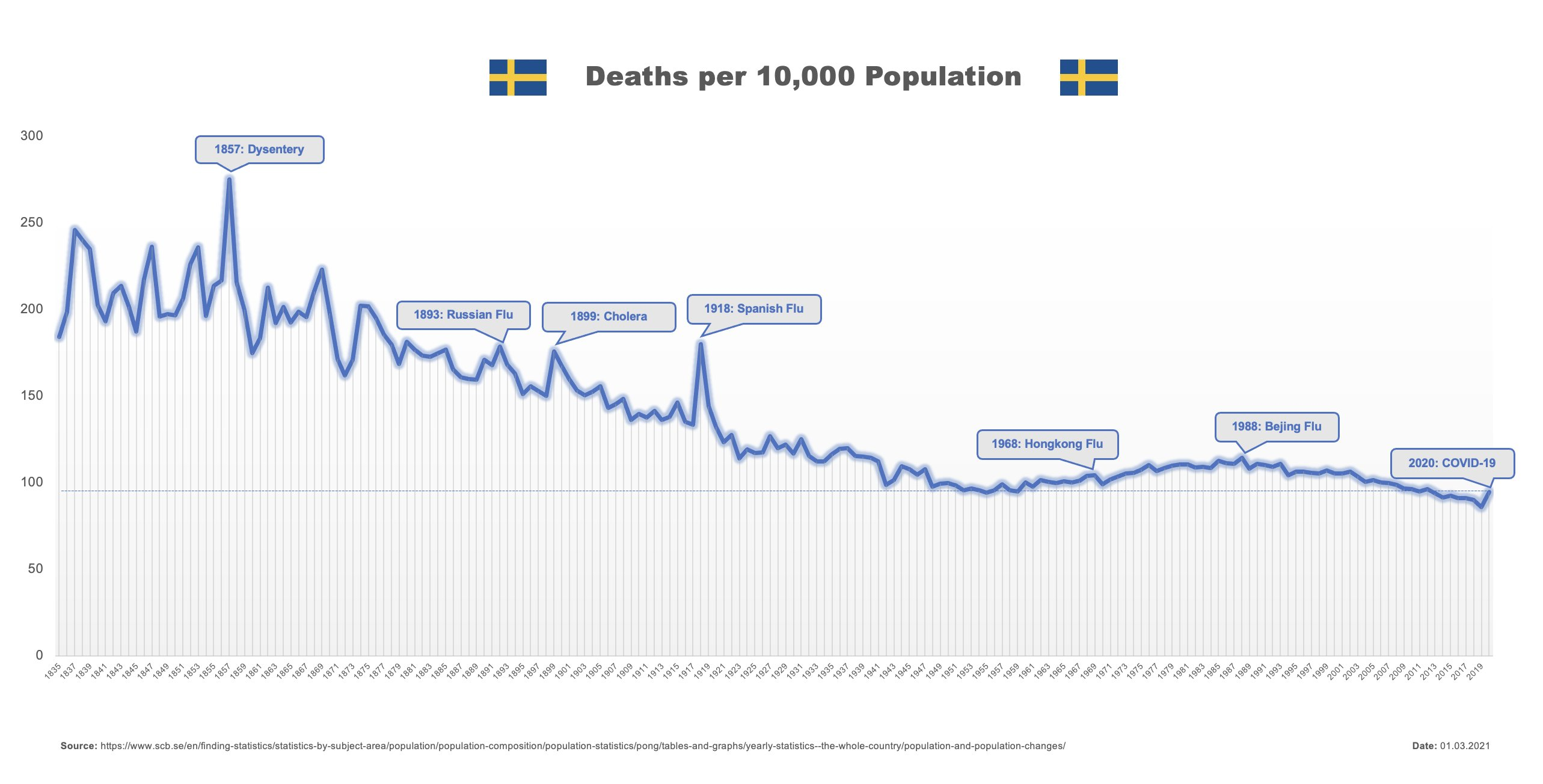
The following chart, developed by a German analyst based on official data, shows Swedish mortality from 1835 to 2020. Swedish mortality in 2020 was comparable to mortality in 2012 and 2013.

Swedish mortality from 1835 to 2020 (Source: Jens/SCB)

The following chart shows Swedish mortality from August to July (an epidemiological year), which means that the 2020 covid spring wave is part of the 2019/20 period, while the 2020 autumn wave is part of the 2020/21 period.

Sweden: Mortality 1990 to 2021, August to Juli (SCB)

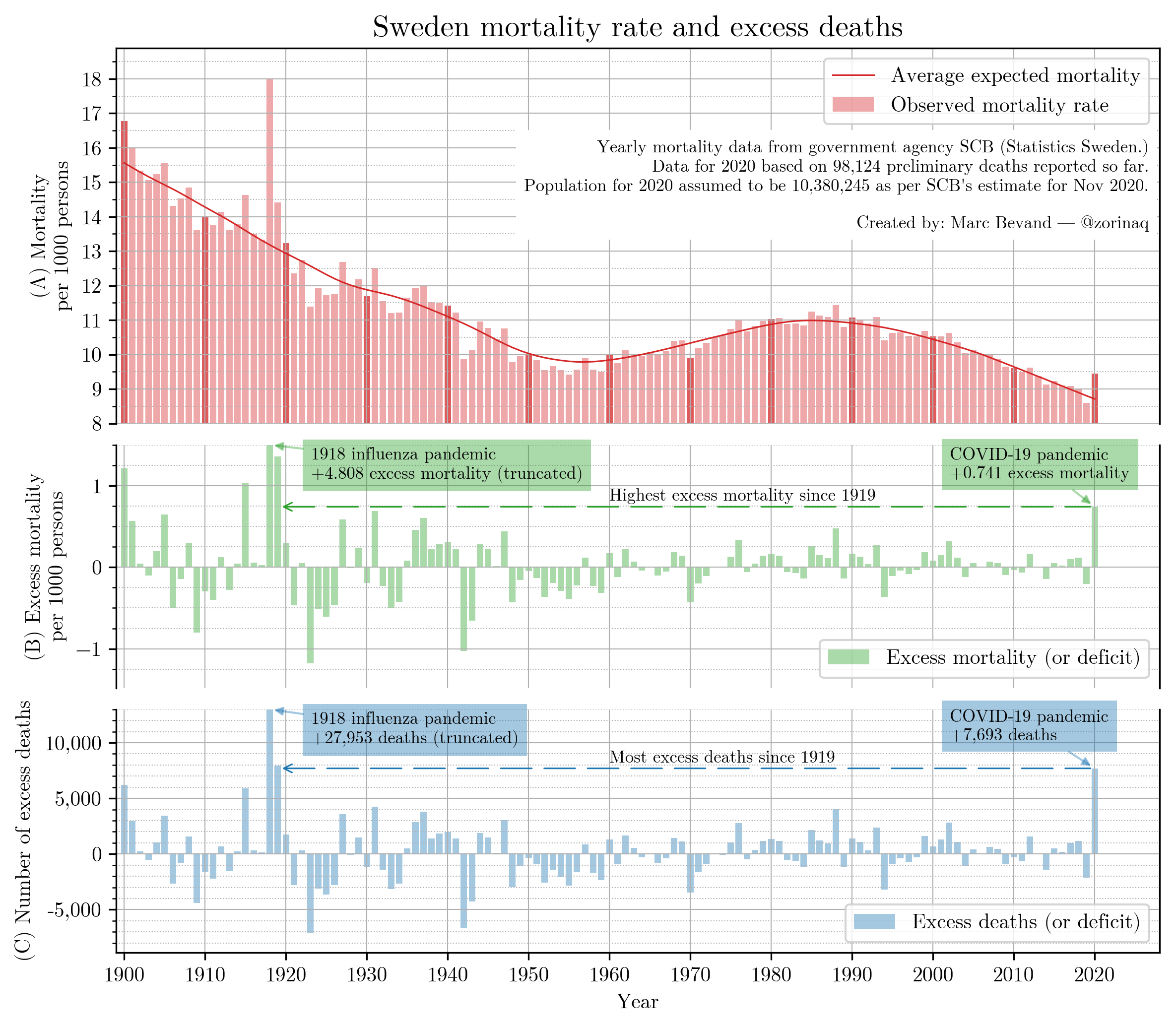
To calculate Swedish excess mortality in 2020 (compared to statistical expectation), one has to take into account the fact that Swedish mortality has been decreasing since the 1990s, due to strongly falling birth rates between 1920 and 1935, recent immigration, and higher life expectancy. If one extrapolates this decreasing mortality trend, Swedish excess mortality in 2020 was the highest since 1919, although still about seven times lower than in 1918, even without age-adjustment.

Swedish mortality, excess mortality, and excess deaths, 1900-2020 (Marc Bevand / SCB)

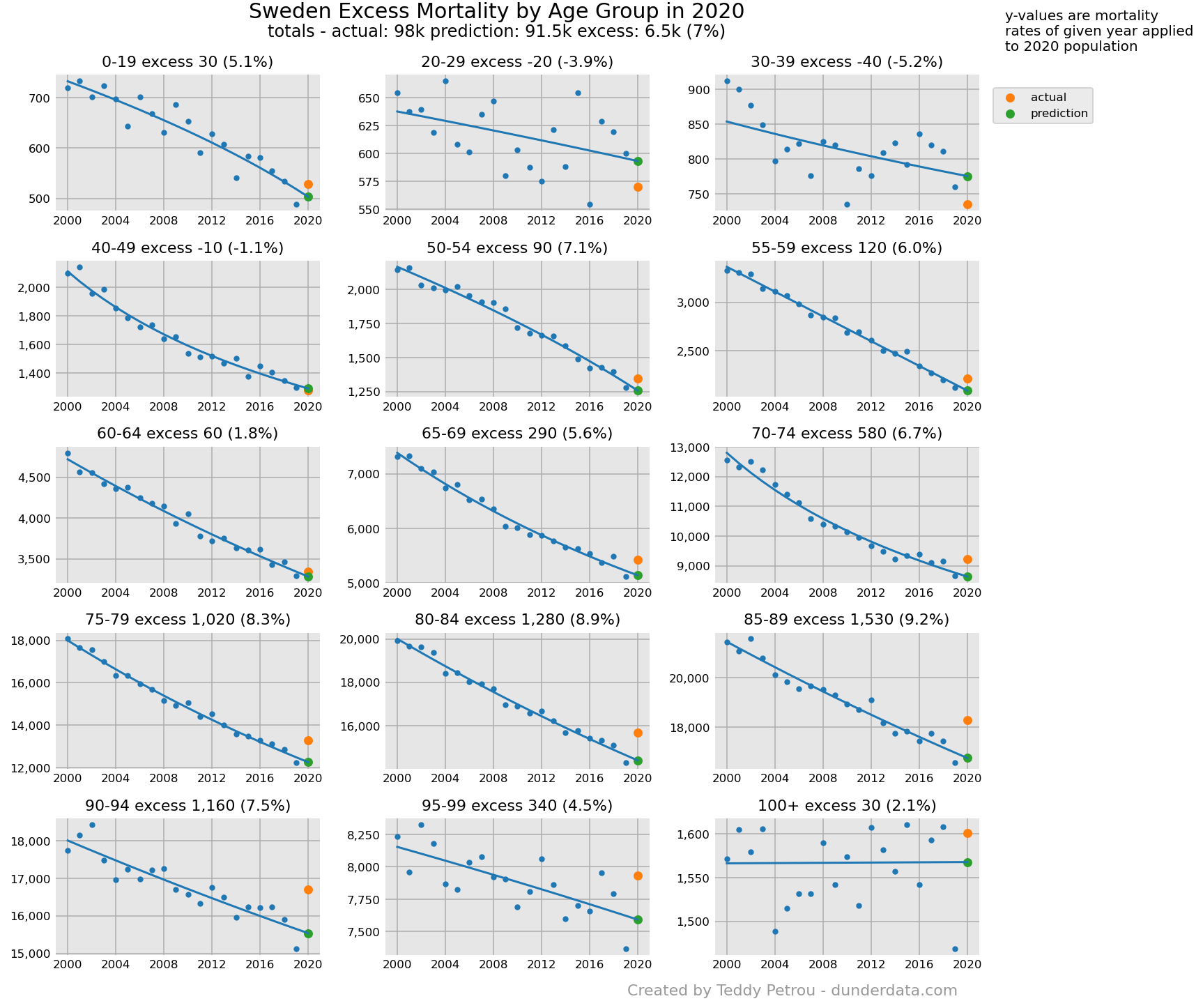
Finally, the following chart shows Swedish mortality from 2000 to 2020 by age group. As can be seen, there is significant excess mortality in people over 65, and possibly in people between 50 and 59.

Swedish excess mortality per age group (Teddy Petrou)

2) United States

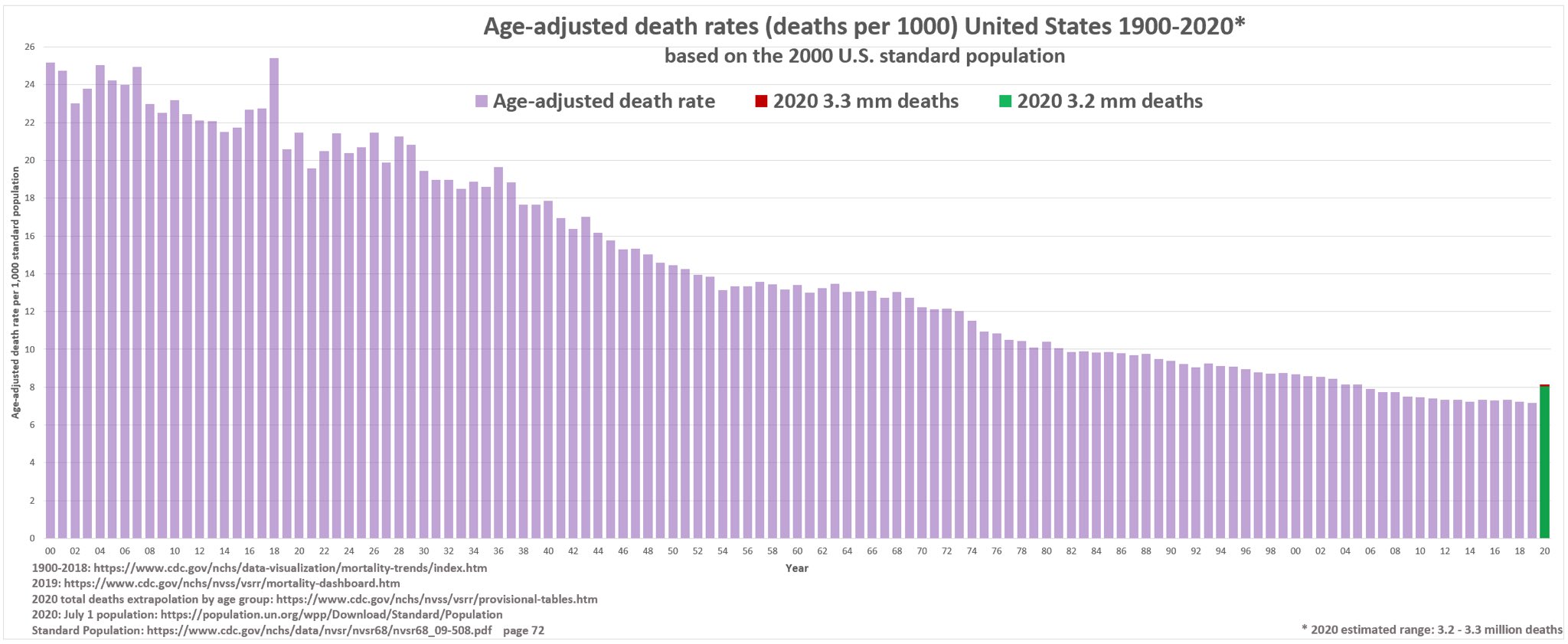
The following chart shows US age-adjusted mortality form 1900 to 2020. To take population ageing into account, the mortality of each year was adjusted to the US standard population of the year 2000. US age-adjusted mortality in 2020 was similar to mortality in 2004.

US age-adjusted mortality, 1900-2020 (Norwood/CDC)

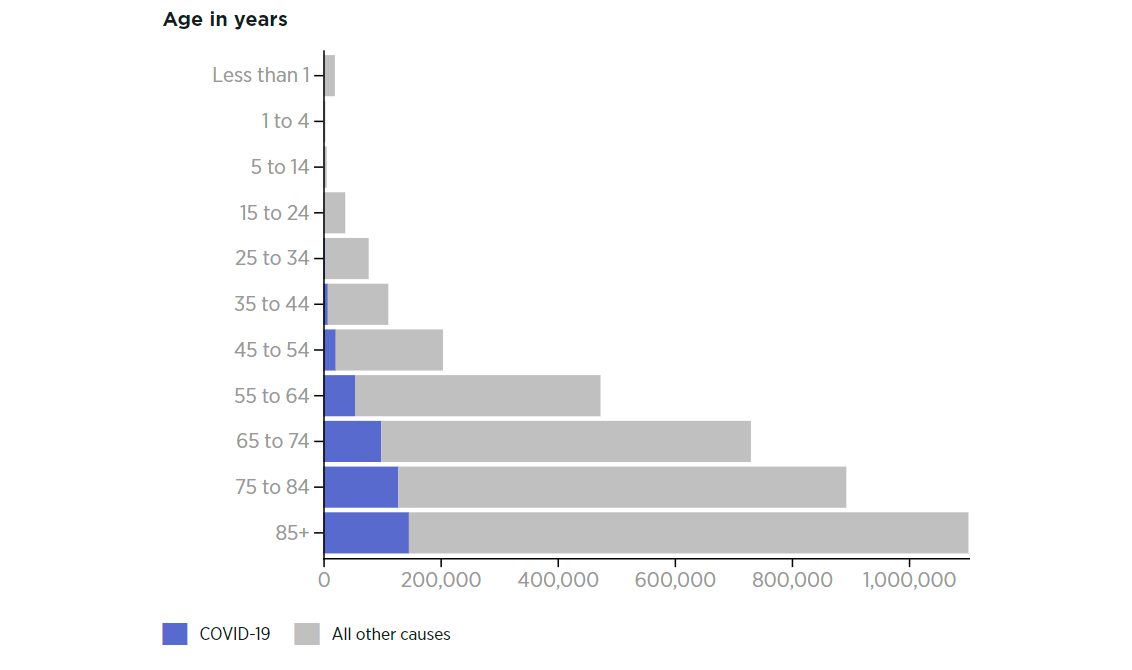
The following chart shows the number of deaths from or with covid (blue) and from all other causes (gray), per age group, from February 2020 to February 2021, based on CDC data:

USA: Deaths from covid and all other causes, per age group, February 2020 to February 2021 (Heritage/CDC)

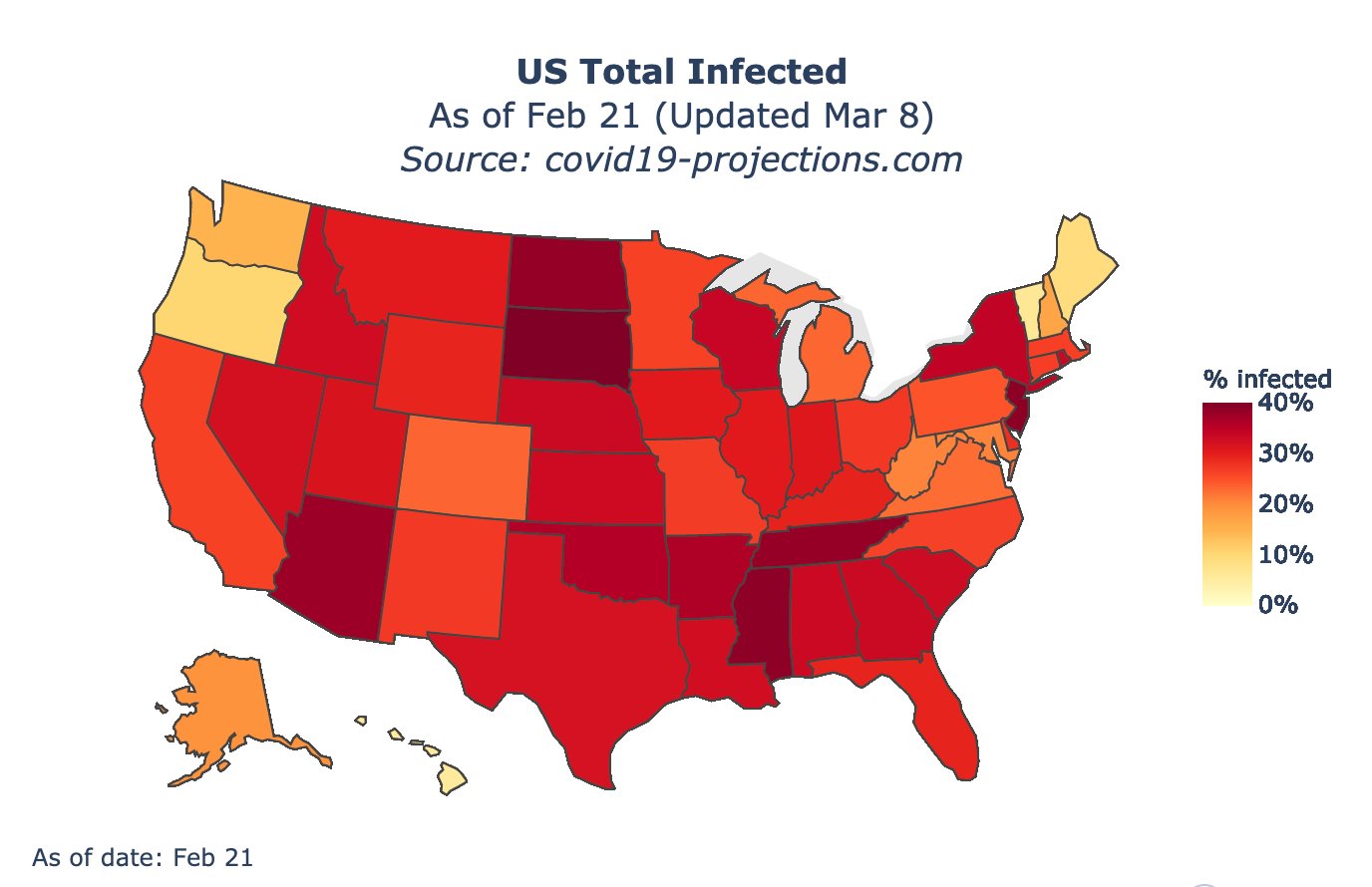
The following map shows the coronavirus infection attack rate per US state by late February 2021, as projected (i.e. not measured) by Covid19 Projections. The infection attack rate is lowest in the northwestern and northeastern corners (5% to 15%) and highest in South Dakota (47%).

Projected coronavirus infection attack rate in US states by February 2021 (covid19-projections.com)

3) United Kingdom

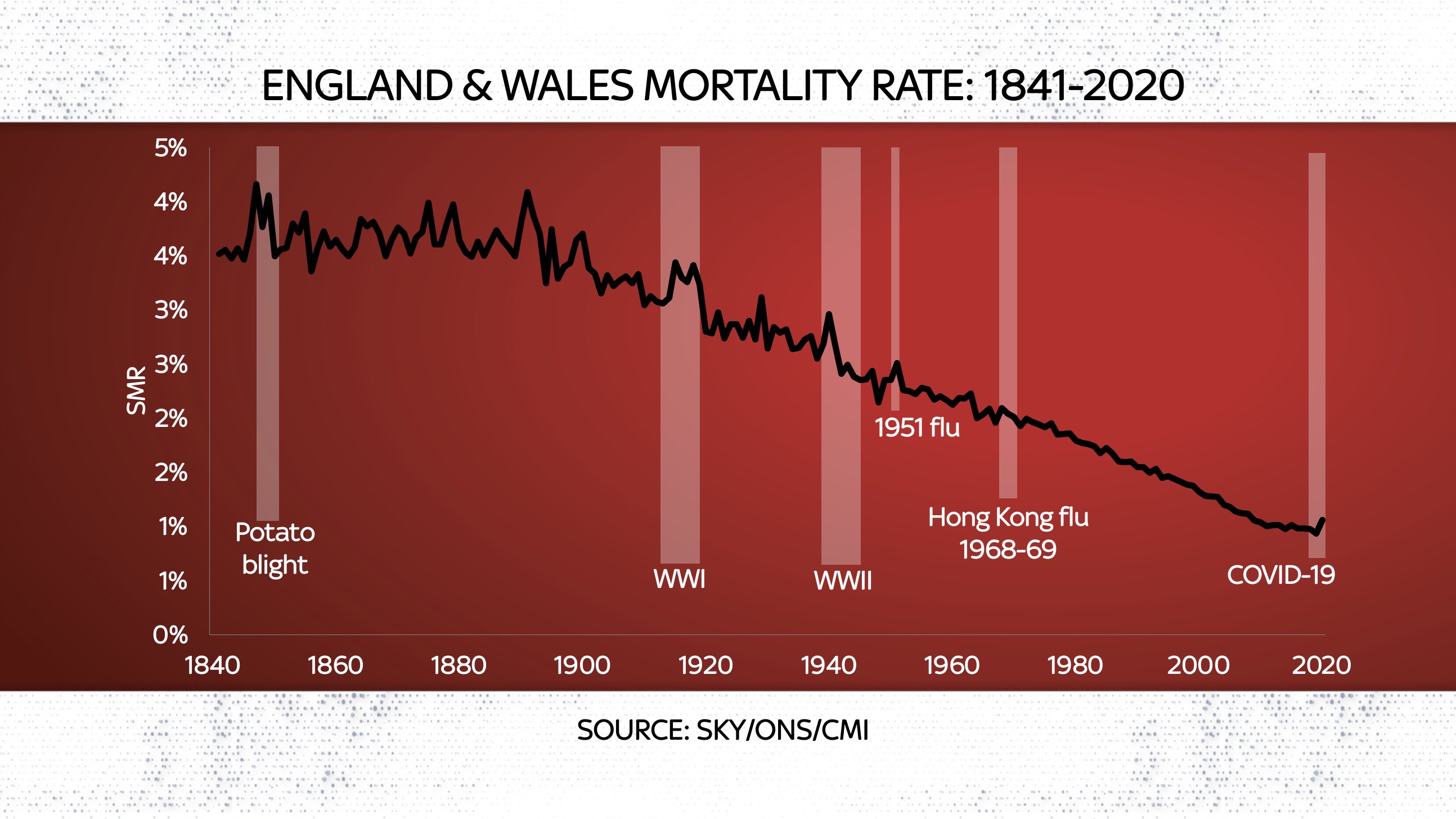
The following chart shows raw mortality in England and Wales from 1840 to 2020.

England and Wales, raw mortality, 1840-2020 (SKY/ONS/IFA)

The next chart shows age-adjusted non-military mortality from 1840 to 2020:

England and Wales, age-adjusted civil mortality, 1840-2020 (SKY/ONS/IFA)

The third chart shows excess mortality compared to the five-year average:

England and Wales, excess mortality, 1840-2020 (SKY/ONS/IFA)

See alsoUK deaths in 2020: how do they compare with previous years? (BMJ)

4) Italy

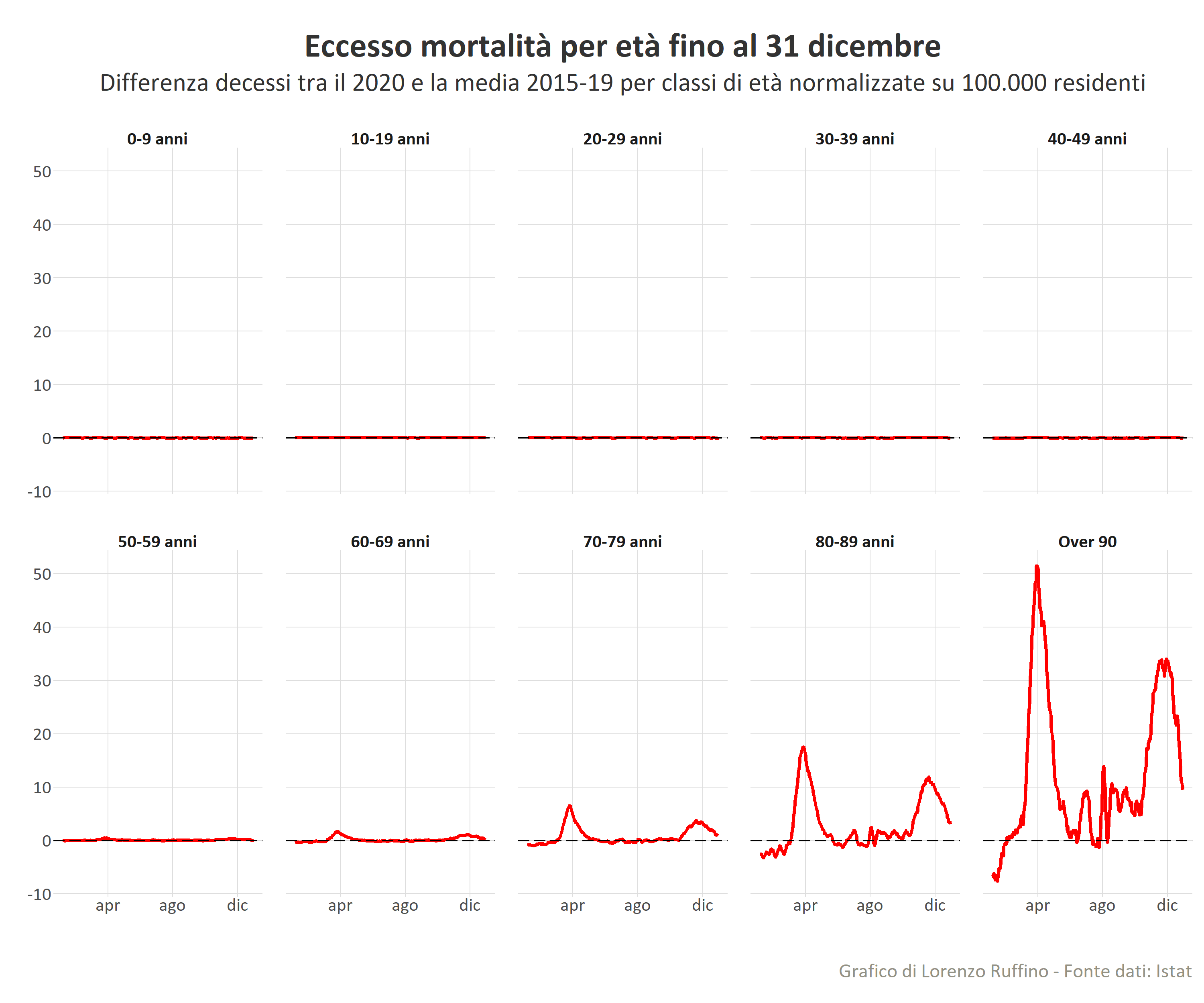
The following chart shows Italian excess mortality in 2020 by age group.

Italian excess mortality in 2020, compared to 2015-19, by age group (Ruffino/Istat)

5) France

The following chart shows French daily mortality from 1968 to 2020: in yellow, the 1969 Hong Kong flu; in green, the 2003 heat wave; and in red, the first and second covid wave.

French daily mortality, 1968 to 2020 (Paldama/SDF)

The second chart shows French monthly mortality from 1990 to 2020 per age group (above and below 65 years). Note that in 2020, there were two peaks (first and second wave) instead of one.

French monthly mortality in people older/younger than 65 years, 1998-2000 (Fernique)

6) Germany

The following chart shows yearly German mortality from 1990 to 2020. Germany had an excess mortality of only about 5% in 2020; however, the German covid infection rate was only about 10% by the end of 2020, due to a very mild first wave in the spring of 2020.

Yearly German mortality, 1990-2020 (Ben Marten / Destatis)

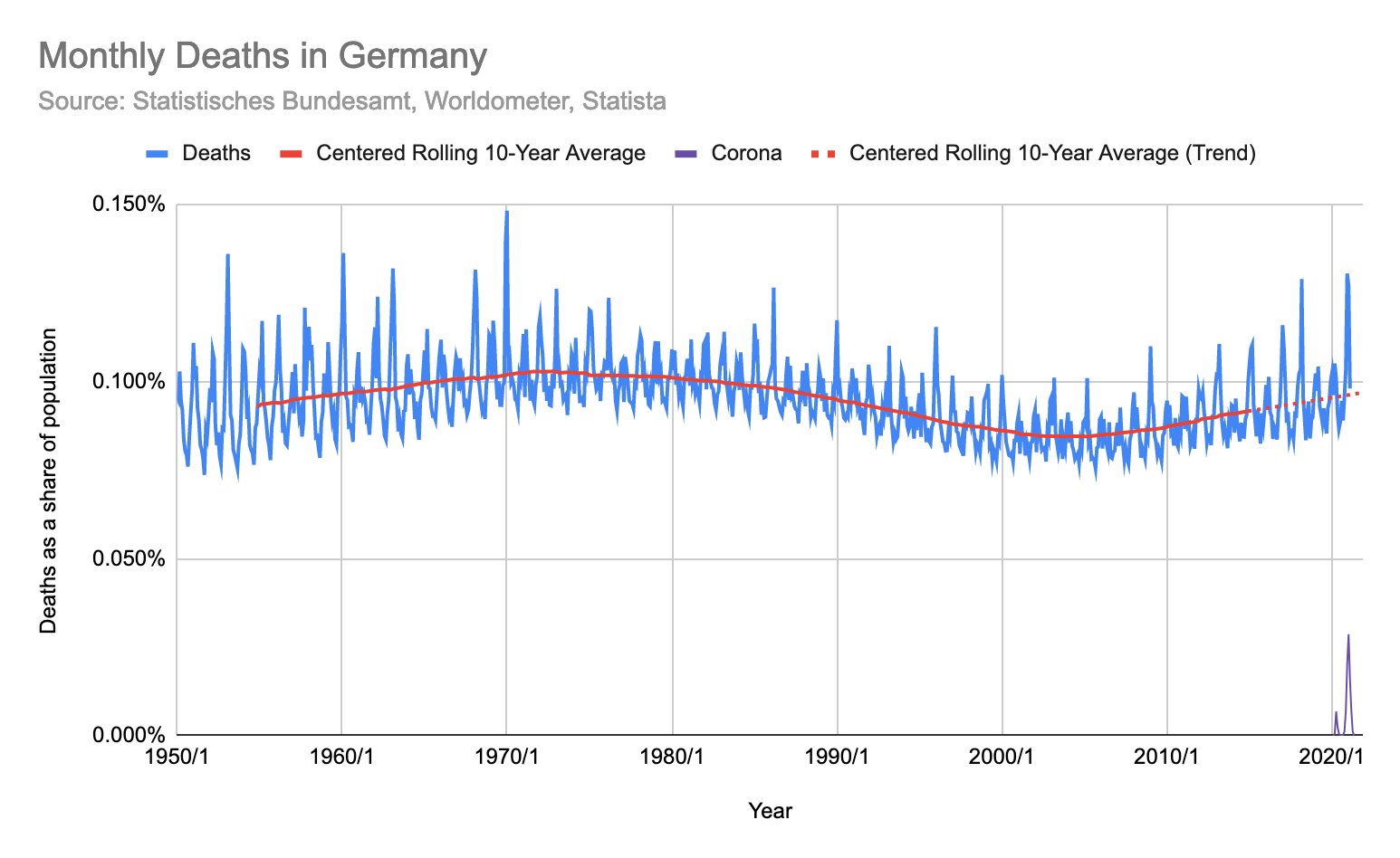
The second chart shows monthly German mortality from 1950 to 2020. The highest peak is the the 1969 Hong Kong flu. The 2017/2018 flu wave was also very strong in Germany.

Monthly German mortality, 1950-2020 (Ben Marten / Destatis)

7) Switzerland

The following chart shows Swiss raw mortality from 1900 to 2020.

Swiss mortality, 1900 to 2020 (SPR/BFS)

The second chart shows Swiss mortality by age group from 1971 to 2020. The median age of covid deaths was 86 years. Below 70 years, there was no excess mortality in Switzerland.

Swiss mortality per age group, 1971 to 2020 (SPR/BFS)

The third chart shows Swiss life expectancy from 1880 to 2020, for males (black) and females (red). In 2020, Swiss life expectancy temporarily dropped by 7.5 months or 0.7% compared to 2019 and reached the level of 2015. In comparison, during the 1918 flu Swiss life expectancy dropped by about 10 years or about 20%.

Switzerland: Life expectancy from 1880 to 2020 (Unisanté Lausanne)

.

Coronavirus Covid-19 Research History – Index

.
Specific Issues Index

from Creating Better World

Posted in coronavirus, Covid-19, pandemic | Tagged , , , , , , | Leave a comment

The WEF and the Pandemic

The WEF and the Pandemic

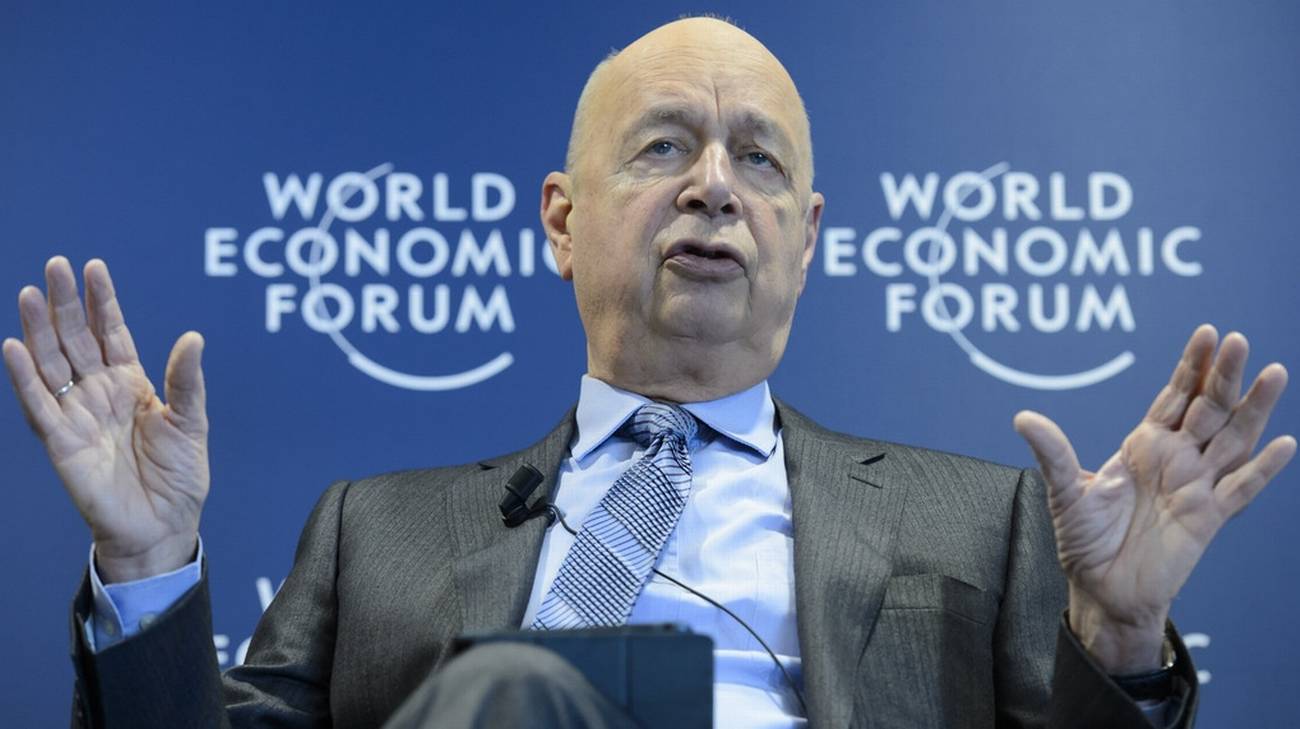
WEF founder Klaus Schwab in 2014 (Alamy)

Published: October 6, 2021 (upd.)
Share onTwitter / Facebook / Telegram
Select LanguageDutchEnglishFrenchGermanGreekHebrewHungarianItalianJapaneseKoreanPolishPortugueseRussianSpanishSwedishTurkishPowered by

How is the Davos World Economic Forum involved in the coronavirus pandemic?

The Davos World Economic Forum (WEF) is a premier forum for governments, global corporations and international entrepreneurs. Founded in 1971 by engineer and economist Klaus Schwab, the WEF describes its mission as “shaping global, regional and industry agendas” and “improving the state of the world”. According to its website, “moral and intellectual integrity is at the heart of everything it does.”

The WEF has been involved in the coronavirus pandemic in several ways.

First, the WEF was, together with the Gates Foundation, a sponsor of the prescient “Event 201” coronavirus pandemic simulation exercise, held in New York City on October 18, 2019 – the same day as the opening of the Wuhan Military World Games, seen by some as “ground zero” of the global pandemic. China itself has argued that US military athletes may have brought the virus to Wuhan.

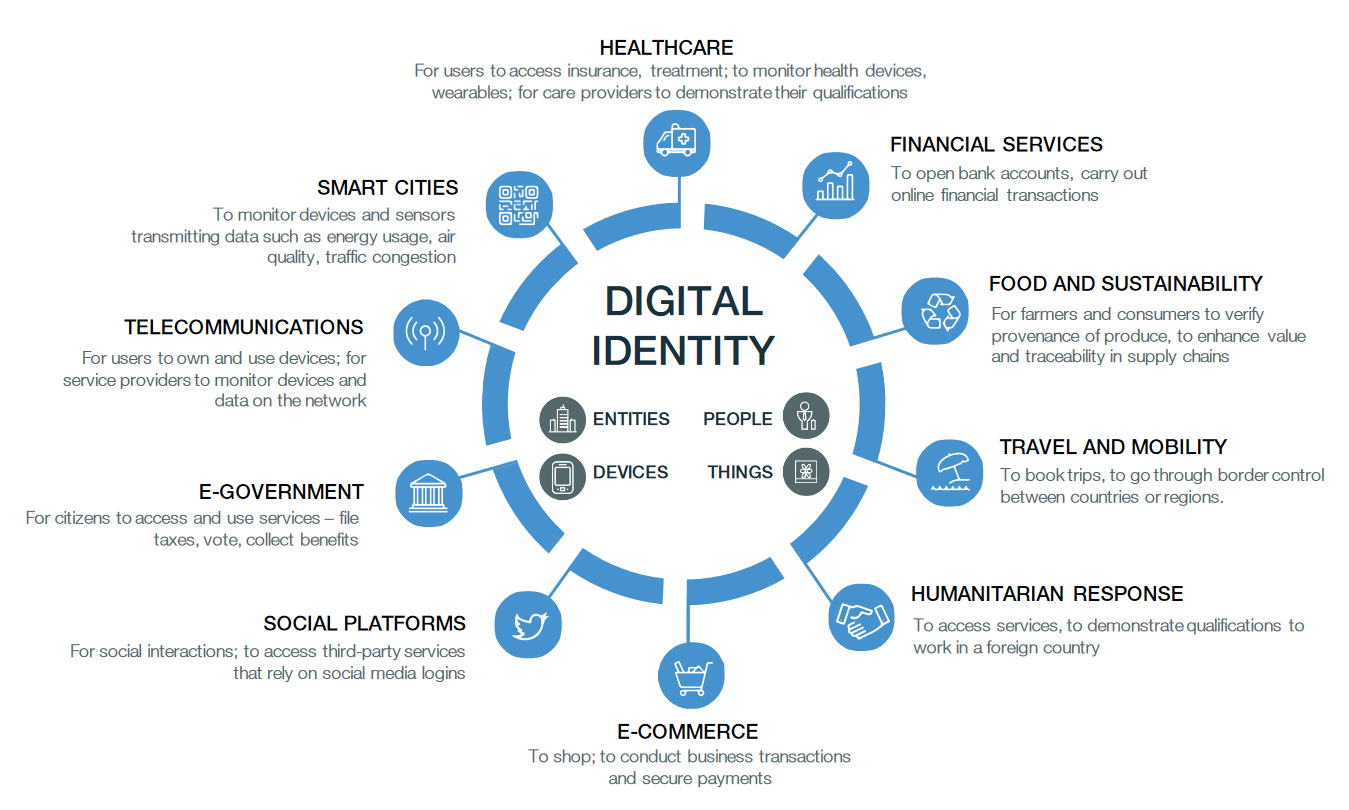
Second, the WEF has been a leading proponent of digital biometric identity systems, arguing that they will make societies and industries more efficient, more productive and more secure. In July 2019, the WEF started a project to “shape the future of travel with biometric-enabled digital traveler identity management”. In addition, the WEF collaborates with the ID2020 alliance, which is funded by the Gates and Rockefeller foundations and runs a program to “provide digital ID with vaccines”. In particular, ID2020 sees the vaccination of children as “an entry point for digital identity.”

Third, WEF founder Klaus Schwab is the author of the book COVID-19: The Great Reset, published in July 2020, which argues that the coronavirus pandemic can and should be used for an “economic, societal, geopolitical, environmental and technological reset”, including, in particular, advancing global governance, accelerating digital transformation, and tackling climate change.

Finally, the WEF has been running, since 1993, a program called “Global Leaders for Tomorrow”, rebranded, in 2004, as “Young Global Leaders”. This program aims at identifying, selecting and promoting future global leaders in both business and politics. Indeed, quite a few “Young Global Leaders” have later managed to become Presidents, Prime Ministers, or CEOs (see below).

During the coronavirus pandemic, several WEF Global Leaders and Global Shapers (a junior program of the Global Leaders) have played prominent roles, typically promoting zero-covid strategies, lockdowns, mask mandates, and ‘vaccine passports’. This may have been a (largely failed) attempt to protect public health and the economy, or it may have been an attempt to advance the global transformation agenda outlined above, or perhaps both.

In this regard, some notable Young Leaders include Jeffrey Zients (US White House Coronavirus Response Coordinator), Stéphane Bancel (CEO of Moderna), Jeremy Howard (founder of influential lobby group “Masks for All”), Leana Wen (zero-covid CNN medical analyst), Eric Feigl-Ding (zero-covid Twitter personality), Gavin Newsom (Governor of California, selected in 2005), Devi Sridhar (British zero-covid professor), Jacinda Ardern (Prime Minister of New Zealand), Greg Hunt (Australian Health Minister and former WEF strategy director), French President Emanuel Macron, Austrian Chancellor Sebastian Kurz, German Chancellor Angela Merkel (selected in 1993), German Health Minister Jens Spahn, and former British PM Tony Blair (a leading proponent of ‘global vaccine passports’).

To get a full overview of their members, see Global Leaders for Tomorrow and Young Global Leaders on WikiSpooks (a Wiki focusing on covert power structures) as well as the official Young Global Leaders website. For an overview of some notable members in politics and the media, see below.

In conclusion, the Davos World Economic Forum has indeed been involved in the strategic management of the coronavirus pandemic, with a major emphasis on using the pandemic as a catalyst for digital transformation and the global introduction of digital identity systems.

Digital Identity: The 2018 vision of the World Economic Forum

Digital Identity: The vision of the World Economic Forum (WEF, 2018)

WEF “Young Global Leaders”

An overview of some WEF Young Global Leaders (2005-2021) and Global Leaders for Tomorrow (1993-2003) in politics and the media. The list is not exhaustive.

SourcesGlobal Leaders for Tomorrow and Young Global Leaders on WikiSpooks.

United States

Politics and Policy

Jeffrey Zients (White House Coronavirus Response Coordinator since 2021, selected in 2003), Jeremy Howard (co-founder of lobby group “masks for all”, selected in 2013), California Governor Gavin Newsom (selected in 2005), Pete Buttigieg (selected in 2019, candidate for US President in 2020, US secretary of transportation since 2021), Chelsea Clinton (Clinton Foundation board member), Huma Abedin (Hillary Clinton aide, selected in 2012), Nikki Haley (US ambassador to the UN, 2017-2018), Samantha Power (US ambassador to the UN, 2013-2017, USAID Administrator since 2021), Ian Bremmer (founder of Eurasia Group), Bill Browder (initiator of the Magnitsky Act), Jonathan Soros (son of George Soros), Kenneth Roth (director of “Human Rights Watch” since 1993), Paul Krugman (economist, selected in 1995), Lawrence Summers (former World Bank Chief Economist, former US Treasury Secretary, former Harvard University President, selected in 1993), Alicia Garza (co-founder of Black Lives Matter, selected in 2020), Stéphane Bancel (Moderna CEO).

Media

CNN medical analyst Leana Wen (selected in 2018), CNN chief medical correspondent Sanjay Gupta, Covid Twitter personality Eric Feigl-Ding (a ‘WEF Global Shaper‘ since 2013), Andrew Ross Sorkin (New York Times financial columnist), Thomas Friedman (New York Times columnist, selected in 1995), George Stephanopoulos (ABC News, 1993), Lachlan Murdoch (CEO of Fox Corporation).

Technology and Social Media

Microsoft founder Bill Gates (1993), former Microsoft CEO Steven Ballmer (2000-2014, selected in 1995), Amazon founder Jeff Bezos (1998), Google co-founders Sergey Brin and Larry Page (2002/2005), former Google CEO Eric Schmidt (2001-2017, selected in 1997), Wikipedia co-founder Jimmy Wales (2007), PayPal co-founder Peter Thiel (2007), eBay co-founder Pierre Omidyar (1999), Facebook founder and CEO Mark Zuckerberg (2009), Facebook COO Sheryl Sandberg (2007).

Great Britain, Canada, Australia, New Zealand

Professor Devi Sridhar (a leading ‘zero covid’ proponent, selected in 2020/21), former British Prime Ministers Tony Blair and Gordon Brown (both selected in 1993), BBC World Service journalist Dawood AzamiLynn Forester de Rothschild (co-owner of The Economist), Nathaniel Rothschild (son of Lord Rothschild), historian Niall Ferguson (selected in 2005), William Hague (Foreign Secretary, 2010-2014), Charles Allen (CEO of ITV, 2004-2007; Chairman of EMI, 2008-2010).

New Zealand Prime Minister Jacinda Ardern (since 2017, selected in 2014), Australian Health Minister Greg Hunt (selected in 2003; former WEF strategy director), Canadian Deputy Prime Minister Chrystia Freeland (selected in 2001; former managing director of Reuters). Canadian Prime Minister Justin Trudeau is a WEF participant, but is not a confirmed Young Global Leader.

Germany

Chancellor Angela Merkel (selected in 1993, 12 years before becoming Chancellor), current Health Minister Jens Spahn and former Health Ministers Philipp Roesler and Daniel Bahr, current co-chair of the Green Party and failed Chancellor candidate Annalena Baerbock (selected in 2020), former co-chair of the Green Party Cem Özdemir (selected in 2002), media mogul and Axel Springer CEO Mathias Doepfner (selected in 2001), talk show host Sandra Maischberger, late Foreign Minister and Vice Chancellor Guido Westerwelle (1997), former German President Christian Wulff (selected in 1995, 15 years before becoming President), Reto Francioni (former CEO of Deutsche Boerse).

European Union

EU Commission Presidents Jose Manuel Barroso (2004-2014, selected in 1993) and Jean-Claude Juncker (2014-2019, selected in 1995), French President Emanuel Macron (since 2017, selected in 2016), former French President Nicolas Sakozy (2007-2012, selected in 1993), Austrian Chancellor Sebastian Kurz, former Italian Prime Minister Matteo Renzi (2014-2016, selected in 2012), former Spanish Prime Minister Jose Maria Aznar (1996-2004, selected in 1993), Klaus Regling (CEO of the European Financial Stability Mechanism since 2012), Guy Verhofstadt (former Belgian Prime Minister, Chair of the Brexit Steering Group), Danish Minister for the Environment Lea Wermelin, Finnish Prime Minister Sanna Marin, former Finnish Prime Minister Alexander Stubb, and Mark Leonard (founding director of the Soros-funded European Council on Foreign Relations).

Switzerland

Natalie Rickli (Director of Health of the Canton of Zurich, selected in 2012), former Presidents of the Swiss National Council Christa Markwalder (selected in 2011) and Pascale Bruderer-Wyss (selected in 2009), Geneva politician Pierre Maudet (selected in 2013), NZZ media group CEO Felix R. Graf (selected in 2007), former Swiss Justice Minister Ruth Metzler (selected in 2002), former Swiss television CEO Roger de Weck (2011-2017, selected in 1994), former UBS CEOs Peter Wuffli (selected in 1994) and Marcel Rohner (selected in 2003), former Credit Suisse CEO Tidjane Tiam (1998).

2005 YGL Nomination Committee

The 2005 WEF Young Global Leaders Nomination Committee consisted primarily of major media publishers and editors, including Arthur Sulzberger and Steve Forbes (USA); James MurdochJonathan Rothermere and Tom Glocer (UK); Arnaud Lagardère (France); Mathias Doepfner and Hubert Burda (Germany); Michael Ringer (Switzerland); and Carl-Johan Bonnier (Sweden).

Video Annex

1) Bill Gates demanding “digital immunity proof” in March 2020

Video: Bill Gates demanding ‘digital immunity proof’ in March 2020 (source)

2) Edward Snowden warning of the “destruction of rights” (March 2020)

3) The Chinese “social credit” system (May 2019)

Further reading

.

Coronavirus Covid-19 Research History – Index

.

Specific Issues Index

from Creating Better World

Posted in coronavirus, Covid-19, pandemic, WEF, World Economic Forum | Tagged , , , , , , , | Leave a comment

The Return of the Flu

The Return of the Flu

Sweden: The return of the flu (WHO FluNet)

Published: November 24, 2021 (upd.)
Share onTelegram / Twitter / Facebook
Select LanguageDutchEnglishFrenchGermanGreekHebrewHungarianItalianJapaneseKoreanPolishPortugueseRussianSpanishSwedishTurkishPowered by

The flu has returned to some countries with high rates of natural immunity against SARS-CoV-2. In contrast, countries with high vaccination rates but low natural immunity rates are seeing record new covid waves, although at lower hospitalization and death rates than before.

In March 2020, shortly after the beginning of the coronavirus pandemic, influenza viruses and some other respiratory viruses mysteriously disappeared from global circulation. Some skeptics suspected that influenza was simply ‘rebranded’ as covid, while many health authorities and journalists claimed influenza was suppressed by face masks and lockdowns.

But influenza has not been rebranded as covid, and influenza viruses have disappeared even in countries without face masks and lockdowns (e.g. Sweden), while they did not disappear during previous flu pandemics, despite face masks, school closures, and other measures. In fact, face masks and most other measures simply aren’t effective against respiratory virus transmission.

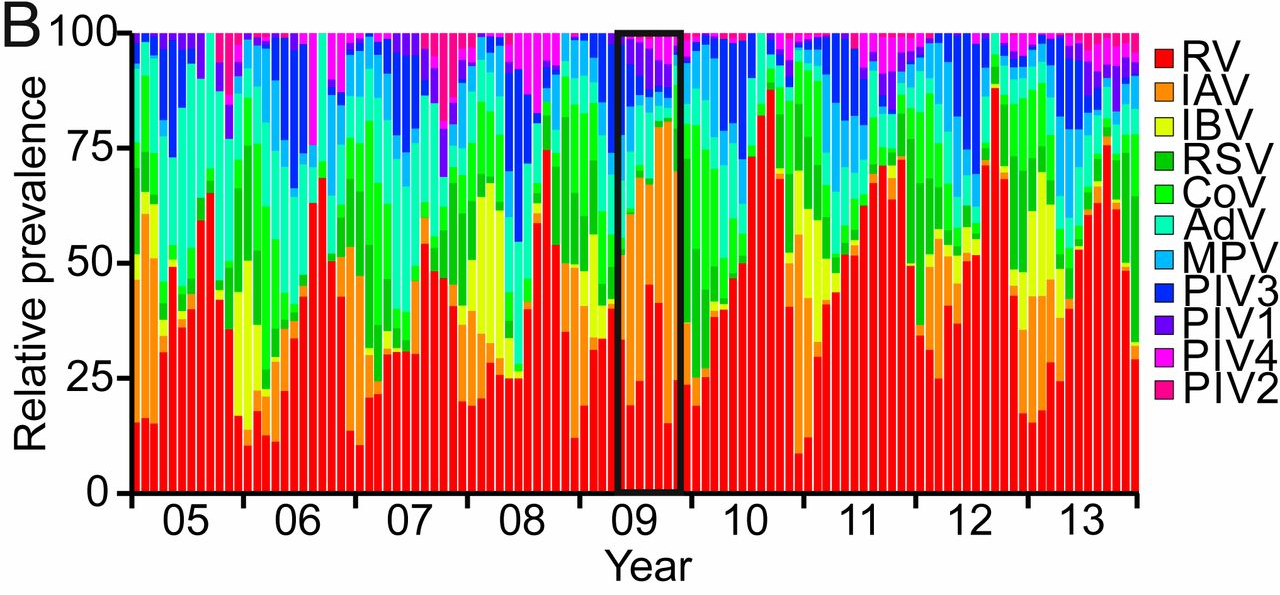
Instead, influenza viruses have been displaced by the more infectious novel coronavirus. This “displacement effect” is well known from previous influenza pandemics (e.g. 1918, 1957 and 1968) and is at play every winter, when various respiratory viruses displace each other. Even during the ongoing coronavirus pandemic, new variants have repeatedly displaced previous variants. (1)

Thus, it was only a matter of time until influenza viruses would re-emerge somewhere, most likely at a place that had achieved a high rate of natural immunity against the novel coronavirus.

This moment came in July 2021, when the first major influenza wave since early 2020 hit India, shortly after its large Delta coronavirus wave had ended in June (see WHO flu chart below). At the time, the natural immunity rate in India was about 80% at the national level and about 97% in the capital city, Delhi, while the covid vaccination rate was only about 5%. (2)

More recently, influenza has also returned to Sweden (see chart above), which had achieved a natural immunity rate of about 60% by October and hasn’t yet seen a new coronavirus surge this winter. However, the current Swedish flu wave is still quite weak and may collapse at any time.

Indeed, in some other European countries, influenza briefly showed up in October but was again displaced by a new coronavirus wave in November (e.g. in the Netherlands). Some places in the United States have also seen local influenza waves recently, especially on university campuses.

Great Britain, meanwhile, has experienced a prolonged Delta wave since June and may have reached a total infection rate of about 50% (3). In the next few weeks, Great Britain might see either a renewed covid winter surge, or a collapse of the Delta wave followed by a flu surge. In South Africa, which experienced three consecutive strong covid waves of the Wuhan, Beta and Delta variants, influenza currently appears to be gaining the upper hand for the first time.

(Update: In most parts of Latin America, the Delta wave had ended in late October. In early December, Rio de Janeiro reported the beginning of a major flu wave, which is fully consistent with the very high rate of natural immunity in Brazil. )

In contrast, countries with a high covid vaccination rate but a rather low natural infection rate have not yet seen a return of influenza, but instead have experienced record new coronavirus waves. This was the case in IsraelIcelandSingapore and in several Western European countries. Moreover, countries with some of the strictest “covid certificate” rules in the world, such as the Baltic states, have seen the highest coronavirus infection rates in the entire world.

Countries with very low infection rates, such as Australia, New Zealand, Norway, Finland and especially China, are bound to see major coronavirus waves as soon as they open their borders. Ideally, these countries will open the “flood gates” before vaccine protection in senior citizens has significantly waned, in order to minimize resulting covid hospitalizations and deaths.

While parallel coronavirus and influenza virus waves seem unlikely (given the competition between the two viruses), the Indian precedent indicates that many European countries, the UK and parts of the US might see an influenza wave in the second half of the winter, shortly after the ongoing coronavirus waves will have ended.

Already in September, WHO regional director for Europe, Dr. Hans Kluge, acknowledged that current covid vaccines cannot prevent virus transmission and, therefore, cannot end the pandemic. Moreover, it has become clear that covid vaccine protection lasts only about half a year, whereas natural immunity appears to be significantly more robust and durable: in most countries, recovered people account for just a fraction of a percent of new cases and hospitalizations. (4)

These limitations of covid vaccines invalidate the global strategy, advanced by billionaire vaccine investor Bill Gates back in April 2020, that the pandemic can only be ended by vaccinating the entire world. Moreover, these limitations invalidate the case for “vaccine passports”. In addition, donating vaccines to “developing countries” is not going to be effective, either, as most countries in Africa, Latin America and South East Asia have already achieved natural immunity rates of 60% to 80%.

Indeed, it looks like the major distinction is no longer between “vaccinated” and “unvaccinated” people (as many politicians suggest), but between recovered and non-recovered people; thus, ironically, the pandemic is increasingly turning into a “pandemic of the vaccinated”. Yet the long-term immunity of recovered people is mostly ignored or downplayed by authorities, possibly because it might challenge the global vaccination and vaccine passport strategy.

Nevertheless, covid vaccines do provide strong protection against severe disease for about half a year and, thus, may already have saved hundreds of thousands of lives in 2021.

Yet regardless of vaccination rates, it appears plausible that the entire global population will get infected by the novel coronavirus within about three years. This raises the most important question of what impact covid vaccines will likely have on this process:

  1. In the best case, covid vaccines will mitigate the impact of initial infections in high-risk groups while not interfering with the subsequent build-up of durable natural immunity. For instance, it has been argued that vaccination campaigns during the 1957 and 1968 flu pandemics may have saved hundreds of thousands of lives in the US and in Europe.
  2. In a neutral case, covid vaccines will simply delay initial infections by a few months, but will not mitigate infections once they occur. This was the result of a recent British study, which found that in senior citizens, covid vaccines may have little effect beyond delaying infection.
  3. In the worst case, covid vaccines will, over time, aggravate subsequent infections by causing an effect called original antigenic sin (OAS) or even antibody-dependent disease enhancement (ADE). For instance, it has been known for many months that vaccinated people show a limited antibody response once infected (they don’t develop anti-N antibodies), and molecular simulation studies indicate that future coronavirus variants might potentially trigger ADE. (5)

Due to the limited duration of covid vaccine trials, it is impossible to know which of these scenarios will materialize. Thanks to their short-term protective effect, covid vaccines may have saved hundreds of thousands of lives in 2021, but their long-term impact remains more uncertain. In particular, an immune-escaping coronavirus variant might fundamentally change the outlook.

See alsoWHO FluNet (WHO), CoVariants, and Covid vs. the flu (SPR)

You have been reading: The Return of the Flu.
An analysis by Swiss Policy Research.

Notes

(1) Importantly, almost 90 years after the discovery of influenza virus (in 1933), this viral interference and displacement effect – and large-scale respiratory virus transmission and seasonality in general – is still not understood scientifically. This is why the epidemiology of respiratory viruses is still a rather pre-scientific field that has failed badly during the coronavirus pandemic.

(2) Of note, India suffered a total pandemic excess mortality of about 4 million deaths, or close to 50% compared to about 9 million deaths per year in a population of about 1.3 billion. In terms of population-wide mortality, 4 million excess deaths equal 0.3%.

(3) British blood donor data indicates a natural infection prevalence – measured by anti-N antibodies – of only 10% to 30% (decreasing with age). However, it has been shown that vaccinated people no longer develop anti-N antibodies once infected (as the vaccine induces anti-S antibodies), so data from vaccinated blood donors underestimates true infection prevalence.

(4) Current serological studies estimate that a previous infection will protect against re-infection for about 2 years on average (or more) and against severe disease for several years at least. In contrast to vaccinated people, recovered people generally develop mucosal immunity, too.

(5) The fact that vaccinated people don’t develop anti-N antibodies once infected was to be expected (as vaccination induces neutralizing anti-S antibodies). The same response is seen in children and in some people with very mild covid, so this is not necessarily a negative effect. Yet it remains unknown how vaccinated people will respond to future coronavirus variants.

Figures

1) The Indian flu wave from July to October 2021

Flu waves in India (WHO FluNet)

2) Sweden vs. Japan: Disappearance of the flu

The flu disappeared both in Sweden (no lockdown, almost no masks) and in Japan (no lockdown, but high mask compliance). Moreover, in many countries, the flu disappeared several weeks prior to lockdowns and mask mandates. ChartIanMsc

Disappearance of the flu in Sweden and Japan (IanMsc)

3) Competition between various respiratory viruses

Temporal patterns of seasonal respiratory viral infections in Glasgow (UK). Red: rhinoviruses, orange and yellow: influenza viruses, light green: coronaviruses, dark green: RS viruses.

Temporal patterns of viral respiratory infections (Nickbaksh et al, 2019)

4) Timeline of pandemic influenza viruses

During the flu pandemics of 1918, 1957 and 1968, a new influenza virus permanently displaced a previously circulating influenza virus.

Timeline of pandemic influenza viruses (Nickol, 2019)

5) Coronavirus vs. influenza virus

Coronavirus vs. influenza virus (PN)
Posted in coronavirus, Covid-19, pandemic | Tagged , , , , , , , , | Leave a comment

The Covid Vaccine War

The Covid Vaccine War

The coronavirus pandemic: panic vs. totalitarianism (Twitter)

Published: December 13, 2021 (upd.)
Share onTelegram / Twitter / Facebook
Select LanguageDutchEnglishFrenchGermanGreekHebrewHungarianItalianJapaneseKoreanPolishPortugueseRussianSpanishSwedishTurkishPowered by

Saving or enslaving humanity?

SPR and other independent geopolitical analysts have been warning since the early days of the coronavirus pandemic that the pandemic might be used as a pretext or catalyst to impose a global digital biometric identity system, introduced as “vaccine passports”, that may later be expanded into a Chinese-style “social credit” population control system.

In particular, NSA whistleblower Edward Snowden warned already back in March 2020 of the “permanent destruction of rights” and the creation of an “architecture of oppression”. Japan-based geopolitical analyst, James Corbett, highlighted the fact that governments around the world have been busy building extensive technical infrastructure that is unlikely to get dismantled anytime soon.

While “vaccine passports” have of course been entirely ineffective and indeed counterproductive at the medical level, this doesn’t really matter at the strategic level, if their primary strategic purpose is to introduce QR-based or even RFID-based identity systems that may later be linked to other personal health and financial data as well as to digital currencies and payment systems.

A Global Campaign

Indeed, in February 2021, digital identity lobby group ID2020, funded by the Gates Foundation and the Rockefeller Foundation, created the “Good Health Pass” collaboration that currently includes 125 member corporations from the fields of technology, health, transport and payment systems. In September, the collaboration urged US President Biden in an open letter to “recognize the need for verifiable digital health passes as a precursor to large scale vaccination and testing mandates.”

In August, the WHO published a document, sponsored by the Gates Foundation and the Rockefeller Foundation, detailing technical specifications for the global implementation of “vaccine certificates”, as outlined already back in March 2020 by Bill Gates himself. Of note, the five WHO project managers developing the technical specifications previously worked for the Gates Foundation or the Rockefeller Foundation or for other projects funded by one of these foundations.

French government and defense industry contractor, Thales Groupdescribed “vaccine passports” as “a precursor to digital ID wallets, offering citizens unparalleled convenience and security.”

In the European Union, which had been planning the introduction of “vaccine passports” since 2018, EU Commission president von der Leyen argued that the EU “must consider mandatory covid vaccinations”, despite the fact that EMA still hasn’t fully approved the vaccines, and the use of all of these vaccines has already been suspended or restricted in several countries over safety concerns.

In general, the fact that millions of “unvaccinated employees” are threatened with losing their jobs – regardless of their actual immunity status and the fact that natural immunity provides far better protection than vaccination – is another indication that strategic objectives appear to be more important than actual medical or epidemiological considerations. For instance, English care homes recently had to suspend 50,000 unvaccinated employees, jeopardizing the care of 30,000 residents.

Sweden and Russia

The global nature of this campaign might explain why even in a country like Sweden, which has managed the coronavirus pandemic without any major restrictions, the government in November suddenly decided to introduce “vaccine passes” for some indoor events (even excluding recovered people). In fact, Sweden might quickly turn from a bastion of lockdown resistance into a pioneer of “more secure and easier” RFID-based identity systems (i.e. implantable microchips).

Finally, the Russian Federation, seen by some as a geopolitical alternative to the Western system, is also rapidly moving towards vaccine mandates and national QR “health passes”. The main difference appears to be that in Russia, vaccine certificates are more likely to be fake – despite the fact that Russia has already reached a total pandemic excess mortality of about one million people.

Overall, it looks like many governments are focused not primarily on a rational and evidence-based response to the pandemic, but on maintaining the narrative of a heroic fight against the pandemic and “the unvaccinated” – a narrative that may later be written into history books. The digital identity agenda is using this “public health” narrative as a shield to neutralize or break resistance.

Opposition and Protests

Nevertheless, in many countries significant civilian, political or legal resistance has formed against the introduction of vaccine mandates and “vaccine passports”. Many Western countries have been seeing some of the largest political protests in decades, though often ignored, downplayed or vilified by corporate and government-controlled media (see social media channels below).

However, in contrast to general strikes or civilian “color revolutions”, mere protests have often been rather ineffective politically. In fact, an Australian professor, writing on the Global Agenda blog of the World Economic Forum, recommended framing “vaccine passports” as “freedom passes” to “divide the opposition” while simply ignoring “noisy protestors” (the article was later removed).

In some countries, though, opposition to vaccine mandates or “vaccine passports” has reached the highest political or judicial sphere. Some notable examples include the United States, Canada, Spain, Switzerland, some Eastern European countries, and Brazil.

In the US, federal judges have blocked or suspended four of five national vaccine mandates that would have affected federal employees, government contractors, companies with more than 100 employees, and most healthcare workers. In addition, several US states have prohibited the use of “vaccine passports”. On the other hand, states like New York have enacted far-reaching vaccine mandates, and foreign national air travelers to the US are required to be “fully vaccinated”.

In Canada, the Premier of Ontario had to rescind a vaccine mandate for healthcare workers, admitting that it would have resulted in the “potential departure of tens of thousands of health-care workers.” On the other hand, the Canadian government recently made “full vaccination” a mandatory requirement for all air and rail travel (beginning at age 12) – again ignoring the medical evidence that vaccination simply doesn’t prevent infection and transmission.

In Spain, federal courts have rejected several proposals to introduce regional or national “vaccine passports”, calling them “ineffective and unconstitutional”. Spanish courts also declared the 2020 lockdowns as unconstitutional and ordered the government to return all fines to citizens. However, some regional “covid passport” schemes have recently been approved by Spanish courts.

In Switzerland, there recently was a national referendum on “covid passports”. While citizens below 40 mostly rejected them, citizens over 65 overwhelmingly supported them, having been told by the government that they would help protect them. Thus, the new law was accepted by 62% overall.

In some Eastern European countries, interest in covid vaccines was so low that governments had to suspend their vaccination campaigns, despite some of the highest covid death rates in the world. On the other hand, the Baltic state of Lithuania introduced one of the strictest “covid passport” schemes in the world. In Croatia, 2500 former military and policemen have formed a “volunteer battalion”, to “send a message to the ruling party that they oppose vaccine passports.” (video)

In Brazil, president Bolsonaro appears to strongly oppose “covid passports”, having described them as a “leash” and adding that “I would rather die than lose my freedom.” However, it looks like Bolsonaro has limited influence over some major cities like Rio de Janeiro, which have decided to introduce a vaccine mandate for various places, including tourist attractions.

Overall, it seems evident that this is a fight not over some public health policy technicalities, but over fundamental political conceptions and the future of Western and indeed global society.

Covid: A “Plandemic”?

Does the “vaccine passport” strategic agenda indicate that the coronavirus pandemic itself is in fact a pre-planned “plandemic”, engineered simply to enforce global biometric identity systems while claiming to protect citizens from a virus? From a purely scientific perspective, this indeed remains a distinct possibility. The genetic evidence shows that the novel coronavirus is likely lab-engineered (about 90% probability). Such a lab-related scenario is consistent with either a Chinese lab leak (similar to many previous lab leaks), or with a premeditated release disguised as a Chinese lab leak (similar to the 2001 “anthrax letter” operation, already linked to covid), or some combination thereof.

You have been reading: The Covid Vaccine War.
An analysis by Swiss Policy Research.

International protests

Dedicated social media channels that cover international pandemic-related protests:

  1. Anonyme Citoyen (France, 64k subscribers)
  2. Nicole Elisei (Global, 50k subscribers on Twitter)
  3. Radio Genova (Italy/global, 21k subscribers)
  4. Efrat Fenigson (Israel, 22k subscribers)
  5. Rise Melbourne (Australia, 25k subscribers)
  6. Banana Media (Netherlands, 5k subscribers)
  7. Live World (International, 56k subscribers)

Videos: Passports and Protests

2) Bergamo (!): Protest against vaccine passport (October 2021)
3) Austria: “Every citizen can be checked at any time” (Nov. 2021)
4) Italy: The “Super Green Pass” (December 2021)
5) Bio-security state: James Corbett and Robert F. Kennedy Jr. (Nov. 2021)
6) Edward Snowden: An architecture of oppression (March 2020)
7) Bill Gates: “Digital immunity proof” (March 2020)
8) Canada: Investing $1 billion into “health pass” infrastructure
9) Victoria: A “vaccinated economy” (Dan Andrews, September 2021)
10) Robert F. Kennedy Jr. in Switzerland (November 2021)
11) Lithuania: Pioneering the “opportunity pass” (September 2021)
12) The week in Melbourne (18+) (September 2021)
13) China: School children with QR “health codes” (October 2021)
14) The Chinese “social credit” system (May 2019)
15) Cardiac arrests in athletes

.

Coronavirus Covid-19 Research History – Index

.

Specific Issues Index

from Creating Better World

Posted in coronavirus, Covid-19, pandemic | Tagged , , , , , , , | Leave a comment

On the Origin of SARS Coronavirus 2

On the Origin of SARS Coronavirus 2

An overview of the main SARS-CoV-2 origin hypotheses (Source: Alina Chan, PhD)

Updated: December 2021
Published: June 2020
Share onTwitter / Facebook
Select LanguageDutchEnglishFrenchGermanGreekHebrewHungarianItalianJapaneseKoreanPolishPortugueseRussianSpanishSwedishTurkishPowered by

A comprehensive summary of facts concerning the origin of the novel coronavirus.

Executive summary: The currently available evidence supports a lab-related origin of the novel coronavirus. The phylogenetic evidence links SARS-CoV-2 to a 2012 covid-like pneumonia incident in a Chinese mine near Mojiang. The virus samples of this incident were collected, stored and investigated by the Wuhan Institute of Virology (WIV). However, some US labs may also have had access to this data, as they were collaborating with the Wuhan lab in the field of coronavirus research. At the genetic level, the existence of a furin cleavage site involving a CGG-coded double arginine codon and a BsaXI Golden Gate seamless cloning site may indicate genetic engineering. In contrast, the search for an intermediate animal host has so far remained unsuccessful.

A. Previous pandemics and epidemics

  1. The two most recent (mild) global pandemics were the 1977 ‘Russian flu’ and the 2009 ‘swine flu’. In both of these cases, modern genetic research indicates that a lab escape was the most likely origin of the pandemic virus (see here and here). Yet in both cases, the World Health Organization (WHO) initially excluded this possibility (see here and here).
  2. The origin of the first SARS coronavirus in 2002 remains unknown, but a natural origin is generally assumed. However, since the discovery of SARS-1, at least four lab escapes of the virus from P3 and P4 high-security labs in Singapore, Taiwan and China have been documented.
  3. In December 2021, it was confirmed that a scientist had got infected with the SARS-CoV-2 Delta variant after exposure in a Taiwanese P3 high-security lab.
  4. The 2007 outbreak of foot and mouth disease in Britain was also “very probably caused by a leak from a local laboratory”, according to a British government report.
  5. Concerned scientists have repeatedly warned of the risks involved in so-called “gain-of-function” virus research, which seeks to enhance the virulence or infectiousness of viruses through genetic engineering and other methods.

B. The Mojiang miners and the Wuhan Institute of Virology

  1. In February 2020, it became known that a bat virus called RaTG13, collected by the Wuhan Institute of Virology (WIV) in 2013, was the closest known relative of SARS-CoV-2.
  2. In May 2020, it became known that RaTG13, previously known as BtCoV/4991, had been found in bat feces in a mineshaft near Mojiang in southwest China, after six miners fell ill with SARS-like pneumonia and three of them eventually died. At the time, the WIV received tissue and blood samples of the surviving and dead miners.
  3. The WIV itself didn’t disclose this link, however. Rather, in a March 2020 interview, the famous WIV “bat woman” Shi Zhengli falsely claimed that “a fungus” had caused the miners’ illness.
  4. It was only through a leaked Chinese medical dissertation that the link between the Mojiang miners, their SARS-like pneumonia, and the WIV lab became known. Of note, this medical dissertation was later removed from public access by Chinese authorities.
  5. Moreover, the WIV claimed that they hadn’t investigated the RaTG13 virus until after the outbreak of the pandemic (to compare it to Sars-CoV-2), but genetic database records later showed that the WIV had in fact investigated RaTG13 as of 2017 or 2018.
  6. Archived Chinese database entries showed that the origin of RaTG13 had been changed from “lung fluid” (from the miners) to “bat feces” in July 2020 without any explanation. In addition, the WIV claimed that the RaTG13 sample had “disintegrated” during their analyses and was no longer available, and thus no longer verifiable.
  7. Back in 2012/2013, the sick Mojiang miners were hospitalized for up to four months before being either discharged or dying. During this time, the lungs of the miners may have served as a kind of “human incubator”, possibly allowing the bat coronavirus to adapt to human cells much faster than would have been possible in the wild.
  8. The WIV is known to have infected “humanized mice” with bat coronaviruses, and there is video footage of insufficiently protected WIV employees being bitten by bats.
  9. WIV scientists studied bat coronaviruses not in a high-safety BSL-4 lab, but in BSL-2 and BSL-3 labs. The safety level of a BSL-2 lab is comparable to a dentist’s office.
  10. In September 2019, the WIV deleted a large genetic database containing information on their collection of cross-species bat coronaviruses.
  11. In December 2020, a group of BBC journalists tried to visit the Mojiang mine area in China’s south-western province of Yunnan, but was blocked by Chinese police and security forces. Other Western journalists were also blocked from accessing the area.
  12. In May 2021, three new Chinese medical dissertations were retrieved by independent researchers, which revealed that the WIV retained and studied several additional, but unpublished coronaviruses from the Mojiang mine very closely related to RaTG13 and SARS-CoV-2.

C. The initial covid-19 outbreak in Wuhan

  1. According to a leaked Chinese investigation report, the first suspected covid-19 patients were admitted to Wuhan hospitals already in October of 2019. According to local Chinese press reports, SARS-CoV-2 was already circulating by November 2019.
  2. In September 2019, an inspection and review of virus samples at the WIV took place.
  3. On 12 September 2019, the WIV deleted its cross-species viral pathogen database.
  4. The theory that the initial outbreak had occurred at the Wuhan wet market turned out to be false, as most of the first infections had no connection to the wet market.
  5. To this day, no potential wild animal source of SARS-CoV-2 has been identified.
  6. In late 2019 or early 2020, the profile and photo of WIV employee Huang Yanling was deleted from the WIV website. The WIV later claimed that Huang Yanling hadn’t worked at the WIV since 2015; however, a photo of 2018 surfaced showing her together with the WIV team. Since late 2019, Huang Yanling seems to have disappeared. The US government argued that Huang Yanling may have been “covid patient zero” at the WIV.
  7. In March 2021, a member of the WHO team tasked with investigating the virus origin admitted to NBC News that some employees of the WIV had shown flu-like symptoms in autumn 2019, prior to the outbreak of the pandemic. The WIV claimed that by March 2020, none of its employees had antibodies to Sars-CoV-2, but even if true, this may well be due to antibody waning.
  8. An analysis of public data found that orders of PCR virus tests by the Wuhan University of Science and Technology and the Chinese CDC (also located in Wuhan) rose sharply as early as May 2019 and increased further from July to October 2019, although the use of these PCR tests remains uncertain.
  9. A scientific analysis published in Nature in October 2021 found that “community transmission of SARS-CoV-2 was likely in several areas of Europe and the United States by January 2020 () with possible introductions and transmission events as early as December 2019″.
  10. An independent analysis found that the US National Center for Medical Intelligence (NCMI) may have received first reports of a possible virus outbreak in Wuhan in mid-November 2019.

D. Genetic peculiarities of SARS-CoV-2

  1. The SARS-CoV-2 coronavirus features a so-called furin cleavage site (FCS), which makes the virus more infectious and virulent than it would otherwise be. Such an FCS is not known in any other SARS-like coronavirus, but it is often inserted as part of gain-of-function studies in virus research. However, similar FCS are known to occur in non-SARS-like coronaviruses, hence a natural origin cannot be excluded based on this.
  2. The furin cleavage site found in SARS-CoV-2 uses a CGG-coded arginine (amino acid) double codon, which is quite rare in natural coronaviruses, but is quite common in engineered viruses used in lab experiments with humanized mice.
  3. David Baltimore, an eminent virologist and former president of CalTech, said the following about the furin cleavage site: “When I first saw the furin cleavage site in the viral sequence, with its arginine codons, I said to my wife it was the smoking gun for the origin of the virus. () These features make a powerful challenge to the idea of a natural origin for SARS2.”
  4. In July 2020, US virologist Alina Chan first noted that the peculiar genetic sequence of the SARS-CoV-2 furin cleavage site (viz. an out-of-frame insertion of a Proline amino acid codon) creates a very specific genetic structure (viz. a Golden Gate BsaXI restriction site) that would be expected if the furin cleavage site was inserted via “seamless” cloning. This technique was pioneered by US virologist Ralph Baric, but might also have been used by Chinese researchers.
  5. US coronavirus researcher Ralph Baric stated in an interview on the origin of SARS-CoV-2: “You can engineer a virus without leaving any trace. However, the answers you are looking for can only be found in the archives of the Wuhan laboratory.”
  6. In a FOIA-released email to NIAID director Anthony Fauci and Wellcome Trust director Jeremy Farrar, sent on January 31, 2020, US virologist Kristian Andersen wrote that “after discussions earlier today, [we] all find the genome inconsistent with expectations from evolutionary theory.” Yet after a teleconference with Fauci the following day, Andersen and his colleagues wrote a much-cited letter to Nature Medicine, claiming that SARS-CoV-2 had arisen naturally.
  7. SARS-CoV-2 is exceedingly well adapted to human ACE2 cell receptors, is highly transmissible from human to human, and has remained remarkably stable since its first detection. All of these attributes would be very surprising if the virus had indeed jumped from an animal to a human for the first time in autumn 2019.
  8. In March 2021, Russian-Canadian geneticist Yuri Deigin argued that the furin cleavage site found in SARS-CoV-2 may indicate that the virus was used as an attenuated virus in the context of coronavirus vaccine research. Another geneticist argued that SARS-CoV-2 is the first known beta-coronavirus that can be vaccinated against.
  9. Bat coronaviruses very similar to SARS-CoV-2 have also been found in northern Laos (bordering Yuannan, China); of note, the US military and the French Institute Pasteur were sampling bat viruses in northern Laos already back in 2017, and some of these coronavirus samples were sent to the Wuhan Institute of Virology. However, the coronaviruses found in northern Laos do not feature a furin cleavage site.
  1. In addition to the WIV, the US military, the US CDC and US universities have also done research on SARS-like bat coronaviruses, including gain-of-function research.
  2. In 2014, some of the US research was halted for safety concerns and moved to the WIV in China. Thus, some of the high-risk coronavirus research at the WIV was financed by US institutions, including, notably, the US NIAID led by Dr. Anthony Fauci.
  3. In addition, a US NGO called “Ecohealth Alliance” worked with US institutions, the US military, and the Chinese WIV, collecting and investigating SARS-like bat coronaviruses to “prevent the next pandemic”. Ecohealth Alliance is led by Dr. Peter Daszak.
  4. In November 2019, before the novel coronavirus become publicly known, Peter Daszak openly stated that Ecohealth Alliance and the WIV were doing the type of research that could create viruses like SARS-CoV-2.
  5. Although not widely known, the US military is the largest sponsor of Ecohealth Alliance. In fact, Ecohealth Alliance may be described as a US military contractor or front organization.
  6. A leaked 2018 US DARPA grant application by EcoHealth and the WIV describes the planning of high-risk coronavirus experiments, including the introduction of “human-specific cleavage sites” to bat coronaviruses and the “release of skin-penetrating nanoparticles and aerosols containing ‘novel chimeric spike proteins’ of bat coronaviruses into cave bats in Yunnan, China.” The idea appears to have been to “immunize” bats against coronaviruses that could jump to humans (Project DEFUSE).

F. The official “investigation” into the origin of SARS-CoV-2

  1. There are two “official” groups tasked with investigating the origin of SARS-CoV-2: a group assembled by the WHO and a group assembled by the science journal The Lancet.
  2. The Lancet Covid-19 Commission chose Ecohealth Alliance president Peter Daszak to lead the SARS-CoV-2 origin investigation. Although clearly not impartial, Daszak is also a member of the WHO virus origin investigation team, which had to be approved by China.
  3. Moreover, a FOIA request revealed that early scientific letters claiming that a lab origin of SARS-CoV-2 was “extremely unlikely” or a “conspiracy theory” were in fact coordinated behind the scenes by none other than Ecohealth Alliance president Peter Daszak; 26 of 27 scientists who signed these letters had links to the Wuhan lab.
  4. Another FOIA request revealed that leading virologists like Ralph Baric were well aware that a lab escape was a very real possibility, but didn’t want to discuss this publicly. Molecular biologist professor Richard Ebright called the WHO mission “a charade”.
  5. In March 2021, former US CDC director Robert Redfield said that he believed SARS-CoV-2 came from the WIV lab: ““I do not believe this somehow came from a bat to a human and, at that moment in time, the virus () became one of the most infectious viruses that we know in humanity for human-to-human transmission.”
  6. Also in March 2021, a group of researchers demanded a transparent and thorough investigation in an open letter published by several newspapers.
  7. In October 2021, the Lancet commission on the origins of the coronavirus, led by EcoHealth president Peter Daszak, was shut down over “conflicts of interest”; the WHO created a new group without Peter Daszak, but one third of its members still had conflicts of interest.
  8. US biosafety expert Dr. Meryl Nass argued that the authors of the much-cited March 2020 letter to Nature Medicine (claiming a natural origin of SARS-CoV-2) may have been “longstanding government agents [working for the US military], in addition to having real science jobs.”

G. Additional aspects

  1. On October 18, 2019, a one-day coronavirus pandemic simulation called Event 201 was held in New York City. The event was organized by the Johns Hopkins University Center for Health Security and was sponsored by the Gates Foundation and the World Economic Forum. Based on the above timeline, Event 201 may have been held about one month after the emergence of SARS-CoV-2 in Wuhan, but about two months before the first public notice about the new virus. In June 2001, Johns Hopkins University had organized a similar simulation of bio-attacks, about three months before the anthrax letter attacks occurred after September 11. The US government tried to blame these anthrax letters on Iraq, but the anthrax spores were later traced back to a US military biolab. The FBI accused two US military scientists, but never found the real perpetrators.
  2. Also on October 18, 2019, the Military World Games were held in Wuhan, at which several participants contracted a covid-like disease, according to later reports. China argued that SARS-CoV-2 may have been imported to Wuhan by US participants of the military games.
  3. In July 2019, the US biodefense facility at Fort Detrick was closed over “safety concerns”.
  4. Also in July 2019, some nursing homes in northern Virginia, about 50 miles from Fort Detrick, reported an outbreak of a “mystery respiratory disease”, typically “starting with a cough”, that claimed several lives. At the time, the US CDC could not identify the pathogen responsible for the respiratory disease.
  5. Beginning in June 2019, the US experienced a rather mysterious “vaping lung disease” (later termed EVALI) in mostly young adults, with symptoms quite similar to covid-19. The official explanation of “vitamin E acetate” as a filler in illegal THC vapes was not convincing, as the addition of this substance hadn’t been a new phenomenon. Moreover, EVALI apparently disappeared in parallel to the onset of the covid pandemic in early 2020. However, EVALI had never been reported to be infectious.
  6. Also in July 2019, a Chinese scientist and her team were removed by Canadian police from Canada’s only P4 high-security lab over an undisclosed ‘policy breach’. In 2018 and 2019, the Chinese scientist was sending highly dangerous Ebola and Henipa viruses to the Wuhan Institute of Virology, which was performing research in cooperation with the Canadian lab.
  7. A few studies claimed to have found SARS-CoV-2 PCR samples outside of China dating back to autumn or even summer 2019, but these were individual cases that couldn’t be confirmed and that may have been due to contamination or false-positive test results.
  8. In late January 2020, dubious videos claiming to show “coronavirus-infected people collapsing in the streets of Wuhan” appeared online. In reality, these videos showed unrelated accidents and medical emergencies and even homeless people. The distribution of these videos occurred via social media and Western news agencies.
  9. In June 2020, US evolutionary biologist Bret Weinstein argued that if someone wanted to “make it look like” a lab leak, Wuhan would have been the ideal place to release the virus to “hide their tracks”. For some US labs, it would have been rather easy to engineer a coronavirus that looks like a WIV lab leak, as they had extensive access to WIV viral databases.
  10. The first media outlets to suggest, in early January 2020, that the novel coronavirus may have leaked from a Chinese “bioweapons program”, were the CIA-founded and US government-controlled Radio Free Asia and the Washington Times; the latter quoted Israeli military intelligence biowarfare specialist Dany Shoham, who in 2001 promoted false claims that the US anthrax letter attacks were linked to Iraq.

Annex 1: Figures

A) Phylogeography of SARS-CoV-2

A) Phylogeography of SARS-CoV-2 (Latham/Wilson)

B) 2016 email by Peter Daszak to NIAID on GOF research

2016 email by Peter Daszak to NIAID on GOF research (WCWP)

C) Possible origins of SARS-CoV-2

Possible origins of SARS-CoV-2 (VanDongen)

D) Indications of genetic engineering at SARS-CoV-2 furin cleavage site

Indications of genetic engineering at SARS-CoV-2 furin cleavage site (source)

E) July 2019 nursing home respiratory disease outbreaks and US military medical labs

July 2019 nursing home respiratory disease outbreaks and US military medical labs (source)

F) US and Chinese coronavirus researchers at a 2018 symposium in Wuhan

US and Chinese coronavirus researchers at a 2018 symposium in Wuhan

G) The Wuhan Institute of Virology

The Wuhan Institute of Virology

Annex 2: Scientific papers

  1. Lab-Made? SARS-CoV-2 Genealogy Through the Lens of Gain-of-Function Research (Deigin, Medium, April 2020)
  2. Might SARS‐CoV‐2 Have Arisen via Serial Passage through an Animal Host or Cell Culture? (Sirotkin and Sirotkin, Bioessays, August 2020)
  3. Did a Review of Samples Collected from a Mineshaft Cause the COVID-19 Pandemic? (Anonymous, Zenodo, September 2020)
  4. Lethal Pneumonia Cases in Mojiang miners (2012) and the mine could provide important clues to the origin of SARS-CoV-2 (Rahalkar and Bahulikar, FPubH, October 2020)
  5. Should we discount the laboratory origin of COVID-19? (Segreto et al., ECL, March 2021)
  6. The genetic structure of SARS‐CoV‐2 does not rule out a laboratory origin (Segreto and Deigin, Bioessays, November 2020)
  7. An investigation into the WIV databases that were taken offline (Demaneuf et al., Feb. 2021)
  8. SARS-CoV-2′s claimed natural origin is undermined by issues with genome sequences of its relative strains (Deigin & Segreto, BioEssays, May 2021)

Annex 3: Selected press articles

  1. From 2014: A New Killer Virus in China? (Science Magazine, March 2014)
  2. How China’s ‘Bat Woman’ Hunted Down Viruses from SARS to the New Coronavirus (Scientific American, March 2020)
  3. Dr. Fauci Backed Controversial Wuhan Lab with U.S. Dollars for Risky Coronavirus Research (Newsweek, April 2020)
  4. Pentagon biolab discovered MERS and SARS-like coronaviruses in bats (Arms Watch, April 2020)
  5. Seven year coronavirus trail from mine deaths to a Wuhan lab (London Times, July 2020)
  6. Did the Covid-19 virus really escape from a Wuhan lab? (The Telegraph, February 2021)

Annex 4: The DRASTIC online research group

The connection between SARS-CoV-2, RaTG13, the Mojiang mine and the WIV was first discovered by members of an informal online research group called DRASTIC. In particular, members of this group first discovered the Chinese medical dissertation linking the WIV to the hushed-up 2012 SARS-like incident in a Mojiang mine, caused by RaTG13 or a similar SARS-like coronavirus.

.

Coronavirus Covid-19 Research History – Index

.

Specific Issues Index

from Creating Better World

Posted in coronavirus, Covid-19, pandemic | Tagged , , , , , , | Leave a comment