Is there any circumstance that the government should mandate vaccines for the public? There may be a circumstance, but it should never have happened during the current Covid-19 situation. Covid was a serious health risk only to those with multiple comorbidities. 95% or more people either never suffered any symptoms or only mild cold flu symptoms. The CDC director a few months ago stated that 75% of those who have died with Covid virus association had 4 or more comorbidities. How many died with 3; with 2; with 1.
People were mandated to take experimental unproven vaccines in violation of the Nuremberg Medical Code established after the trials of medical personnel at the Nuremberg trials of the Nazi after WWII. There were some unusually rapid approvals of several of the mRNA vaccines. However, the approved vaccines have never been distributed. The vaccine manufacturers were allowed by CDC to first deplete their large stock of the experimental vaccines. The manufacturers are in no rush to provide the approved vaccine which they are liable for any adverse effects, while with their experimental vaccines they are immune from any liability.
Meanwhile the CDC’s Vaccine Adverse Event Reporting System (VAERS) released recent reports of 1,217,333 reports of adverse events from all age groups following COVID vaccines, including 26,699 deaths and 217,301 serious injuries between Dec. 14, 2020, and April 1, 2022. This is about a 1000% increase in adverse reaction from all vaccines in each of the previous 10 years. Data experts also claim that less the 10% of adverse reactions to vaccines ever get officially reported. The total number (1,205,755) of COVID vaccine adverse events reported to the Vaccine Adverse Event Reporting System between Dec. 14, 2020 and March 25, 2022, now eclipses the total number (930,952) of adverse events reported in the 32-year history of the database. Yet CDC and media keeps claiming these vaccines are safe.
CDC’s own data states that death or serious injury of anyone under 19 is almost nonexistent even with no acknowledgement that those few who have suffered have also had serious comorbidities. Based on CDC data and experts, my firm opinion is that any mandated Covid vaccines for children has been a crime against humanity.
There is no proof that the vaccines really helped people concerning Covid. The number of deaths associated with Covid in the U.S. increased in 2021 (even after large numbers of people became vaccinated) from 2020 (when there was no vaccines). With many unvaccinated people prevented from working, using many public facilities, or attending public events while an increasing number of vaccinated people were allowed to gather at same time, the vaccinated people must have been the prime spreader of Covid in most of 2021. In fact, the vaccine manufacturers and the CDC have finally admitted that the vaccines were never able to prevent Covid or its spread despites claims otherwise. The mean age of those dying from Covid was originally over 80 about the same as normal life expectancy in the U.S. Again, most people who died from Covid were elderly suffering from multiple comorbidities and among the first to be vaccinated.
Are the vaccines safe? I say NO! To date, the vaccine manufacturers have refused to release the complete data on their vaccine ingredients which the government and public have paid them to make. Meanwhile there have been reports of the toxic Graphene Oxide found in the vaccines that should have been investigated rather than ignored. About 81% of COVID-19 deaths hit ages 65 and older in 2020 but fell to 69% in 2021. The deaths among people under 45 in 2021 has more than double in that age group from 2020 data. This despite the latter part of the year when the dominate less virent Omicron variant was controlling. A major difference in the significant lowering of the age for deaths must be the vaccine themselves. The vaccines have been so poor that not only were two required of Pfizer but at least two more boosters were highly recommended in one year despite dwindling time of efficacy for each one. This need more multiple vaccines in one to two years is unheard of in the past. Data seems to show that the more vaccines you get the worse your outcome in dealing with Covid. Natural immunity from having had Covid has proven to be much better than repeated vaccines.
The World Death Rate Data statistics clearly demonstrate that there was no Covid Pandemic. Only 6 years in the past 72 had lower death rates than any of the covid years and in those years the death rate was barely less than the covid years. See link for more detailed analysis.
The government rather than providing additional financing to hospitals in lump sums to deal with covid cases decided to give additional money based on individual covid cases and deaths each medical facility experienced. This strange funding policy helped to deliberately inflate the number of covid deaths! This funding arrangement encouraged medical facilities to report any covid association with deaths regardless of actual causes. There have been reports of medical staffs being told by management to promote covid as a factor in deaths even if it wasn’t to help fund the medical facility. I personally have met someone who told me that he and other staff were told to do exactly this by their management.
The vaccine manufacturers and others have made billions while many people have been financially devastated by lock downs, closed businesses, closed schools and losing their employment by refusing to be vaccinated. The government and corporate media have relentlessly attacked the unvaccinated creating an atmosphere in society that the unvaccinated are subhuman. None of this was necessary or should have happened.
Censorship of anybody including experts with a different narrative on Covid has been overwhelming. Dr. Robert Malone, the inventor of the mRNA and DNA vaccine core platform technology states that scientific censorship is running rampant in medical journals. Data on repurposing existing drugs to treat COVID-19 is being blocked, rejected, and buried. Scientific journals depend on revenue from selling journal reprints to pharmaceutical companies — major financial motivation to print only research that’s favorable to the pharmaceutical industry. Rampant lawlessness, in which rules and regulations about bioethics are being completely disregarded, has taken over.
Government policy concerning Covid has resulted in a massive transfer of wealth to the super rich and has economically devasted millions in our country and other nations. Government policy has also created a massive “sheep” mentality among the public as long as some medical emergency can be associated with the narrative of an event.
We have yet to determine the source of Covid-19! Was Covid a natural occurrence because of increasing human encroachment with nature? Or was there a release from the Wuhan lab accidentally or on purpose? Why is the U.S. sponsoring bio-weapon labs around the world in violation of the 1972 Biological Weapons Treaty?
Almost half the world’s population have suffered US “sanctions” — often the denial of essentials like medicines. It is an American way of war. With sanctions news again, I am posting my 1999 film, Paying the Price: Killing the Children of Iraq.
“Almost 10 years of extraordinary isolation imposed by the UN and enforced by America and Britain have killed more people than the two atomic bombs dropped on Japan.”
Paying the Price: Killing the Children of Iraq is a powerful indictment of the largely unreported effects of United Nations sanctions following the 1991 Gulf War – most strikingly, the 500,000 children among more than one million Iraqis who died in almost 10 years of sanctions, figures verified by UNICEF (the United Nations Children’s Fund) and other UN agencies.
John Pilger describes it as “the most comprehensive embargo in modern history against a country” and asks why 21 million people are “being punished for the crimes of a dictator, Saddam Hussein”. Iraq, which in 1989 had one of the lowest infant mortality rates in the world, as well as universal, free healthcare and education, now has one of the highest. Remarkably, the United States and Britain are continuing to bomb Iraq almost every day, with civilians accounting for a third of the casualties.
Paying the Price is dominated by scenes of malnourished and dying Iraqi children whose treatment is affected by the intermittent supply of drugs while clean water, fresh food, soap, paper, pencils, books and light bulbs are no longer available or extremely limited in supply.
In a Baghdad cancer clinic, Denis Halliday – who in 1998 resigned from the UN over the sanctions and intervened personally to save the lives of some children – tells Pilger: “I think in this hospital we’ve seen today evidence of the killing that is now the responsibility of the Security Council member states, particularly, I think, Bill Clinton and Tony Blair.” American Secretary of State Madeleine Albright, previously asked on American television whether the deaths of more than 500,000 children was a price worth paying, answered: “We think the price is worth it.”
In the south of the country, Pilger reports on another lethal result of the Gulf War, which followed Sadam Hussein’s invasion of Kuwait in 1990. The Americans used depleted uranium in shells and missiles fired by their tanks and aircraft. Wind and dust carried the radiation across the towns and villages of southern Iraq, creating what one specialist describes as “a cancer epidemic that is likely to strike almost half the population”. The embargo has denied Iraq the equipment and expertise needed to clean up the former battlefields, as well as the technology for diagnosing cancer and drugs for treating it.
Claims of Saddam Hussein possessing weapons of mass destruction – the justification for sanctions – are untrue, says Scott Ritter, a former chief UN weapons inspector in Iraq. “By 1998, the chemical weapons infrastructure had been completely dismantled or destroyed,” he explains, adding that biological, nuclear and long-range ballistic missile weapons programmes had also been “eliminated”.
In an empty Security Council chamber at the UN, Pilger concludes: “Do the representatives of the powerful who sit here in the Security Council ever think beyond their so-called interests and manoeuvres and about their victims, small children dying needlessly half a world away? It’s time we reclaimed the United Nations. While you’ve been watching this film, countless children have died silently in Iraq. How many more will die before the silence is broken?
Paying the Price: Killing the Children of Iraq (Carlton Television), ITV1, 6 March 2000
Producer-director: Alan Lowery; co-producer: John Pilger (75 mins)
The Eruption Of War Between Russia And Ukraine Appears To Have Given The CIA The Pretext To Launch A Long-Planned Insurgency In The Country.
One Poised To Spread Far Beyond Ukraine’s Borders With Major Implications For Biden’s “War On Domestic Terror”.
As the conflict between Ukraine and Russia continues to escalate and dominate the world’s attention, the increasing evidence that the US Central Intelligence Agency (CIA) is and has been working to create and arm an insurgency in the country has received considerably little attention considering its likely consequences. This is particularly true given that former CIA officials and a former Secretary of State are now openly saying that the CIA is following the “models” of past CIA-backed insurgencies in Afghanistan and Syria for its plans in Ukraine. Given that those countries have been ravaged by war as a direct result of those insurgencies, this bodes poorly for Ukraine.
Yet, this insurgency is poised to have consequences that reach far beyond Ukraine. It increasingly appears that the CIA sees the insurgency it is creating as more than an opportunity to take its hybrid war against Russia ever closer to its borders. As this report will show, it appears the CIA is determined to manifest a prophecy propagated by its own ranks over the past two years. This prediction from former and current intelligence officials dates from at least early 2020 and holds that a “transnational white supremacist network” with alleged ties to the Ukraine conflict will be the next global catastrophe to befall the world as the threat of Covid-19 recedes.
Per these “predictions”, this global network of white supremacists – allegedly with a group linked to the conflict in the Donbas region of Ukraine at its core – is to become the new Islamic State-style threat and will undoubtedly be used as the pretext to launch the still-dormant infrastructure set up last year by the US government under President Biden for an Orwellian “War on Domestic Terror.”
Given that this CIA-driven effort to build an insurgency in Ukraine began as far back as 2015 and that the groups it has trained (and continues to train) include those with overt Neo-Nazi connections, it seems that this “coming Ukrainian insurgency,” as it has been recently called, is already here. In that context, we are left with the unnerving possibility that this latest escalation of the Ukraine-Russia conflict has merely served as the opening act for the newest iteration of the seemingly endless “War on Terror.”
Insurgency Rising
Soon after Russia began military operations in Ukraine, Foreign Affairs – the media arm of the Council on Foreign Relations (CFR) – published an article entitled “The Coming Ukrainian Insurgency.” The piece was authored by Douglas London, a self-described “retired Russian-speaking CIA operations officer who served in Central Asia and managed agency counterinsurgency operations.” He asserted in the article that “Putin will face a long, bloody insurgency that will spread across multiple borders” with the potential to create “widening unrest that could destabilize other countries in Russia’s orbit.”
Other notable statements made by London include his assertion that “the United States will invariably be a major and essential source of backing for a Ukrainian insurgency.” He also states that “As the United States learned in Vietnam and Afghanistan, an insurgency that has reliable supply lines, ample reserves of fighters, and sanctuary over the border can sustain itself indefinitely, sap an occupying army’s will to fight, and exhaust political support for the occupation at home.” London explicitly refers to models for this apparently imminent Ukrainian insurgency as the CIA-backed insurgencies in Afghanistan in the 1980s and the “moderate rebels” in Syria from 2011 to the present.
London isn’t alone in promoting these past CIA-backed insurgencies as a model for “covert” US aid to Ukraine. Former Secretary of State Hillary Clinton, whose State Department helped to create the “moderate rebel” insurgency in Syria and oversaw the US and NATO-backed destruction of Libya, appeared on MSNBC on February 28th to say essentially the same. In her interview, Clinton cited the CIA-backed insurgency in Afghanistan as “the model that people [in the US government] are now looking toward” with respect to the situation in Ukraine. She also references the insurgency in Syria in similar fashion in the same interview. It is worth noting that Clinton’s former deputy chief of staff when she was Secretary of State, Jake Sullivan, is now Biden’s National Security Adviser.
The Afghanistan insurgency, initially backed by the US and CIA beginning in the late 1970s under the name Operation Cyclone, subsequently spawned the US empire’s supposedly mortal enemies – the Taliban and Al Qaeda – who would go on to fuel the post-9/11 “War on Terror.” The US’ campaign against the descendants of the insurgency it had once backed resulted in horrific destruction in Afghanistan and a litany of dead and war crimes, as well as the longest (and thus most expensive) war and occupation in American military history. It also resulted in the bombings and destruction of several other countries along with the whittling down of civil liberties domestically. Similarly, in Syria, the US and CIA’s backing of “moderate rebels” was and remains incredibly destructive to the country it supposedly wants to merely “liberate” from the rule of Bashar al-Assad. The US military continues to occupy critical areas of that country.
With these openly touted as “models” for the “coming Ukraine insurgency,” what is to become of Ukraine, then? If the history of CIA-backed insurgencies is any indicator, it heralds significantly more destruction and more suffering for its people than the current Russian military campaign. Ukraine will become a failed state and a killing field. Those in the West cheering on their governments’ support for the Ukrainian side of the conflict would do well to realize this, particularly in the United States, as it will only lead to the escalation of yet another deadly proxy war.
However, in addition to the above, we must also consider the very unsettling reality that this Ukrainian insurgency began to be formed by the CIA at least several months, if not several years, prior to Russia’s currently ongoing military campaign in Ukraine. Yahoo! News reported in January that the CIA has been overseeing a covert training program for Ukrainian intelligence operatives and special ops forces since 2015. Their report explicitly quotes one former CIA official with knowledge of the program as saying that the CIA has been “training an insurgency” and has been conducting this training at an undisclosed US military base. This training of Ukrainian “insurgents” was supported by the Obama, Trump, and now Biden administrations, with the latter two expanding its operations. While the CIA denied to Yahoo! that it was training an insurgency, a New York Times report also published in January stated that the US is considering support for an insurgency in Ukraine if Russia invades.
Given that the CIA, at that time and prior to this year, has been warning of an imminent Russian invasion of Ukraine up until the current escalation of hostilities took place, it is worth asking if the US government and the CIA helped “pull the trigger” by intentionally crossing Russia’s “red lines” with respect to NATO encroachment in Ukraine and post-2014 Ukraine’s acquisition of nuclear weapons when it became clear that the CIA’s repeated predictions about an “imminent” invasion failed to materialize. Russia’s red lines with Ukraine have been stated clearly – and violated repeatedly by the US – for years. Notably, the US’ efforts to provide lethal aid to Ukraine have coincided with the winding down of its lethal support to Syrian “rebels”, suggesting that the US war and intelligence apparatus has long seen Ukraine as the “next” on its list of proxy wars.
However, more recently, the CIA’s warnings of an imminent invasion of Ukraine were scoffed at, not only by many American analysts, but also apparently by both the Russian and Ukrainian governments themselves. It is alleged that this all changed, at least from the Russian perspective, following Ukrainian President Volodymyr Zelensky’s claim at the Munich Security Conference that his government would seek to make Ukraine a nuclear power in violation of the 1994 Budapest Memorandum. Surely, Zelensky and his supporters in Washington DC and Langley, Virginia would have known that such an extreme claim from Zelensky would elicit a response from Russia. One need only consider the reverberations that follow any country announcing its intentions to become a nuclear power on the world stage. Russian leadership has since made the case that they felt compelled to act militarily after Ukraine, which has been regularly attacking separatists along its border with Russia with embedded paramilitary units that have called for the “extermination” of ethnic Russians who live in those regions, announced plans to acquire nukes.
In addition, given Ukraine’s growing ties to NATO and its desire to integrate itself into that alliance, these theoretical nuclear weapons would be NATO-controlled nukes on Russia’s border. Zelensky, the US, and their other allied parties surely knew that this intention, particularly its admission in public, would push an already tense situation to the next level. Of course, this statement from Zelensky followed a US-led airlift of weapons to Ukraine early last month, weeks before the current Russian military campaign. US lethal aid to Ukraine has previously been described as being tantamount to a “declaration of war” on Russia by the US, per members of Russia’s Ministry of Defense as far back as 2017.
It is worth considering that these red lines and the potential to cross them was discussed by Zelensky and representatives of Ukraine’s intelligence services when they met with the head of the CIA, William Burns, in January. The CIA, at that time, was already claiming a Russian invasion of Ukraine was imminent. Given the events described above, could it be possible that the CIA wanted to bring about the insurgency they have been preparing for, potentially since 2015? Would they have done so by pushing their allies in Ukraine’s government to manifest the conditions necessary to begin that insurgency, i.e. prompting them to cross Russia’s “red lines” to elicit the reaction needed to launch a pre-planned insurgency? With the CIA also training Ukraine’s intelligence operatives for nearly seven years, the possibility is certainly one to consider.
If this theory is more than plausible and close to the truth of how we got here, we are left with more questions, mainly – Why would the CIA look to launch this insurgency in Ukraine and why now?
The apparent answer may surprise you.
Manufacturing The Narrative And The Threat
In May 2020, Politico published an article entitled “Experts Knew a Pandemic Was Coming. Here’s What They’re Worried About Next.” The article was written by Garrett Graff, former editor of Politico, a professor at Georgetown’s Journalism and Public Relations program, and director of cyber initiatives at The Aspen Institute – a “non-partisan” think tank funded largely by the Rockefeller Brothers Fund, the Carnegie Corporation and the Bill & Melinda Gates Foundation.
Graff’s introduction to the piece states the following:
“Every year, the intelligence community releases the Worldwide Threat Assessment—a distillation of worrisome global trends, risks, problem spots and emerging perils. But this year, the public hearing on the assessment, usually held in January or February, was canceled, evidently because intelligence leaders, who usually testify in a rare open hearing together, were worried their comments would aggravate President Donald Trump. And the government has not yet publicly released a 2020 threat report.”
In 2020, the CIA did not release a “worldwide” threat assessment for the first time since it first began annually releasing them decades ago. This article published by Politico was intended by Graff to serve as a “Domestic Threat Assessment” in the absence of the CIA’s Worldwide Threat Assessment and is styled as a “list of the most significant events that might impact the United States” in the short, medium and long terms. Graff created this Threat Assessment document after interviewing “more than a dozen thought leaders,” many of whom were “current and former national security and intelligence officials.” A few months later, the Department of Homeland Security, for the first time since its creation in 2003, would publish its own “Homeland” Threat Assessment in October of that year. As I noted at the time, this signalled a major shift within the US national security/intelligence apparatus away from “foreign terror”, its ostensible focus since 9/11, to “domestic terror.”
Just months after this Homeland Threat Assessment was published, the war on domestic terror would be launched in the wake of the events of January 6th, which itself was apparently foreseen by then-DHS official Elizabeth Neumann. In early 2020, Neumann had presciently stated: “It feels like we are at the doorstep of another 9/11—maybe not something that catastrophic in terms of the visual or the numbers—but that we can see it building, and we don’t quite know how to stop it.”
Indeed, when January 6th took place, no real effort was made by Capitol Police or other law enforcement officials present to stop the so-called “riot”, with plenty of footage from the event instead showing law enforcement waving the supposed “insurrectionists” into the Capitol building. This, however, did not stop top politicians and national security officials from labelling January 6th as the “another 9/11” that Neumann had apparently predicted. Notably, the DHS’ first-ever Homeland Threat Assessment, Neumann’s warning, and the subsequent official narrative regarding the events of January 6th were all heavily focused on the threat of “white supremacist terror attacks” on the US homeland.
Returning to the May 2020 Politico article – Graff notes that many supposed pandemic “experts”, which – per Graff – includes Bill Gates and US intelligence officials James Clapper and Dan Coats, had “projected the spread of a novel virus and the economic impacts it would bring as well as “details about the specific challenges” the US would face during the initial phase of the Covid-19 crisis. Graff then asks “What other catastrophes are coming that we aren’t planning for?” According to the “thought leaders” he consulted for this piece, which included several current and former intelligence officials, the most immediate “near-term threat” likely to disrupt life in the US and beyond following Covid was “the Globalization of White Supremacy.”
In discussing this imminent threat, Graff wrote:
“‘Terrorism’ today conjures images of ISIS fighters and suicide bombers. But if you ask national security officials about the top near-term terrorism threat on their radar, they almost universally point to the rising problem of white nationalist violence and the insidious way that groups that formerly existed locally have been knitting themselves together into a global web of white supremacism. In recent weeks, the State Department—for the first time—formally designated a white supremacist organization, the Russian Imperial Movement, as a terrorist organization, in part because it’s trying to train and seed adherents around the globe, inspiring them to carry out terror attacks…” (emphasis added)
Graff then adds that “There are serious—and explicit—warnings about this coming from U.S. government and foreign officials that eerily echo the warnings that came about for al Qaeda before 9/11.” He then quotes FBI Director Christopher Wray as stating:
“It’s not just the ease and the speed with which these attacks can happen, but the connectivity that the attacks generate. One unstable, disaffected actor hunkered down, alone, in his mom’s basement in one corner of the country, getting further fired up by similar people half a world away. That increases the complexity of domestic terrorism cases we have in a way that is really challenging.”
This quote from Wray was first published in a piece Graff had written a month prior to publishing his Politico piece. The focus of that interview centered around domestic terrorism in the US, with extensive discussion about the 1995 Oklahoma City bombing and the Russian Imperial Movement. In that article, published in Wired, the State Department’s coordinator for counterterrorism, Nathan Sales, characterized that movement as “a terrorist group that provides paramilitary-style training to neo-Nazis and white supremacists, and it plays a prominent role in trying to rally like-minded Europeans and Americans into a common front against their perceived enemies.”
This Russian Imperial Movement, or RIM, advocates for the re-establishment of the pre-1917 Russian empire, which would exert influence over all territory inhabited by ethnic Russians. Their ideology is described as white supremacist, monarchist, ultra-nationalist, pro-Russian Orthodox, and anti-Semitic. They are not considered neo-Nazi, but have worked to build ties with other, far-right groups with neo-Nazi connections.
RIM was allegedly responsible for training a bomber whose acts resulted in no deaths in Sweden from 2016-2017. The bomber, Victor Melin, was not an active RIM member but was reportedly trained by them, and he conducted 2 of his 3 bombings with an individual completely unaffiliated with RIM. Melin was, however, a member of the Nordic Resistance Movement at the time.
A few years later, in April 2020, RIM became the first “white supremacist” group to be labeled a Specially Designated Global Terrorist Entity (SDGT) by the US, despite not being tied to an act of terror since 2017 and despite those previous acts resulting in no deaths. The acts of terror cited as justification by then Secretary of State Mike Pompeo were those perpetrated by Melin. However, the Nordic Resistance Movement, of which Melin was an active member at the time of the bombings, did not receive the SDGT label, even though it is significantly largely in terms of membership and reach than RIM. The decision to label RIM this way was considered “unprecedented” at the time.
It has since been claimed that the group now numbers in the “several thousand” worldwide, though little publicly available evidence exists to support this statistic and that statistic notably only emerged roughly a month after the US terror designation and originated from a US-based institute. There are also no statistics available on the number of individuals they have allegedly trained via their paramilitary arm, known as the Imperial Legion.
Per the US government, RIM’s reach is global and extends to the US. However, its US ties are based on dubious allegations of a relationship with Atomwaffen Division’s Russian affiliate and a “personal relationship” with the 2017 “Unite the Right” rally organizer Matthew Heimbach. However, this again is based on the allegations (not direct evidence) that Heimbach received funds from RIM. Heimbach’s group, the Traditionalist Workers’ Party, has been inactive since 2018, two years before the US SDGT designation for RIM. It is also alleged that RIM offered to train other “Unite the Right” figures, though RIM and the “white supremacists” who supposedly received this offer deny the reports. Furthermore, there remains no evidence of any US citizen ever participating in paramilitary training with RIM. This contradicts Nathan Sales’ April 2020 claim that RIM plays “a prominent role in trying to rally like-minded Europeans and Americans into a common front against their perceived enemies.” Despite the lack of evidence left-leaning, non-partisan, and right-leaning think tanks have continued to use RIM as proof of a “large, interconnected, transnational network” of violent white supremacists.
It seems odd that a group that is apparently small and very limited in terms of its presence in the US and that is responsible for no deadly terror attacks would earn the honor of becoming the first US-designed, white supremacist Specially Designated Global Terrorist Entity. This is especially true when the acts cited as justification for the SDGT designation were committed by a member of a different, larger group, a group that did not receive this designation at the time or in the years since. However, in the context of current events in Ukraine, the 2020 designation of RIM begins to make more sense, at least from the US national security perspective.
RIM is alleged to support separatists in Ukraine’s Donetsk and Luhansk regions since 2014 and has been described by the US as “anti-Ukrainian.” These regions are at the center of the current conflict and its most recent escalation last month. The US government and pro-Western think tanks list RIM’s “first attack” as its involvement in the conflict in eastern Ukraine. According to Stanford University’s Center for International Security and Cooperation (CISAC), the number of fighters sent by or trained by RIM in Eastern Ukraine is unknown, though one report states RIM sent “groups of five to six fighters” from Russia to Eastern Ukraine in mid-June 2014. RIM’s paramilitary arm, the Imperial Legion, has not been active in Ukraine since January 2016. However, some reports have asserted that “some individuals opted to stay and continue fighting.” Claims have also been made in more recent years that RIM members have fought in the Syrian conflict and in Libya on the side of General Haftar.
Following this “first attack,” Stanford’s CISAC claims that, from 2015 to 2020, they have been “building a transnational network,” though as previously noted – their success in that endeavor is based on reports of dubious authenticity and/or significance, particularly in the United States. However, their alleged role on the side of separatists in the Donbass has been used by US think tanks to argue that RIM advances Moscow’s policy goals, which they say include “seeking to fuel white supremacist extremism in Europe and the United States.”
Some think tanks in the US, like Just Security, have used RIM to argue that Russia’s government plays a major role in “transnational white supremacy” due to “a mutual affection between Western white supremacists and the Russian government.” They claim that because Russia “tolerates” RIM’s presence domestically, “the Kremlin facilitates the growth of right-wing extremism in Europe and the United States that exacerbates threats to the stability of democratic governments.”
However, what Just Security fails to mention is that RIM has vocally opposed and protested against Putin’s government, has been labeled an extremist group by the Russian government and has even had its offices raided by Russian police because of their opposition to Putin’s leadership. Notably, Just Security’s advisors included former CIA deputy director and Event 201 participant, Avril Haines as well as former deputy chief of staff to Hillary Clinton at the State Department, Jake Sullivan. Haines and Sullivan now serve as Biden’s Director of National Intelligence (i.e. the top intelligence official in the country) and Biden’s National Security adviser, respectively.
The Dawn Of “Domestic Terror”
As a result of the current escalation of events in Ukraine, it appears inevitable that the effort to use RIM to paint Russia as a driving force behind “transnational white supremacism” are due to resurface. This effort appears to have as one of its goals the minimization of the role that neo-Nazi groups like the Azov Battalion, the Neo-Nazi paramilitary unit embedded within Ukraine’s National Guard, are actively playing in the current hostilities.
In January of this year, Jacobin published an article about the CIA efforts to seed an insurgency in Ukraine, noting that “everything we know points to the likelihood that [the groups being trained by the CIA] includes Neo-Nazis inspiring far-right terrorists across the world.” It cites a 2020 report from West Point which states that: “A number of prominent individuals among far-right extremist groups in the United States and Europe have actively sought out relationships with representatives of the far-right in Ukraine, specifically the National Corps and its associated militia, the Azov Regiment.” It adds that “US-based individuals have spoken or written about how the training available in Ukraine might assist them and others in their paramilitary-style activities at home.”
Even the FBI, though more publicly concerned about RIM, has been forced to admit that US-based white supremacists have cultivated ties with the group, with the Bureau stating in a 2018 indictment that Azov “is believed to have participated in training and radicalizing United States–based white supremacy organizations.” In contrast, there remains no proof of any concrete ties of a single US citizen to RIM.
With the CIA now backing an insurgency that prominent former CIA officials are claiming will “spread across multiple borders,” the fact that the forces being trained and armed by the agency as part of this “coming insurgency” include Azov battalion is significant. It seems that the CIA is determined to create yet another self-fulfilling prophecy by breeding the very network of “global white supremacy” that intelligence officials have claimed is the “next” big threat after the Covid-19 crisis wanes.
The injection of the group RIM into the narrative should also be of concern. It seems plausible, given the pre-conflict terror designation for the group and its alleged past ties to the Ukraine conflict, that a CIA-trained Ukrainian insurgent, perhaps from a group like Azov or an equivalent, would willingly pose as a member of RIM, allowing RIM to be labeled as the “new Al Qaeda”, with its base of operations conveniently located in Russia and its presence there “tolerated” by Moscow. It certainly would serve the now, rather pervasive narrative equating Putin with Adolf Hitler in the wake of Russia’s decision to launch its military campaign in Ukraine. It would also serve to launch, in earnest, the up-until-now largely dormant War on Domestic Terror, the infrastructure for which was launched by the Biden administration just last year.
While January 6th was used to equate support for former President Donald Trump with neo-Nazism and white supremacism, recent articles that have followed Russia’s recent military campaign against Ukraine deliberately link this “Putin as Hitler” narrative with US Republicans. US conservatives have long been the focus of “domestic terror” fear-mongering over the past several years (They are also, incidentally, the majority of gun owners).
An editorial by Robert Reich published in The Guardian on March 1st claims “the world is frighteningly locked in a battle to the death between democracy and authoritarianism.” Reich goes onto to state that Russia’s incursion into Ukraine “is a new cold war… The biggest difference between the old cold war and the new one is that authoritarian neo-fascism is no longer just an external threat to America and Europe. A version of it is also growing inside western Europe and the US. It has even taken over one of America’s major political parties. The Trump-led Republican party does not openly support Putin, but the Republican party’s animus toward democracy is expressed in ways familiar to Putin and other autocrats.” Other articles making similar claims have appeared in The New York Times and The Intercept, among others, in just the past week.
On March 2, Salon followed Reich’s piece with a similar editorial entitled “How white supremacy fuels the Republican love affair with Vladimir Putin,” which concludes with the assertion that “today’s Republican Party is America’s and the world’s largest white supremacist and white identity organization” and “that “conservatism” and racism are now fully one and the same thing here in America.”
As this muddying of the waters regarding the relationship among Putin, the US Republican Party, and white supremacism escalates, we also have intelligence agencies in Europe and the US increasingly linking opposition to Covid measures, like lockdowns and vaccine mandates, to neo-Nazism, white supremacism and the far-right, frequently with little to no evidence. This recently occurred with the Freedom Convoy in Canada and, more recently, German security agencies and officials asserted just days ago that they can no longer distinguish between “far-right radicals” and those who oppose vaccine mandates and Covid restrictions. However, these efforts to link opposition to Covid measures with “domestic terrorism” and the far-right go back to 2020.
In addition to these trends, it also seems inevitable that the “Russian misinformation” label, used and abused for the past several years so that any dissenting narrative was often labeled “Russian” in origin, is likely to make a comeback in this context and provide the justification for a zealous censorship campaign online and particularly on social media, where this “transnational white supremacist network” is said to be dependent upon for its supposed success.
The coming “global white supremacist” terror threat, if we are to believe our unusually prescient intelligence officials, appears to be the “next thing” to befall the world as the Covid crisis wanes. It also appears that the CIA has crowned itself the midwife and chosen Ukraine as the birthplace of this new “terror threat,” one which will create not only the next proxy war between US empire and its adversaries, but also the pretext to launch the “War on Domestic Terror” in North America and Europe.
The US Army regularly produces deadly viruses, bacteria and toxins in direct violation of the UN Convention on the prohibition of Biological Weapons. Hundreds of thousands of unwitting people are systematically exposed to dangerous pathogens and other incurable diseases. Bio warfare scientists using diplomatic cover test man-made viruses at Pentagon bio laboratories in 25 countries across the world. These US bio-laboratories are funded by the Defense Threat Reduction Agency (DTRA) under a $ 2.1 billion military program– Cooperative Biological Engagement Program (CBEP), and are located in former Soviet Union countries such as Georgia and Ukraine, the Middle East, South East Asia and Africa.
Georgia as a testing ground
The Lugar Center is the Pentagon bio laboratory in Georgia. It is located just 17 km from the US Vaziani military airbase in the capital Tbilisi. Tasked with the military program are biologists from the US Army Medical Research Unit-Georgia (USAMRU-G) along with private contractors. The Bio-safety Level 3 Laboratory is accessible only to US citizens with security clearance. They are accorded diplomatic immunity under the 2002 US-Georgia Agreement on defense cooperation.
The Lugar Center, Republic of GeorgiaThe US Army has been deployed to Vaziani Military Air Base, 17 km from the Pentagon bio-laboratory at The Lugar Center.The USA-Georgia agreement accords diplomatic status to the US military and civilian personnel (including diplomatic vehicles), working on the Pentagon program in Georgia.
Information obtained from the US federal contracts registry clarifies some of the military activities at The Lugar Center – among them research on bio-agents (anthrax, tularemia) and viral diseases (e.g. Crimean-Congo Hemorrhagic Fever), and the collection of biological samples for future experiments.
Pentagon contractors produce bio agents under diplomatic cover
The Defense Threat Reduction Agency (DTRA) has outsourced much of the work under the military program to private companies, which are not held accountable to Congress, and which can operate more freely and move around the rule of law. US civilian personnel performing work at The Lugar Center have also been given diplomatic immunity, although they are not diplomats. Hence, private companies can perform work, under diplomatic cover, for the US government without being under the direct control of the host state – in this case the Republic of Georgia. This practice is often used by the CIA to provide cover for its agents. Three private American companies work at the US bio-laboratory in Tbilisi – CH2M Hill, Battelle and Metabiota. In addition to the Pentagon, these private contractors perform research for the CIA and various other government agencies.
CH2M Hill has been awarded $341.5 million DTRA contracts under the Pentagon’s program for bio-laboratories in Georgia, Uganda, Tanzania, Iraq, Afghanistan, South East Asia. Half of this sum ($161.1 million), being allocated to The Lugar Center, under the Georgian contract. According to CH2M Hill, the US Company has secured biological agents and employed former bio warfare scientists at The Lugar Center. These are scientists who are working for another American company involved in the military program in Georgia – Battelle Memorial Institute.
Battelle as a $59 million subcontractor at Lugar Center has extensive experience in research on bio-agents, as the company has already worked on the US Bio-weapons Program under 11 previous contracts with the US Army (1952-1966).Source: US Army Activities in the US, Biological Warfare Programs, vol. II, 1977, p. 82
Project Clear Vision (1997 and 2000), a joint investigation by the CIA and the Battelle Memorial Institute, under a contract awarded by the Agency, reconstructed and tested a Soviet-era anthrax bomblet in order to test its dissemination characteristics. The project’s stated goal was to assess bio-agents dissemination characteristics of bomblets. The clandestine CIA-Battelle operation was omitted from the US Biological Weapons Convention declarations submitted to the UN.
Top Secret Experiments
Battelle has operated a Top Secret Bio laboratory (National Biodefense Analysis and Countermeasures Center – NBACC) at Fort Detrick, Maryland under a US Department of Homeland Security (DHS) contract for the last decade. The company has been awarded a $344.4 million federal contract (2006 – 2016) and another $17.3 million contract (2015 -2026) by DHS.
Besides the military experiments at the Lugar Center in Georgia, Battelle has already produced bioterrorism agents at the Biosafety Level 4 NBACC Top Secret Laboratory at Fort Detrick in the US. A NBACC presentation lists 16 research priorities for the lab. Amongst them to characterize classical, emerging and genetically engineered pathogens for their BTA (biological threat agent) potential; assess the nature of nontraditional, novel and non-endemic induction of disease from potential BTA and to expand aerosol-challenge testing capacity for non-human primates.
Scientists engineer pathogens at the NBACC lab. Photo credit: NBACC
The US Company Metabiota Inc. has been awarded $18.4 million federal contracts under the Pentagon’s DTRA program in Georgia and Ukraine for scientific and technical consulting services. Metabiota services include global field-based biological threat research, pathogen discovery, outbreak response and clinical trials. Metabiota Inc. had been contracted by the Pentagon to perform work for DTRA before and during the Ebola crisis in West Africa and was awarded $3.1 million (2012-2015) for work in Sierra Leone – one of the countries at the epicenter of the Ebola outbreak.
Metabiota worked on a Pentagon’s project at the epicenter of the Ebola crisis, where three US biolabs are situated.
A July 17, 2014 report drafted by the Viral Hemorrhagic Fever Consortium, accused Metabiota Inc. of failing to abide by an existing agreement on how to report test results and for bypassing the Sierra Leonean scientists working there. The report also raised the possibility that Metabiota was culturing blood cells at the lab, something the report said was dangerous, as well as misdiagnosing healthy patients. All of those allegations were denied by Metabiota.
2011,The Lugar Center, Andrew C. Weber (on the right) – US Assistant Secretary of Defense (2009-2014), US DoD Deputy Coordinator for Ebola Response (2014-2015), is currently a Metabiota ( the US contractor) employee.
Military Experiments on biting insects
Entomological warfare is a type of biological warfare that uses insects to transmit diseases. The Pentagon has allegedly performed such entomological tests in Georgia and Russia. In 2014 The Lugar Center was equipped with an insect facility and launched a project “Raising Awareness about Barcoding of Sand Flies in Georgia and Caucasus”. The project covered a larger geographic area outside of Georgia – Caucasus. In 2014-2015 Phlebotomine sand fly species were collected under another project “Surveillance Work on Acute Febrile Illness” and all (female) sand flies were tested to determine their infectivity rate. A third project, also including sand flies collection, studied the characteristics their salivary glands.
A biting fly in a bathroom in Tbilisi (photo 1), flies in Georgia (photo 2, 3)
As a result Tbilisi has been infested with biting flies since 2015. These biting insects live indoors, in bathrooms, all year long, which was not the typical behaviour of these species in Georgia previously (normally the Phlebotomine fly season in Georgia is exceptionally short – from June to September). Local people complain of being bitten by these newly appeared flies while naked in their bathrooms. They also have a strong resistance to cold and can survive even in the sub-zero temperatures in the mountains.
Biting Flies in Dagestan, Russia
Since the start of the Pentagon project in 2014 flies similar to those in Georgia have appeared in neighboring Dagestan (Russia). According to local people, they bite and cause rashes. Their breeding habitats are house drains.
Flies in Georgia (on the left). The same species in Dagestan (on the right)
Flies from the Phlebotomine family carry dangerous parasites in their saliva which they transmit through a bite to humans. The disease, which these flies carry, is of high interest to the Pentagon. In 2003 during the US invasion of Iraq American soldiers were severely bitten by sand flies and contracted Leishmoniasis. The disease is native to Iraq and Afghanistan and if left untreated the acute form of Leishmoniasis can be fatal.
A 1967 US Army report “Arthropods of medical importance in Asia and the European USSR” lists all local insects, their distribution and the diseases that they carry. Biting flies, which live in drains, are also listed in the document. Their natural habitats, though, are the Philippines, not Georgia or Russia.
Source: “Arthropods of medical importance in Asia and the European USSR”, US Army report, 1967
Operation Whitecoat: Infected flies tested to bite humans
Sand fly
In 1970 and 1972, Sand Fly Fever tests were performed on humans according to a declassified US Army report – US Army Activities in the US, Biological Warfare Programs, 1977, vol. II, p. 203. During operation Whitecoat volunteers were exposed to bites by infected sand flies. Operation Whitecoat was a bio-defense medical research program carried out by the US Army at Fort Detrick, Maryland between 1954 and 1973.
Despite the official termination of the US bio-weapons program, in 1982 USAMRIID performed an experiment if sand flies and mosquitoes could be vectors of Rift Valley Virus, Dengue, Chikungunya and Eastern Equine Encephalitis – viruses, which the US Army researched for their potential as bio-weapons.
Killer Insects
A. Aegupti
The Pentagon has a long history in using insects as vectors for diseases. According to a partially declassified 1981 US Army report, American bio warfare scientists carried out a number of experiments on insects. These operations were part of the US Entomological Warfare under the Program for Biological Weapons of the US.
The Pentagon: How to kill 625,000 people for just $0.29 cost per death
A US Army report in 1981 compared two scenarios – 16 simultaneous attacks on a city by A. Aegupti mosquitoes, infected with Yellow Fever, and Tularemia aerosol attack, and assesses their effectiveness in cost and casualties.
Operation Big Itch: Field tests were performed to determine coverage patterns and survivability of the tropical rat flea Xenopsylla cheopis for use as a disease vector in biological warfare.
Operation Big Buzz: 1 million A. Aeugupti mosquitoes were produced, 1/3 were placed in munitions and dropped from aircraft, or dispersed on the ground. The mosquitoes survived the airdrop and actively sought out human blood.
Source: Evaluation of Entomological Warfare as a potential Danger to the US and European NATO nations, US Army, March 1981 Report
Operation May Day: Aedes Aegupti mosquitoes were dispersed through ground based methods in Georgia, USA, during a US Army operation codenamed May Day.
Parts of the 1981 US Army report such as the “Mass production of Aedes Aegypti” have not been declassified, potentially meaning that the project is still ongoing.
Aedes Aegypti, also known as yellow fever mosquito, have been widely used in US military operations. The same species of mosquitoes are alleged to be the vectors of dengue, chikungunya and the Zika virus, which causes genetic malformations in newborns.
The US Army Chemical Research and Development Command, Biological Weapons Branch, studied outdoor mosquito biting activity in a number of field tests at Dugway Proving Ground, Utah, in 1960. Virgin female Aedes aegypti mosquitoes, which had been starved, were tested upon troops out in the open air.
Military Experiments with Tropical Mosquitoes and Ticks in Georgia
Such species of mosquitoes and fleas (studied in the past under the US Entomological Warfare Program) have also been collected in Georgia and tested at The Lugar Center.
Under the DTRA project “Virus and Other Arboviruses in Georgia” in 2014 the never-before-seen tropical mosquito Aedes albopictus was detected for the first time and after decades (60 years) the existence of Aedes Aegypti mosquito was confirmed in West Georgia.
Aedes Albopictus is a vector of many viral pathogens, Yellow fever virus, Dengue, Chikungunya and Zika.
These tropical mosquitoes Aedes Albopictus having never been seen before in Georgia, have also been detected in neighboring Russia (Krasnodar) and Turkey, according to data provided by the European Centre for Disease Prevention and Control. Their spread is unusual for this part of the world.
Aedes Aegupti Mosquitoes have been distributed only in Georgia, Southern Russia and Northern Turkey. They were detected for the first time in 2014 after the start of the Pentagon program at The Lugar Center.
Under another DTRA project “Epidemiology and Ecology of Tularemia in Georgia” (2013-2016) 6,148 ground ticks were collected ; 5,871 were collected off the cattle and 1,310 fleas and 731 ticks were caught. In 2016 a further 21 590 ticks were collected and studied at The Lugar Center.
In 2007 despite the anthrax outbreak the Georgian government terminated the compulsory vaccination for 7 years, 2013 saw NATO start human trials on a new anthrax vaccine in Georgia.
Pentagon Research on Russian Anthrax
Anthrax is one of the bio agents weaponized by the US Army in the past. Despite the Pentagon’s claims that its program is only defensive, there are facts to the contrary. In 2016 at The Lugar Center American scientists carried out research on the “Genome Sequence of the Soviet/Russian Bacillus anthracis Vaccine Strain 55-VNIIVViM”, which was funded by the U.S. Defense Threat Reduction Agency’s (DTRA) Cooperative Biological Engagement Program in Tbilisi, and administered by Metabiota (the US contractor under the Pentagon program in Georgia).
34 people infected with Crimean-Congo Hemorrhagic Fever (CCHF) in Georgia
Crimean-Congo hemorrhagic fever (CCHF) is caused by infection through a tick-borne virus (Nairovirus). The disease was first characterized in Crimea in 1944 and given the name Crimean hemorrhagic fever. It was then later recognized in 1969 as the cause of illness in Congo, thus resulting in the current name of the disease. In 2014 34 people became infected (among which a 4-year old child) with CCHF. 3 of which died. The same year Pentagon biologists studied the virus in Georgia under the DTRA project “Epidemiology of febrile illnesses caused by Dengue viruses and other Arboviruses in Georgia”. The project included tests on patients with fever symptoms and the collection of ticks, as possible vectors of CCHV for laboratory analysis.
34 people became infected with CCHF, 3 of them died in Georgia. Source: NCDC-Georgia
The cause of the CCHF outbreak in Georgia is still unknown. According to the local Veterinary Department report, only one tick from all of the collected species from the infected villages tested positive for the disease. Despite the claims of the local authorities that the virus was transmitted to humans from animals, all animal blood samples were negative too. The lack of infected ticks and animals is inexplicable given the sharp increase of CCHF human cases in 2014, meaning that the outbreak was not natural and the virus was spread intentionally.
In 2016 another 21 590 ticks were collected for DNA database for future studies at The Lugar Center under the Pentagon project “Assessing the Seroprevalence and Genetic Diversity of Crimean-Congo Hemorrhagic Fever Virus (CCHFV) and Hantaviruses in Georgia”.
Symptoms of CCHF
Military bio-lab blamed for deadly CCHF outbreak in Afghanistan
237 cases of Crimean-Congo Hemorrhagic Fever (CCHF) have also been reported across Afghanistan, 41 of which were fatal as of December 2017. According to Afghanistan’s Ministry of Health most of the cases have been registered in the capital Kabul where 71 cases have been reported with 13 fatalities, and in the province of Herat near the border with Iran (67 cases).
Afghanistan is one of 25 countries across the world with Pentagon bio-laboratories on their territory. The project in Afghanistan is part of the US bio-defense program – Cooperative Biological Engagement Program (CBEP), which is funded by the Defense Threat Reduction Agency (DTRA). The DTRA contractors, working at The Lugar Center in Georgia, CH2M Hill and Battelle have also been contracted for the program in Afghanistan. CH2M Hill has been awarded a $10.4 million contract (2013-2017). The Pentagon contractors in Afghanistan and Georgia are the same and so are the diseases which are spreading among the local population in both countries.
Why the Pentagon collects and studies bats
Bats are allegedly the reservoir hosts to the Ebola Virus , Middle East Respiratory Syndrome (MERS) and other deadly diseases. However, the precise ways these viruses are transmitted to humans are currently unknown. Numerous studies have been performed under the DTRA Cooperative Biological Engagement Program (CBEP) in a search for deadly pathogens of military importance in bats.
Bats have been blamed for the deadly Ebola outbreak in Africa (2014-2016). However, no conclusive evidence of exactly how the virus “jumped” to humans has ever been provided, which raises suspicions of intentional and not natural infection.
Engineering deadly viruses is legal in the US
MERS-CoV is thought to originate from bats and spread directly to humans and/or camels. However, like Ebola, the precise ways the virus spreads are unknown. 1,980 cases with 699 deaths were reported in 15 countries across the world (as of June 2017) caused by MERS-CoV.
3 to 4 out of every 10 patients reported with MERS have died (Source: WHO)
MERS-CoV is one of the viruses that have been engineered by the US and studied by the Pentagon, as well as Influenza and SARS. Confirmation of this practice is Obama’s 2014 temporary ban on government funding for such “dual-use” research. The moratorium was lifted in 2017 and experiments have continued. Enhanced Potential Pandemic Pathogens (PPPs) experiments are legal in the US. Such experiments aim to increase the transmissibility and/or virulence of pathogens.
Tularemia as Bioweapon
F. Tularensis is a highly infectious bacterium and has the potential to be weaponized for use through aerosol attacks.
Tularemia, also known as Rabbit Fever, is classified as a bioterrorism agent and was developed in the past as such by the US. However, the Pentagon’s research on tularemia continues, as well as on possible vectors of the bacteria such as ticks and rodents which cause the disease. The DTRA has launched a number of projects on Tularemia along with other especially dangerous pathogens in Georgia. Especially Dangerous Pathogens (EDPs), or select agents, represent a major concern for the public health globally. These highly pathogenic agents have the potential to be weaponized with proof of their military importance seen through the following Pentagon projects: Epidemiology and Ecology of Tularemia inGeorgia (2013-2016) (60 000 vectors were collected for strain isolates and genome research); Epidemiology of Human Tularemia in Georgia and Human Disease Epidemiology and Surveillance of Especially Dangerous Pathogens in Georgia (study of select agents among patients with undifferentiated fever and hemorrhagic fever/septic shock).
Tularemia is one of the bio-weapons that the US Army developed in the past. Source: 1981 US Army Report
Pentagon bio-laboratories spread diseases in Ukraine
The DoD Defense Threat Reduction Agency (DTRA) has funded 11 bio-laboratories in the former Soviet Union Country Ukraine, bordering on Russia.
The US military program is sensitive information
Ukraine has no control over the military bio-laboratories on its own territory. According to the 2005 Agreement between the US DoD and the Ministry of Health of Ukraine the Ukrainian government is prohibited from public disclosure of sensitive information about the US program and Ukraine is obliged to transfer to the US Department of Defense (DoD) dangerous pathogens for biological research. The Pentagon has been granted access to certain state secrets of Ukraine in connection with the projects under their agreement.
Biowarfare scientists under diplomatic cover
Among the set of bilateral agreements between the US and Ukraine is the establishment of the Science and Technology Center in Ukraine (STCU) – an International organization funded mainly by the US government which has been accorded diplomatic status. The STCU officially supports projects of scientists previously involved in the Soviet biological weapons program. Over the past 20 years the STCU has invested over $285 million in funding and managing some 1,850 projects of scientists who previously worked on the development of weapons of mass destruction.
The US personnel in Ukraine work under diplomatic cover.
364 Ukrainians died from Swine Flu
One of the Pentagon laboratories is located in Kharkiv, where in January 2016 at least 20 Ukrainian soldiers died from Flu-like virus in just two days with 200 more being hospitalized. The Ukrainian government did not report on the dead Ukrainian soldiers in Kharkiv. As of March 2016 364 deaths have been reported across Ukraine (81.3 % caused by Swine Flu A (H1N1) pdm09 – the same strain which caused the world pandemic in 2009).
According to DPR intelligence information the US bio lab in Kharkiv leaked the deadly virus.
Police investigate infection with incurable disease
A highly suspicious Hepatitis A infection spread rapidly in just few months across South East Ukraine where most of the Pentagon biolabs are located.
29 cases of Hepatitis A were reported in Kharkiv in November 2017. The virus was isolated in contaminated drinking water. One of the Pentagon bio-labs is located in Kharkiv which was blamed for the deadly Flu outbreak a year ago which claimed the lives of 364 Ukrainians.
Ukraine and Russia hit by new highly virulent cholera infection
A new highly virulent variant of the cholera agent Vibrio cholera, with a high genetic similarity to the strains reported in Ukraine, hit Moscow in 2014. According to a 2014 Russian Research Anti-Plaque Institute genetic study the cholera strain isolated in Moscow was similar to the bacteria which caused the epidemic in neighboring Ukraine.
Southern Research Institute, one of the US contractors working at the bio-laboratories in Ukraine, has projects on Cholera, as well as on Influenza and Zika – all pathogens of military importance to the Pentagon.
Along with Southern Research Institute, two other private American companies operate military bio-labs in Ukraine – Black&Veatch and Metabiota.
Black & Veatch Special Project Corp. was awarded $198.7 million DTRA contracts to build and operate bio-laboratories in Ukraine (under two 5-year contracts in 2008 and 2012 totaling $128.5 million), as well as in Germany, Azerbaijan, Cameroon, Thailand, Ethiopia, Vietnam and Armenia.
Metabiota has been awarded a $18.4 million federal contract under the program in Georgia and Ukraine. This US company was also contracted to perform work for the DTRA before and during the Ebola crisis in West Africa, the company was awarded $3.1 million (2012-2015) for work in Sierra Leone .
Southern Research Institute has been a prime subcontractor under the DTRA program in Ukraine since 2008. The company was also a prime Pentagon contractor in the past under the US Biological Weapons Program for research and development of bio-agents with 16 contracts between 1951 and 1962.
Southern Research Institute was also a subcontractor on a Pentagon program for anthrax research in 2001. The prime contractor being Advanced Biosystems, whose president at that time was Ken Alibek (a former Soviet microbiologist and biological warfare expert from Kazakhstan who defected to the US in 1992).
Ken Alibek
Ken Alibek was the First Deputy Director of Biopreparat, where he oversaw a program for biological weapon facilities and was the Soviet Union’s main expert on anthrax. After his defection to the US, he was engaged on Pentagon research projects.
$250 000 for lobbying Jeff Sessions for “research for US intelligence”
Southern Research Institute lobbied the US Congress and US Department of State hard for “issues related to research and development for US intelligence” and “defense related research and development”. The lobbying activities coincided with the start of the Pentagon projects on bio-labs in Ukraine and other former Soviet states.
The company paid $ 250 000 for lobbying the then Senator Jeff Sessions in 2008-2009 (currently the US Attorney General appointed by Donald Trump), when the institute was awarded a number of federal contracts.
US Attorney General Jeff Sessions, US Senator from Alabama (1997-2017)
Police investigate Botulism toxin poisoning in Ukraine
115 Botulism cases, with 12 deaths, were reported in Ukraine in 2016. In 2017 the Ukrainian Ministry of Health confirmed a further 90 new cases, with 8 deaths, of botulinum toxin poisoning (one of the most poisonous biological substances known). According to the local health authorities, the cause of the outbreak was food poisoning into which police launched an investigation. The Pentagon biolaboratories in Ukraine were among the prime suspects, as botulinum toxin is one of the bioterrorism agents which have already been produced at a Pentagon bioweapons facility in the US. (see below)
The Ukrainian government stopped supplying antitoxin in 2014 and no botulism vaccines in stock were available during the 2016-2017 outbreak.
Botulism is a rare and extremely dangerous illness caused by a toxin produced by the bacterium Clostridium botulinum.
1 gm of the toxin can kill as many as 1 million people
Botulinum neurotoxin poses a major bio-weapon threat because of its extreme potency, ease of production and transport. It causes muscles paralyses, respiratory failure and ultimately death if not treated immediately. A single gram of crystalline toxin, evenly dispersed and inhaled can kill more than one million people. It could be disseminated via aerosol, or by contamination of water and/ or food supplies.
The Pentagon produces live Viruses, Bacteria & Toxins
Botulinum Toxin was tested as a bio-weapon by the US Army in the past, as well as Anthrax, Brucella and Tularemia. Although the US bio-weapons program was officially terminated in 1969 documents show that the military experiments have never ended. Presently the Pentagon produces and tests live bio- agents at the same military facility as it did in the past – Dugway Proving Ground.
The US Army produces and tests bio-agents at a special military facility located at Dugway Proving Ground (West Desert Test Center, Utah), as proven in a 2012 US Army Report. The facility is overseen by the Army Test and Evaluation Command.
The Life Sciences Division (LSD) at Dugway Proving Ground is tasked with the production of bio-agents. According to the Army report, scientists from this division produce and test aerosolized bio-agents at Lothar Saloman Life Sciences Test Facility (LSTF).
Lothar Saloman Life Sciences Test Facility (LSTF) where bio-terrorism agents are produced and aerosolized. Photo Credit: Dugway Proving GroundBiological Agents produced by the US Army at Dugway Proving Ground, Utah, USA Source: Capabilities Report 2012, West Desert Test Center
The Life Sciences Division consists of an Aerosol Technology branch and a Microbiology Branch. The Aerosol Technology Branch aerosolizes biological agents and simulants. The Microbiology branch produces toxins, bacteria, viruses and agent-like organisms which are used in chamber and field testing.
The fermentation laboratories at the Life Sciences Test Facility grow bacteria in fermentors ranging from a small 2 L to a large 1500 L system. The fermentors are tailored specifically to the requirements of the microorganism that is being engineered – pH, temperature, light, pressure, and nutrient concentrations that give the microorganism optimal growth rates.
A large 1500 L fermentatorA post-production laboratory dries and mills test materials. Photos credit: Dugway Proving Ground
After the bio-agents are produced, the scientists challenge them at containment aerosol chambers.
Technicians disseminate live biological agents for identification sensitivity tests (photos: Dugway Proving Ground)
Aerosol experiments with Botulinum Neurotoxin and Anthrax
Documents prove that the US Army produces, possesses and tests aerosols of the most lethal toxin in the world – Botulinum Neurotoxin. In 2014 the Department of the Army purchased 100 mg of Botulinum Toxin from Metabiologics for tests at Dugway Proving Ground.
The experiments date back to 2007 when an unspecified quantity of the toxin was procured to the Department of the Army by the same company – Metabiologics. According to the 2012 West Desert Test Center Report, the military facility performs tests with Botulinum Neurotoxin Aerosol, as well as with aerosolized Anthrax, Yersinia pestis, and Venezuelan Equine Encephalitis Virus (VEE).
Source: Capabilities Report 2012, West Desert Test Center
Outdoor field test programs at Dugway Proving Ground
US Army documents and photos show that the Pentagon has developed various dissemination methods for bioterrorism attacks including by explosives.
Source: Capabilities Report 2012, West Desert Test CenterDissemination of contaminants for biological/chemical tests. Photo credit: Dugway Proving GroundDissemination of simulants by explosives. Photo Credit: Dugway Proving GroundLiquid DisseminationPowder DisseminationDissemination on the test grid. Photos Credit: Dugway Proving GroundAerosol Sprayer
The US Army report lists numerous dissemination techniques including by bio-aerosol sprayers. Such sprayers called Micronair disseminators have already been developed by the US Army and tested at Dugway Proving Ground. According to the documents, they can be vehicle-mounted, or worn as a backpack, with a pump system which can be fitted to the unit to increase the accuracy of the release. Micronair sprayers can release 50 to 500 mL of bio-liquid simulant per minute from 12 L tanks.
The US stole bacteria from Saddam Hussein’s bio weapons factory
Bacillus thuringiensis
Bacillus thuringiensis is an insect pathogen that is widely used as a bio-pesticide. B. thuringiensis (BT) Al Hakam was collected in Iraq by the UN Special Commission led by the US in 2003. It is named after Al Hakam – Iraq’s bio-weapons production facility. Apart from Pentagon field tests, this bacterium is also used in the US for the production of GM corn, resistant to pests. Photos posted by the CIA prove that the bacteria was collected by the US in Iraq. According to the CIA, the vials containing bio-pesticide, were recovered from an Al Hakam scientist’s home.
CIA: A total of 97 vials-including those with labels consistent with the al Hakam cover stories of single-cell protein and bio-pesticides, as well as strains that could be used to produce BW agents were recovered from a scientist’s residence in Iraq in 2003. Photo credit: CIA
Information from the US federal contracts registry shows that the Pentagon performs tests using the bacteria stolen from Saddam Hussein’s bio-weapons factory in Iraq.
The Defense Threat Reduction Agency (DTRA) federal project for laboratory analysis and field tests with bacteria. Source: govtribe.com
The tests are performed at Kirtland Air Force Base (Kirtland is the home of the Air Force Materiel Command’s Nuclear Weapons Center). Here weapons are being tested, meaning that the field tests with biological simulants (bacteria) also fall into this group.
The DTRA contractor on this project – Lovelace Biomedical and Environmental Research Institute (LBERI), operates an Animal Bio-safety 3 Level (ABSL-3) laboratory which has Select Agent status. The facility is designed to conduct bioaerosol studies. The company has been awarded a 5-year contract for field tests with biological simulants at Kirtland Air Force Base.
Photo Credit: Kirtland Air Force BaseSome of the tests are performed in a wind tunnel. Photo credit: Dugway Proving Ground
Field tests with Biological Simulants (bacteria)
What the Pentagon is now doing is exactly what it did in the past, meaning that its bio-weapons program was never terminated. The US Army performed 27 field tests with such biological simulants, involving the public domain from 1949 to 1968, when President Nixon officially announced the end of the program.
The Defense Threat Reduction Agency (DTRA), which runs the US military program at the Lugar Center in Georgia, is alleged to have already performed field tests with an unknown substance in Chechnya, Russia. In the spring of 2017 local citizens reported on a drone disseminating white powder close to the Russian border with Georgia. Neither the Georgian border police, nor the US personnel operating on the Georgia-Russia border, commented on this information.
$9.2 million US military project on Russia-Georgia border
DTRA has full access to the Russia-Georgia border, granted under a military program called “Georgia Land Border Security Project”. The activities, related to the project have been outsourced to a private American company – Parsons Government Services International. DTRA has previously contracted Parsons for similar border security projects in Lebanon, Jordan, Libya and Syria. Parsons have been awarded a $9.2 million contract under the Pentagon border security project on the Russia-Georgia border.
Local citizens in Chechnya noticed a UAV sprayer near the Russian border with Georgia in 2017.
US Defense Agency tests GM Insects to transmit GM Viruses
The Pentagon has invested at least $65 million in gene editing. The US Defense Advanced Research Projects Agency (DARPA) has awarded 7 research teams to develop tools for genome engineering in insects, rodents and bacteria under DARPA’s Safe Gene program, using a novel CRISPR-Cas9 technology.
Under another military program –Insect Allies, GM insects are engineered to transfer modified genes to plants. The $10.3 million DARPA project includes both gene editing in insects and in the viruses that they transmit. Ecological Niche-preference Engineering is a third ongoing military program for genome engineering in insects. The Pentagon’s stated objective is to engineer GM organisms so that they can resist certain temperatures, change their habitat and food sources.
Besides gene editing in insects and in the viruses they transmit, the Pentagon wants to engineer humans as well. DARPA Advanced Tools for Mammalian Genome Engineering Project seeks to create a biological platform inside the human body, using it to deliver new genetic information, and thus altering humans at the DNA level.
DARPA wants to insert an additional 47th artificial chromosome into human cells. This chromosome will deliver new genes that will be used for engineering the human body. SynPloid Biotek LLC has been awarded two contracts under the program totaling $1.1 million (2015-2016 – $ 100,600 for the first phase of the research; 2015-2017 – $ 999,300 for work which is not specified in the federal contracts registry. The company has only two employees and no previous record on bio-research.
Top Secret Research on Synthetic Viruses
Between 2008 and 2014, the United States invested approximately $820 million in synthetic biology research, Defense being a major contributor. Most of the military projects on synthetic biology are classified, among them are a number of classified studies by the secretive JASON group of US military advisors – e.g. Emerging Viruses and Genome Editing for the Pentagon, and Synthetic Viruses for the National Counterterrorism Center.
JASON is an independent scientific advisory group that provides consulting services to the U.S. government on matters of defense science and technology. It was established in 1960 and most of their resulting JASON reports are classified. For administrative purposes, the JASON’s projects are run by the MITRE Corporation, which has contracts with the Defense Department, CIA and the FBI. Since 2014 MITRE has been awarded some $27.4 million in contracts with the DoD.
Although the JASON Reports are classified, another US Air Force study titled Biotechnology: Genetically Engineered Pathogens, sheds some light on what the secretive JASON group has researched – 5 groups of genetically engineered pathogens that can be used as bio-weapons. These are binary biological weapons (a lethal combination of two viruses), host swapping diseases (animal viruses that “jump” to humans, like the Ebola virus), stealth viruses, and designer diseases. Designer diseases can be engineered to target a certain ethnic group, meaning that they can be used as ethnic bio-weapons.
Ethnic Bioweapons
Ethnic biological weapon (biogenetic weapon) is a theoretical weapon that aims to primarily harm people of specific ethnicities, or genotypes. Although officially the research and development of ethnic bio-weapons have never been publicly confirmed, documents show that the US collects biological material from certain ethnic groups – Russians and Chinese.
The US Air Force has been specifically collecting Russian RNA and synovial tissue samples, raising fears in Moscow of a covert US ethnic bio-weapons program.
Source: fbo.gov
Apart from Russians, the US has been collecting biological material from both healthy and cancer patients in China. The National Cancer Institute has collected biological samples from 300 subjects from Linxian, Zhengzhou, and Chengdu in China. While another federal project, titled Serum Metabolic biomarkers discovery study of Esophageal Squamous Cell Carcinoma in China, includes analysis of 349 serum samples which have been collected from Chinese patients.
The US National Cancer Institute has been collecting biological material from patients of the Chinese Cancer Hospital in Beijing.
Chinese biological material has been collected under a series of federal projects including saliva and cancer tissue. Among them, Genotyping DNA Samples from Lymphoma cases and from controls (healthy patients), Breast cancer tissue blocks from breast cancer patients, Saliva samples of 50 families who have 3 or more cases of UGI cancer, Genotype 50 SNP’S for DNA samples from the Cancer Hospital, Beijing, Genotypes from 3000 cases of gastric cancer and 3000 controls (healthy patients) in Beijing.
Tobacco Vaccines: How the Pentagon helped tobacco companies to profit from Ebola
The Defense Advanced Research Projects Agency (DARPA) has invested $100 million in vaccines production from tobacco plants. The companies, involved in the project, are owned by the biggest American tobacco companies – Mediacago Inc. is co-owned by Philip Morris, and Kentucky BioProcessing is a subsidiary of Reynolds American which is owned by British American Tobacco. Currently they are producing Flu and Ebola vaccines from tobacco plants.
The $100 million program Blue Angel was launched as a response to the H1N1 pandemic in 2009. Medicago being awarded $21 million to produce 10, 000 million doses of an influenza vaccine within one month.
Blue Angel program manager Dr. John Julias explains: “Although there are multiple plant species and other organisms being explored as alternative protein production platforms, the US Government has continued to make an investment in tobacco-based manufacturing.”
The plant-based vaccine production method works by isolating a specific antigen protein that triggers a human immune response from the targeted virus. A gene from the protein is transferred to bacteria, which is used to infect plants. The plants then start producing the protein that will be used for vaccinations (photos: DARPA)
It is not clear why the Pentagon chose to invest in vaccines produced from tobacco plants amongst all other plant species, which they explored. Medicago, co-owned by Philip Morris, paid $495,000 for lobbying the Department of Defense, the Congress and The Department of Health and Human Services for “funding to advance technology to support public health preparedness applications”. The Pentagon funded tobacco companies to develop new technology and to profit from vaccines.
Biological Experiments are war crimes
Article 8 of The Rome Statute of The International Criminal Court (ICC) defines biological experiments as war crimes. The US, however, is not a state party to the international treaty, and cannot be held accountable for its war crimes.
Zelensky justified the ban on mostly left and anti-NATO parties in the country by claiming that they had alleged links with Russia, despite the fact that most of these parties have publicly opposed Russian intervention
In yet another assault on dissenting political views in Ukraine, President Volodymyr Zelensky issued a ban on the activities of major opposition political parties in the country after alleging that they have links with Russia. He also announced the merger of all TV channels in the country in the name of implementing a “unified information policy”, thus creating a government monopoly over the medium.
Citing the need to maintain the unity of the country, Zelensky claimed in a statement that “the National Security and Defense Council decided, given the full-scale war unleashed by Russia and the political ties that a number of political structures have with this state, to suspend any activity of a number of political parties for the period of martial law.”
Zelensky also announced the shutting down of all other TV channels in the country and merging them with the national TV. He claimed that the move will help implement a “unified information policy” under martial law. Ukraine has already banned the broadcast of Russian TV channels.
The 11 political parties banned include Opposition Platform for Life, which has 39 seats in the 450-seat Ukrainian parliament. Among the other parties banned are the Party of Sharity, Nashi (Ours) Party, Left Opposition, Union of Left Forces, Socialist parties. Several of these are left-wing parties and have been opposed to Ukrainian membership of NATO and the European Union (EU).
Following the announcement of the ban, Opposition Platform for Life called the move “illegal” and vowed to challenge it in court. It also asked activists and office bearers to continue working, adding that “instead of political dialogue and attempts to search for compromise and ways to unite the country, the authorities are relying on raiding, intimidation, repression and reprisals against their opponents.”
Opposition Platform for Life has a substantial base in the Russian speaking population in Ukraine’s east. It is led by Viktor Medvedchuk who has been charged with treason by the Ukrainian government. He was put under house arrest following the Russian attack. However, it is alleged by the Ukrainian government that he has escaped house arrest. The charge was denied by Medvedchuk’s lawyer.
Just weeks earlier on March 6, Aleksandr Kononovich and Mikhail Kononovich, leaders of the Leninist Communist Youth Union of Ukraine were also arrested by Ukrainian security forces and put in jail. Since then, information about their status has been extremely limited.
Several commentators took to social media to criticize the ban on opposition groups.
Some also questioned the lack of criticism in the western media, which otherwise tends to label such actions as murder of democracy. Many commented that this showed the western media’s “double standard”.
Western governments that have failed to formally issue a statement on the development also faced criticism from some sections.
A long history of banning opposition
The current political dispensation in Ukraine has been accused of being intolerant towards any position critical to its pro-western and pro-NATO policies. The dominance of right-wing and neo-Nazi groups in the political sphere has been witnessed since the Euromaidan movement in 2014, which forced then president Viktor Yanukovych to resign because of his government’s reluctance to adopt pro-EU policies and his supposed closeness to Russia.
The Ukrainian government has also shown a strong hatred towards the country’s Soviet past and has taken controversial steps to erase its memory from the public domain.
Much before the war began on February 24, Zelensky had banned for five years the activities of at least three TV channels with alleged links to opposition parties. The channels ZIK, NewsOne and 112 Ukraine, which were forced to shut down, were owned by Taras Kozak, a member of the parliament from the Opposition Platform for Life party.
Ukrainian authorities also banned the Communist Party in the country in 2015, alleging that it supported separatism and ethnic conflict after it took positions in favor of Russian annexation of Crimea and the independence movements in Donetsk and Luhansk. To issue a ban on its activities, the authorities used a controversial “decommunisation law” passed in May 2015, which required that the party change its name and logo. This law also allows the government to erase the communist and Soviet footprints of the country’s past.
Despite widespread criticism, the Ukrainian authorities refused to revoke the controversial law, also seen to be promoting neo-Nazi groups. It has been underlined that Zelensky’s reluctance to take on right-wing groups in the same way that he is targeting allegedly pro-Russian groups is a sign of their influence in setting the political discourse in the country.
2022-03-18 My Response to Bernie Sander’s e-mail on Ukraine blindly accepting the Military-Industrial-Media Complex narrative.
It is so sad that Bernie’s understanding of U.S. foreign policy does not match his much better understanding of domestic issues!
It is not wrong what you have written, Bernie, for the most part, as rational people should all want peace! But I am sorry, that you choose to totally ignore the issues I have listed below! This means you do not fully understand who is really responsible for Russia’s invasion of Ukraine and what real peace could and should have been concerning Ukraine:
the U.S. and NATO multi-nation expansion of NATO to Russia’s border despite repeated assurances that it would never happen;
the U.S and NATO’s refusal to agree that Ukraine would never be a part of NATO;
the continued suggestions of a future Ukraine once again in possession of nuclear weapons;
the U.S. direct involvement in the 2014 coup that was provoked by the violence of the Right Sector/neo-Nazi thugs and which overthrew a democratically elected President and Government;
the 8 years of Ukraine and the Nazi/Right Sector attacks on the two Russian speaking Eastern Ukraine break away providences that have killed over 14,000;
the attempts to ban the Russian Language in Ukraine;
the cutting off of the primary source of drinking water to Crimea;
the continued Right Sector’s connections & influence within the government and military;
the total refusal to understand and accept Russia’s red line plea for a non-NATO non-militaristic Ukraine;
the refusal to recognize independent local rule of several Russian speaking Eastern Ukraine providences.
The U.S. and NATO have, in fact, only acted to force Russia to invade Ukraine rather than accept their most reasonable demands. Wasn’t the U.S. willing to risk a nuclear war to force Russia not to bring missiles into Cuba in 1962. NATO was formed to counter the USSR, so why does it still exist? The U.S. and NATO have destroyed the world’s best chance for worldwide peace by its expansion and continued existence!
What rational people would find any problem with a neutral non-militarist non-NATO Ukraine! Image a Ukraine at peace with Russia, the U.S. and the E.U.! Imagine a Ukraine that spent its resources on a better life for its people rather than on military build-up! Imagine a “Switzerland-like” Ukraine!
But NO, the U.S. Military-Industrial-Media Complex would have nothing to do with such a Ukraine. The MIMC is perfectly happy to promote and encourage every Ukraine to fight to the death for their war crime profits! Blame Russia if you must, but also Bernie, your obedient support of the U.S. MIMC is as much to blame as anyone!
There must be no ambiguity in acknowledging that what the whole world is seeing from Vladimir Putin’s war in Ukraine is nothing less than a blatant violation of international law and human decency.
This war, in which a large powerful nation invades a smaller neighbor, has already killed thousands of innocent people, including many children. A large number of cities throughout the country are being leveled by long-range Russian missiles while others are under siege as people are running low on food, water and much-needed medical supplies. In the first week of the war alone, more than a million refugees crossed borders into neighboring countries. Some estimates now put the number of refugees at more than 3 million while many more have been displaced from their homes within Ukraine.
This has been a humanitarian disaster for the people of Ukraine, but it is much more than that. The Russian invasion threatens global energy and food supplies, is contributing to greater economic instability and the rising prices we see everywhere. And oh, by the way, this is all happening at a time when the world is already struggling with a global pandemic that has killed millions and the devastating impacts of climate change which threaten the very existence of the planet.
That is the bad news. And it cannot be sugar-coated. It is very bad.
But, in the midst of all this horror, there is some reason for optimism.
All across the world, people are waking up to the fact that there is a global struggle taking place between autocracy and democracy, between oligarchy and an economy that works for all, between authoritarianism and the right of people to freely express their views. There is also the beginnings of a new progressive global order that recognizes every person on this planet shares a common humanity and that all of us, no matter where we live or the language we speak, want our children to grow up healthy, have a good education, and live in peace.
We not only see this vision from people in the allied countries who are defending Ukraine and are speaking out against Putin’s war, but from people within Russia as well.
It is extraordinary that in the autocracy that is Russia today, many thousands of incredibly courageous people have been out on the streets demanding an end to the war and speaking out against Vladimir Putin, knowing that it’s illegal to do so and that they will likely be arrested and punished. Putin recently referred to them as “traitors,” a frightening term coming from a dictator.
Here in America, rising gas prices are waking people up to something we have long known, and that is that moving quickly to renewable energy is not just an environmental issue. It is a matter of national security.
Yes. Our reliance on fossil fuels will continue to mean more drought, more crop failures, scarcer drinking water, rising seas, extreme weather events, climate refugees, and more disease. In fact, climate change threatens the very wellbeing of the entire planet. But equally important, we must break our dependence on fossil fuel not only to save the planet, but to end the hold that billionaire dictators like Putin and the autocrats in the Middle East have over the entire global economy. This is a profound national security issue.
Sisters and brothers, we have long said that we are in the midst of a global struggle with nothing less than the future of the planet at stake.
Russia’s invasion of Ukraine has made that more clear than ever.
It is a global struggle between those who believe in democracy and the rule of law versus those who believe government exists to rob the people they purport to serve in order to make the billionaire rulers even richer.
It is a struggle between those who believe information should be open and accessible to all versus those who believe the flow of information should be controlled by the government and a small number of oligarchs.
It is a struggle between those who believe we should choose peace and international cooperation versus those who support xenophobia and massive amounts of military spending.
It is a struggle between a progressive movement that mobilizes behind a shared vision of prosperity, security and dignity for all people, against one that defends massive global income and wealth inequality.
And, in the midst of these difficult times, our job going forward is to build upon this global awakening and do everything we can to oppose all of the forces, whether unaccountable government power or unaccountable corporate power, who try to divide us up and set us against each other in order to advance their own power and financial gain.
We know that those forces have long worked together across borders.
The U.S., which played a major role in exacerbating the conflict that led up to Russia’s invasion of Ukraine, must now play a major role in the negotiations between Ukraine and Russia to achieve a ceasefire. Add your name to the following letter to President Biden and Congress asking for the U.S. to support and commit to necessary compromises such as recognizing Ukraine as a neutral country and not expanding NATO any further eastward.
Petition: After you sign petition, you will be directed to contact Congress directly to tell to support negotiations
Dear President Biden and U.S. Congress,
The war in Ukraine is raging on, with only a narrow diplomatic channel existing between Ukraine and Russia. Negotiations have barely been able to achieve humanitarian corridors for civilians to leave and vital food, water, and other supplies to enter. The achievement of an urgent ceasefire is still beyond reach. In order to support negotiations, the United States must provide a clear articulation of what compromises the U.S./NATO will support.
There is no military solution to the conflict over Ukraine, a country caught in the crossfire between the U.S. and Russia, the world’s two most heavily armed nuclear nations. While the U.S. and the world are rightfully denouncing Putin’s invasion of a sovereign country, the shelling of civilians, the destruction of homes and hospitals, and threats of nuclear attacks, the major role the U.S. has played in exacerbating the conflict that led up to Russia’s invasion must also be acknowledged and addressed.
By breaking promises not to expand NATO into Eastern Europe, by placing offensive missiles in Romania and Poland that could reach Russia in minutes, by arming Ukrainian forces, by continuing to “modernize” the U.S. nuclear arsenal and by withdrawing from key nonproliferation treaties, the U.S. exacerbated the conflict that led up to Russia’s invasion of Ukraine. We know that Russia must withdraw its troops and commit to respecting the sovereignty of Ukraine, but the United States must be ready to make compromises and support negotiations between Ukraine and Russia by committing to the following:
Continued rejection of a no-fly zone over Ukraine;
No NATO expansion;
Recognition of Ukraine as a neutral country;
An off-ramp for sanctions on Russia to be lifted;
Support for an international security agreement to protect the interests of all people on the European continent to remain free from war and occupation;
Support for Ukrainian demilitarization to the degree that missiles would be banned;
Supply humanitarian aid to Ukraine and support Ukrainian refugees.
We, the undersigned, ask you to urge President Zelensky to engage in vigorous negotiations to reach a deal to end the fighting.
Michail Gorbachev discussing German unification with Hans-Dietrich Genscher and Helmut Kohl in Russia, July 15, 1990. Photo: Bundesbildstelle / Presseund Informationsamt der Bundesregierung.
Declassified documents show security assurances against NATO expansion to Soviet leaders from Baker, Bush, Genscher, Kohl, Gates, Mitterrand, Thatcher, Hurd, Major, and Woerner
Slavic Studies Panel Addresses “Who Promised What to Whom on NATO Expansion?”
Published: Dec 12, 2017 Briefing Book # 613 Svetlana Savranskaya and Tom Blanton
Page from Stepanov-Mamaladze’s notes from February 12, 1990, reflecting Baker’s assurance to Shevardnadze during the Ottawa Open Skies conference: “And if U[nited] G[ermany] stays in NATO, we should take care about non-expansion of its jurisdiction to the east.”
Eduard A. Shevardnadze (right) greets Hans-Dietrich Genscher (left) and Helmut Kohl (middle) on their arrival in Moscow on February 10, 1990, for talks on German reunification. Photo: AP Photo / Victor Yurchenko.
The agreement to begin the Two Plus Four talks is presented to the press by the six foreign ministers at the “Open Skies” Conference in Ottawa on February 13, 1990. Left to right: Eduard Shevardnadze (USSR), James A. Baker (US), Hans-Dietrich Genscher (FRG), Roland Dumas (France), Douglas Hurd (Great Britain), Oskar Fischer (GDR). Photo: Bundesbildstelle / Presseund Informationsamt der Bundesregierung.
First official round of the Two Plus Four negotiations, with the six foreign ministers, in Bonn on May 5, 1990. Photo: Bundesbildstelle / Presseund Informationsamt der Bundesregierung.
From right to left: Foreign Minister Hans-Dietrich Genscher (FRG), Minister President Lothar de Maizière (GDR), and Foreign Ministers Roland Dumas (France), Eduard Shevardnadze (USSR), Douglas Hurd (Great Britain), and James Baker (USA) sign the so-called Two Plus Four Agreement (Treaty on the Final Settlement with Respect to Germany) in Moscow on September 12, 1990. Photo: Bundesbildstelle / Presseund Informationsamt der Bundesregierung.
The working sessions at Camp David met on the deck, outdoors, here clockwise from top left, interpreter Peter Afanasenko, Baker, Bush, Vice President Dan Quayle (the only one in a tie), Scowcroft, Shevardnadze, Gorbachev, and Akhromeyev (back to camera), June 2, 1990. (Credit: George H.W. Bush Presidential Library, P13412-08)
President Bush greets Czech President Vaclav Havel outside the White House, Washington, D.C., February 20, 1990. Credit: George Bush Presidential Library and Museum
Foreign Minister Genscher presents President Bush with a piece of the Berlin Wall, Oval Office of the White House, Washington, D.C., November 21, 1989. Credit: George Bush Presidential Library and Museum.
The principals gathered for a group photo at Camp David, all smiles except for the Soviet marshal at right. From left, Baker, Barbara Bush, President Bush, Raisa Gorbacheva, President Gorbachev, Shevardnadze, Scowcroft, Akhromeyev. June 2, 1990. (Credit: George H.W. Bush Presidential Library, P13437-14)
The Washington summit arrival on May 31, 1990, featured high ceremony on the White House lawn, here with formal greetings from President Bush for Mikhail Gorbachev, now president of the USSR. (Credit: George H.W. Bush Presidential Library, P13298-18)
Washington D.C., December 12, 2017 – U.S. Secretary of State James Baker’s famous “not one inch eastward” assurance about NATO expansion in his meeting with Soviet leader Mikhail Gorbachev on February 9, 1990, was part of a cascade of assurances about Soviet security given by Western leaders to Gorbachev and other Soviet officials throughout the process of German unification in 1990 and on into 1991, according to declassified U.S., Soviet, German, British and French documents posted today by the National Security Archive at George Washington University (http://nsarchive.gwu.edu).
The documents show that multiple national leaders were considering and rejecting Central and Eastern European membership in NATO as of early 1990 and through 1991, that discussions of NATO in the context of German unification negotiations in 1990 were not at all narrowly limited to the status of East German territory, and that subsequent Soviet and Russian complaints about being misled about NATO expansion were founded in written contemporaneous memcons and telcons at the highest levels.
The documents reinforce former CIA Director Robert Gates’s criticism of “pressing ahead with expansion of NATO eastward [in the 1990s], when Gorbachev and others were led to believe that wouldn’t happen.”[1] The key phrase, buttressed by the documents, is “led to believe.”
President George H.W. Bush had assured Gorbachev during the Malta summit in December 1989 that the U.S. would not take advantage (“I have not jumped up and down on the Berlin Wall”) of the revolutions in Eastern Europe to harm Soviet interests; but neither Bush nor Gorbachev at that point (or for that matter, West German Chancellor Helmut Kohl) expected so soon the collapse of East Germany or the speed of German unification.[2]
The first concrete assurances by Western leaders on NATO began on January 31, 1990, when West German Foreign Minister Hans-Dietrich Genscher opened the bidding with a major public speech at Tutzing, in Bavaria, on German unification. The U.S. Embassy in Bonn (see Document 1) informed Washington that Genscher made clear “that the changes in Eastern Europe and the German unification process must not lead to an ‘impairment of Soviet security interests.’ Therefore, NATO should rule out an ‘expansion of its territory towards the east, i.e. moving it closer to the Soviet borders.’” The Bonn cable also noted Genscher’s proposal to leave the East German territory out of NATO military structures even in a unified Germany in NATO.[3]
This latter idea of special status for the GDR territory was codified in the final German unification treaty signed on September 12, 1990, by the Two-Plus-Four foreign ministers (see Document 25). The former idea about “closer to the Soviet borders” is written down not in treaties but in multiple memoranda of conversation between the Soviets and the highest-level Western interlocutors (Genscher, Kohl, Baker, Gates, Bush, Mitterrand, Thatcher, Major, Woerner, and others) offering assurances throughout 1990 and into 1991 about protecting Soviet security interests and including the USSR in new European security structures. The two issues were related but not the same. Subsequent analysis sometimes conflated the two and argued that the discussion did not involve all of Europe. The documents published below show clearly that it did.
The “Tutzing formula” immediately became the center of a flurry of important diplomatic discussions over the next 10 days in 1990, leading to the crucial February 10, 1990, meeting in Moscow between Kohl and Gorbachev when the West German leader achieved Soviet assent in principle to German unification in NATO, as long as NATO did not expand to the east. The Soviets would need much more time to work with their domestic opinion (and financial aid from the West Germans) before formally signing the deal in September 1990.
The conversations before Kohl’s assurance involved explicit discussion of NATO expansion, the Central and East European countries, and how to convince the Soviets to accept unification. For example, on February 6, 1990, when Genscher met with British Foreign Minister Douglas Hurd, the British record showed Genscher saying, “The Russians must have some assurance that if, for example, the Polish Government left the Warsaw Pact one day, they would not join NATO the next.” (See Document 2)
Having met with Genscher on his way into discussions with the Soviets, Baker repeated exactly the Genscher formulation in his meeting with Foreign Minister Eduard Shevardnadze on February 9, 1990, (see Document 4); and even more importantly, face to face with Gorbachev.
Not once, but three times, Baker tried out the “not one inch eastward” formula with Gorbachev in the February 9, 1990, meeting. He agreed with Gorbachev’s statement in response to the assurances that “NATO expansion is unacceptable.” Baker assured Gorbachev that “neither the President nor I intend to extract any unilateral advantages from the processes that are taking place,” and that the Americans understood that “not only for the Soviet Union but for other European countries as well it is important to have guarantees that if the United States keeps its presence in Germany within the framework of NATO, not an inch of NATO’s present military jurisdiction will spread in an eastern direction.” (See Document 6)
Afterwards, Baker wrote to Helmut Kohl who would meet with the Soviet leader on the next day, with much of the very same language. Baker reported: “And then I put the following question to him [Gorbachev]. Would you prefer to see a united Germany outside of NATO, independent and with no U.S. forces or would you prefer a unified Germany to be tied to NATO, with assurances that NATO’s jurisdiction would not shift one inch eastward from its present position? He answered that the Soviet leadership was giving real thought to all such options [….] He then added, ‘Certainly any extension of the zone of NATO would be unacceptable.’” Baker added in parentheses, for Kohl’s benefit, “By implication, NATO in its current zone might be acceptable.” (See Document 8)
Well-briefed by the American secretary of state, the West German chancellor understood a key Soviet bottom line, and assured Gorbachev on February 10, 1990: “We believe that NATO should not expand the sphere of its activity.” (See Document 9) After this meeting, Kohl could hardly contain his excitement at Gorbachev’s agreement in principle for German unification and, as part of the Helsinki formula that states choose their own alliances, so Germany could choose NATO. Kohl described in his memoirs walking all night around Moscow – but still understanding there was a price still to pay.
All the Western foreign ministers were on board with Genscher, Kohl, and Baker. Next came the British foreign minister, Douglas Hurd, on April 11, 1990. At this point, the East Germans had voted overwhelmingly for the deutschmark and for rapid unification, in the March 18 elections in which Kohl had surprised almost all observers with a real victory. Kohl’s analyses (first explained to Bush on December 3, 1989) that the GDR’s collapse would open all possibilities, that he had to run to get to the head of the train, that he needed U.S. backing, that unification could happen faster than anyone thought possible – all turned out to be correct. Monetary union would proceed as early as July and the assurances about security kept coming. Hurd reinforced the Baker-Genscher-Kohl message in his meeting with Gorbachev in Moscow, April 11, 1990, saying that Britain clearly “recognized the importance of doing nothing to prejudice Soviet interests and dignity.” (See Document 15)
The Baker conversation with Shevardnadze on May 4, 1990, as Baker described it in his own report to President Bush, most eloquently described what Western leaders were telling Gorbachev exactly at the moment: “I used your speech and our recognition of the need to adapt NATO, politically and militarily, and to develop CSCE to reassure Shevardnadze that the process would not yield winners and losers. Instead, it would produce a new legitimate European structure – one that would be inclusive, not exclusive.” (See Document 17)
Baker said it again, directly to Gorbachev on May 18, 1990 in Moscow, giving Gorbachev his “nine points,” which included the transformation of NATO, strengthening European structures, keeping Germany non-nuclear, and taking Soviet security interests into account. Baker started off his remarks, “Before saying a few words about the German issue, I wanted to emphasize that our policies are not aimed at separating Eastern Europe from the Soviet Union. We had that policy before. But today we are interested in building a stable Europe, and doing it together with you.” (See Document 18)
The French leader Francois Mitterrand was not in a mind-meld with the Americans, quite the contrary, as evidenced by his telling Gorbachev in Moscow on May 25, 1990, that he was “personally in favor of gradually dismantling the military blocs”; but Mitterrand continued the cascade of assurances by saying the West must “create security conditions for you, as well as European security as a whole.” (See Document 19) Mitterrand immediately wrote Bush in a “cher George” letter about his conversation with the Soviet leader, that “we would certainly not refuse to detail the guarantees that he would have a right to expect for his country’s security.” (See Document 20)
At the Washington summit on May 31, 1990, Bush went out of his way to assure Gorbachev that Germany in NATO would never be directed at the USSR: “Believe me, we are not pushing Germany towards unification, and it is not us who determines the pace of this process. And of course, we have no intention, even in our thoughts, to harm the Soviet Union in any fashion. That is why we are speaking in favor of German unification in NATO without ignoring the wider context of the CSCE, taking the traditional economic ties between the two German states into consideration. Such a model, in our view, corresponds to the Soviet interests as well.” (See Document 21)
The “Iron Lady” also pitched in, after the Washington summit, in her meeting with Gorbachev in London on June 8, 1990. Thatcher anticipated the moves the Americans (with her support) would take in the early July NATO conference to support Gorbachev with descriptions of the transformation of NATO towards a more political, less militarily threatening, alliance. She said to Gorbachev: “We must find ways to give the Soviet Union confidence that its security would be assured…. CSCE could be an umbrella for all this, as well as being the forum which brought the Soviet Union fully into discussion about the future of Europe.” (See Document 22)
The NATO London Declaration on July 5, 1990 had quite a positive effect on deliberations in Moscow, according to most accounts, giving Gorbachev significant ammunition to counter his hardliners at the Party Congress which was taking place at that moment. Some versions of this history assert that an advance copy was provided to Shevardnadze’s aides, while others describe just an alert that allowed those aides to take the wire service copy and produce a Soviet positive assessment before the military or hardliners could call it propaganda.
As Kohl said to Gorbachev in Moscow on July 15, 1990, as they worked out the final deal on German unification: “We know what awaits NATO in the future, and I think you are now in the know as well,” referring to the NATO London Declaration. (See Document 23)
In his phone call to Gorbachev on July 17, Bush meant to reinforce the success of the Kohl-Gorbachev talks and the message of the London Declaration. Bush explained: “So what we tried to do was to take account of your concerns expressed to me and others, and we did it in the following ways: by our joint declaration on non-aggression; in our invitation to you to come to NATO; in our agreement to open NATO to regular diplomatic contact with your government and those of the Eastern European countries; and our offer on assurances on the future size of the armed forces of a united Germany – an issue I know you discussed with Helmut Kohl. We also fundamentally changed our military approach on conventional and nuclear forces. We conveyed the idea of an expanded, stronger CSCE with new institutions in which the USSR can share and be part of the new Europe.” (See Document 24)
The documents show that Gorbachev agreed to German unification in NATO as the result of this cascade of assurances, and on the basis of his own analysis that the future of the Soviet Union depended on its integration into Europe, for which Germany would be the decisive actor. He and most of his allies believed that some version of the common European home was still possible and would develop alongside the transformation of NATO to lead to a more inclusive and integrated European space, that the post-Cold War settlement would take account of the Soviet security interests. The alliance with Germany would not only overcome the Cold War but also turn on its head the legacy of the Great Patriotic War.
But inside the U.S. government, a different discussion continued, a debate about relations between NATO and Eastern Europe. Opinions differed, but the suggestion from the Defense Department as of October 25, 1990 was to leave “the door ajar” for East European membership in NATO. (See Document 27) The view of the State Department was that NATO expansion was not on the agenda, because it was not in the interest of the U.S. to organize “an anti-Soviet coalition” that extended to the Soviet borders, not least because it might reverse the positive trends in the Soviet Union. (See Document 26) The Bush administration took the latter view. And that’s what the Soviets heard.
As late as March 1991, according to the diary of the British ambassador to Moscow, British Prime Minister John Major personally assured Gorbachev, “We are not talking about the strengthening of NATO.” Subsequently, when Soviet defense minister Marshal Dmitri Yazov asked Major about East European leaders’ interest in NATO membership, the British leader responded, “Nothing of the sort will happen.” (See Document 28)
When Russian Supreme Soviet deputies came to Brussels to see NATO and meet with NATO secretary-general Manfred Woerner in July 1991, Woerner told the Russians that “We should not allow […] the isolation of the USSR from the European community.” According to the Russian memorandum of conversation, “Woerner stressed that the NATO Council and he are against the expansion of NATO (13 of 16 NATO members support this point of view).” (See Document 30)
Thus, Gorbachev went to the end of the Soviet Union assured that the West was not threatening his security and was not expanding NATO. Instead, the dissolution of the USSR was brought about by Russians (Boris Yeltsin and his leading advisory Gennady Burbulis) in concert with the former party bosses of the Soviet republics, especially Ukraine, in December 1991. The Cold War was long over by then. The Americans had tried to keep the Soviet Union together (see the Bush “Chicken Kiev” speech on August 1, 1991). NATO’s expansion was years in the future, when these disputes would erupt again, and more assurances would come to Russian leader Boris Yeltsin.
The Archive compiled these declassified documents for a panel discussion on November 10, 2017 at the annual conference of the Association for Slavic, East European and Eurasian Studies (ASEEES) in Chicago under the title “Who Promised What to Whom on NATO Expansion?” The panel included:
* Mark Kramer from the Davis Center at Harvard, editor of the Journal of Cold War Studies, whose 2009 Washington Quarterly article argued that the “no-NATO-enlargement pledge” was a “myth”;[4]
* Joshua R. Itkowitz Shifrinson from the Bush School at Texas A&M, whose 2016 International Security article argued the U.S. was playing a double game in 1990, leading Gorbachev to believe NATO would be subsumed in a new European security structure, while working to ensure hegemony in Europe and the maintenance of NATO;[5]
* James Goldgeier from American University, who wrote the authoritative book on the Clinton decision on NATO expansion, Not Whether But When, and described the misleading U.S. assurances to Russian leader Boris Yeltsin in a 2016 WarOnTheRocks article;[6]
* Svetlana Savranskaya and Tom Blanton from the National Security Archive, whose most recent book, The Last Superpower Summits: Gorbachev, Reagan, and Bush: Conversations That Ended the Cold War (CEU Press, 2016) analyzes and publishes the declassified transcripts and related documents from all of Gorbachev’s summits with U.S. presidents, including dozens of assurances about protecting the USSR’s security interests.[7]
[Today’s posting is the first of two on the subject. The second part will cover the Yeltsin discussions with Western leaders about NATO.]
U.S. Department of State. FOIA Reading Room. Case F-2015 10829
One of the myths about the January and February 1990 discussions of German unification is that these talks occurred so early in the process, with the Warsaw Pact still very much in existence, that no one was thinking about the possibility that Central and European countries, even then members of the Warsaw Pact, could in the future become members of NATO. On the contrary, the West German foreign minister’s Tutzing formula in his speech of January 31, 1990, widely reported in the media in Europe, Washington, and Moscow, explicitly addressed the possibility of NATO expansion, as well as Central and Eastern European membership in NATO – and denied that possibility, as part of his olive garland towards Moscow. This U.S. Embassy Bonn cable reporting back to Washington details both of Hans-Dietrich Genscher’s proposals – that NATO would not expand to the east, and that the former territory of the GDR in a unified Germany would be treated differently from other NATO territory.
Documents on British Policy Overseas, series III, volume VII: German Unification, 1989-1990. (Foreign and Commonwealth Office. Documents on British Policy Overseas, edited by Patrick Salmon, Keith Hamilton, and Stephen Twigge, Oxford and New York, Routledge 2010). pp. 261-264
The U.S. State Department’s subsequent view of the German unification negotiations, expressed in a 1996 cable sent to all posts, mistakenly asserts that the entire negotiation over the future of Germany limited its discussion of the future of NATO to the specific arrangements over the territory of the former GDR. Perhaps the American diplomats missed out on the early dialogue between the British and the Germans on this issue, even though both shared their views with the U.S. secretary of state. As published in the British Foreign and Commonwealth Office’s official 2010 documentary history of the UK’s input into German unification, this memorandum of British Foreign Minister Douglas Hurd’s conversation with West German Foreign Minister Genscher on February 6, 1990, contains some remarkable specificity on the issue of future NATO membership for the Central Europeans. The British memorandum specifically quotes Genscher as saying “that when he talked about not wanting to extend NATO that applied to other states beside the GDR. The Russians must have some assurance that if, for example, the Polish Government left the Warsaw Pact one day, they would not join NATO the next.” Genscher and Hurd were saying the same to their Soviet counterpart Eduard Shevardnadze, and to James Baker.[8]
This concise note to President Bush from one of the Cold War’s architects, Paul Nitze (based at his namesake Johns Hopkins University School of International Studies), captures the debate over the future of NATO in early 1990. Nitze relates that Central and Eastern European leaders attending the “Forum for Germany” conference in Berlin were advocating the dissolution of both the superpower blocs, NATO and the Warsaw Pact, until he (and a few western Europeans) turned around that view and instead emphasized the importance of NATO as the basis of stability and U.S. presence in Europe.
U.S. Department of State, FOIA 199504567 (National Security Archive Flashpoints Collection, Box 38)
Although heavily redacted compared to the Soviet accounts of these conversations, the official State Department version of Secretary Baker’s assurances to Soviet Foreign Minister Shevardnadze just before the formal meeting with Gorbachev on February 9, 1990, contains a series of telling phrases. Baker proposes the Two-Plus-Four formula, with the two being the Germanies and the four the post-war occupying powers; argues against other ways to negotiate unification; and makes the case for anchoring Germany in NATO. Furthermore, Baker tells the Soviet foreign minister, “A neutral Germany would undoubtedly acquire its own independent nuclear capability. However, a Germany that is firmly anchored in a changed NATO, by that I mean a NATO that is far less of [a] military organization, much more of a political one, would have no need for independent capability. There would, of course, have to be iron-clad guarantees that NATO’s jurisdiction or forces would not move eastward. And this would have to be done in a manner that would satisfy Germany’s neighbors to the east.”
U.S. Department of State, FOIA 199504567 (National Security Archive Flashpoints Collection, Box 38)
Even with (unjustified) redactions by U.S. classification officers, this American transcript of perhaps the most famous U.S. assurance to the Soviets on NATO expansion confirms the Soviet transcript of the same conversation. Repeating what Bush said at the Malta summit in December 1989, Baker tells Gorbachev: “The President and I have made clear that we seek no unilateral advantage in this process” of inevitable German unification. Baker goes on to say, “We understand the need for assurances to the countries in the East. If we maintain a presence in a Germany that is a part of NATO, there would be no extension of NATO’s jurisdiction for forces of NATO one inch to the east.” Later in the conversation, Baker poses the same position as a question, “would you prefer a united Germany outside of NATO that is independent and has no US forces or would you prefer a united Germany with ties to NATO and assurances that there would be no extension of NATO’s current jurisdiction eastward?” The declassifiers of this memcon actually redacted Gorbachev’s response that indeed such an expansion would be “unacceptable” – but Baker’s letter to Kohl the next day, published in 1998 by the Germans, gives the quote.
This Gorbachev Foundation record of the Soviet leader’s meeting with James Baker on February 9, 1990, has been public and available for researchers at the Foundation since as early as 1996, but it was not published in English until 2010 when the Masterpieces of History volume by the present authors came out from Central European University Press. The document focuses on German unification, but also includes candid discussion by Gorbachev of the economic and political problems in the Soviet Union, and Baker’s “free advice” (“sometimes the finance minister in me wakes up”) on prices, inflation, and even the policy of selling apartments to soak up the rubles cautious Soviet citizens have tucked under their mattresses.
Turning to German unification, Baker assures Gorbachev that “neither the president nor I intend to extract any unilateral advantages from the processes that are taking place,” and that the Americans understand the importance for the USSR and Europe of guarantees that “not an inch of NATO’s present military jurisdiction will spread in an eastern direction.” Baker argues in favor of the Two-Plus-Four talks using the same assurance: “We believe that consultations and discussions within the framework of the ‘two+four’ mechanism should guarantee that Germany’s unification will not lead to NATO’s military organization spreading to the east.” Gorbachev responds by quoting Polish President Wojciech Jaruzelski: “that the presence of American and Soviet troops in Europe is an element of stability.”
The key exchange takes place when Baker asks whether Gorbachev would prefer “a united Germany outside of NATO, absolutely independent and without American troops; or a united Germany keeping its connections with NATO, but with the guarantee that NATO’s jurisdiction or troops will not spread east of the present boundary.” Thus, in this conversation, the U.S. secretary of state three times offers assurances that if Germany were allowed to unify in NATO, preserving the U.S. presence in Europe, then NATO would not expand to the east. Interestingly, not once does he use the term GDR or East Germany or even mention the Soviet troops in East Germany. For a skilled negotiator and careful lawyer, it seems very unlikely Baker would not use specific terminology if in fact he was referring only to East Germany.
The Soviet leader responds that “[w]e will think everything over. We intend to discuss all these questions in depth at the leadership level. It goes without saying that a broadening of the NATO zone is not acceptable.” Baker affirms: “We agree with that.”
George H.W. Bush Presidential Library, NSC Scowcroft Files, Box 91128, Folder “Gorbachev (Dobrynin) Sensitive.”
This conversation is especially important because subsequent researchers have speculated that Secretary Baker may have been speaking beyond his brief in his “not one inch eastward” conversation with Gorbachev. Robert Gates, the former top CIA intelligence analyst and a specialist on the USSR, here tells his kind-of-counterpart, the head of the KGB, in his office at the Lubyanka KGB headquarters, exactly what Baker told Gorbachev that day at the Kremlin: not one inch eastward. At that point, Gates was the top deputy to the president’s national security adviser, Gen. Brent Scowcroft, so this document speaks to a coordinated approach by the U.S. government to Gorbachev. Kryuchkov, whom Gorbachev appointed to replace Viktor Chebrikov at the KGB in October 1988, comes across here as surprisingly progressive on many issues of domestic reform. He talks openly about the shortcomings and problems of perestroika, the need to abolish the leading role of the CPSU, the central government’s mistaken neglect of ethnic issues, the “atrocious” pricing system, and other domestic topics.
When the discussion moves on to foreign policy, in particular the German question, Gates asks, “What did Kryuchkov think of the Kohl/Genscher proposal under which a united Germany would be associated with NATO, but in which NATO troops would move no further east than they now were? It seems to us to be a sound proposal.” Kryuchkov does not give a direct answer but talks about how sensitive the issue of German unification is for the Soviet public and suggests that the Germans should offer the Soviet Union some guarantees. He says that although Kohl and Genscher’s ideas are interesting, “even those points in their proposals with which we agree would have to have guarantees. We learned from the Americans in arms control negotiations the importance of verification, and we would have to be sure.”
Deutsche Enheit Sonderedition und den Akten des Budeskanzleramtes 1989/90, eds. Hanns Jurgen Kusters and Daniel Hofmann (Munich: R. Odenbourg Verlag, 1998), pp. 793-794
This key document first appeared in Helmut Kohl’s scholarly edition of chancellery documents on German unification, published in 1998. Kohl at that moment was caught up in an election campaign that would end his 16-year tenure as chancellor, and wanted to remind Germans of his instrumental role in the triumph of unification.[9] The large volume (over 1,000 pages) included German texts of Kohl’s meetings with Gorbachev, Bush, Mitterrand, Thatcher and more – all published with no apparent consultation with those governments, only eight years after the events. A few of the Kohl documents, such as this one, appear in English, representing the American or British originals rather than German notes or translations. Here, Baker debriefs Kohl the day after his February 9 meeting with Gorbachev. (The chancellor is scheduled to have his own session with Gorbachev on February 10 in Moscow.) The American apprises the German on Soviet “concerns” about unification, and summarizes why a “Two Plus Four” negotiation would be the most appropriate venue for talks on the “external aspects of unification” given that the “internal aspects … were strictly a German matter.” Baker especially remarks on Gorbachev’s noncommittal response to the question about a neutral Germany versus a NATO Germany with pledges against eastward expansion, and advises Kohl that Gorbachev “may well be willing to go along with a sensible approach that gives him some cover …” Kohl reinforces this message in his own conversation later that day with the Soviet leader.
Mikhail Gorbachev i germanskii vopros, edited by Alexander Galkin and Anatoly Chernyaev, (Moscow: Ves Mir, 2006)
This meeting in Moscow was the moment, by Kohl’s account, when he first heard from Gorbachev that the Soviet leader saw German unification as inevitable, that the value of future German friendship in a “common European home” outweighed Cold War rigidities, but that the Soviets would need time (and money) before they could acknowledge the new realities. Prepared by Baker’s letter and his own foreign minister’s Tutzing formula, Kohl early in the conversation assures Gorbachev, “We believe that NATO should not expand the sphere of its activity. We have to find a reasonable resolution. I correctly understand the security interests of the Soviet Union, and I realize that you, Mr. General Secretary, and the Soviet leadership will have to clearly explain what is happening to the Soviet people.” Later the two leaders tussle about NATO and the Warsaw Pact, with Gorbachev commenting, “They say what is NATO without the FRG. But we could also ask: what is the WTO without the GDR?” When Kohl disagrees, Gorbachev calls merely for “reasonable solutions that do not poison the atmosphere in our relations” and says this part of the conversation should not be made public.
Gorbachev aide Andrei Grachev later wrote that the Soviet leader early on understood that Germany was the door to European integration, and “[a]ll the attempted bargaining [by Gorbachev] about the final formula for German association with NATO was therefore much more a question of form than serious content; Gorbachev was trying to gain needed time in order to let public opinion at home adjust to the new reality, to the new type of relations that were taking shape in the Soviet Union’s relations with Germany as well as with the West in general. At the same time he was hoping to get at least partial political compensation from his Western partners for what he believed to be his major contribution to the end of the Cold War.”[10]
Soviet Foreign Minister Shevardnadze was particularly unhappy with the swift pace of events on German unification, especially when a previously scheduled NATO and Warsaw Pact foreign ministers’ meeting in Ottawa, Canada, on February 10-12, 1990, that was meant to discuss the “Open Skies” treaty, turned into a wide-ranging negotiation over Germany and the installation of the Two-Plus-Four process to work out the details. Shevardnadze’s aide, Teimuraz Stepanov-Mamaladze, wrote notes of the Ottawa meetings in a series of notebooks, and also kept a less-telegraphic diary, which needs to be read along with the notebooks for the most complete account. Now deposited at the Hoover Institution, these excerpts of the Stepanov-Mamaladze notes and diary record Shevardnadze’s disapproval of the speed of the process, but most importantly reinforce the importance of the February 9 and 10 meetings in Moscow, where Western assurances about Soviet security were heard, and Gorbachev’s assent in principle to eventual German unification came as part of the deal.
Notes from the first days of the conference are very brief, but they contain one important line that shows that Baker offered the same assurance formula in Ottawa as he did in Moscow: “And if U[nited] G[ermany] stays in NATO, we should take care about nonexpansion of its jurisdiction to the East.” Shevardnadze is not ready to discuss conditions for German unification; he says that he has to consult with Moscow before any condition is approved. On February 13, according to the notes, Shevardnadze complains, “I am in a stupid situation – we are discussing the Open Skies, but my colleagues are talking about unification of Germany as if it was a fact.” The notes show that Baker was very persistent in trying to get Shevardnadze to define Soviet conditions for German unification in NATO, while Shevardnadze was still uncomfortable with the term “unification,” instead insisting on the more general term “unity.”
This diary entry from February 12 contains a very brief description of the February 10 Kohl and Genscher visit to Moscow, about which Stepanov-Mamaladze had not previously written (since he was not present). Sharing the view of his minister, Shevardnadze, Stepanov reflects on the hurried nature of, and insufficient considerations given to, the Moscow discussions: “Before our visit here, Kohl and Genscher paid a hasty visit to Moscow. And just as hastily – in the opinion of E.A. [Shevardnadze] – Gorbachev accepted the right of the Germans to unity and self-determination.” This diary entry is evidence, from a critical perspective, that the United States and West Germany did give Moscow concrete assurances about keeping NATO to its current size and scope. In fact, the diary further indicates that at least in Shevardnadze’s view those assurances amounted to a deal – which Gorbachev accepted, even while he stalled for time.
On the second day of the Ottawa conference, Stepanov-Mamaladze describes difficult negotiations about the exact wording on the joint statement on Germany and the Two-Plus-Four process. Shevardnadze and Genscher argued for two hours over the terms “unity” versus “unification” as Shevardnadze tried to slow things down on Germany and get the other ministers to concentrate on Open Skies. The day was quite intense: “During the day, active games were taking place between all of them. E.A. [Shevardnadze] met with Baker five times, twice with Genscher, talked with Fischer [GDR foreign minister], Dumas [French foreign minister], and the ministers of the ATS countries,” and finally, the text of the settlement was settled, using the word “unity.” The final statement also called the agreement on U.S. and Soviet troops in Central Europe the main achievement of the conference. But for the Soviet delegates, “ the ‘Open Sky’ [was] still closed by the storm cloud of Germany.”
State Department FOIA release, National Security Archive Flashpoints Collection, Box 38.
This memo, likely authored by top Baker aide Robert Zoellick at the State Department, contains the candid American view of the Two-Plus-Four process with its advantages of “maintain[ing] American involvement in (and even some control over) the unification debate.” The American fear was that the West Germans would make their own deal with Moscow for rapid unification, giving up some of the bottom lines for the U.S., mainly membership in NATO. Zoellick points out, for example, that Kohl had announced his 10 Points without consulting Washington and after signals from Moscow, and that the U.S. had found out about Kohl going to Moscow from the Soviets, not from Kohl. The memo pre-empts objections about including the Soviets by pointing out they were already in Germany and had to be dealt with. The Two-Plus-Four arrangement includes the Soviets but prevents them from having a veto (which a Four-Power process or a United Nations process might allow), while an effective One-Plus-Three conversation before each meeting would enable West Germany and the U.S., with the British and the French, to work out a common position. Especially telling are the underlining and handwriting by Baker in the margins, especially his exuberant phrase, “you haven’t seen a leveraged buyout until you see this one!”
These conversations might be called “the education of Vaclav Havel,”[10] as the former dissident-turned-president of Czechoslovakia visited Washington only two months after the Velvet Revolution swept him from prison to the Prague Castle. Havel would enjoy standing ovations during a February 21 speech to a joint session of Congress, and hold talks with Bush before and after the congressional appearance. Havel had already been cited by journalists as calling for the dissolution of the Cold War blocs, both NATO and the Warsaw Pact, and the withdrawal of troops, so Bush took the opportunity to lecture the Czech leader about the value of NATO and its essential role as the basis for the U.S. presence in Europe. Still, Havel twice mentioned in his speech to Congress his hope that “American soldiers shouldn’t have to be separated from their mothers” just because Europe couldn’t keep the peace, and appealed for a “future democratic Germany in the process of unifying itself into a new pan-European structure which could decide about its own security system.” But afterwards, talking again to Bush, the former dissident clearly had gotten the message. Havel said he might have been misunderstood, that he certainly saw the value of U.S. engagement in Europe. For his part, Bush raised the possibilities, assuming more Czechoslovak cooperation on this issue, of U.S. investment and aid.
This memcon after Havel’s triumphant speech to Congress contains Bush’s request to Havel to pass the message to Gorbachev that the Americans support him personally, and that “We will not conduct ourselves in the wrong way by saying ‘we win, you lose.’” Emphasizing the point, Bush says, “tell Gorbachev that … I asked you to tell Gorbachev that we will not conduct ourselves regarding Czechoslovakia or any other country in a way that would complicate the problems he has so frankly discussed with me.” The Czechoslovak leader adds his own caution to the Americans about how to proceed with the unification of Germany and address Soviet insecurities. Havel remarks to Bush, “It is a question of prestige. This is the reason why I talked about the new European security system without mentioning NATO. Because, if it grew out of NATO, it would have to be named something else, if only because of the element of prestige. If NATO takes over Germany, it will look like defeat, one superpower conquering another. But if NATO can transform itself – perhaps in conjunction with the Helsinki process – it would look like a peaceful process of change, not defeat.” Bush responded positively: “You raised a good point. Our view is that NATO would continue with a new political role and that we would build on the CSCE process. We will give thought on how we might proceed.”
The Bush administration’s main worry about German unification as the process accelerated in February 1990 was that the West Germans might make their own deal bilaterally with the Soviets (see Document 11) and might be willing to bargain away NATO membership. President Bush later commented that the purpose of the Camp David meeting with Kohl was to “keep Germany on the NATO reservation,” and that drove the agenda for this set of meetings. The German chancellor arrives at Camp David without Genscher because the latter does not entirely share the Bush-Kohl position on full German membership in NATO, and he recently angered both leaders by speaking publicly about the CSCE as the future European security mechanism.[12]
At the beginning of this conversation, Kohl expresses gratitude for Bush and Baker’s support during his discussions with Gorbachev in Moscow in early February, especially for Bush’s letter stating Washington’s strong commitment to German unification in NATO. Both leaders express the need for the closest cooperation between them in order to reach the desired outcome. Bush’s priority is to keep the U.S. presence, especially the nuclear umbrella, in Europe: “if U.S. nuclear forces are withdrawn from Germany, I don’t see how we can persuade any other ally on the continent to retain these weapons.” He refers sarcastically to criticisms coming from Capitol Hill: “We have weird thinking in our Congress today, ideas like this peace dividend. We can’t do that in these uncertain times.” Both leaders are concerned about the position Gorbachev might take and agree on the need to consult with him regularly. Kohl suggests that the Soviets need assistance and the final arrangement on Germany could be a “matter of cash.” Foreshadowing his reluctance to contribute financially, Bush replies, “you have deep pockets.” At one point in the conversation, Bush seems to view his Soviet counterpart not as a partner but as a defeated enemy. Referring to talk in some Soviet quarters against Germany staying in NATO, he says: “To hell with that. We prevailed and they didn’t. We cannot let the Soviets clutch victory from the jaws of defeat.”
Foreign Minister Shevardnadze delivers a letter to Bush from Gorbachev, in which the Soviet president reviews the main issues before the coming summit. Economic issues are at the top of the list for the Soviet Union, specifically Most Favored Nation status and a trade agreement with the United States. Shevardnadze expresses concern about the lack of progress on these issues and the U.S. efforts to prevent the EBRD from extending loans to the USSR. He stresses that they are not asking for help, “we are only looking to be treated as partners.” Addressing the tensions in Lithuania, Bush says that he does not want to create difficulties for Gorbachev on domestic issues, but notes that he must insist on the rights of Lithuanians because their incorporation within the USSR was never recognized by the United States. On arms control, both sides point to some backtracking by the other and express a desire to finalize the START Treaty quickly. Shevardnadze mentions the upcoming CSCE summit and the Soviet expectation that it will discuss the new European security structures. Bush does not contradict this but ties it to the issues of the U.S. presence in Europe and German unification in NATO. He declares that he wants to “contribute to stability and to the creation of a Europe whole and free, or as you call it, a common European home. A[n] idea that is very close to our own.” The Soviets—wrongly—interpret this as a declaration that the U.S. administration shares Gorbachev’s idea.
Documents on British Policy Overseas, series III, volume VII: German Unification, 1989-1990. (Foreign and Commonwealth Office. Documents on British Policy Overseas, edited by Patrick Salmon, Keith Hamilton, and Stephen Twigge, Oxford and New York, Routledge 2010), pp. 373-375
Ambassador Braithwaite’s telegram summarizes the meeting between Secretary of State for Foreign and Commonwealth Affairs Douglas Hurd and President Gorbachev, noting Gorbachev’s “expansive mood.” Gorbachev asks the secretary to pass his appreciation for Margaret Thatcher’s letter to him after her summit with Kohl, at which, according to Gorbachev, she followed the lines of policy Gorbachev and Thatcher discussed in their recent phone call, on the basis of which the Soviet leader concluded that “the British and Soviet positions were very close indeed.” Hurd cautions Gorbachev that their positions are not 100% in agreement, but that the British “recognized the importance of doing nothing to prejudice Soviet interests and dignity.” Gorbachev, as reflected in Braithwaite’s summary, speaks about the importance of building new security structures as a way of dealing with the issue of two Germanies: “If we are talking about a common dialogue about a new Europe stretching from the Atlantic to the Urals, that was one way of dealing with the German issue.” That would require a transitional period to pick up the pace of the European process and “synchronise it with finding a solution to the problem of the two Germanies.” However, if the process was unilateral – only Germany in NATO and no regard for Soviet security interest – the Supreme Soviet would be very unlikely to approve such a solution and the Soviet Union would question the need to speed up the reduction of its conventional weapons in Europe. In his view, Germany’s joining NATO without progress on European security structures “could upset the balance of security, which would be unacceptable to the Soviet Union.”
Mikhail Gorbachev i germanskii vopros, edited by Alexander Galkin and Anatoly Chernyaev, (Moscow: Ves Mir, 2006), pp. 398-408
This memorandum from the Central Committee’s most senior expert on Germany sounds like a wake-up call for Gorbachev. Falin puts it in blunt terms: while Soviet European policy has fallen into inactivity and even “depression” after the March 18 elections in East Germany, and Gorbachev himself has let Kohl speed up the process of unification, his compromises on Germany in NATO can only lead to the slipping away of his main goal for Europe – the common European home. “Summing up the past six months, one has to conclude that the ‘common European home,’ which used to be a concrete task the countries of the continent were starting to implement, is now turning into a mirage.” While the West is sweet-talking Gorbachev into accepting German unification in NATO, Falin notes (correctly) that “the Western states are already violating the consensus principle by making preliminary agreements among themselves” regarding German unification and the future of Europe that do not include a “long phase of constructive development.” He notes the West’s “intensive cultivation of not only NATO but also our Warsaw Pact allies” with the goal to isolate the USSR in the Two-Plus-Four and CSCE framework.
He further comments that reasonable voices are no longer heard: “Genscher from time to time continues to discuss accelerating the movement toward European collective security with the ‘dissolving of NATO and WTO into it.’ … But very few people … hear Genscher.” Falin proposes using the Soviet Four-power rights to achieve a formal legally binding settlement equal to a peace treaty that would guarantee Soviet security interests as “our only chance to dock German unification with the pan-European process.” He also suggests using arms control negotiations in Vienna and Geneva as leverage if the West keeps taking advantage of Soviet flexibility. The memo suggests specific provisions for the final settlement with Germany, the negotiation of which would take a long time and provide a window for building European structures. But the main idea of the memo is to warn Gorbachev not to be naive about the intentions of his American partners: “The West is outplaying us, promising to respect the interests of the USSR, but in practice, step by step, separating us from ‘traditional Europe.’”
George H. W. Bush Presidential Library, NSC Scowcroft Files, Box 91126, Folder “Gorbachev (Dobrynin) Sensitive 1989 – June 1990 [3]”
The secretary of state had just spent nearly four hours meeting with the Soviet foreign minister in Bonn on May 4, 1990, covering a range of issues but centering on the crisis in Lithuania and the negotiations over German unification. As in the February talks and throughout the year, Baker took pains to provide assurances to the Soviets about including them in the future of Europe. Baker reports, “I also used your speech and our recognition of the need to adapt NATO, politically and militarily, and to develop CSCE to reassure Shevardnadze that the process would not yield winners and losers. Instead, it would produce a new legitimate European structure – one that would be inclusive, not exclusive.” Shevardnadze’s response indicates that “our discussion of the new European architecture was compatible with much of their thinking, though their thinking was still being developed.” Baker relates that Shevardnadze “emphasized again the psychological difficulty they have – especially the Soviet public has – of accepting a unified Germany in NATO.” Astutely, Baker predicts that Gorbachev will not “take on this kind of an emotionally charged political issue now” and likely not until after the Party Congress in July.
This fascinating conversation covers a range of arms control issues in preparation for the Washington summit and includes extensive though inconclusive discussions of German unification and the tensions in the Baltics, particularly the standoff between Moscow and secessionist Lithuania. Gorbachev makes an impassioned attempt to persuade Baker that Germany should reunify outside of the main military blocs, in the context of the all-European process. Baker provides Gorbachev with nine points of assurance to prove that his position is being taken into account. Point eight is the most important for Gorbachev—that the United States is “making an effort in various forums to ultimately transform the CSCE into a permanent institution that would become an important cornerstone of a new Europe.”
This assurance notwithstanding, when Gorbachev mentions the need to build new security structures to replace the blocs, Baker lets slip a personal reaction that reveals much about the real U.S. position on the subject: “It’s nice to talk about pan-European security structures, the role of the CSCE. It is a wonderful dream, but just a dream. In the meantime, NATO exists. …” Gorbachev suggests that if the U.S. side insists on Germany in NATO, then he would “announce publicly that we want to join NATO too.” Shevardnadze goes further, offering a prophetic observation: “if united Germany becomes a member of NATO, it will blow up perestroika. Our people will not forgive us. People will say that we ended up the losers, not the winners.”
Mikhail Gorbachev i germanskii vopros, edited by Alexander Galkin and Anatoly Chernyaev, (Moscow: Ves Mir, 2006), pp. 454-466
Gorbachev felt that of all the Europeans, the French president was his closest ally in the construction of a post-Cold War Europe, because the Soviet leader believed Mitterrand shared his concept of the common European home and the idea of dissolving both military blocs in favor of new European security structures. And Mitterrand did share that view, to an extent. In this conversation, Gorbachev is still hoping to persuade his counterpart to join him in opposing German unification in NATO. Mitterrand is quite direct, telling Gorbachev that it is too late to fight this issue and that he would not give his support, because “if I say ‘no’ to Germany’s membership in NATO, I will become isolated from my Western partners.” However, Mitterrand suggests that Gorbachev demand “appropriate guarantees” from NATO. He speaks about the danger of isolating the Soviet Union in the new Europe and the need to “create security conditions for you, as well as European security as a whole. This was one of my guiding goals, particularly when I proposed my idea of creating a European confederation. It is similar to your concept of a common European home.”
In his recommendations to Gorbachev, Mitterrand is basically repeating the lines of the Falin memo (see Document 16). He says Gorbachev should strive for a formal settlement with Germany using his Four-power rights and use the leverage of conventions arms control negotiations: “You will not abandon such a trump card as disarmament negotiations.” He implies that NATO is not the key issue now and could be drowned out in further negotiations; rather, the important thing is to ensure Soviet participation in new European security system. He repeats that he is “personally in favor of gradually dismantling the military blocs.”
Gorbachev expresses his wariness and suspicion about U.S. effort to “perpetuate NATO,” to “use NATO to create some sort of mechanism, an institution, a kind of directory for managing world affairs.” He tells Mitterrand about his concern that the U.S. is trying to attract East Europeans to NATO: “I told Baker: we are aware of your favorable attitude towards the intention expressed by a number of representatives of Eastern European countries to withdraw from the Warsaw Pact and subsequently join NATO.” What about the USSR joining?
Mitterrand agrees to support Gorbachev in his efforts to encourage pan-European processes and ensure that Soviet security interests are taken into account as long as he does not have to say “no” to the Germans. He says “I always told my NATO partners: make a commitment not to move NATO’s military formations from their current territory in the FRG to East Germany.”
George H.W. Bush Presidential Library, NSC Scowcroft Files, FOIA 2009-0275-S
True to his word, Mitterrand writes a letter to George Bush describing Gorbachev’s predicament on the issue of German unification in NATO, calling it genuine, not “fake or tactical.” He warns the American president against doing it as a fait accompli without Gorbachev’s consent implying that Gorbachev might retaliate on arms control (exactly what Mitterrand himself – and Falin earlier – suggested in his conversation). Mitterrand argues in favor of a formal “peace settlement in International law,” and informs Bush that in his conversation with Gorbachev he “indicated that, on the Western side, we would certainly not refuse to detail the guarantees that he would have a right to expect for his country’s security.” Mitterrand thinks that “we must try to dispel Mr. Gorbatchev’s worries,” and offers to present “ a number of proposals” about such guarantees when he and Bush meet in person.
Gorbachev Foundation Archive, Moscow, Fond 1, opis 1.[13]
In this famous “two anchor” discussion, the U.S. and Soviet delegations deliberate over the process of German unification and especially the issue of a united Germany joining NATO. Bush tries to persuade his counterpart to reconsider his fears of Germany based on the past, and to encourage him to trust the new democratic Germany. The U.S. president says, “Believe me, we are not pushing Germany towards unification, and it is not us who determines the pace of this process. And of course, we have no intention, even in our thoughts, to harm the Soviet Union in any fashion. That is why we are speaking in favor of German unification in NATO without ignoring the wider context of the CSCE, taking the traditional economic ties between the two German states into consideration. Such a model, in our view, corresponds to the Soviet interests as well.” Baker repeats the nine assurances made previously by the administration, including that the United States now agrees to support the pan-European process and transformation of NATO in order to remove the Soviet perception of threat. Gorbachev’s preferred position is Germany with one foot in both NATO and the Warsaw Pact—the “two anchors”—creating a kind of associated membership. Baker intervenes, saying that “the simultaneous obligations of one and the same country toward the WTO and NATO smack of schizophrenia.” After the U.S. president frames the issue in the context of the Helsinki agreement, Gorbachev proposes that the German people have the right to choose their alliance—which he in essence already affirmed to Kohl during their meeting in February 1990. Here, Gorbachev significantly exceeds his brief, and incurs the ire of other members of his delegation, especially the official with the German portfolio, Valentin Falin, and Marshal Sergey Akhromeyev. Gorbachev issues a key warning about the future: “if the Soviet people get an impression that we are disregarded in the German question, then all the positive processes in Europe, including the negotiations in Vienna [over conventional forces], would be in serious danger. This is not just bluffing. It is simply that the people will force us to stop and to look around.” It is a remarkable admission about domestic political pressures from the last Soviet leader.
Documents on British Policy Overseas, series III, volume VII: German Unification, 1989-1990. (Foreign and Commonwealth Office. Documents on British Policy Overseas, edited by Patrick Salmon, Keith Hamilton, and Stephen Twigge, Oxford and New York, Routledge 2010), pp 411-417
Margaret Thatcher visits Gorbachev right after he returns home from his summit with George Bush. Among many issues in the conversation, the center of gravity is on German unification and NATO, on which, Powell notes, Gorbachev’s “views were still evolving.” Rather than agreeing on German unification in NATO, Gorbachev talks about the need for NATO and the Warsaw pact to move closer together, from confrontation to cooperation to build a new Europe: “We must mould European structures so that they helped us find the common European home. Neither side must be afraid of unorthodox solutions.”
While Thatcher speaks against Gorbachev’s ideas short of full NATO membership for Germany and emphasizes the importance of a U.S. military presence in Europe, she also sees that “CSCE could provide the umbrella for all this, as well as being the forum which brought the Soviet Union fully into discussion about the future of Europe.” Gorbachev says he wants to “be completely frank with the Prime Minister” that if the processes were to become one-sided, “there could be a very difficult situation [and the] Soviet Union would feel its security in jeopardy.” Thatcher responds firmly that it was in nobody’s interest to put Soviet security in jeopardy: “we must find ways to give the Soviet Union confidence that its security would be assured.”
Mikhail Gorbachev i germanskii vopros, edited by Alexander Galkin and Anatoly Chernyaev, (Moscow: Ves Mir, 2006), pp. 495-504
This key conversation between Chancellor Kohl and President Gorbachev sets the final parameters for German unification. Kohl talks repeatedly about the new era of relations between a united Germany and the Soviet Union, and how this relationship would contribute to European stability and security. Gorbachev demands assurances on non-expansion of NATO: “we must talk about the nonproliferation of NATO military structures to the territory of the GDR, and maintaining Soviet troops there for a certain transition period.” The Soviet leader notes earlier in the conversation that NATO has already began transforming itself. For him, the pledge of NATO non-expansion to the territory of the GDR in spirit means that NATO would not take advantage of the Soviet willingness to compromise on Germany. He also demands that the status of Soviet troops in the GDR for the transition period be “regulated. It should not hang in the air, it needs a legal basis.” He hands Kohl Soviet considerations for a full-fledged Soviet-German treaty that would include such guarantees. He also wants assistance with relocating the troops and building housing for them. Kohl promises to do so as long as this assistance is not construed as “a program of German assistance to the Soviet Army.”
Talking about the future of Europe, Kohl alludes to NATO transformation: “We know what awaits NATO in the future, and I think you are now in the know as well.” Kohl also emphasizes that President Bush is aware and supportive of Soviet-German agreements and will play a key role in the building of the new Europe. Chernyaev sums up this meeting in his diary for July 15, 1990: “Today – Kohl. They are meeting at the Schechtel mansion on Alexei Tolstoy Street. Gorbachev confirms his agreement to unified Germany’s entry into NATO. Kohl is decisive and assertive. He leads a clean but tough game. And it is not the bait (loans) but the fact that it is pointless to resist here, it would go against the current of events, it would be contrary to the very realities that M.S. likes to refer to so much.”[14]
President Bush reaches out to Gorbachev immediately after the Kohl-Gorbachev meetings in Moscow and the Caucasus retreat of Arkhyz, which settled German unification, leaving only the financial arrangements for resolution in September. Gorbachev had not only made the deal with Kohl, but he had also survived and triumphed at the 28th Congress of the CPSU in early July, the last in the history of the Soviet Party. Gorbachev describes this time as “perhaps the most difficult and important period in my political life.” The Congress subjected the party leader to scathing criticism from both conservative Communists and the democratic opposition. He managed to defend his program and win reelection as general secretary, but he had very little to show from his engagement with the West, especially after ceding so much ground on German unification.
While Gorbachev fought for his political life as Soviet leader, the Houston summit of the G-7 had debated ways to help perestroika, but because of U.S. opposition to credits or direct economic aid prior to the enactment of serious free-market reforms, no concrete assistance package was approved; the group went no further than to authorize “studies” by the IMF and World Bank. Gorbachev counters that given enough resources the USSR “could move to a market economy,” otherwise, the country “will have to rely more on state-regulated measures.” In this phone call, Bush expands on Kohl’s security assurances and reinforces the message from the London Declaration: “So what we tried to do was to take account of your concerns expressed to me and others, and we did it in the following ways: by our joint declaration on non-aggression; in our invitation to you to come to NATO; in our agreement to open NATO to regular diplomatic contact with your government and those of the Eastern European countries; and our offer on assurances on the future size of the armed forces of a united Germany – an issue I know you discussed with Helmut Kohl. We also fundamentally changed our military approach on conventional and nuclear forces. We conveyed the idea of an expanded, stronger CSCE with new institutions in which the USSR can share and be part of the new Europe.”
George H.W. Bush Presidential Library, NSC Condoleezza Rice Files, 1989-1990 Subject Files, Folder “Memcons and Telcons – USSR [1]”
Staffers in the European Bureau of the State Department wrote this document, practically a memcon, and addressed it to senior officials such as Robert Zoellick and Condoleezza Rice, based on notes taken by U.S. participants at the final ministerial session on German unification on September 12, 1990. The document features statements by all six ministers in the Two-Plus-Four process – Shevardnadze (the host), Baker, Hurd, Dumas, Genscher, and De Maiziere of the GDR – (much of which would be repeated in their press conferences after the event), along with the agreed text of the final treaty on German unification. The treaty codified what Bush had earlier offered to Gorbachev – “special military status” for the former GDR territory. At the last minute, British and American concerns that the language would restrict emergency NATO troop movements there forced the inclusion of a “minute” that left it up to the newly unified and sovereign Germany what the meaning of the word “deployed” should be. Kohl had committed to Gorbachev that only German NATO troops would be allowed on that territory after the Soviets left, and Germany stuck to that commitment, even though the “minute” was meant to allow other NATO troops to traverse or exercise there at least temporarily. Subsequently, Gorbachev aides such as Pavel Palazhshenko would point to the treaty language to argue that NATO expansion violated the “spirit” of this Final Settlement treaty.
George H. W. Bush Presidential Library, NSC Heather Wilson Files, Box CF00293, Folder “NATO – Strategy (5)”
The Bush administration had created the “Ungroup” in 1989 to work around a series of personality conflicts at the assistant secretary level that had stalled the usual interagency process of policy development on arms control and strategic weapons. Members of the Ungroup, chaired by Arnold Kanter of the NSC, had the confidence of their bosses but not necessarily the concomitant formal title or official rank.[15] The Ungroup overlapped with a similarly ad hoc European Security Strategy Group, and this became the venue, soon after German unification was completed, for the discussion inside the Bush administration about the new NATO role in Europe and especially on NATO relations with countries of Eastern Europe. East European countries, still formally in the Warsaw Pact, but led by non-Communist governments, were interested in becoming full members of international community, looking to join the future European Union and potentially NATO.
This document, prepared for a discussion of NATO’s future by a Sub-Ungroup consisting of representatives of the NSC, State Department, Joint Chiefs and other agencies, posits that “[a] potential Soviet threat remains and constitutes one basic justification for the continuance of NATO.” At the same time, in the discussion of potential East European membership in NATO, the review suggests that “In the current environment, it is not in the best interest of NATO or of the U.S. that these states be granted full NATO membership and its security guarantees.” The United States does not “wish to organize an anti-Soviet coalition whose frontier is the Soviet border” – not least because of the negative impact this might have on reforms in the USSR. NATO liaison offices would do for the present time, the group concluded, but the relationship will develop in the future. In the absence of the Cold War confrontation, NATO “out of area” functions will have to be redefined.
George H. W. Bush Presidential Library: NSC Philip Zelikow Files, Box CF01468, Folder “File 148 NATO Strategy Review No. 1 [3]”[16]
This concise memorandum comes from the State Department’s European Bureau as a cover note for briefing papers for a scheduled October 29, 1990 meeting on the issues of NATO expansion and European defense cooperation with NATO. Most important is the document’s summary of the internal debate within the Bush administration, primarily between the Defense Department (specifically the Office of the Secretary of Defense, Dick Cheney) and the State Department. On the issue of NATO expansion, OSD “wishes to leave the door ajar” while State “prefers simply to note that discussion of expanding membership is not on the agenda….” The Bush administration effectively adopts State’s view in its public statements, yet the Defense view would prevail in the next administration.
Rodric Braithwaite personal diary (used by permission from the author)
British Ambassador Rodric Braithwaite was present for a number of the assurances given to Soviet leaders in 1990 and 1991 about NATO expansion. Here, Braithwaite in his diary describes a meeting between British Prime Minister John Major and Soviet military officials, led by Minister of Defense Marshal Dmitry Yazov. The meeting took place during Major’s visit to Moscow and right after his one-on-one with President Gorbachev. During the meeting with Major, Gorbachev had raised his concerns about the new NATO dynamics: “Against the background of favorable processes in Europe, I suddenly start receiving information that certain circles intend to go on further strengthening NATO as the main security instrument in Europe. Previously they talked about changing the nature of NATO, about transformation of the existing military-political blocs into pan-European structures and security mechanisms. And now suddenly again [they are talking about] a special peace-keeping role of NATO. They are talking again about NATO as the cornerstone. This does not sound complementary to the common European home that we have started to build.” Major responded: “I believe that your thoughts about the role of NATO in the current situation are the result of misunderstanding. We are not talking about strengthening of NATO. We are talking about the coordination of efforts that is already happening in Europe between NATO and the West European Union, which, as it is envisioned, would allow all members of the European Community to contribute to enhance [our] security.”[17] In the meeting with the military officials that followed, Marshal Yazov expressed his concerns about East European leaders’ interest in NATO membership. In the diary, Braithwaite writes: “Major assures him that nothing of the sort will happen.” Years later, quoting from the record of conversation in the British archives, Braithwaite recounts that Major replied to Yazov that he “did not himself foresee circumstances now or in the future where East European countries would become members of NATO.” Ambassador Braithwaite also quotes Foreign Minister Douglas Hurd as telling Soviet Foreign Minister Alexander Bessmertnykh on March 26, 1991, “there are no plans in NATO to include the countries of Eastern and Central Europe in NATO in one form or another.”[18]
U.S. Department of Defense, FOIA release 2016, National Security Archive FOIA 20120941DOD109
These memcons from April 1991 provide the bookends for the “education of Vaclav Havel” on NATO (see Documents 12-1 and 12-2 above). U.S. Undersecretary of Defense for Policy Paul Wolfowitz included these memcons in his report to the NSC and the State Department about his attendance at a conference in Prague on “The Future of European Security,” on April 24-27, 1991. During the conference Wolfowitz had separate meetings with Havel and Minister of Defense Dobrovsky. In the conversation with Havel, Wolfowitz thanks him for his statements about the importance of NATO and US troops in Europe. Havel informs him that Soviet Ambassador Kvitsinsky was in Prague negotiating a bilateral agreement, and the Soviets wanted the agreement to include a provision that Czechoslovakia would not join alliances hostile to the USSR. Wolfowitz advises both Havel and Dobrovsky not to enter into such agreements and to remind the Soviets about the provisions of the Helsinki Final Act that postulate freedom to join alliances of their choice. Havel states that for Czechoslovakia in the next 10 years that means NATO and the European Union.
In conversation with Dobrovsky, Wolfowitz remarks that “the very existence of NATO was in doubt a year ago,” but with U.S. leadership, and NATO allied (as well as united German) support, its importance for Europe is now understood, and the statements of East European leaders were important in this respect. Dobrovsky candidly describes the change in the Czechoslovak leadership’s position, “which had revised its views radically. At the beginning, President Havel had urged the dissolution of both the Warsaw Pact and NATO,” but then concluded that NATO should be maintained. “Off the record,” says Dobrovsky, “the CSFR was attracted to NATO because it ensured the U.S. presence in Europe.”
State Archive of the Russian Federation (GARF), Fond 10026, Opis 1
This document is important for describing the clear message in 1991 from the highest levels of NATO – Secretary General Manfred Woerner – that NATO expansion was not happening. The audience was a Russian Supreme Soviet delegation, which in this memo was reporting back to Boris Yeltsin (who in June had been elected president of the Russian republic, largest in the Soviet Union), but no doubt Gorbachev and his aides were hearing the same assurance at that time. The emerging Russian security establishment was already worried about the possibility of NATO expansion, so in June 1991 this delegation visited Brussels to meet NATO’s leadership, hear their views about the future of NATO, and share Russian concerns. Woerner had given a well-regarded speech in Brussels in May 1990 in which he argued: “The principal task of the next decade will be to build a new European security structure, to include the Soviet Union and the Warsaw Pact nations. The Soviet Union will have an important role to play in the construction of such a system. If you consider the current predicament of the Soviet Union, which has practically no allies left, then you can understand its justified wish not to be forced out of Europe.”
Now in mid-1991, Woerner responds to the Russians by stating that he personally and the NATO Council are both against expansion—“13 out of 16 NATO members share this point of view”—and that he will speak against Poland’s and Romania’s membership in NATO to those countries’ leaders as he has already done with leaders of Hungary and Czechoslovakia. Woerner emphasizes that “We should not allow […] the isolation of the USSR from the European community.” The Russian delegation warned that any strengthening or expanding of NATO could “seriously slow down democratic transformations” in Russia, and called on their NATO interlocutors to gradually decrease the military functions of the alliance. This memo on the Woerner conversation was written by three prominent reformers and close allies of Yeltsin—Sergey Stepashin (chairman of the Duma’s Security Committee and future deputy minister of Security and prime minister), Gen. Konstantin Kobets (future chief military inspector of Russia after he was the highest-ranking Soviet military officer to support Yeltsin during the August 1991 coup) and Gen. Dmitry Volkogonov (Yeltsin’s adviser on defense and security issues, future head of the U.S.-Russian Joint Commission on POW-MIA and prominent military historian).
Notes
[1] See Robert Gates, University of Virginia, Miller Center Oral History, George H.W. Bush Presidency, July 24, 2000, p. 101)
[2] See Chapter 6, “The Malta Summit 1989,” in Svetlana Savranskaya and Thomas Blanton, The Last Superpower Summits (CEU Press, 2016), pp. 481-569. The comment about the Wall is on p. 538.
[3] For background, context, and consequences of the Tutzing speech, see Frank Elbe, “The Diplomatic Path to Germany Unity,” Bulletin of the German Historical Institute 46 (Spring 2010), pp. 33-46. Elbe was Genscher’s chief of staff at the time.
[4] See Mark Kramer, “The Myth of a No-NATO-Enlargement Pledge to Russia,” The Washington Quarterly, April 2009, pp. 39-61.
[5] See Joshua R. Itkowitz Shifrinson, “Deal or No Deal? The End of the Cold War and the U.S. Offer to Limit NATO Expansion,” International Security, Spring 2016, Vol. 40, No. 4, pp. 7-44.
[6] See James Goldgeier, Not Whether But When: The U.S. Decision to Enlarge NATO (Brookings Institution Press, 1999); and James Goldgeier, “Promises Made, Promises Broken? What Yeltsin was told about NATO in 1993 and why it matters,” War On The Rocks, July 12, 2016.
[7] See also Svetlana Savranskaya, Thomas Blanton, and Vladislav Zubok, “Masterpieces of History”: The Peaceful End of the Cold War in Europe, 1989 (CEU Press, 2010), for extended discussion and documents on the early 1990 German unification negotiations.
[8] Genscher told Baker on February 2, 1990, that under his plan, “NATO would not extend its territorial coverage to the area of the GDR nor anywhere else in Eastern Europe.” Secretary of State to US Embassy Bonn, “Baker-Genscher Meeting February 2,” George H.W. Bush Presidential Library, NSC Kanter Files, Box CF00775, Folder “Germany-March 1990.” Cited by Joshua R. Itkowitz Shifrinson, “Deal or No Deal? The End of the Cold War and the U.S. Offer to Limit NATO Expansion,” International Security, Spring 2016, Vol. 40, No. 4, pp. 7-44.
[9] The previous version of this text said that Kohl was “caught up in a campaign finance corruption scandal that would end his political career”; however, that scandal did not erupt until 1999, after the September 1998 elections swept Kohl out of office. The authors are grateful to Prof. Dr. H.H. Jansen for the correction and his careful reading of the posting.
[10] See Andrei Grachev, Gorbachev’s Gamble (Cambridge, UK: Polity Press, 2008), pp. 157-158.
[11] For an insightful account of Bush’s highly effective educational efforts with East European leaders including Havel – as well as allies – see Jeffrey A. Engel, When the World Seemed New: George H.W. Bush and the End of the Cold War (Houghton Mifflin Harcourt, 2017), pp. 353-359.
[12] See George H.W. Bush and Brent Scowcroft, A World Transformed (New York: Knopf, 1998), pp. 236, 243, 250.
[13] Published in English for the first time in Savranskaya and Blanton, The Last Superpower Summits (2016), pp. 664-676.
[15] See Michael Nelson and Barbara A. Perry, 41: Inside the Presidency of George H.W. Bush (Cornell University Press, 2014), pp. 94-95.
[16] The authors thank Josh Shifrinson for providing his copy of this document.
[17] See Memorandum of Conversation between Mikhail Gorbachev and John Major published in Mikhail Gorbachev, Sobranie Sochinenii, v. 24 (Moscow: Ves Mir, 2014), p. 346
[18] See Rodric Braithwaite, “NATO enlargement: Assurances and misunderstandings,” European Council on Foreign Relations, Commentary, 7 July 2016.
I was watching RT coverage of the Russia-Ukaine situation on DISH when the programming went suddenly black without notice. I called DISH to complain. I had been aware that Comcast had long ago dropped RT under political pressure. I then wrote the post above on FB. I now find that FB has labeled me a possible voice of the Russian Government because of my post. Censorship is outrageously rampant in America to now include social media. There was once hope that the military-industrial-media complex (MIMC) bias control of TV, radio and newsprint could be broken via social media, but even that is falling rapidly to the MIMC control.
During the lead up and invasion by Russia of Ukraine, I followed RT for progressives and Russian viewpoints on the situation. This information was vital in understanding the situation from both sides! This was especially important to me, when long ago I learned how bias MIMC news was in support of corporate and the 1% interests. MIMC heavily censors alternative opinions contrary to the MIMC narratives on controversial issues.
I regularly watch RT News for U.S. progressive programs and individuals’ viewpoints as well as various Russian society viewpoints that are not allowed on the military-industrial-media complex (MIMC) TV in the U.S. A few years ago, RT started allowing some U.S. conservative programing in response to attacks by the MIMC and the Democratic Party trying to associate some conspiracy between Russia and the Trump administration. I believe RT was forced into this partial conservative programming approach to get on the good side of Republicans to help keep RT on the air. The vicious attacks on RT by MIMC and corporate Democratic leadership was mainly driven due to RT’s allowing so many popular U.S. progressive individuals access to commentary and even regular programming. The attacks became so strong that several progressive individuals felt the need to leave RT as they were being smeared as Russia puppets!
My FB Post in Question! (usually only a handful of people see any of my posts)
RT was just taken off the air on Dish right in the middle of a program about the Russia-Ukraine conflict. RT is the only on the ground source of honest information on the conflict on TV. RT has already been kicked off the air in the EU. The U.S. Military-Industrial-Media Complex has taken more steps to push their war narrative without dissent. RT.com seems to be still online! Want to get rid of Dish now. Will work on ideas with roommates! www.CreatingBetterWorld.org
What is labeled state-controlled media on Facebook?
Facebook defines “state-controlled media” as media outlets that Facebook believes may be partially or wholly under the editorial control of their government, based on our own research and assessment against a set of criteria developed for this purpose. We hold these Pages to a higher standard of transparency because we believe they combine the influence of a media organization with the backing of a state.
Facebook seeks to identify these organizations by using our definition and standards to review their ownership, governance, sources of funding, and processes that may help ensure editorial independence. As these organizations are identified, a label will appear under the Page Transparency section. Labels will be applied on a rolling basis to organizations globally when we determine that publishers meet our criteria, outlined below, which we use to assess the likelihood that they may be under the partial or whole editorial control of their government.
We appreciate that not all organizations will agree with Facebook’s assessment. Organizations that believe they are mislabeled can submit an appeal. This appeals form can only be viewed by a labeled Page’s admin.
Note: We do not consider public media organizations that are publicly financed, retain a public service mission, and demonstrate independent editorial control to be state-controlled media under our definition and will not apple the label to these organizations at this time.
How does Facebook determine editorial control?
Facebook researches and assesses the information available to us regarding factors that may indicate editorial control by a government. These factors could include:
Mission statement, mandate, and/or public reporting on how the organization defines and accomplishes its journalistic mission
Ownership structures (example: disclosure of ownership structures such as information on owners, stakeholders, board members, management, government appointees in leadership positions, disclosure on direct or indirect ownership by entities or individuals holding elected office)
Editorial guidelines (example: transparency around its sources of content, independence and diversity of sources)
Information about newsroom leadership and staff
Sources of funding and revenue
Governance and accountability mechanisms (example: internal accountability mechanisms, correctional policies, procedure for complaints, external assessments and oversight boards, rules governing their composition and appointment procedures)
Facebook also considers country-specific factors, including press freedom, and references open source data, such as research conducted by academics and leading experts.
Facebook believes that governments may exert editorial control over state-controlled media in a range of ways and to different degrees. If Facebook believes that the evidence assessed suggests that editorial control by a government exists, we will label the organization unless we consider there is sufficient evidence of protections in place to ensure editorial independence.
An organization that is seeking to prove its editorial independence should be able to demonstrate show evidence consistent with editorial independence. For example:
A statute in the host country that clearly protects the editorial independence of the organization
Established procedures, processes, and protections at the media organization to ensure the implementation of editorial independence
An assessment by an independent, credible, external organization finding that editorial independence is in fact maintained and that established procedures have been followed
If Facebook believes there is sufficient evidence evidence of editorial independence, we will not label the organization.
How did Facebook come up with these definitions of state-controlled media?
Facebook came up with these definitions and standards for state-controlled media organizations after conducting extensive research and obtaining input from more than 65 experts around the world specializing in media, governance, human rights and development.
Some of the experts Facebook consulted include:
Reporters Without Borders
Center for International Media Assistance
European Journalism Center
Oxford Internet Institute
Center for Media, Data and Society (CMDS) at the Central European University
This page is not meant to be unbiased. These are articles generally explain the Russian position and the U.S. – NATO instigation. Articles (*) are anti-Putin but still informative. If you want the U.S. – NATO side concerning Ukraine watch the military-industrial-media complex mainstream news! Personally, I find mainstream news to be mostly distorted or false propaganda. Click on each article title for their full story. More stories pending in this ongoing post.
It’s time to challenge the orthodox view on the war in Ukraine. As Russia’s illegal and brutal assault enters its fourth month, the impact on Europe, the Global South and the world is already profound. We are witnessing the emergence of a new political/military world order. Climate action is being sidelined as reliance on fossil fuels increases; food scarcity and other resource demands are pushing prices upward and causing widespread global hunger; and the worldwide refugee crisis—with more international refugees and internally displaced people than at any time since the end of World War II—poses a massive challenge. Furthermore, the more protracted the war in Ukraine, the greater the risk of a nuclear accident or incident.
There doesn’t seem to be a single instance where the U.S. successfully prevented a military overthrow. But there are many examples where the U.S. supported it. For example, in Saigon in 1963, the CIA was behind a coup against its own client, Ngo Dinh Diem, who had been installed after the Eisenhower administration refused to abide by the 1954 Geneva Accords mandating free elections in 1956, two years after the intended temporary division of the country.
Of course, there are some examples where the U.S. condemned military coups—though few if any to my knowledge where they did anything to prevent them.
Although the U.S. did not prevent the February 1, 2021, military ouster of Myanmar’s elected government including civilians such as Nobel laureate Aung San Suu Kyi, Secretary of State Antony Blinken denounced the Rangoon goons.
That is, after the deed is done, Washington may withhold military and other types of aid, but frequently resumes providing the weaponry that feeds the insatiable military-industrial complex, as in the case of Egypt, where Egyptian army chief General Abdel Fattah el-Sisi forcibly overthrew the elected president on July 3, 2013.
The fact of the matter is that, far from “preventing” military coups, since 1945 the U.S.A. (you know, the Undemocratic States of America) has been the world’s worst perpetrator of armed overthrows of democratically elected, as well as other “inconvenient,” governments.
Reverend King may have accurately identified “the greatest purveyor of violence in the world today: my own government,” in his 1967 “Beyond Vietnam” speech.
But one can also truthfully declare that Imperial America is “the greatest purveyor of coups” on Earth. When it comes to invading, bombing and attacking other countries, the U.S. holds the world record and is truly peerless, especially against lands that are not remotely border states, such as Iraq and Vietnam.
Meddling in the internal affairs of other countries, whether via putsches, “regime change,” drone warfare and other bombing, plus countless covert actions has become a national pastime, the distilled essence of “American exceptionalism” in the second half of the 20th century and into the 21st century.
With 750-plus military bases straddling the globe in 80 countries (whether they want the Yanks there or not), one-third of a million troops occupying Europe and currently amping up potential conflict there (where forever-expanding NATO outspends the Russian military 14 to 1), with its forward-basing policy plus intel operations, the U.S. is nonpareil as the world’s international intruder and busybody.
PARTIAL LIST OF 200-PLUS YEARS OF U.S.-SUPPORTED OVERTHROWS (see end of article)
After the fall of the Soviet Union, there was a near-universal understanding among political leaders that NATO expansion would be a foolish provocation against Russia. How naive we were to think the military-industrial complex would allow such sanity to prevail.
The MIC set out almost immediately to recruit the former Communist Bloc countries into the European Union and NATO. Countries that joined NATO, which now include Poland, Hungary, the Czech Republic, Bulgaria, Estonia, Latvia, Lithuania, Romania, Slovakia, Slovenia, Albania, Croatia, Montenegro, and North Macedonia were forced to reconfigure their militaries, often through hefty loans, to become compatible with NATO military hardware.
There would be no peace dividend. The expansion of NATO swiftly became a multi-billion-dollar bonanza for the corporations that had profited from the Cold War. (Poland, for example, just agreed to spend $ 6 billion on M1 Abrams tanks and other U.S. military equipment.) If Russia would not acquiesce to again being the enemy, then Russia would be pressured into becoming the enemy. And here we are. On the brink of another Cold War, one from which only the war industry will profit while, as W. H. Auden wrote, the little children die in the streets.
The consequences of pushing NATO up to the borders with Russia — there is now a NATO missile base in Poland 100 miles from the Russian border — were well known to policy makers. Yet they did it anyway. It made no geopolitical sense. But it made commercial sense. War, after all, is a business, a very lucrative one. It is why we spent two decades in Afghanistan although there was near universal consensus after a few years of fruitless fighting that we had waded into a quagmire we could never win.
Vladimir Putin’s invasion of Ukraine is based on obviously reactionary pretexts. The Left has nothing to do with his agenda — and should make no apologies for opposing a US military response. Russia’s invasion of Ukraine is sickening. Vladimir Putin had this Monday claimed that the “Kiev regime” refused any resolution of the conflict in the Donbas except through “military means.” The Russian president now claims to resolve it with far more bloodshed, already spreading beyond the Donbas region and risking a wider conflagration.
As for the United States and UK, even if they do not send troops to Eastern Europe, we can expect a warlike atmosphere perhaps echoing that which followed 9/11, with smears against supposed “stooges of Putin,” and clampdowns on media really or simply alleged to be Moscow-linked. A key focus of left-wing politics will be resistance against the already encroaching policing of public discourse by social media giants and state McCarthyism. Another will be to defend the right of refugees from the war — and its likely fallout on the global food supply — to settle in Europe.
In recent weeks, media-political rhetoric in Western countries has been heavily directed at delegitimizing the Left and antiwar forces domestically. This also points to its unreality and impotence with regard to events in Ukraine. Liberal pundits often speak of Putin’s hirelings on the European far left and far right; yet no socialist parties are funded by Russian bankers and oligarchs in the manner of British Tories, Marine Le Pen’s Rassemblement National, or Italy’s Lega. Putin’s erratic conduct has surely embarrassed them; socialists never admired him to begin with.
Even compared to the Cold War era, the Left in most countries is far less politically and organizationally prepared to deal with the present crisis, never mind act effectively to stop it. But we can at least rely on certain core principles: an unrelenting rejection of the use of military force; a refusal to justify one set of generals by citing the crimes of another; and, above all, a defense of our own right to speak without fear or accusation of disloyalty.
When two scorpions are in a bottle, they both lose. This is the preventable danger that is growing daily, with no end game in sight between the two nuclear superpowers, led by dictator Vladimir Putin and de facto sole decider, Joe Biden.
Putin’s first argument is, Washington invented the model of aggressive, illegal invasions, and destruction of distant countries that never threatened U.S. security. Millions have died, been injured, and sickened in defenseless countries attacked by U.S. armed forces. George W. Bush and Dick Cheney killed over a million innocent Iraqis and devastated the country in so many ways that scholars called it a “sociocide.”
Putin’s second argument is that Russia is being threatened on its sensitive western border, which had been invaded twice by Germany and caused the loss of 50 million Russian lives. Soon after the Soviet Union collapsed, the West’s military alliance against Russia began moving east. Under Bill Clinton, NATO (The North Atlantic Treaty Organization) signed up Poland, Hungary, and the Czech Republic in 1999 leading to major arms sales by the U.S. giant munitions corporations.
More recently, Putin sees U.S. soldiers in these countries, ever closer U.S. missile launchers, U.S.-led joint naval exercises in the Baltic Sea, and intimations that Ukraine and Georgia could soon join NATO. (Imagine if the Russians were to have such a military presence around the U.S. borders.)
Even often hawkish New York Times columnists – Thomas Friedman and Bret Stephens made this point this week about the brazen U.S. history of military hypocrisy while tearing into Putin. Stephens brought up the Monroe Doctrine over the entire Western Hemisphere, in raising repeatedly the question, “Who are We?”
The chess game between Russia and the West has become more deadly with Putin’s military moves followed by immediate Western sanctions against some Russian banks and oligarchs close to Putin. Travel bans and freezing the completion of the second major natural gas pipeline from Russia to Germany are in place with promises of much more severe economic retaliation by Biden.
These sanctions can become a two-way street. Western Europe needs Russian oil and gas, Russian wheat, and essential Russian minerals such as lithium, cobalt, and nickel. Sanctions against Russia will soon boomerang in terms of higher oil and gas prices for Europeans and Americans, more inflation, worsening supply chains, and the dreaded “economic uncertainty” afflicting stock markets and consumer spending.
The corporate global economy gave us interdependence on other nations, instead of domestic self-reliance under the framework of corporate-managed free trade agreements.
So how many billions of dollars in costs and a weakened economy will Joe Biden tolerate as the price of anti-Putin sanctions that will blowback on the American people? How much suffering will he tolerate being inflicted on the long-suffering Russian people? What will be the impact on the civilian population of more severe sanctions? And who is he to talk as if he doesn’t have to be authorized by Congress to go further into this state of belligerence, short of sending soldiers, which he said he would not do?
Is Congress to be left as a cheerleader, washing its hands of its constitutional oversight and foreign policy duties? Also, watch Republicans and Democrats in Congress unify to whoop through more money for the bloated military budget, as pointed out by military analyst, Michael Klare. What energy will be left for Biden’s pending “Build Back Better” infrastructure, social safety net, and climate crisis legislation?
In recent weeks, the State Department said it recognizes Russia’s legitimate security concerns but not its expansionism. Well, what is wrong with a ceasefire followed by support for a treaty “guaranteeing neutrality for Ukraine, similar to the enforced neutrality for Austria since the Cold War’s early years,” as Nation publisher and Russia specialist Katrina vanden Heuvel urged. (See: Katrina vanden Heuvel’s Washington Post article and her recent Nation piece).
War is a tragedy, a crime, and a defeat. The Nation condemns the decision of Russian President Vladimir Putin to abandon the path of diplomacy by attacking and undertaking “special military operations” in Ukraine. These actions violate international law and fuel a dangerous escalation of violence.
We urge all parties to immediately cease hostilities, de-escalate, and seek a diplomatic solution to mitigate the risk of full-scale war and an unthinkable direct conflict between the world’s two largest nuclear powers.
This magazine has warned repeatedly that the extension of NATO to Russia’s borders would inevitably produce a fierce reaction. We have criticized NATO’s wholesale rejection of Russia’s security proposals. We decry the arrogance that leads US officials to assert that we have the right to do what we wish across the world, even in areas, like Ukraine, that are far more important to others than they are to us.
NATO expansion provided the context for this crisis—a fact often ignored by our media. There is rank irrationality and irresponsibility in offering future NATO membership to Ukraine—when successive US presidents and our NATO allies have demonstrated that they do not have the slightest intention of fighting to defend Ukraine. Instead, Putin’s demand that Ukraine remain outside of NATO—essentially that the status quo be codified—was scorned as violating NATO’s “principle” of admitting anyone it wanted.
One immediate result was to encourage parallel irresponsibility in Ukraine. President Volodymyr Zelensky promised voters when he ran for Ukraine’s presidency in 2019 that he would pursue a path to peace and end the war in the Donbas. Upon taking office, however, his government refused to implement the provisions of the 2015 Minsk Protocols—signed by Russia, Ukraine, France, Germany, and the EU—that essentially would have guaranteed Ukrainian sovereignty and territorial integrity in exchange for Ukrainian neutrality.
This was the genesis of the crisis. For U.S. policymakers it did not matter that the coup government was made up of literal neo-Nazis and extremist white supremacists and antisemitic ultra-nationalists from the neo-Nazi Svoboda party — the National Socialist Party of Ukraine.
Nor was there any concern that one of the former commanders of the Azov Battalion, a violent right-wing gang that was merged into the Ukrainian National Guard and is now being trained by the British, said that Ukraine’s mission is to “lead in a final crusade … against the Semite-led Untermenschen” (sub-humans).
No concern because aligning with rightist elements in order to advance the economic and geostrategic interests of the U.S. state and capitalist class behind the backs of the U.S. public is nothing new. That is why it is so ironic, or perhaps contradictory, that while Democratic Party activists are mobilized to struggle against the far-right in the U.S., Biden’s Ukrainian policies are affirming once again that the neoliberal right does not mind aligning with naked fascism to advance the imperial interests of capital.
From rightist Islamic forces to right-wing apartheid state of Israel, to anti-democratic monarchs of Saudi Arabia and the Gulf Cooperation Council (GCC), there is usually never a state too odious for the U.S. to deal with as long as there was the possibility of a buck to be made.
Ukraine, the ‘borderlands’ between Russia and ‘civilized’ Europe is on fire. For centuries, it has been at the center of a tug-of-war between powers seeking to control its rich lands and Russia’s access to the Mediterranean.
The Maidan Massacre in early 2014 triggered a bloody uprising that ousted president Viktor Yanukovych, spurred Crimeans to secede and join Russia, and sparked a civil war in Eastern Ukraine.
Russia was portrayed by Western media as the perpetrator, and has been sanctioned and widely condemned as such. But was Russia responsible for what happened?
Ukraine on Fire provides a historical perspective for the deep divisions in the region which led to the 2004 Orange Revolution, the 2014 uprisings, and the violent overthrow of democratically-elected Yanukovych.
Covered by Western media as a ‘popular revolution’, it was in fact a coup d’état scripted and staged by ultra-nationalist groups and the US State Department.
Investigative journalist Robert Parry reveals how US-funded political NGOs and media companies have emerged since the 1980s, replacing the CIA in promoting America’s geopolitical agenda abroad.
Executive producer Oliver Stone gained unprecedented access to the inside story through his on-camera interviews with former President Viktor Yanukovych and Minister of Internal Affairs Vitaliy Zakharchenko, who explain how the US Ambassador and factions in Washington actively plotted for regime change.
And, in his first meeting with Russian President Vladimir Putin, Stone solicits Putin’s take on the significance of Crimea, NATO and the US’s history of interference in elections and regime change in the region.
Now, at last, the full exposé is available in the West. Though, of course, everyone is encouraged to purchase a copy to support Stone’s important work.


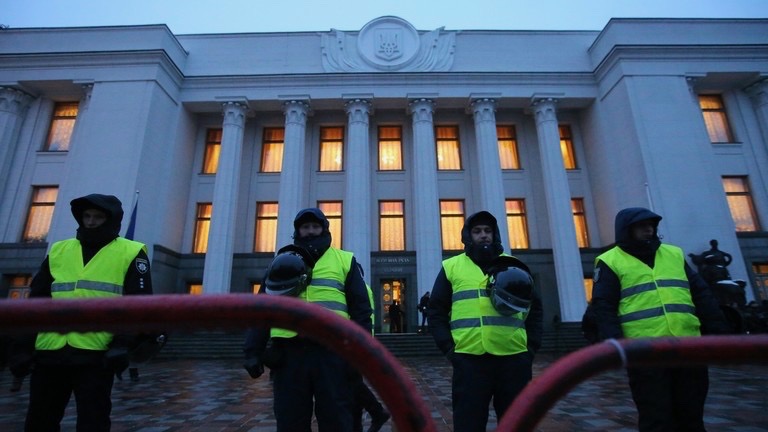
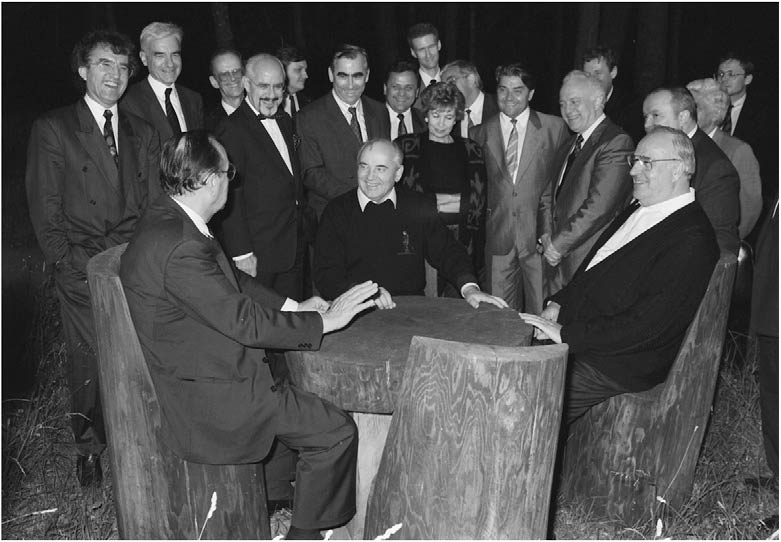
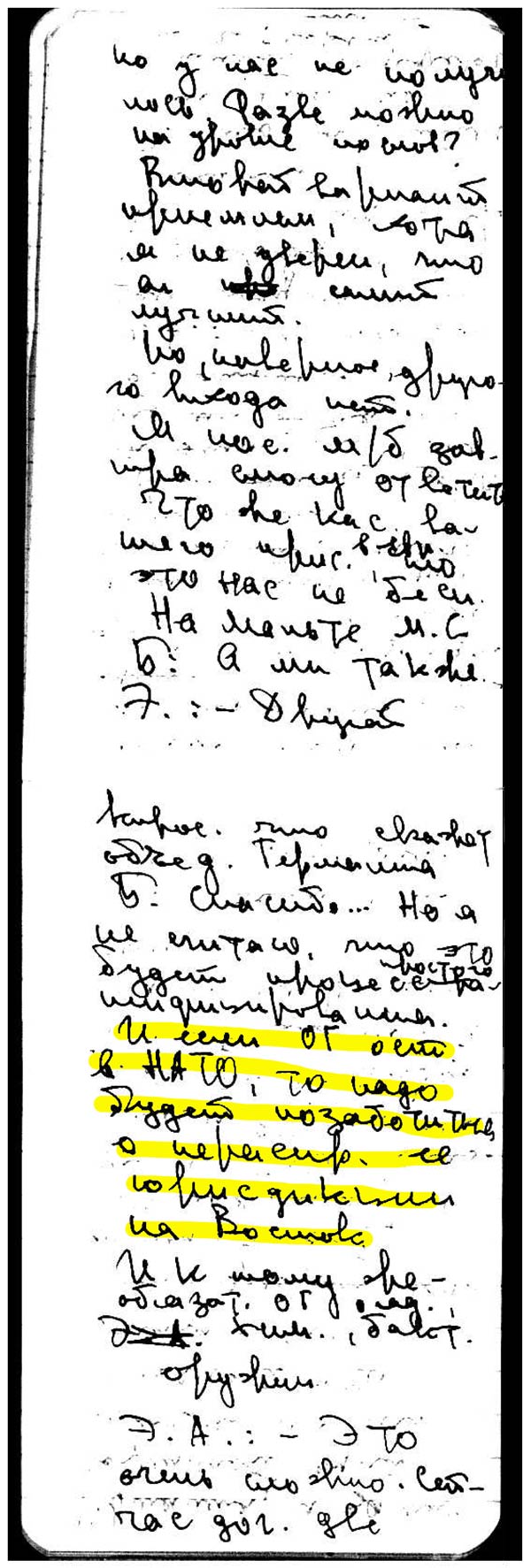




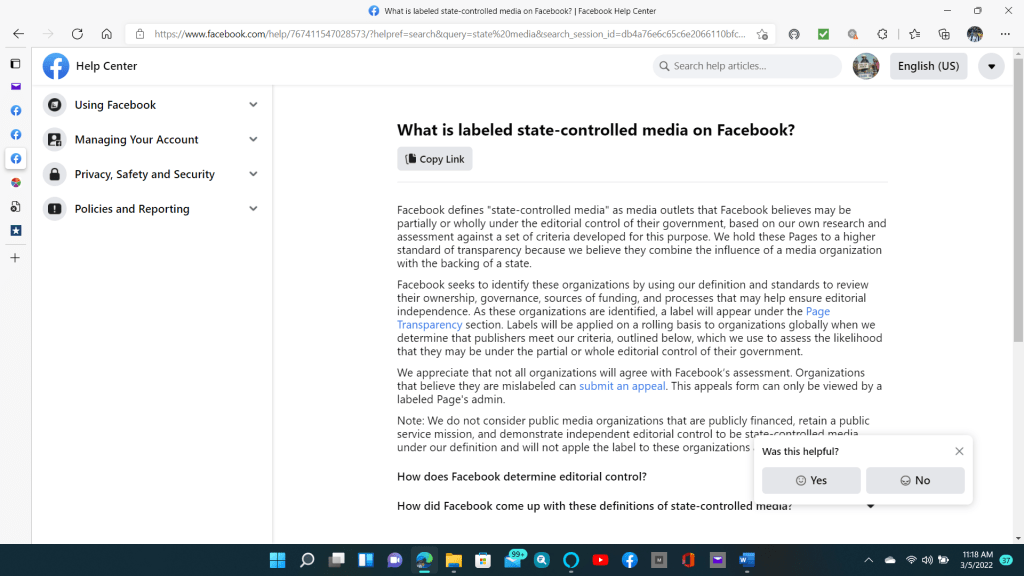



 progressiveissuesblog


